Artwork
Untitled
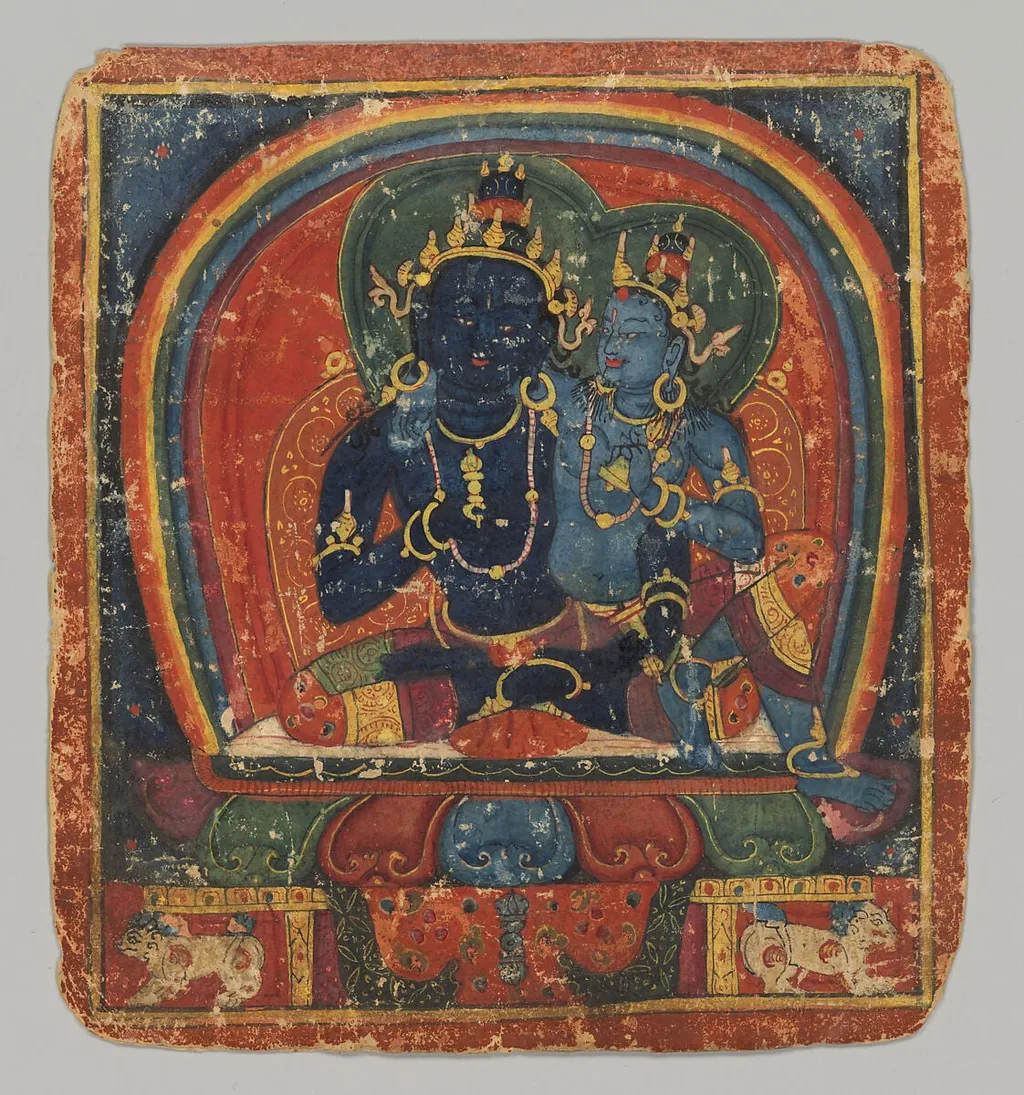
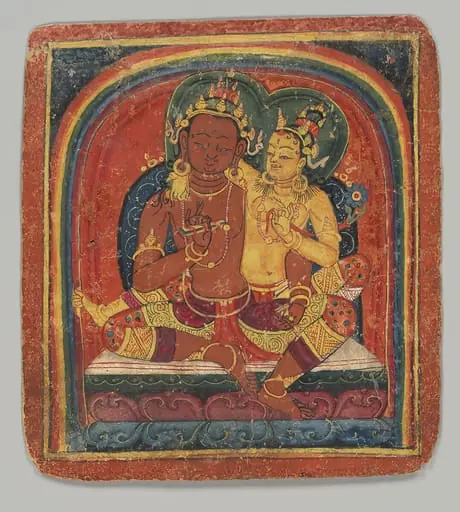
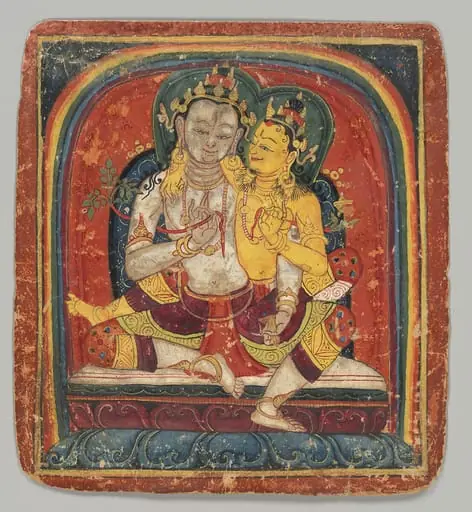
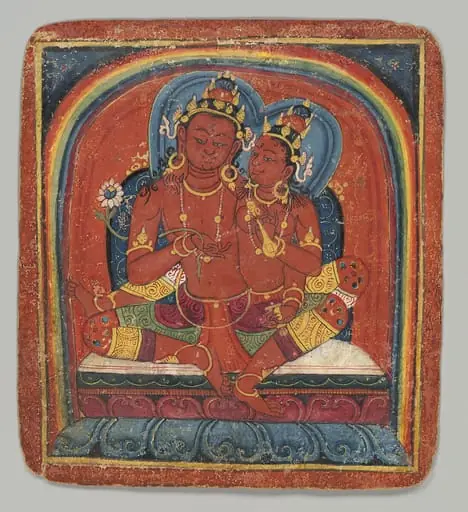
Untitled is a watercolor painting. It dates from 1416 and is held in the collection of the Metropolitan Museum of Art.
About this work
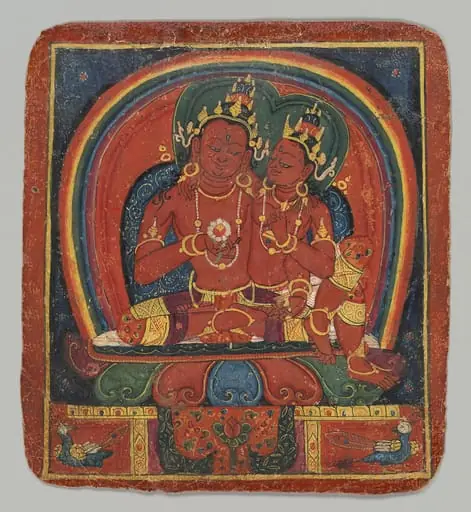
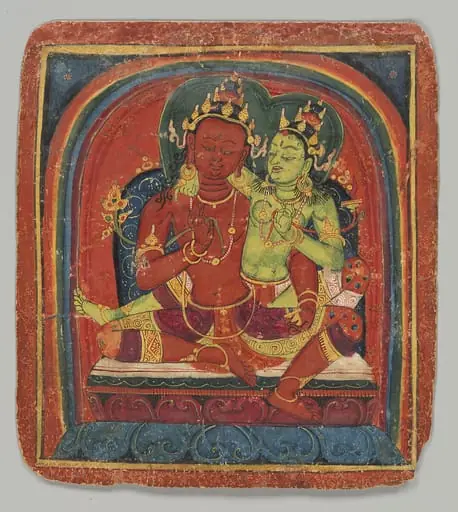
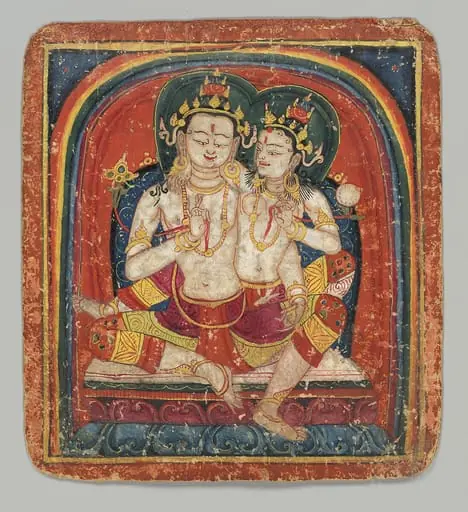
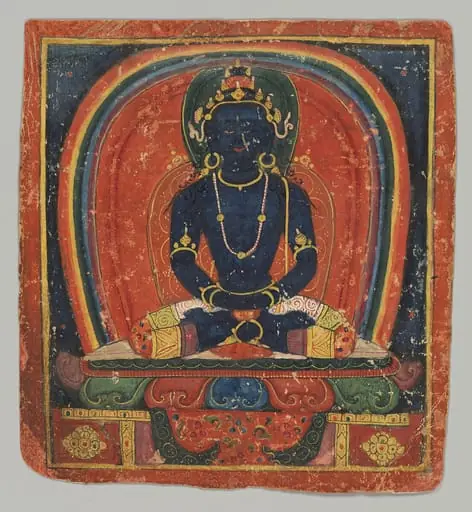
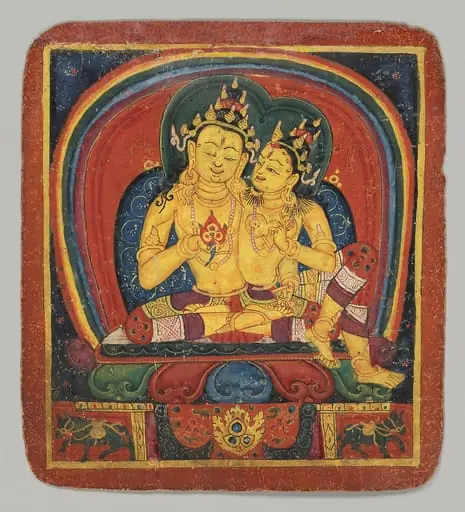
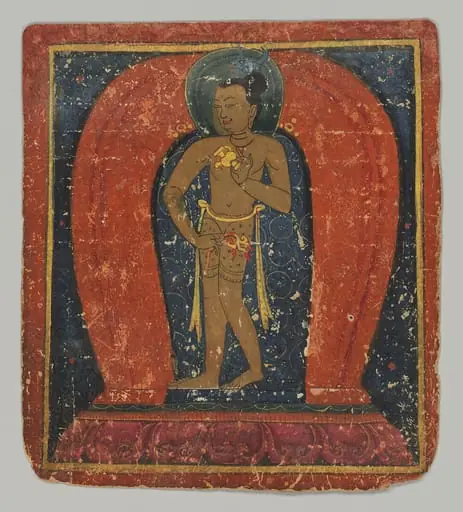
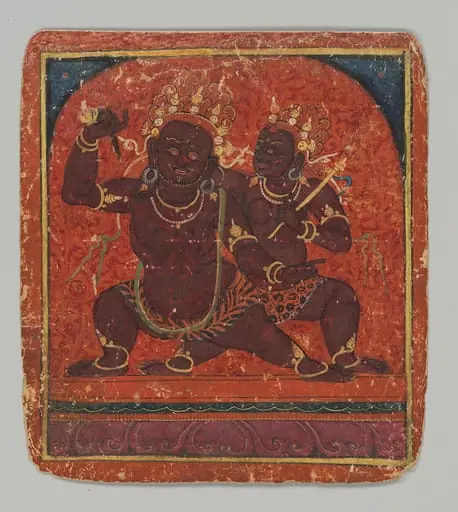
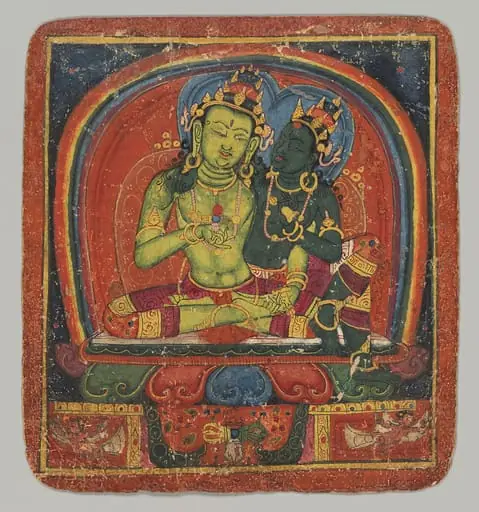
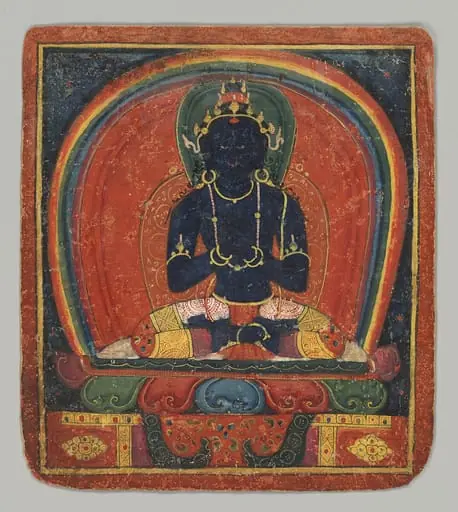
A bright blue bodhisattva sits on a cloud, holding a flower and a vase, outlined in gold with tiny red dots marking the eyes and lips. Painted in Tibet around 1400, it uses opaque watercolor, pigment mixed with chalk so it covers like paint. The gold was likely added later by another hand.
Subject & Meaning
The painting portrays a sacred figure identified in the sources as a Bodhisattva, Buddha, or deity, placing it within a religious genre. As a devotional image, the work likely served to evoke veneration and contemplation of the enlightened being represented, reflecting the iconographic conventions associated with such divine beings in the period.
Technique & Style
Stylistically, the piece functions as a depiction of sacred figures, specifically representing a Bodhisattva, Buddha, and other deities.
Created in 1416 by an anonymous artist, this religious painting utilizes opaque watercolor applied to a paper support. The work measures 16 units in height and 14.5 units in width. Stylistically, the piece functions as a depiction of sacred figures, specifically representing a Bodhisattva, Buddha, and other deities.
The classification as a painting within the religious genre highlights its devotional purpose. While specific details regarding the artist's handling techniques or the object's current physical condition are not explicitly detailed in the available records, the medium and subject matter define its formal characteristics as a devotional image from the early fifteenth century.
History & Provenance
Untitled is an opaque watercolor on paper created circa 1416 by an unknown artist. The work depicts a Bodhisattva, Buddha, and deity, reflecting a religious genre typical of the period. No commission or earlier ownership records are provided in the sources; the painting’s provenance as documented begins with its entry into the Metropolitan Museum of Art’s collection, where it is currently housed.
The Met’s catalog lists the inception date as 1 January 1416 and records the dimensions as 16 cm in height and 14.5 cm in width. Thus, the known history of the piece is limited to its dating, medium, iconography, and present institutional custody.
Overview
This untitled painting from Tibet, created around 1400, depicts a blue bodhisattva seated on a cloud. Rendered in opaque watercolor on paper, the figure holds a flower and a vase, embodying a celestial presence. The artwork offers insight into Tibetan artistic practices and the visual representation of spiritual beings during a period when paper was a rare medium in the region.
Context
The use of paper for this painting is notable, as the material was not common in Tibet during the early 15th century. Its presence suggests either the import of paper or its specialized production for significant works. The depiction of a bodhisattva aligns with a rich tradition of Buddhist art, offering a visual representation of compassion and spiritual aspiration within Tibetan culture.
Artist & collection