Artwork
Untitled
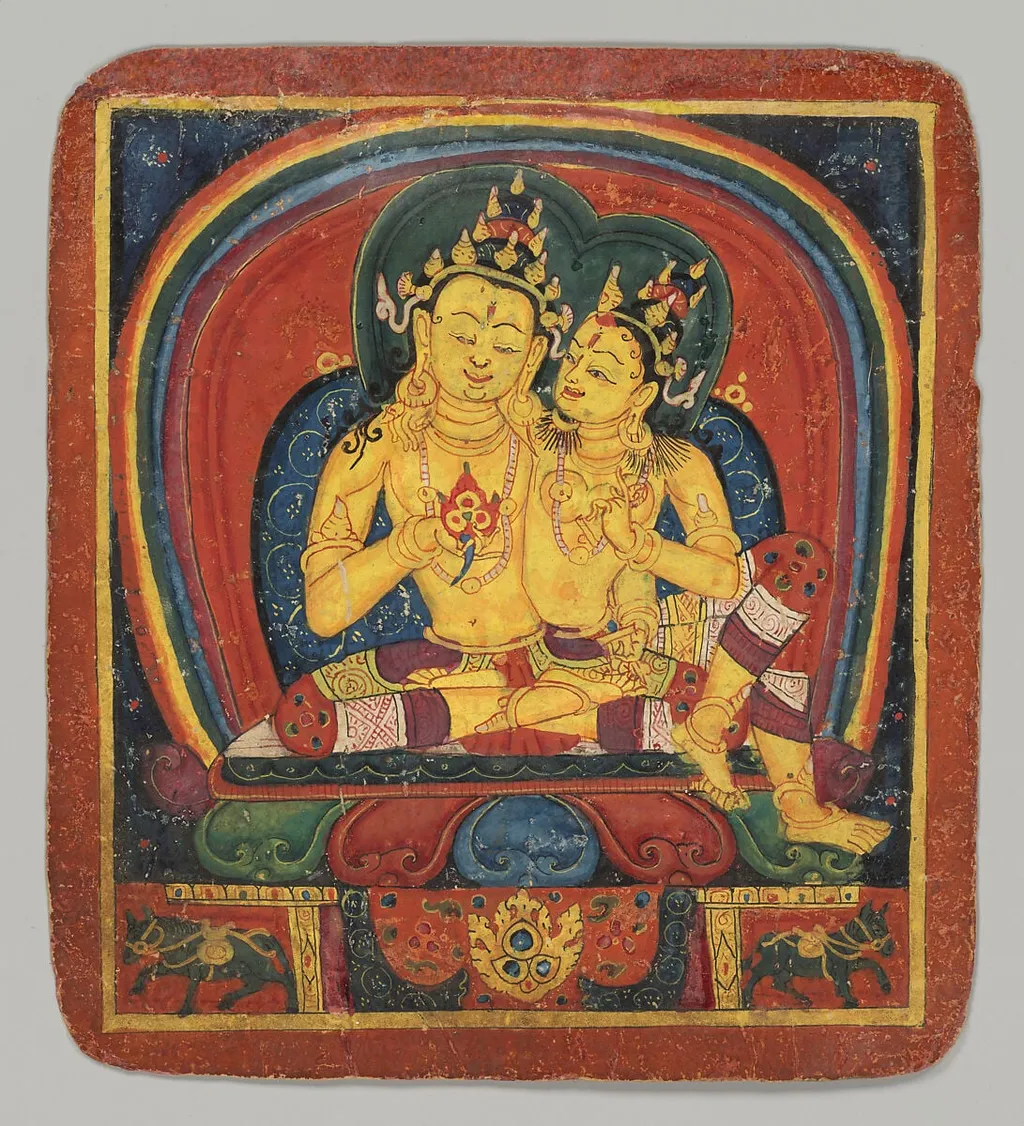
Untitled is a watercolor painting. It dates from 1416 and is held in the collection of the Metropolitan Museum of Art.
About this work
Technique & Style
Created in 1416, this anonymous religious painting is executed in opaque watercolor on paper. The work measures 16 cm in height and 14.5 cm in width. As a small-scale sheet, the medium of opaque watercolor allows for the precise rendering of its devotional imagery on the paper support. The piece is currently held in the collection of the Metropolitan Museum of Art.
History & Provenance
No specific inventory or accession number is provided in the available records, nor is there any documented exhibition history for this piece.
The anonymous religious painting titled Untitled, dated to 1416, is held in the collection of the Metropolitan Museum of Art. The work is executed in opaque watercolor on paper and measures 16 cm in height by 14.5 cm in width. No specific inventory or accession number is provided in the available records, nor is there any documented exhibition history for this piece. The artwork is classified within the museum's paintings department under the genre of religious art.
Context
The painting known as Untitled, dated 1416, exemplifies early fifteenth‑century religious art produced by an anonymous hand. Executed in opaque watercolor on paper, its modest dimensions of 16 cm by 14.5 cm place it within the corpus of devotional works that circulated in manuscript illumination and panel painting of the period. Its presence in the Metropolitan Museum of Art underscores the museum’s role in preserving surviving examples of anonymous painterly practice from the early Renaissance.
Scholarship that examines the work situates it among other undocumented religious compositions, highlighting the limited documentation of individual artists before the rise of signed signatures.
Overview
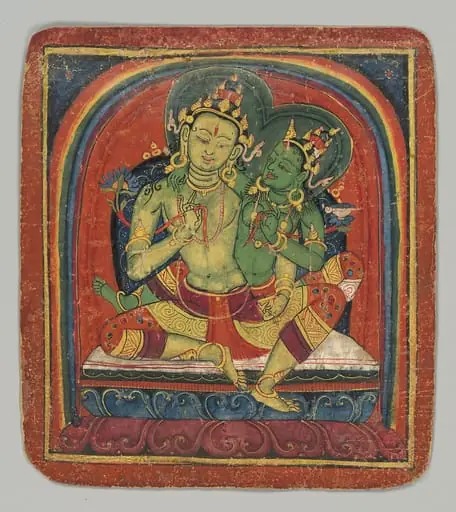
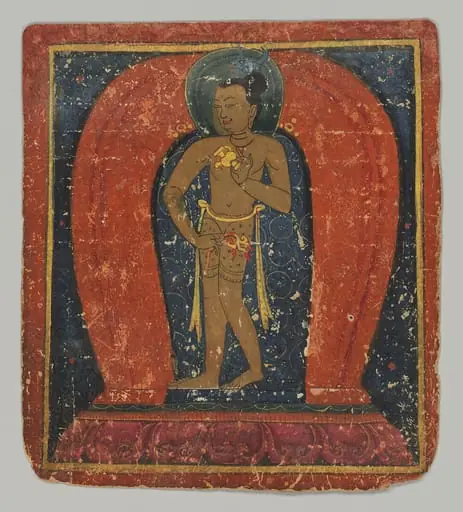
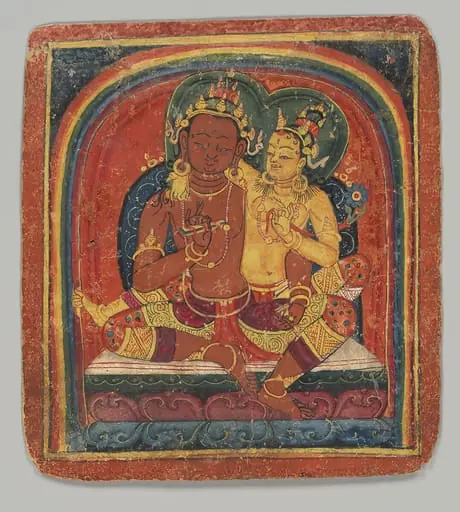
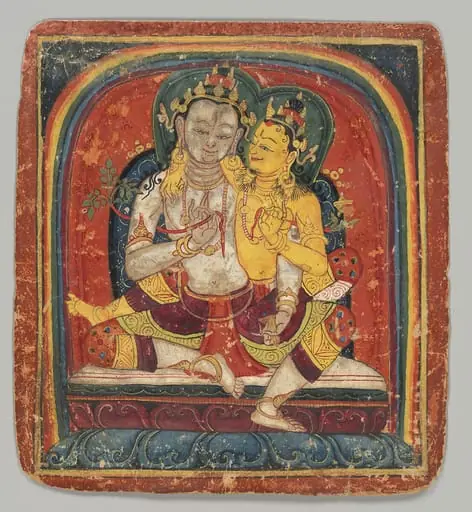
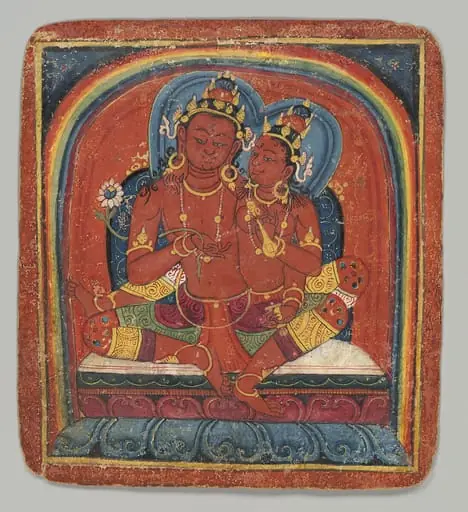
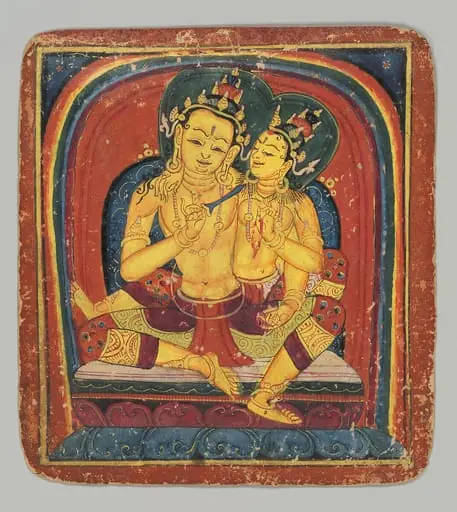
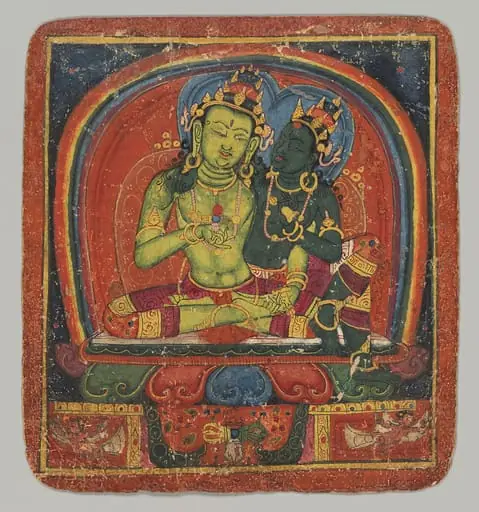
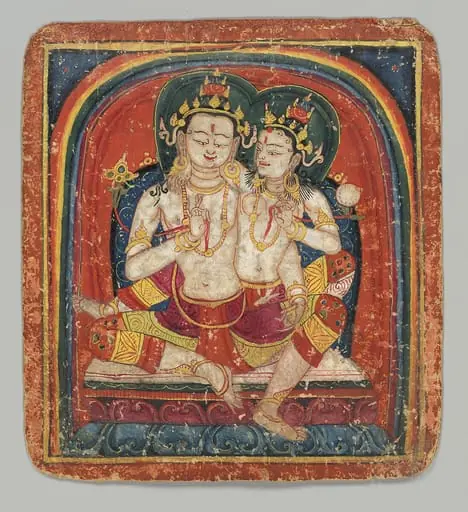
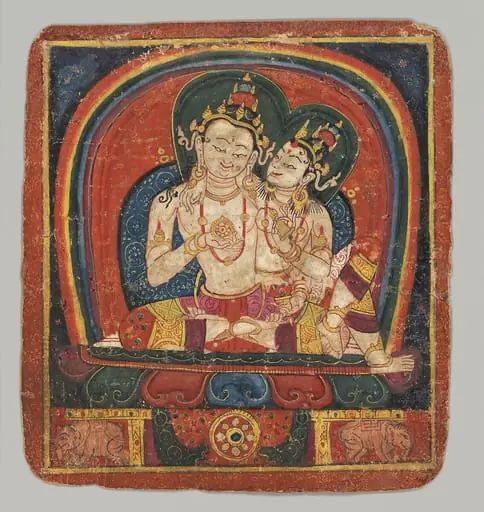
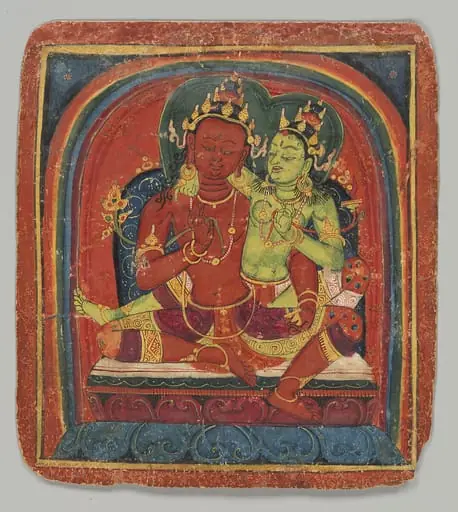
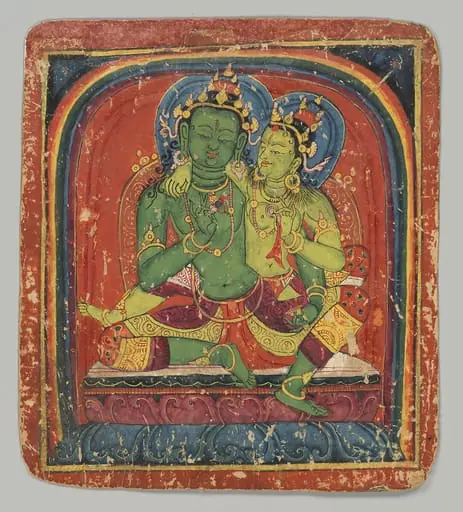
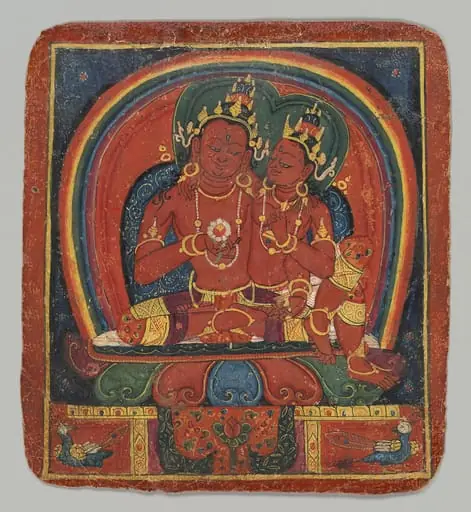
This untitled painting, rendered in opaque watercolor on paper, depicts two figures seated on an elaborate throne. The composition features vibrant colors and symbolic elements, characteristic of certain devotional art traditions. The figures, adorned with jewelry and depicted with yellow skin, are central to the work, which suggests a connection to Buddhist iconography through its specific visual language and setting.
Subject & Meaning
The artwork presents two individuals, distinguished by their yellow skin and extensive jewelry, positioned on a highly decorative, throne-like seat. This seat is flanked by a horse on each side, adding to its regal or sacred character. A rainbow-shaped element frames the background, contributing to the ethereal atmosphere.
The overall arrangement and specific attributes of the figures and their setting strongly indicate a connection to Buddhist themes and visual traditions.
Artist & collection