Artwork
Untitled
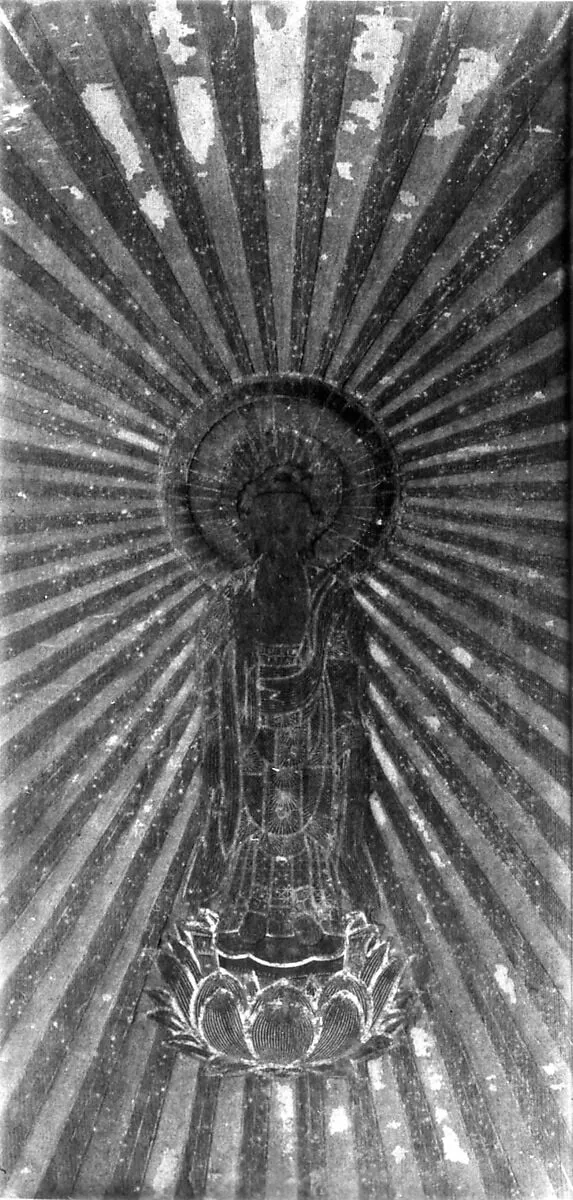
Untitled is a paint painting. It dates from 1749 and is held in the collection of the Metropolitan Museum of Art.
About this work
Subject & Meaning
Created in 1749 by an anonymous Japanese artist, this work on paper depicts the Buddha, serving as a visual representation of Buddhism.
Created in 1749 by an anonymous Japanese artist, this work on paper depicts the Buddha, serving as a visual representation of Buddhism. The painting functions as a religious icon, focusing entirely on the central figure of the enlightened one without additional narrative scenes or complex symbolic attributes described in available records. As a piece of religious art, its primary meaning lies in its devotional purpose, embodying the spiritual traditions of Japanese Buddhism during the mid-18th century. The straightforward depiction emphasizes the figure itself as the sole subject of veneration.
Technique & Style
This untitled work is a painting on paper, executed in 1749 and originating in Japan. The composition is presented in a vertical format, measuring 36.2 cm in height by 16.5 cm in width, a narrow proportion suited to hanging-scroll presentation. Its subject matter is religious, depicting the Buddha and Buddhist iconography. The work is held in the collection of the Metropolitan Museum of Art.
The medium of pigment on paper, combined with the slender vertical dimensions, is consistent with East Asian devotional painting traditions of the mid-eighteenth century, in which Buddhist imagery was commonly rendered as portable scrolls for private veneration or temple use.
History & Provenance
Created in 1749 in Japan, this religious painting on paper depicts the Buddha within the context of Buddhism. The work was executed by an anonymous artist, with no specific commission or patron identified in available records. Following its creation, the piece eventually entered the collection of the Metropolitan Museum of Art, where it is currently housed. The painting measures 36.2 cm in height and 16.5 cm in width.
The painting is held in the collection of the Metropolitan Museum of Art. Its recorded dimensions are 36.2 cm in height by 16.5 cm in width, and it is executed on paper.
No accession number, acquisition details, or exhibition history are documented in the available sources.
Overview
This untitled painting depicts a golden Buddha seated in a cross-legged posture upon a lotus flower, with hands gently folded in his lap. Executed on paper, the work presents a devotional image through a medium less commonly associated with Buddhist art of its period. Its directness and simplicity suggest a focused intent, offering a glimpse into a particular approach to religious imagery.
Context
The selection of paper for this devotional image points to a potentially different function compared to artworks intended for temples. As a less expensive material, paper suggests the painting may have been created for private worship or personal contemplation rather than for public display within a monastic setting. This practical consideration offers insight into the accessibility and dissemination of Buddhist imagery.
Artist & collection

- Untitled
 Untitled
 Christus am Ölberg (?)
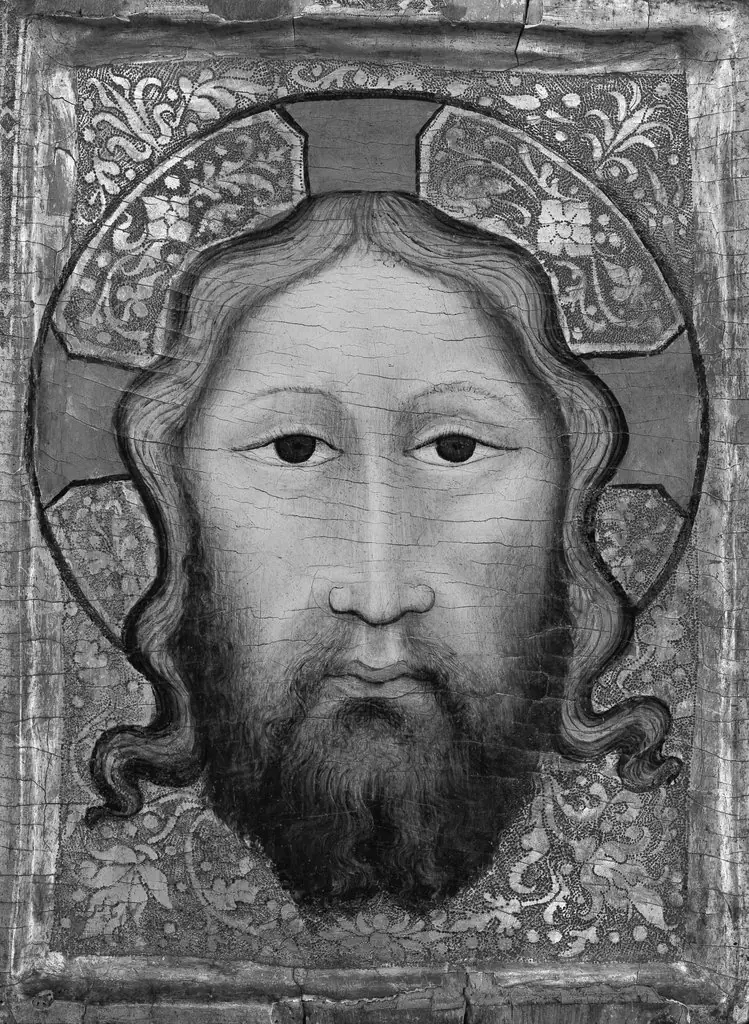 Head of Christ
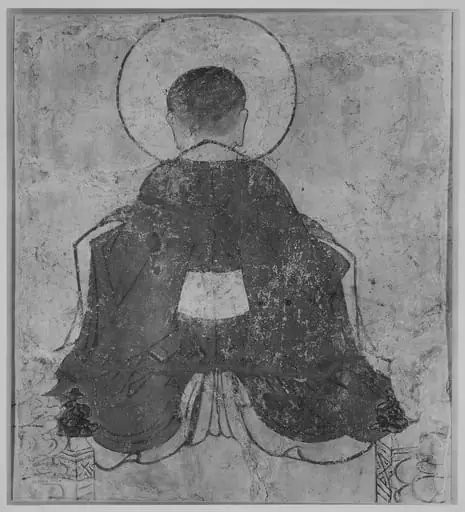 Untitled
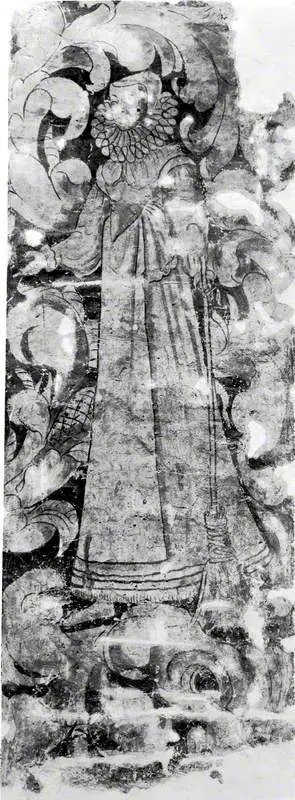 Woman with a Broom (from Stodmarsh Court, Kent)
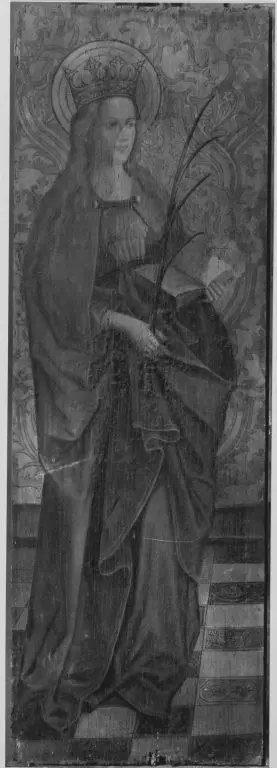 Hl. Barbara
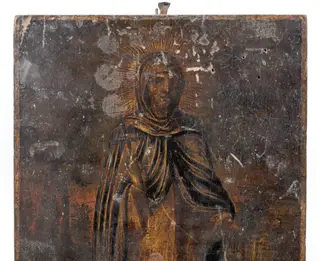 Sfânta Parascheva
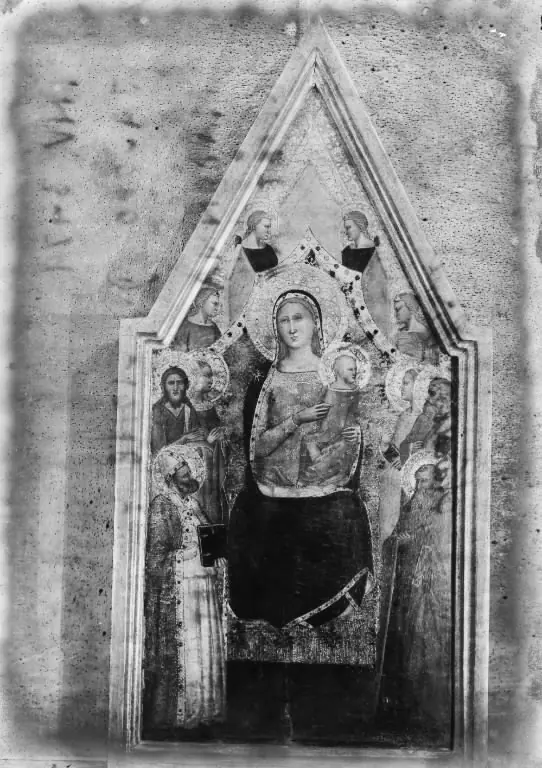 The Virgin and Child with Saints and Angels
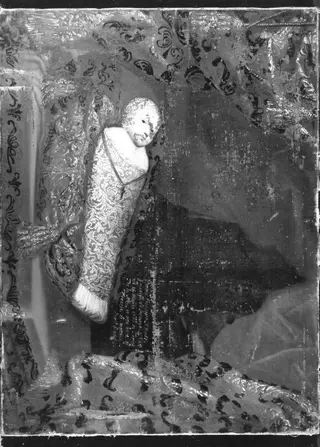 Victor Franz Amadeux II., als Wickelkind
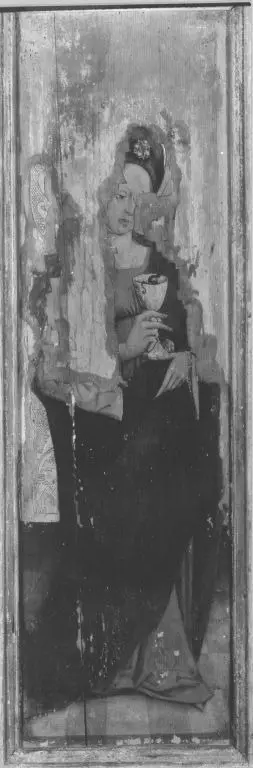 Hl. Barbara (Rückseite: Hl. Ottilie)
 Hl. Magdalena (Rückseite: Rest eines Strahlenkranzes)