Artwork
Untitled
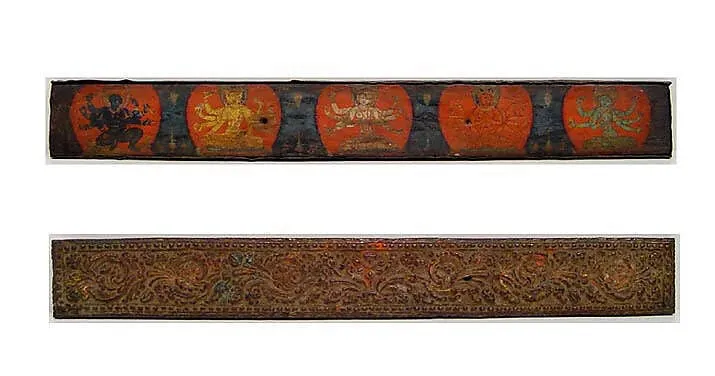
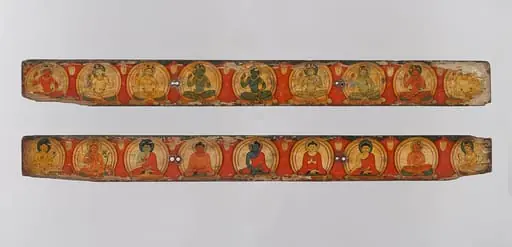
Untitled is a distemper painting. It dates from 1399 and is held in the collection of the Metropolitan Museum of Art.
About this work
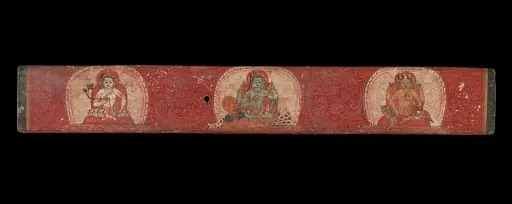
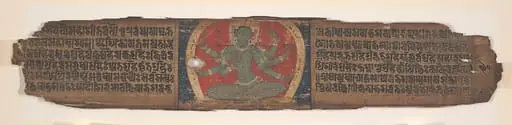
A small wooden panel showing a golden, many-armed figure seated on a lotus, its face calm, each hand holding a different object: a wheel, a conch shell, a lotus bud. Made in Nepal's Kathmandu Valley around 1300 to 1400, the gold was hammered into thin sheets and pressed onto the wood, a method called repousse that makes the deity shine like metal.
Subject & Meaning
The painting’s small scale and refined modeling align with fourteenth-century Nepalese devotional icons intended for private veneration or temple processions.
The central panel depicts a standing deity identified in museum records as a form of Avalokiteśvara, recognizable by the lotus held in the left hand and the gesture of granting refuge with the right. The repoussé gilt-copper cover frames the figure with stylized foliate motifs, underscoring the cultic function of the object. The painting’s small scale and refined modeling align with fourteenth-century Nepalese devotional icons intended for private veneration or temple processions.
History & Provenance
The work titled Untitled was created in 1399 in Nepal, employing distemper on wood with a repoussé gilt‑copper cover; its dimensions measure approximately 5.7 × 46.4 cm. Executed by an anonymous hand, it belongs to the religious painting genre and portrays a deity;. The painting is classified as a work of art within the Paintings category and has been part of the Metropolitan Museum of Art’s collection since its acquisition, though specific acquisition details and previous owners are not documented in the available records. Its creation history reflects early devotional art practices in the region.
The work is held in the collection of the Metropolitan Museum of Art, where it is also located. While the provided records confirm its presence in this institution, they do not specify a particular inventory or accession number. Furthermore, there is no information available within the current sources regarding the artwork's exhibition history.
Overview
This untitled painting, created in Nepal's Kathmandu Valley between 1300 and 1400, features a multi-armed golden deity. Rendered in distemper on a small wooden panel, the artwork is further distinguished by a repoussé gilt-copper cover. The central figure, seated serenely on a lotus blossom, holds various symbolic objects in its numerous hands, presenting a calm and composed demeanor.
Technique & Style
The artwork employs distemper paint on a wooden support, a common method for creating vibrant, matte surfaces. Uniquely, the golden elements of the deity are achieved through a repoussé gilt-copper cover. This technique involves hammering thin sheets of copper from the reverse side to create a raised design, which is then gilded.
This process imparts a metallic luster and three-dimensional quality to the figure, distinguishing it from painted gold leaf and enhancing its radiant presence.
Artist & collection

- Untitled
 Untitled
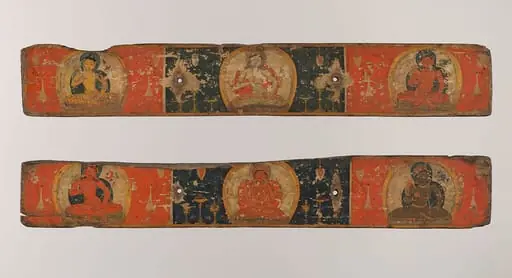
 Four bodhisattvas and two attendants flanking Vajrasattva, bottom cover, from a Manuscript of the Perfection of Wisdom in Eight Thousand Lines (Ashtasahasrika Prajnaparamita-sutra)
 Untitled
 Untitled
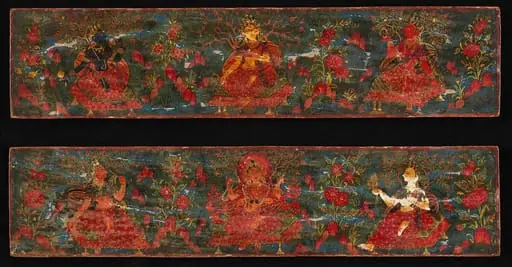
 Pair of Manuscript Covers with Twelve Durgas on Snow Lions Slaying the Buffalo Demon (Mahishasuramardini)
 Rafter with geometrical, plant, animal and heraldic motifs
 Untitled
 Untitled
 Perfection of Wisdom in Eight Thousand Lines: Ashtasahasrika Prajnaparamita: Back Cover
 Untitled
 Untitled