Artwork
Untitled
Untitled is a watercolor painting. It dates from 1416 and is held in the collection of the Metropolitan Museum of Art.
About this work
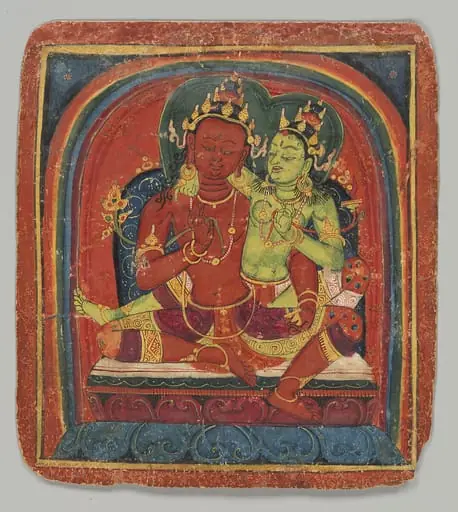
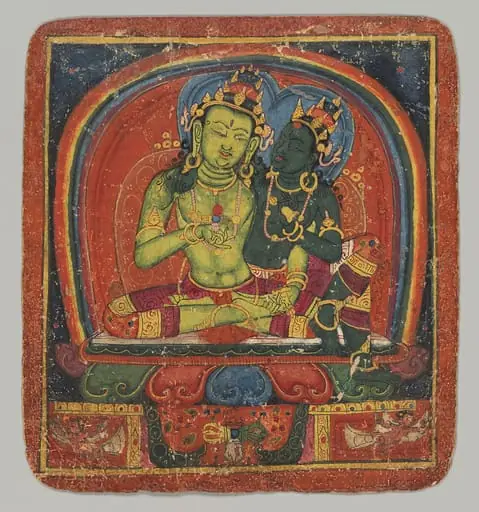
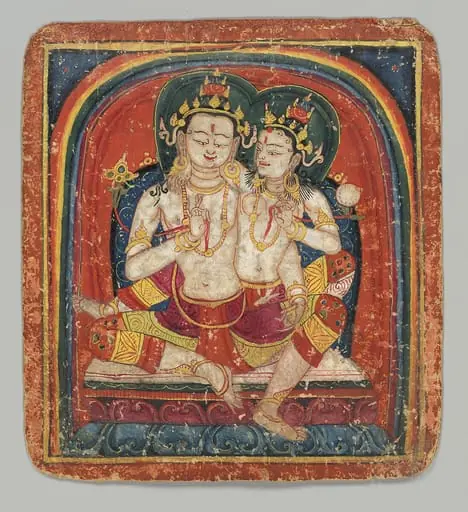
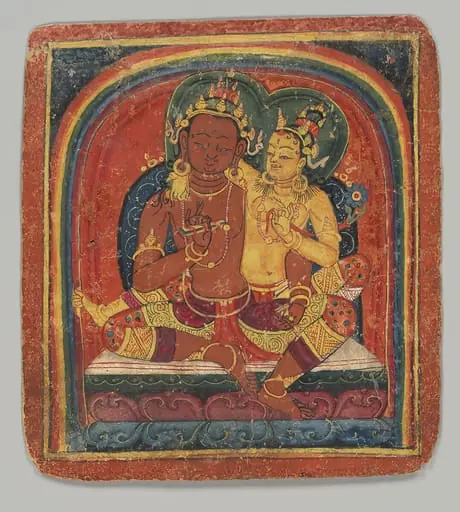
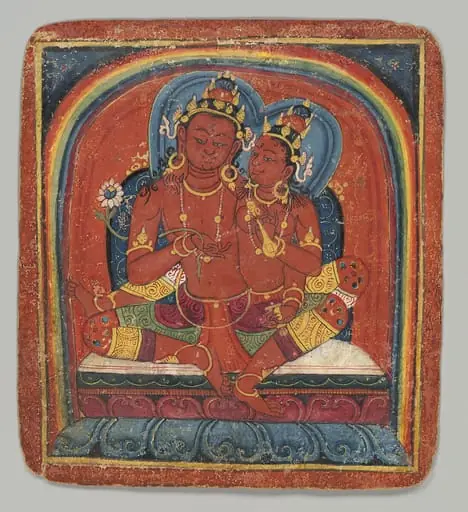
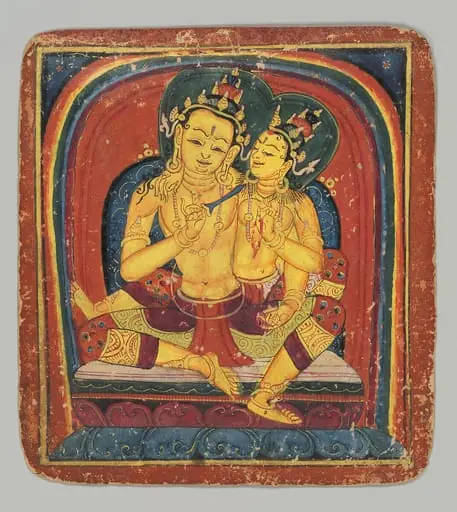
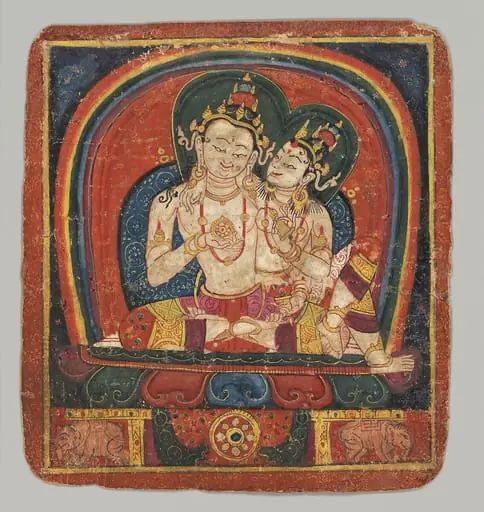
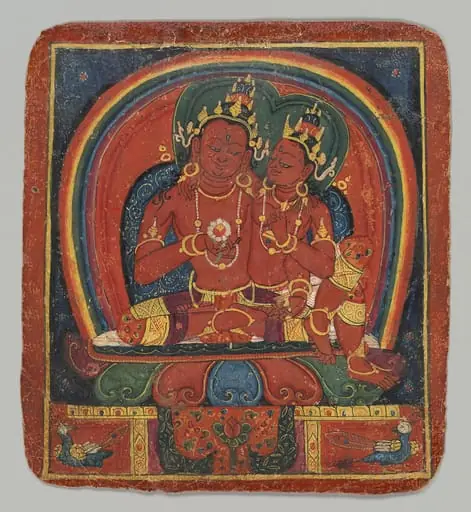
You see a golden figure sitting cross-legged on a lotus flower, holding a small vase in one hand.
You see a golden figure sitting cross-legged on a lotus flower, holding a small vase in one hand. The face is calm, with half-closed eyes and a faint smile. The background is deep blue, with simple red and green patterns framing the scene.
This painting was made in Tibet around 1400, long before paper was common there. The artist used opaque watercolor, pigments mixed with chalky white, to make the colors glow. The figure is a bodhisattva, a being who delays enlightenment to help others.
To see more works like this, look up Tibet in the museum’s collection.
Subject & Meaning
Untitled (1416) portrays a Bodhisattva, a compassionate figure in Buddhist iconography who assists devotees on the path to enlightenment. As a religious painting, the work uses the Bodhisattva’s serene visage and flowing drapery to embody benevolence and spiritual guidance. The anonymous artist situates the figure within a flat, decorative space typical of early 15th‑century devotional art, emphasizing transcendence over physical realism.
By presenting the Bodhisattva without narrative context, the painting invites contemplation of universal compassion, reflecting the broader role of such images in meditative practice within the Metropolitan Museum of Art’s collection.
Technique & Style
Created in 1416, this religious painting is executed in opaque watercolor applied to a paper support. The work measures 16 inches in height and 14.5 inches in width. As a product of an anonymous artist, the piece exemplifies the stylistic conventions of its era through its depiction of a Bodhisattva.
The medium of opaque watercolor allows for distinct coloration on the paper surface, characteristic of the classification as a painting within the religious art genre. The physical dimensions and material composition define its formal presence within the collection.
History & Provenance
The artwork, titled Untitled, is a religious painting created in 1416 by an anonymous artist. Executed in opaque watercolor on paper, the piece depicts a Bodhisattva and measures 16 units in height by 14.5 units in width. While the specific commission details and the initial ownership chain are not recorded in the available data, the work is currently held within the collection of the Metropolitan Museum of Art.
The creation date is precisely established as January 1, 1416, situating the piece within the early 15th century. No further information regarding previous owners, the circumstances of its acquisition by the museum, or the identity of the patron who commissioned the work is provided in the source records.
The opaque watercolor on paper is held in the collection of the Metropolitan Museum of Art, where it remains located. Its modest dimensions, approximately 16 by 14.5 centimeters, are consistent with a small devotional object, though no specific inventory or accession number is recorded in the available documentation. The sources do not provide information regarding its acquisition history, donor, or any recorded exhibition history, leaving the provenance of the work beyond its current institutional home unspecified.
Legacy
The painting, dated 1416 and housed in the Metropolitan Museum of Art, is recognized as an early example of religious art depicting a Bodhisattva. As an anonymous work, it has become a key reference for scholars examining the development of Buddhist iconography in East Asian painting, with its stylistic features often cited in studies of anonymous masters from the period. Its presence in a major museum collection has ensured ongoing scholarly attention, contributing to its reputation as a representative piece of 15th‑century religious painting and influencing later artistic representations of the Bodhisattva motif.
Overview
This untitled painting, created in Tibet around 1400, depicts a bodhisattva using opaque watercolor on paper. The golden figure, seated cross-legged on a lotus, holds a small vase, its face serene with a faint smile. The deep blue background is framed by simple red and green patterns. Its creation predates the widespread use of paper in the region, making the medium choice significant.
Context
Dating to approximately 1400, this Tibetan painting is notable for its medium. Paper was not widely available or commonly used in Tibet during this era, suggesting that its selection for this devotional work was deliberate. The artwork thus offers insight into material culture and artistic practices in the region during the early 15th century.
Artist & collection