Artwork
Untitled
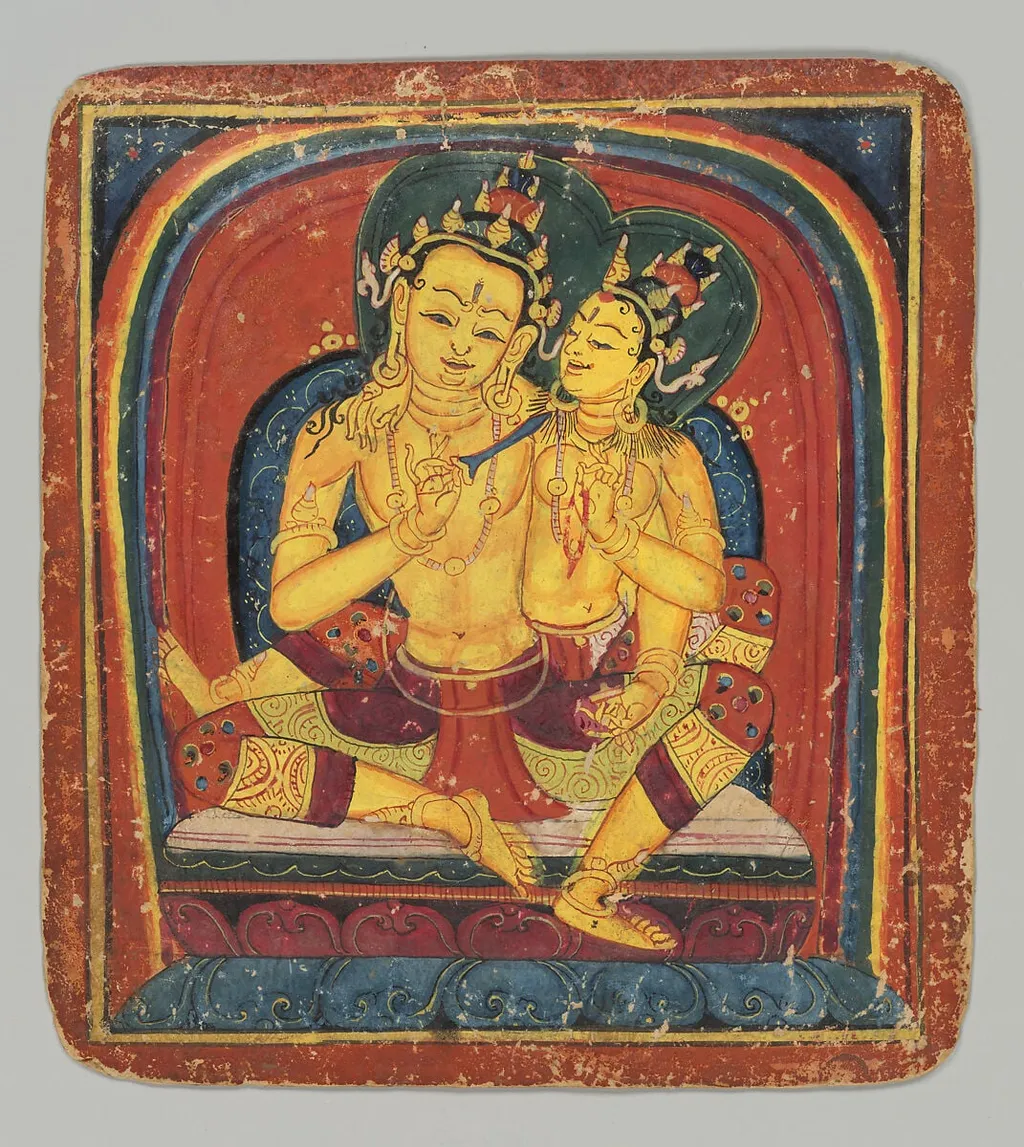
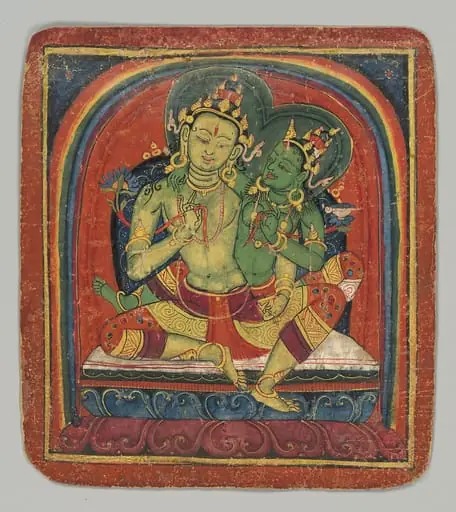
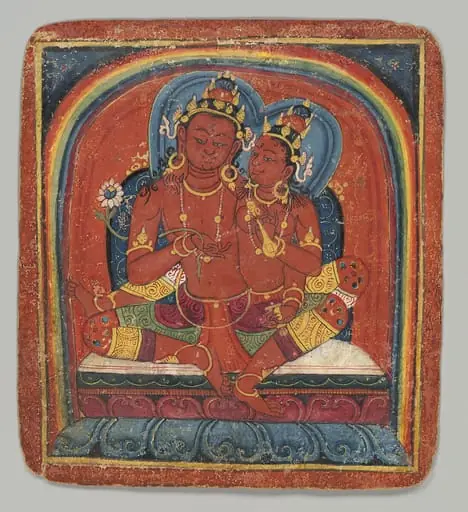
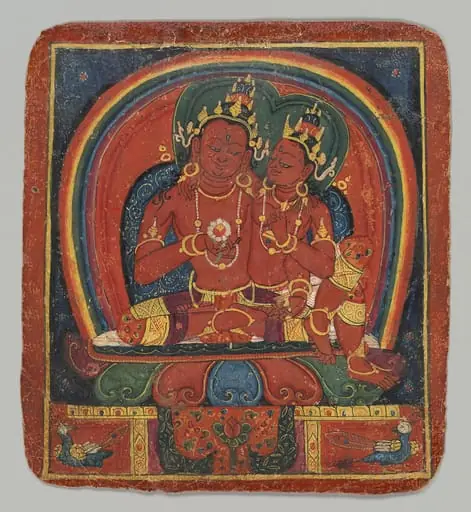
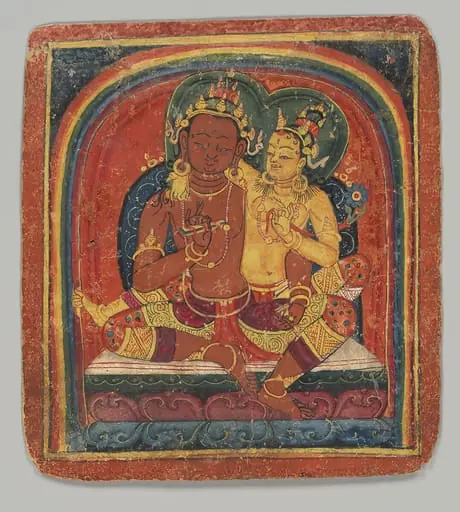
Untitled is a watercolor painting. It dates from 1416 and is held in the collection of the Metropolitan Museum of Art.
About this work
The colors are still vivid because the artist used opaque watercolor, paint mixed with chalk so it covers like tempera.
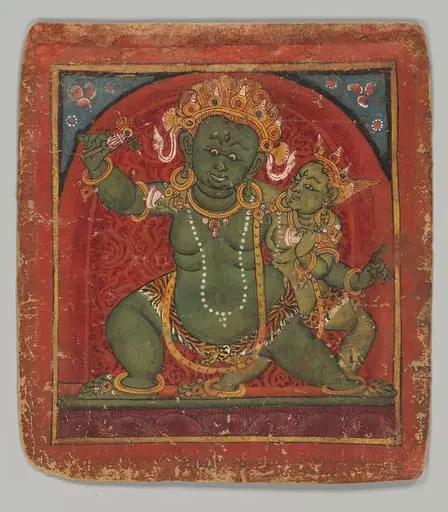
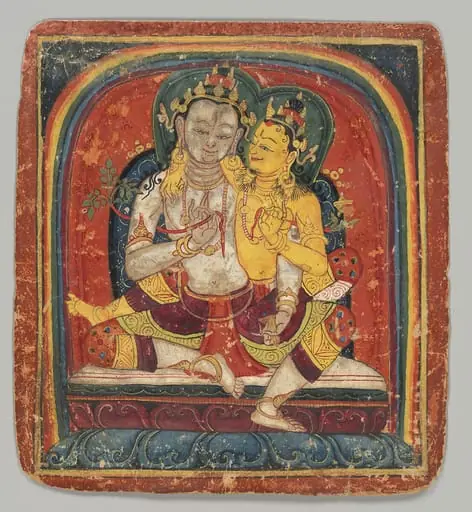
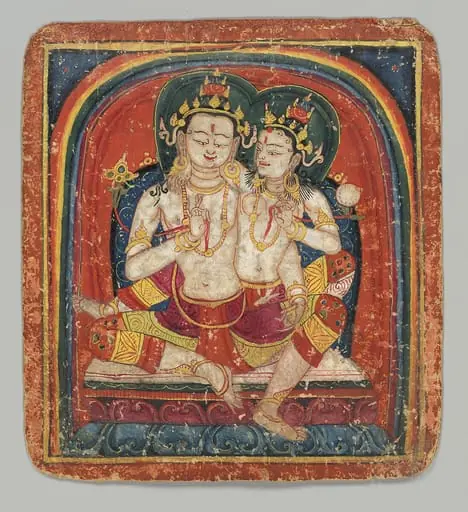
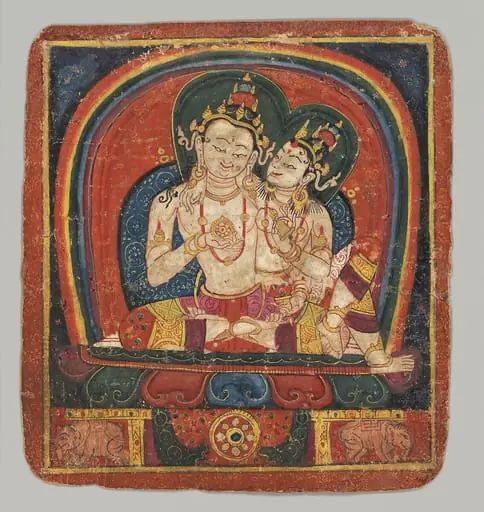
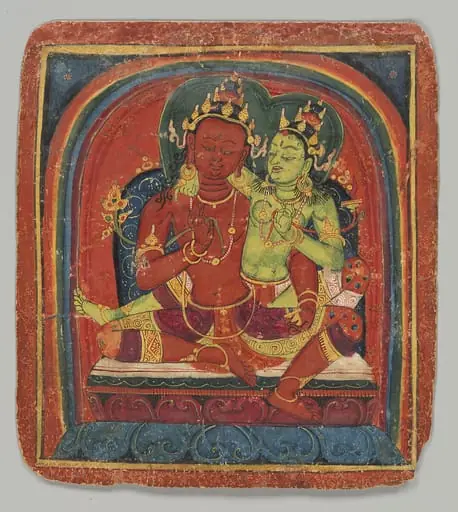
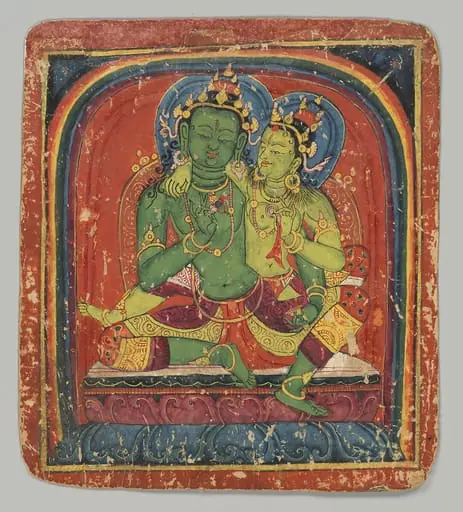
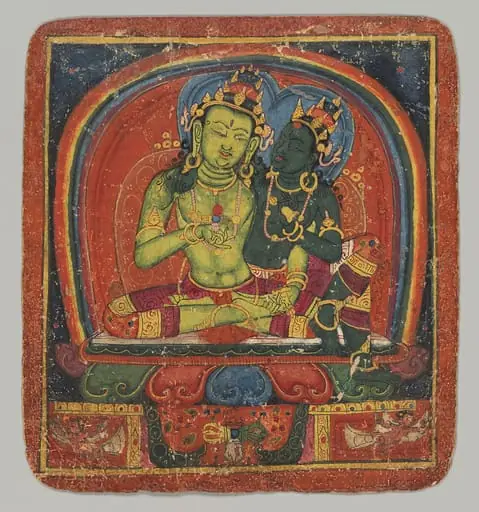
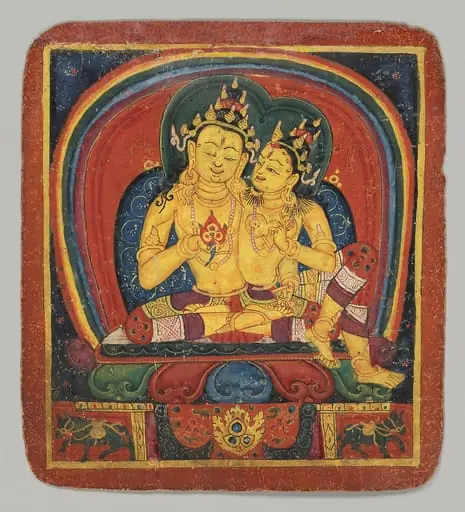
You see a bright blue deity with four arms, sitting on a lotus flower. Each hand holds a different object, one a sword, another a book. Flames flicker behind them, and tiny figures kneel at their feet.
This painting was made in Tibet around 1400, but no one knows who painted it. The colors are still vivid because the artist used opaque watercolor, paint mixed with chalk so it covers like tempera. The details, like the deity’s jewelry, were added with fine brushes, maybe even a single hair.
To see more like this, look up the subject deities.
Subject & Meaning
The work is a religious painting from 1416, created by an anonymous artist using opaque watercolor on paper. Its primary subject is a deity, in keeping with the conventions of devotional religious art. While the specific identity of the deity is not detailed in the available records, the depiction serves a devotional function typical of the genre.
The piece is held in the collection of the Metropolitan Museum of Art and measures 16 by 14.5 cm. As an anonymous work, it focuses entirely on the sacred figure portrayed within its small-scale format.
Technique & Style
Created in 1416 by an anonymous artist, this religious painting is executed in opaque watercolor applied to a paper support. The work measures 16 cm in height and 14.5 cm in width, depicting a deity within a traditional religious genre. The choice of opaque watercolor on paper produces a flat, non-reflective surface and saturated color characteristic of the medium.
Held in the collection of the Metropolitan Museum of Art, the piece retains its original format as a painting classified under religious art, its formal qualities defined by the possibilities of the watercolor technique on paper.
History & Provenance
The 1416 opaque-watercolor-on-paper work known as Untitled is held in the collection of the Metropolitan Museum of Art, which serves as both the current owner and the physical location of the work. The specific inventory or accession number is not provided in the available records, and the provided sources do not list any past or future exhibitions where the piece has been displayed.
Context
The untitled painting, dated 1416 and executed in opaque watercolor on paper, belongs to the religious genre and portrays a deity. Its anonymous authorship places it among the many unsigned devotional images of its period, in which the sacred subject rather than individual authorship was the focus. Held in the Metropolitan Museum of Art, the work provides insight into the museum's holdings of early devotional painting and into anonymous religious image-making of the early fifteenth century.
Overview
This untitled Tibetan painting, created around 1400, is rendered with opaque watercolor on paper. It depicts a multi-armed deity, distinguished by its blue complexion and seated posture on a lotus blossom. The artwork's vibrant palette and intricate details are notable, reflecting the sophisticated artistic practices of the period. Its purpose likely served a devotional or instructional role within a spiritual context.
Artist & collection