Artwork
View of the Capitol
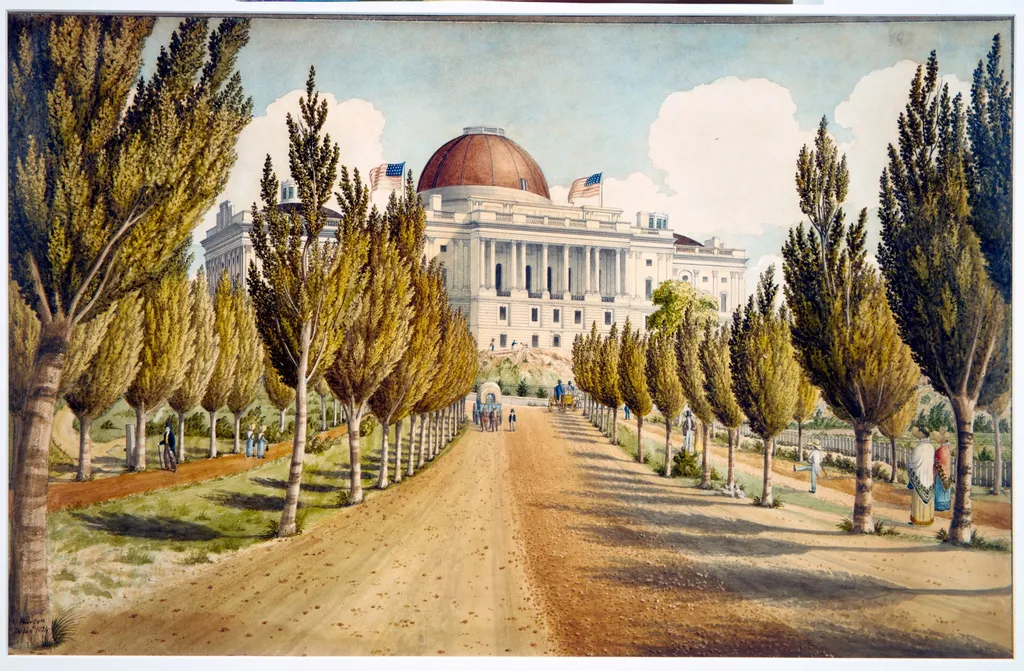
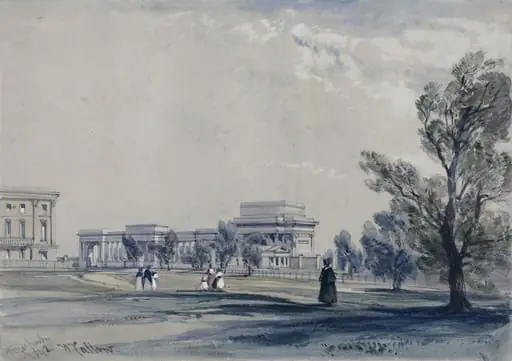
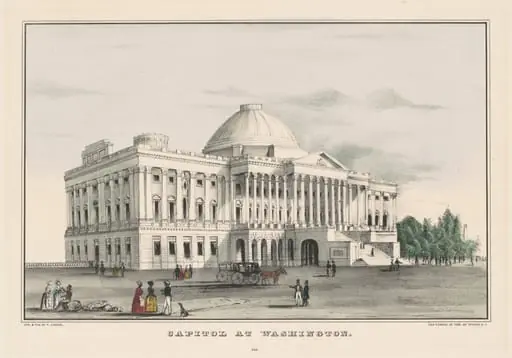
View of the Capitol is an unspecified painting. It dates from 1824 and is held in the collection of the Metropolitan Museum of Art. The work depicts a rural lane bordered by trees that leads to a prominent white structure capped with a brown dome.
About this work
History & Provenance
The work has been part of the museum's permanent holdings since its acquisition, establishing a clear chain of ownership from its creation to the present.
The painting was created in 1824 and attributed to Charles W. Burton, who produced a watercolor of the United States Capitol. It entered the collection of the Metropolitan Museum of Art, where it remains on view.
The work has been part of the museum's permanent holdings since its acquisition, establishing a clear chain of ownership from its creation to the present.
Its classification as a painting and its date of 1824 are documented in the museum's records.
The watercolor View of the Capitol, attributed to Charles W. Burton and dated to 1824, is held in the collection of the Metropolitan Museum of Art. The institution serves as both the current owner and the physical location of the work. While the piece is documented within the museum's holdings, the provided records do not specify a particular inventory or accession number, nor do they list any specific exhibitions in which the artwork has been displayed.
Context
View of the Capitol (1824), a watercolor attributed to Charles W. Burton, entered the Metropolitan Museum of Art collection. It is classified as a painting from 1824 and is held in the museum's collection.
Scholarly attention to this work remains limited, with minimal documentation in major art historical literature. Its attribution to Burton is based on stylistic analysis and archival records rather than definitive documentation.
The painting's significance is primarily contextual within early 19th-century American landscape traditions, reflecting the period's fascination with national symbols and civic architecture. It contributes to the corpus of early American topographical works that documented the young republic's built environment.
Overview
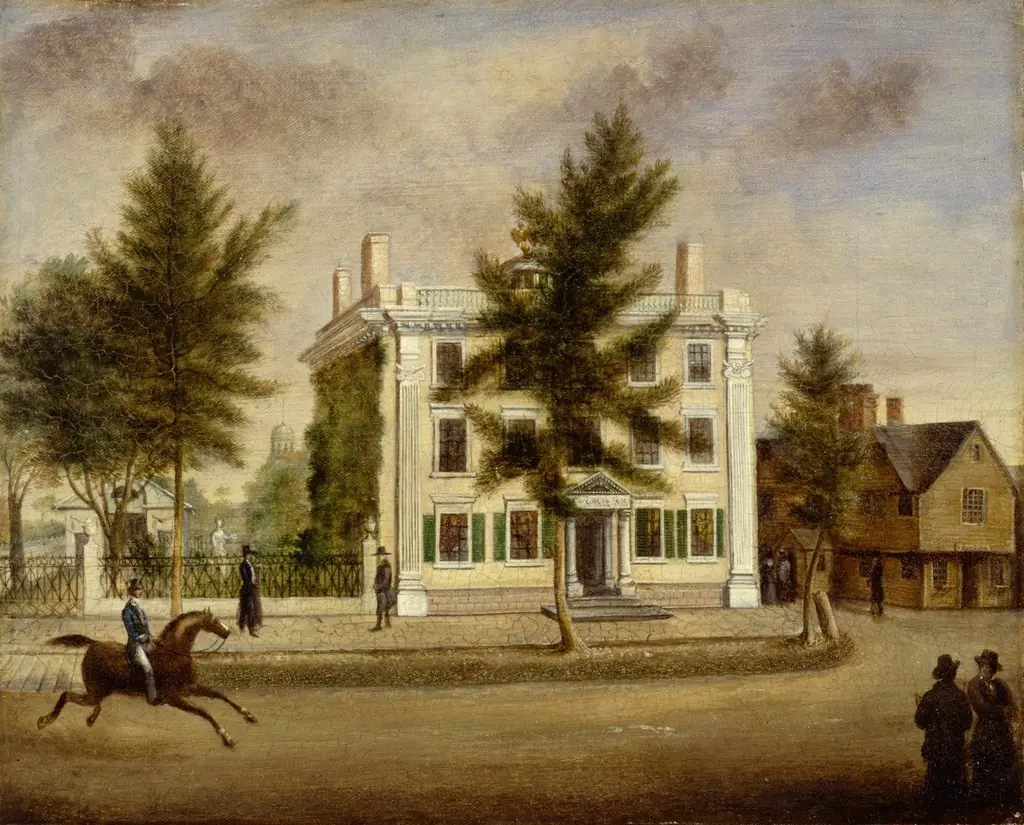
The work depicts a rural lane bordered by trees that leads to a prominent white structure capped with a brown dome. Columns flank the building, and flags rise above its roof. Figures are scattered along the path and gathered near the edifice, set against a clear blue sky dotted with white clouds.
Subject & Meaning
The composition presents a civic scene, emphasizing the relationship between the natural landscape and a monumental public building. The presence of pedestrians suggests everyday activity, while the architectural grandeur conveys the importance of the institution housed within.
Technique & Style
The artist renders the foliage with a varied palette of greens and yellows, achieving a sense of depth and realism. Careful attention to architectural detail, columns, dome, and flagpoles, demonstrates a precise, representational approach, while the bright sky and crisp cloud forms contribute to a luminous atmosphere.
Artist & collection