Artwork
The Claremont
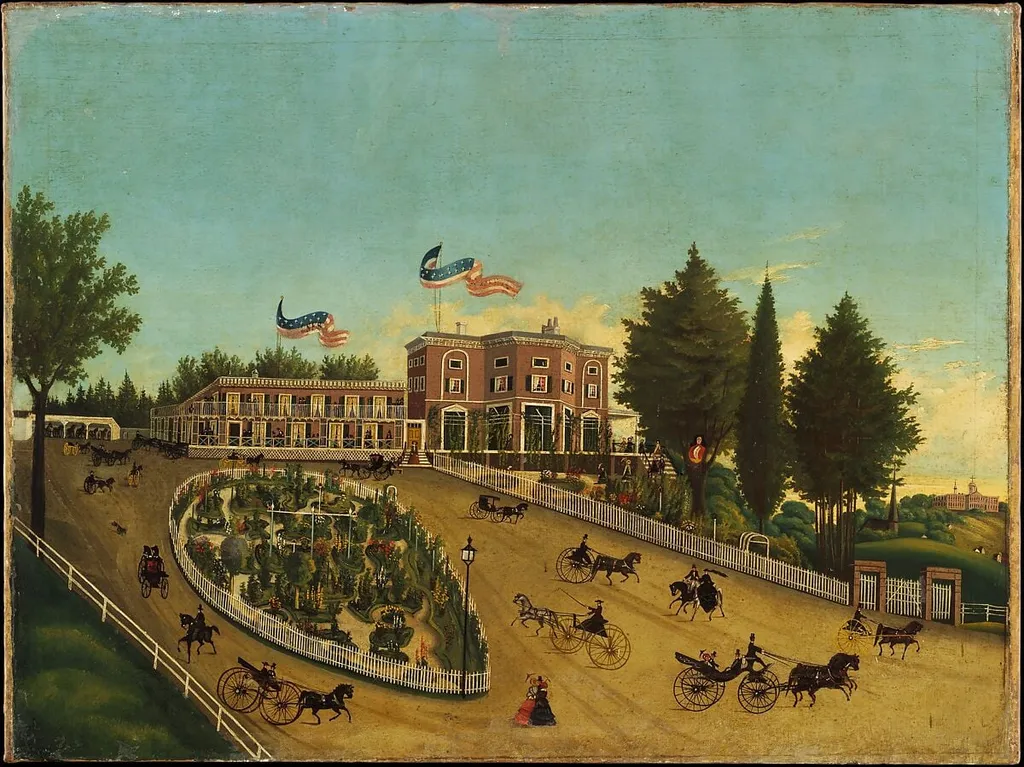
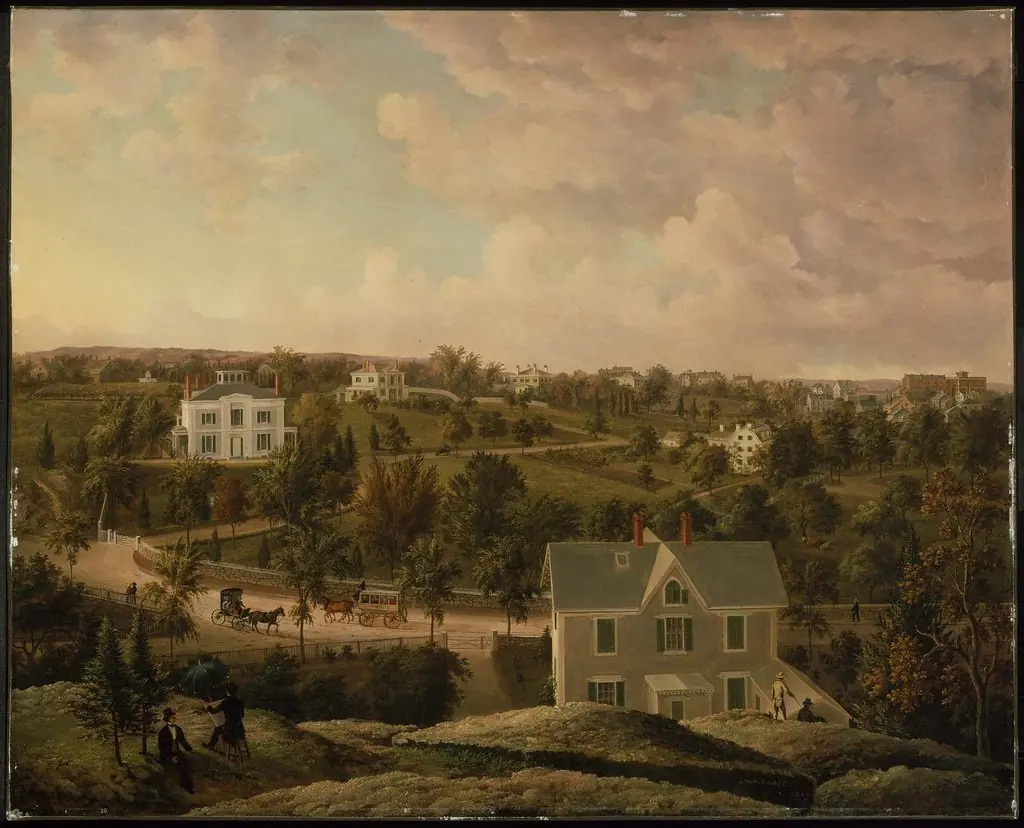
The Claremont is an oil painting. It dates from 1855 and is held in the collection of the Metropolitan Museum of Art.
- Accession no.
- 54.90.169
- Credit line
- The Edward W. C. Arnold Collection of New York Prints, Maps, and Pictures, Bequest of Edward W. C. Arnold, 1954
About this work
Technique & Style
The composition captures a specific urban or suburban scene, utilizing the oil medium to render these distinct subjects within a horizontal format.
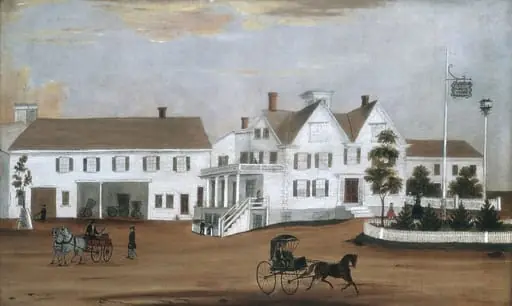
The Claremont is executed in oil paint on a canvas support, a standard medium for mid-nineteenth-century American cityscapes. Created in 1855 by an anonymous artist, the work measures 64.8 centimeters in height and 86.4 centimeters in width. Stylistically, the painting functions as a cityscape that formally organizes architectural and natural elements, specifically depicting a building, trees, a carriage, and a horse.
The composition captures a specific urban or suburban scene, utilizing the oil medium to render these distinct subjects within a horizontal format. As part of the Metropolitan Museum of Art's collection, the piece represents the anonymous production of the era's genre painting, focusing on the visual documentation of built environments and transportation.
History & Provenance
The Claremont is an anonymous oil on canvas dated 1855, held in the Metropolitan Museum of Art's collection within The American Wing. The work measures 64.8 × 86.4 cm and portrays a cityscape with a building, carriage, horse, and tree. No commissioning patron or documented ownership prior to its acquisition by the Met is known; the painting entered the museum's holdings as part of its anonymous painting collection, and its provenance therefore consists solely of that acquisition. The available sources do not record a specific accession number or any exhibition history for the work.
Overview
The Claremont is an oil on canvas painting housed in the American Wing, depicting a tranquil street scene from mid-19th century America. The composition features a prominent white house, a horse-drawn carriage, and two men engaged in conversation, all rendered with a quiet observation typical of the period.
Subject & Meaning
The painting captures a moment of daily life in 1850s America, presenting a serene streetscape. A white residence stands prominently, while a horse-drawn carriage moves along the thoroughfare. In the foreground, two figures in top hats appear to be conversing, contributing to the sense of an ordinary, unhurried day in an American town.
Context
This depiction of an American street scene from the 1850s offers a point of comparison for understanding broader artistic trends of the era. Examining "The Claremont" alongside other contemporary American streetscapes can illuminate common visual conventions, architectural styles, and social observations prevalent in art during the mid-19th century.
Artist & collection

- View of Roxbury
 New England Country Seat
 Bucks County Farm Outside Doylestown, Pennsylvania
 New England Country Seat
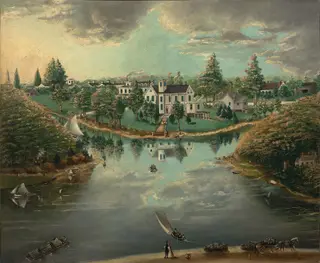 Judd House, Southold, Long Island
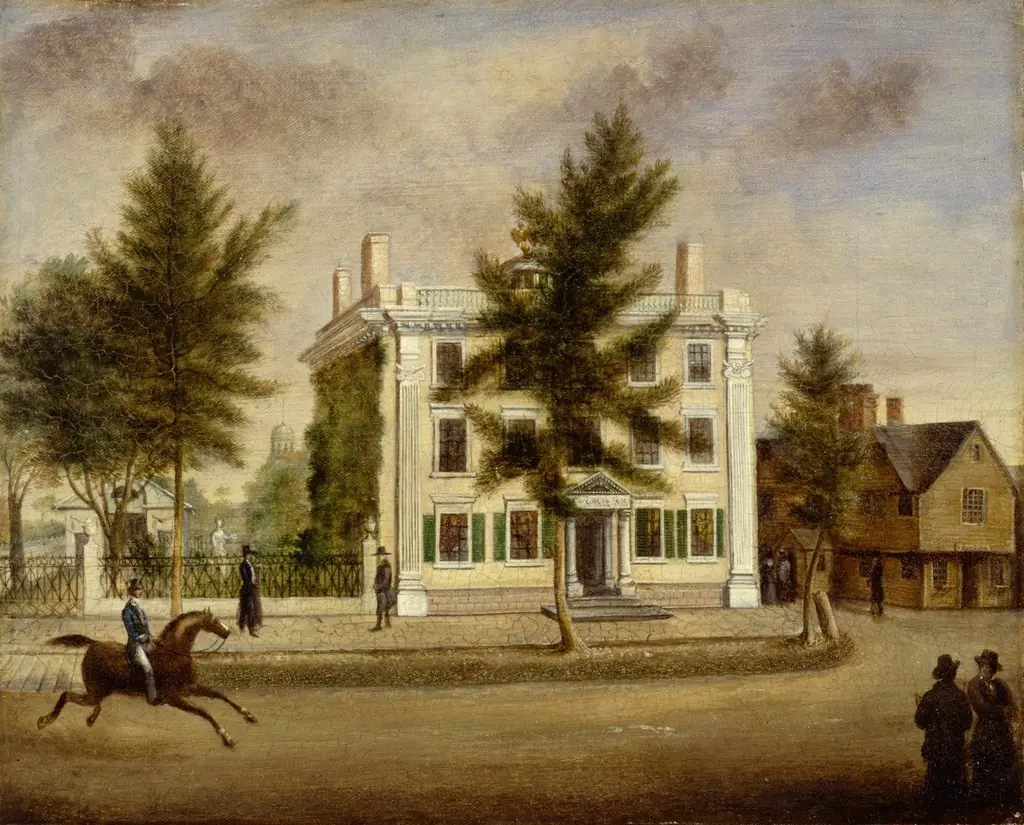 Pickman-Derby House, 70 Washington Street, Salem, Massachusetts
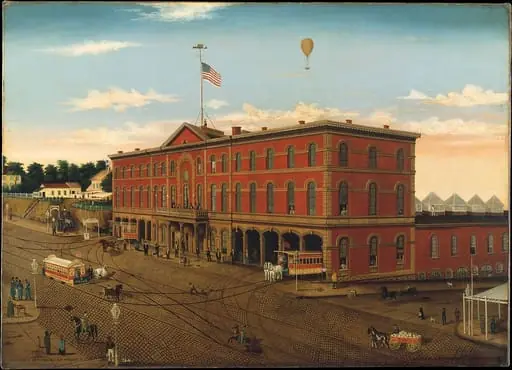 The Third Avenue Railroad Depot
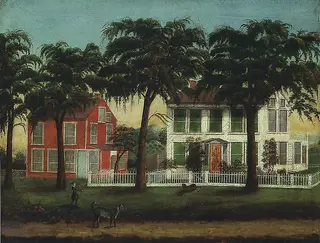 Houses on the Fox River, Illinois
 Hudson House
 The seven sisters of Tottenham
 Castine, Maine
 Geese in Flight