Artwork
Worship of Lord Jagannatha in His Temple at Puri
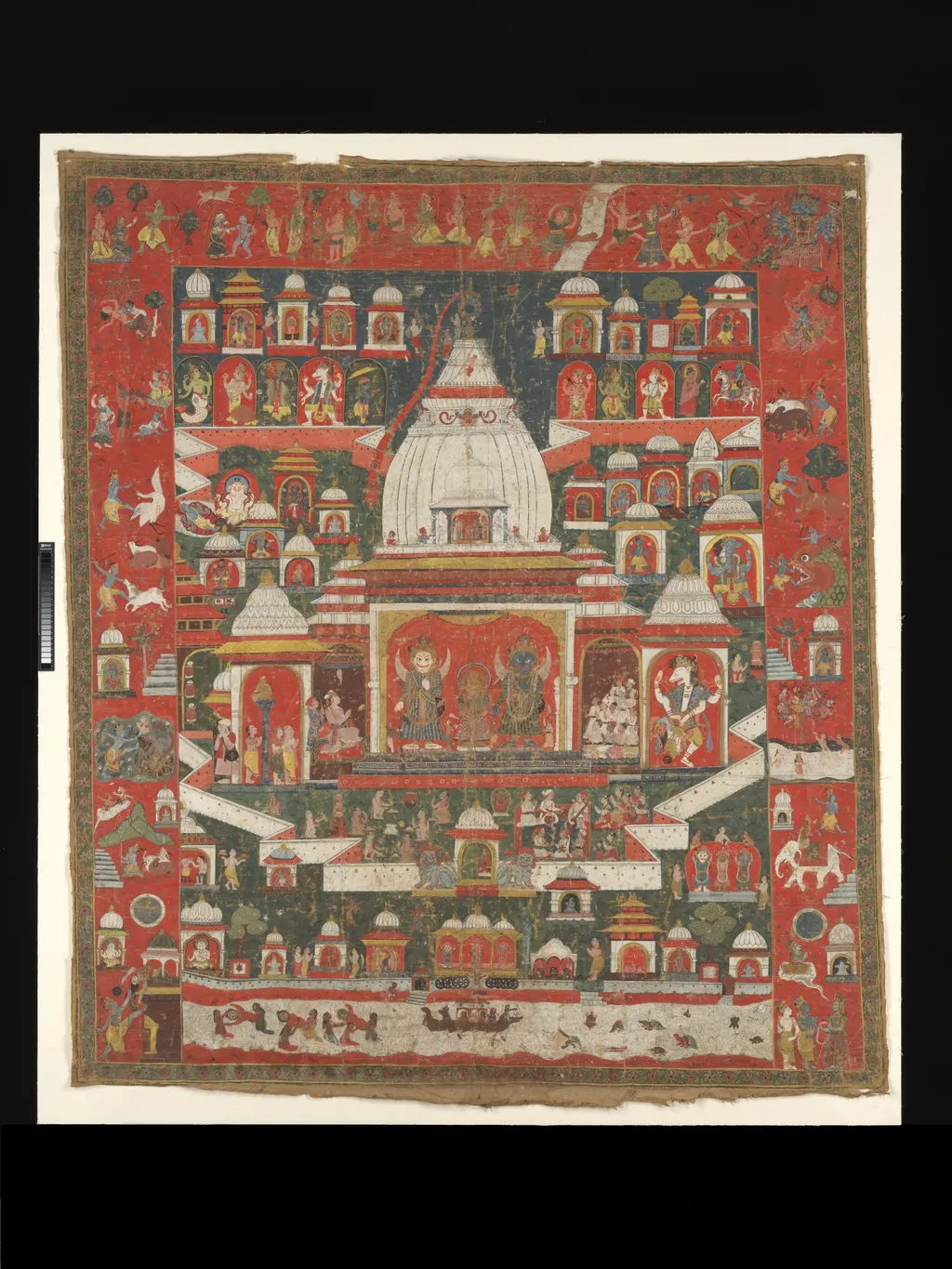
Worship of Lord Jagannatha in His Temple at Puri is an unspecified painting. It dates from 1716 and is held in the collection of the Metropolitan Museum of Art. The work presents a densely populated composition framed by an ornate red and gold border.
About this work
History & Provenance
While the work is attributed to an anonymous artist and dates to 1716, the sources do not provide a specific inventory or accession number for the piece.
The painting titled Worship of Lord Jagannatha in His Temple at Puri was created in 1716. It is attributed to an anonymous artist and was made in Nepal. The work entered the collection of the Metropolitan Museum of Art, where it is currently held.
No further details regarding the original commission, specific patron, or the chain of ownership prior to its acquisition by the museum are provided in the available records.
The painting Worship of Lord Jagannatha in His Temple at Puri is held in the collection of the Metropolitan Museum of Art. While the work is attributed to an anonymous artist and dates to 1716, the sources do not provide a specific inventory or accession number for the piece. The provided records also contain no information regarding a history of exhibitions for this artwork.
Overview
The work presents a densely populated composition framed by an ornate red and gold border. At its heart stands a white, dome‑capped temple surrounded by a cluster of smaller domed and arched structures. A multitude of figures in vivid reds, yellows and greens populate the scene, many engaged in ritual activity, procession or music, while elephants and assorted animals add further movement.
Subject & Meaning
The central focus is the worship of Lord Jagannatha within his principal shrine at Puri, depicted as a bustling devotional gathering. The surrounding figures, priests, pilgrims, musicians and dancers, illustrate the communal nature of the festival, emphasizing the temple’s role as a cultural and spiritual hub for the region.
Technique & Style
Executed in a flat, decorative manner, the painting relies on bold, unmodulated color rather than chiaroscuro or modeling. The figures and architecture are rendered with clear outlines and repetitive patterns, producing a narrative quality reminiscent of illuminated manuscripts or storybooks rather than a naturalistic representation.
Context
The composition reflects traditional Indian courtly and religious art, where crowded scenes are organized into orderly rows to convey both the grandeur of the ceremony and the hierarchical structure of participants. The use of a richly colored frame underscores the ceremonial importance of the subject.
Legacy
By encapsulating a major pilgrimage event in a single, highly stylized image, the work serves as a visual record of ritual practice and artistic conventions of its period, offering scholars insight into the visual language used to celebrate and document Hindu festivals.
Artist & collection

 Legend of Vasudhara (Ashvaghosha Avadana)
 Shaiva Shrines in a Landscape
 Mandala of Vishnu
 Untitled
 Genealogical Painting
 Three Mandalas
 Untitled
 Painted Banner (Thangka) of the Avalokiteshvara Incarnation of the Rain God Rato Matsyendranatha
 Commemoration Thangka for Bhimaratha Rite
 Painted Banner (paubha) of Goddess Ushnishavijaya Within a Funerary Mound (chaitya) and Surrounded by Chaityas