Artwork
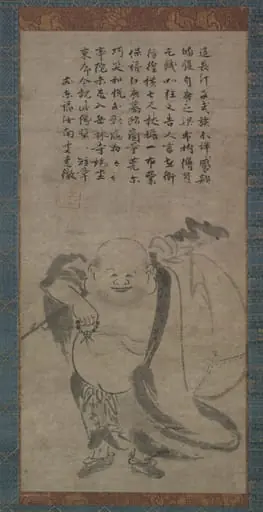
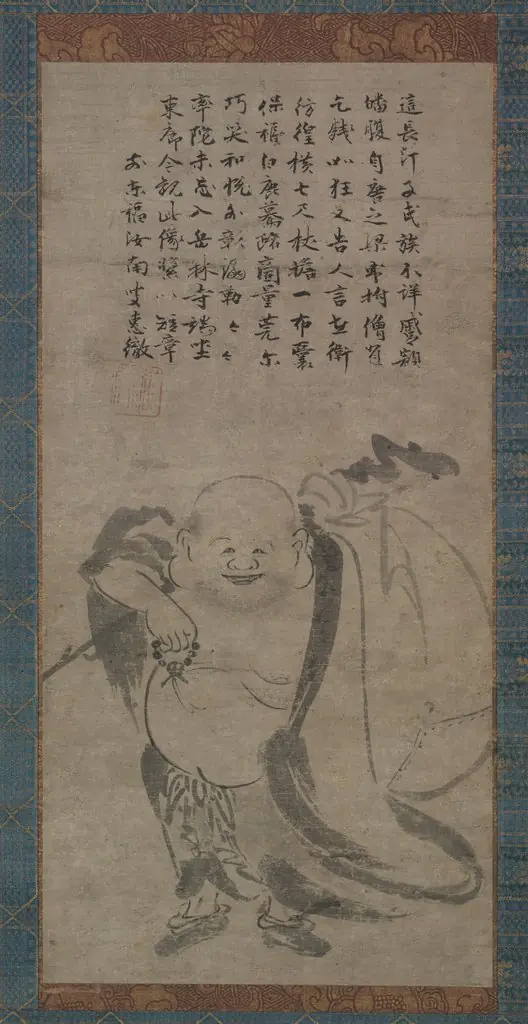
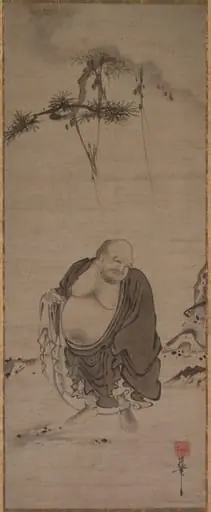
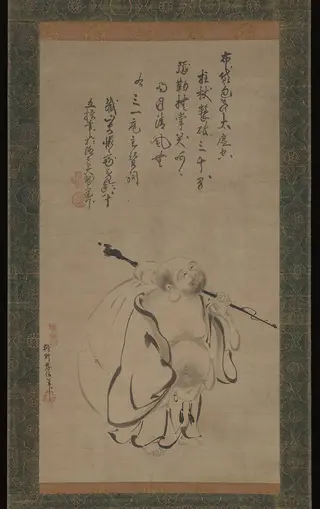
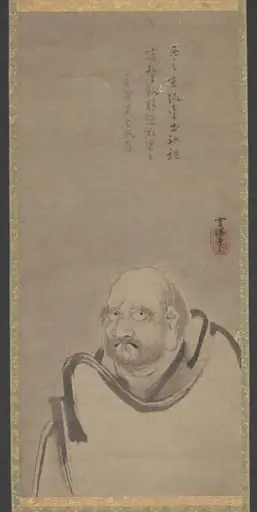
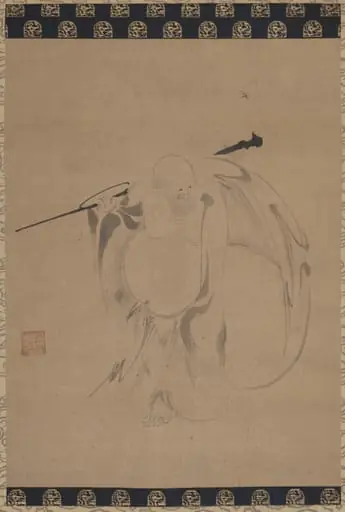
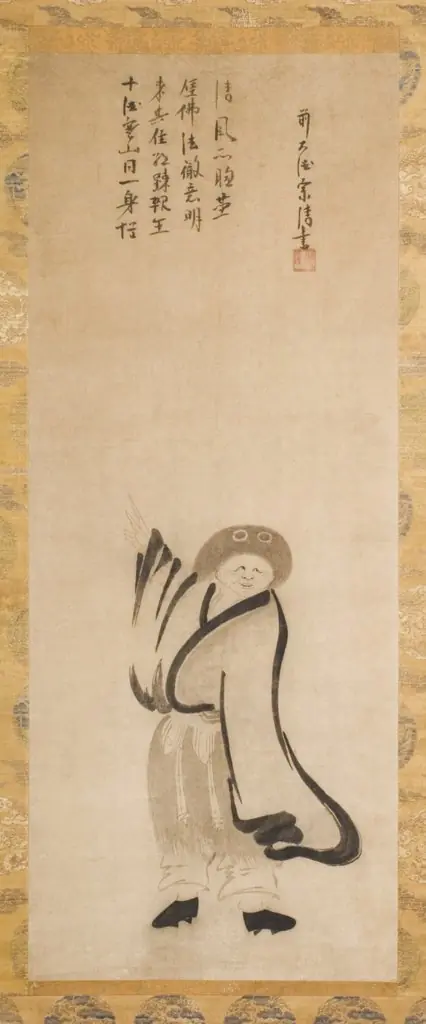
Kanzan Holding a Scroll
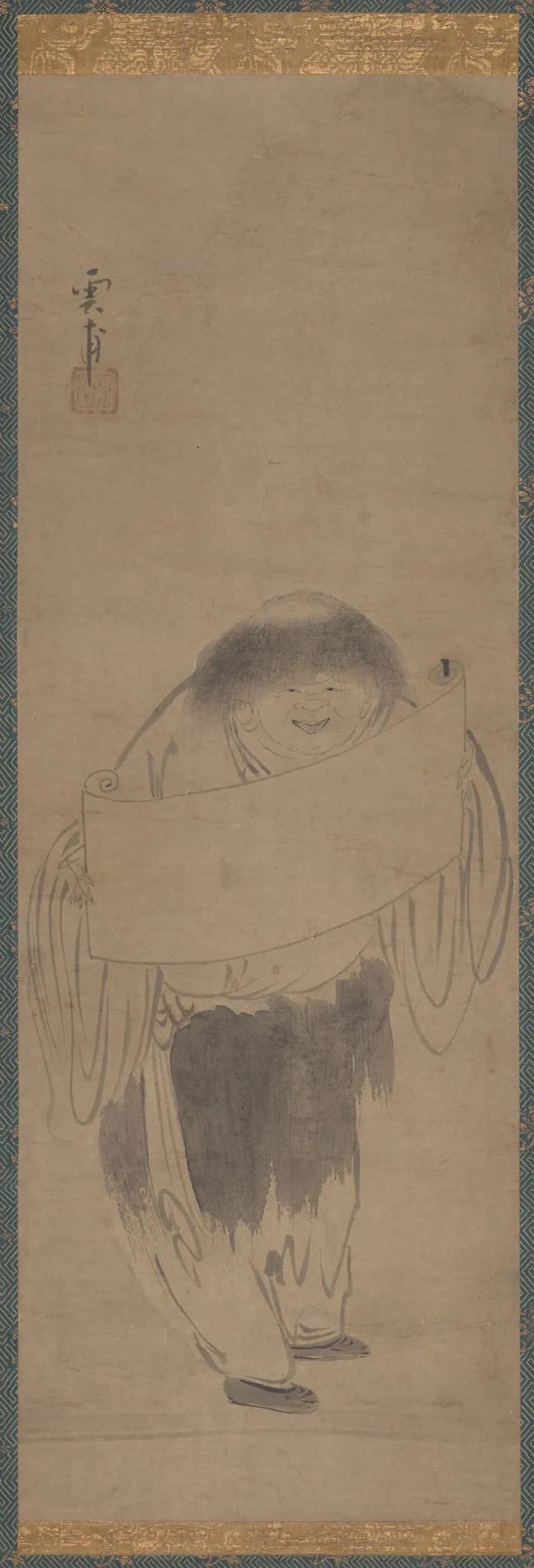
Kanzan Holding a Scroll is an unspecified painting by the Joseon dynasty painting artist Unpo Shūkū. It dates from 1404 and is held in the collection of the Cleveland Museum of Art. Created around 1404, this small hanging scroll portrays a solitary figure in a moment of quiet reflection.
- Accession no.
- 2015.499
- Credit line
- Gift from the Collection of George Gund III
About this work
Overview
Created around 1404, this small hanging scroll portrays a solitary figure in a moment of quiet reflection. The work is attributed to the Japanese painter Unpo Shūkū and is part of the collection of the Cleveland Museum of Art. Its muted palette and restrained composition convey a serene atmosphere that invites close viewing.
Subject & Meaning
The central figure is a man in traditional court attire, head slightly bowed, holding an unrolled scroll that hints at written text. His gentle smile and calm demeanor suggest contemplation, perhaps of the contents of the scroll or a broader philosophical meditation. The piece emphasizes personal introspection rather than narrative action.
Technique & Style
Executed in ink and color on silk, the painting employs delicate brushwork to render the folds of the robe and the subtle texture of the background, a light brown wash that creates depth without distraction. The artist’s restrained line quality and restrained use of pigment are characteristic of early 15th‑century Japanese court painting.
History & Provenance
Attributed to Unpo Shūkū, an active painter in the early 1400s, the scroll entered the Cleveland Museum of Art’s collection through a 20th‑century acquisition, though earlier ownership records are sparse. Its survival in good condition provides a rare example of Shūkū’s portraiture, which is otherwise poorly documented.
Context
The work belongs to a period when Japanese court painters emphasized refined elegance and scholarly pursuits. Portraits of literati or officials holding scrolls were common visual motifs, symbolizing learning and moral cultivation. This piece reflects those cultural values, aligning with the aesthetic ideals of the Muromachi court.
Artist & collection