Artwork
狩野孝信筆 布袋図「拄杖擊破三千界。彌勒撫掌笑呵呵,明月清風無。」|Hotei
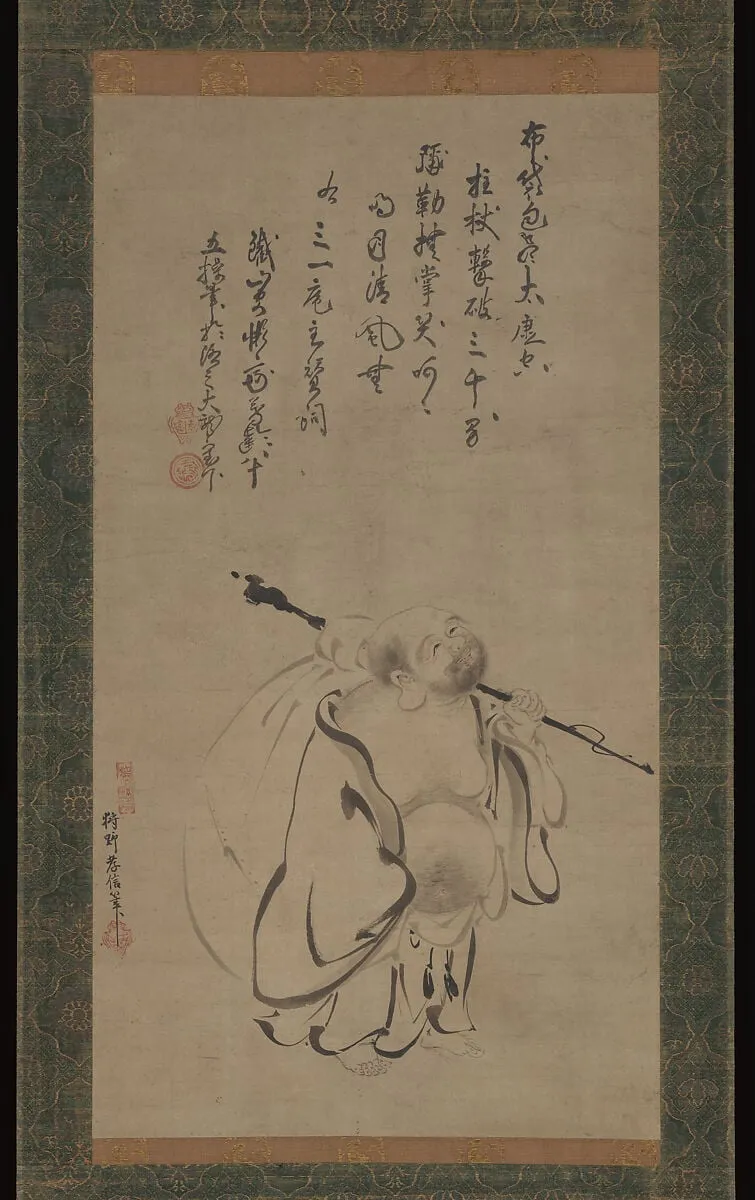
狩野孝信筆 布袋図「拄杖擊破三千界。彌勒撫掌笑呵呵,明月清風無。」|Hotei is an ink painting by the Baroque artist Kano Takanobu. It dates from 1616 and is held in the collection of the Metropolitan Museum of Art.
- Accession no.
- 2006.115
- Credit line
- Funds from various donors, 2006
About this work
He’s surrounded by a few quick brushstrokes, mountains, a moon, and a scrap of poetry in the corner.
A chubby, laughing monk leans on a tall staff, his belly spilling over his robe. He’s surrounded by a few quick brushstrokes, mountains, a moon, and a scrap of poetry in the corner.
This monk is Hotei, the Japanese god of happiness. The poem jokes that his staff can smash the whole world, but he just laughs. The painting was made in 1616, when Zen Buddhism was spreading in Japan. Artists often used humor like this to teach ideas.
If you like this, look up Zen ink painting.
Subject & Meaning
Created in 1616 by Kano Takanobu, this hanging scroll depicts a solitary male figure identified as Hotei. The work is classified within the religious genre, utilizing ink and color on paper to render the subject. The artwork's title includes a poetic inscription referencing Maitreya and the destruction of worldly realms with a staff. The piece serves as a representation of this religious figure within the context of Japanese painting.
Technique & Style
Created in 1616 by Kano Takanobu, this hanging scroll is executed in ink and color on paper. The work depicts a male figure, identified as Hotei, within a religious genre context. As a painting from early 17th-century Japan, the piece utilizes the traditional combination of ink and pigment applied to a paper support, characteristic of the Kano school's output during this period. The medium and format reflect the standard practices for devotional or decorative hanging scrolls of the era.
History & Provenance
The painting was created in 1616 by Kanō Takanobu as a hanging scroll executed in ink and color on paper, produced in Japan. It is held in the collection of the Metropolitan Museum of Art, where it remains located. The sources do not provide further detail on an earlier ownership chain, a specific commission, or intermediate custody prior to its accession by the museum.
Context
Kanō Takanobu’s Hotei (1616) occupies a pivotal place within the Kanō school’s late-Momoyama output, reflecting the atelier’s synthesis of Chinese scholarly themes with Japanese decorative grandeur. Scholars such as Yamane Yūzō situate the scroll within Takanobu’s mature period, when he balanced the school’s official commissions for the Tokugawa shogunate with more intimate, ink-based works that engaged Zen Buddhist iconography. The inscription, evoking the irreverent spontaneity of the Chan patriarch Hotei, aligns the painting with Muromachi-era precedents, yet Takanobu’s controlled brushwork and restrained palette signal the Kanō school’s evolving response to the political stability of the early Edo period.
Critical reception has emphasized the work’s dual identity: a devotional image for elite patrons and a meditation on artistic lineage. The Metropolitan Museum of Art’s acquisition underscores its recognition as a key example of early 17th-century Japanese ink painting, bridging the gap between the Kanō school’s institutional dominance and individual expression.
Overview
Kano Takanobu's "Hotei," created in 1616, is an ink and color painting on a hanging scroll. It portrays Hotei, a revered figure in Japanese culture often associated with happiness and good fortune. This work exemplifies the artist's engagement with religious subjects, presenting a playful yet profound image that reflects the spiritual currents of its time.
Artist & collection

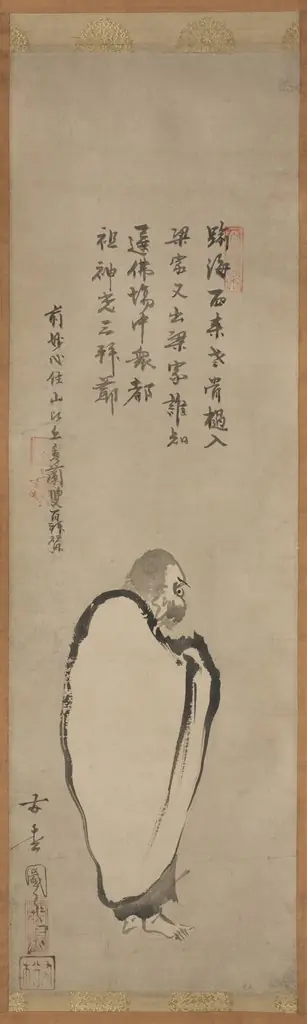 Figure of Daruma
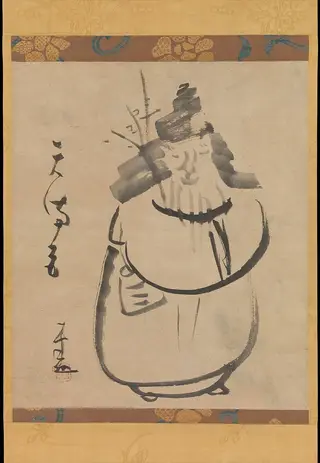 「天満宮」 渡唐天神図|“Tenmangū,” Sugawara no Michizane as Tenjin Traveling to China
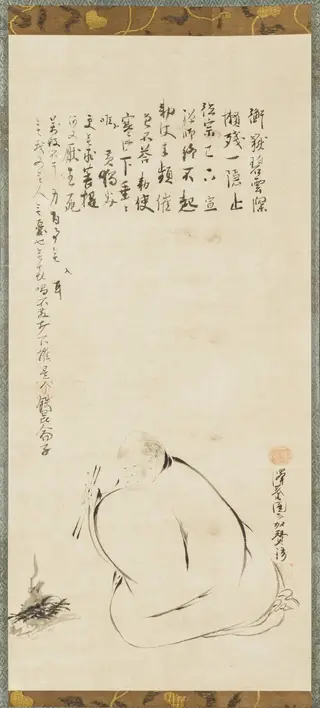 Monk Raisan
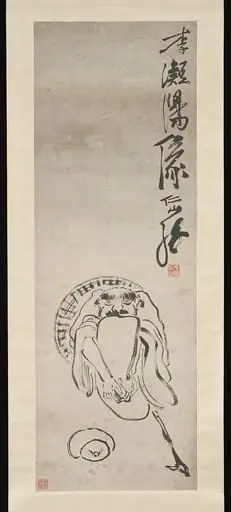 清 蘇仁山 李凝陽像 軸|The Immortal Li Tieguai
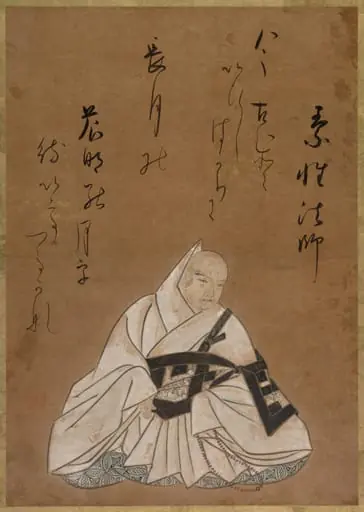 The Poet Sōsei
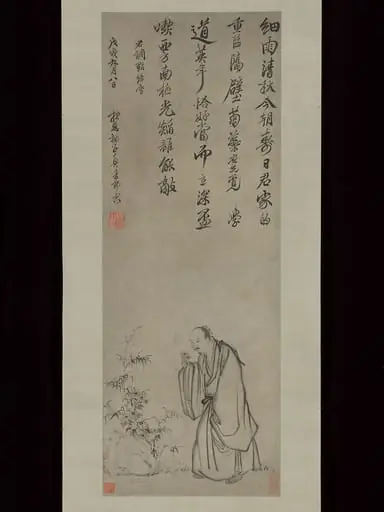 清 佚名 仿張風 摘菊圖 軸|Plucking Chrysanthemums
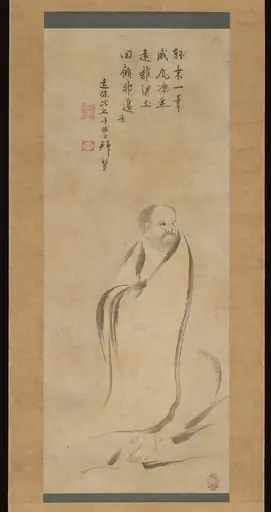 芦葉達磨図 (Royō Daruma zu)|Bodhidharma Crossing the Yangzi River on a Reed
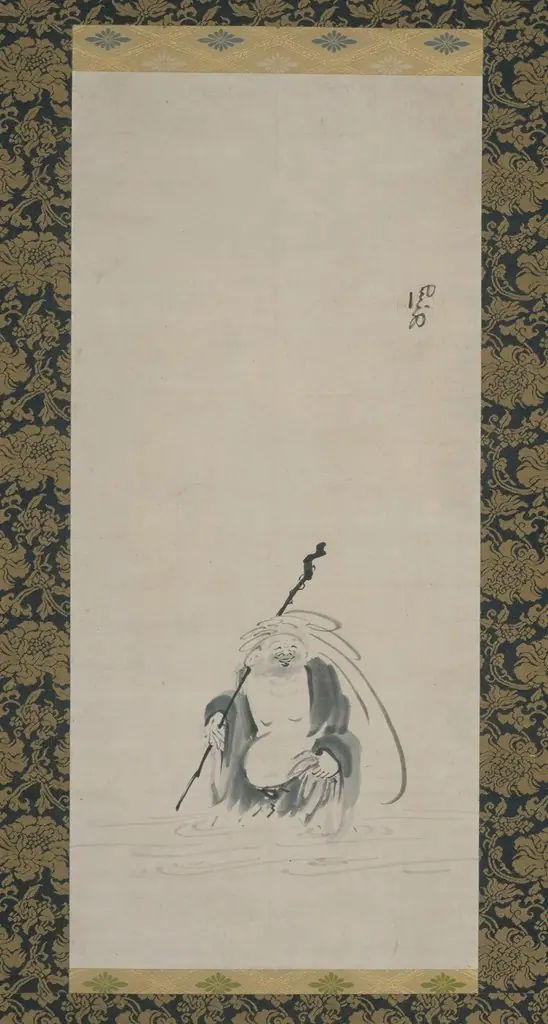 Hotei Crossing a Stream
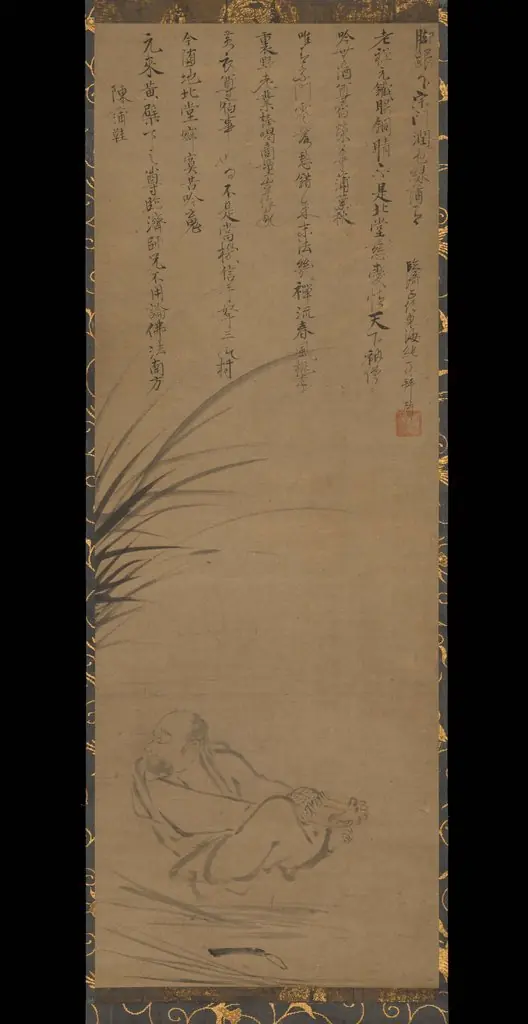 Inscription on the anonymous painting of Chen Puxie
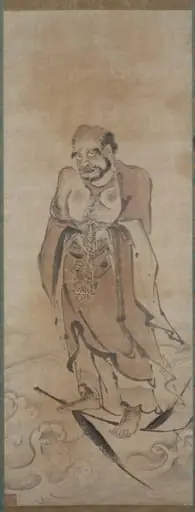 Bodhidharma on a Reed
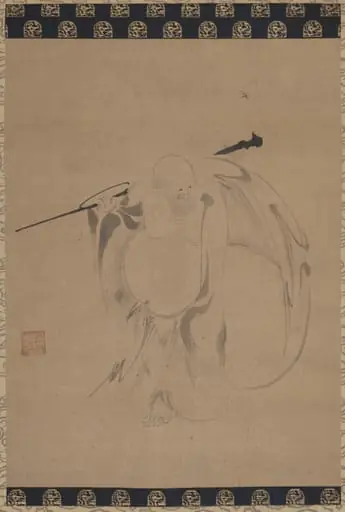 Hotei
Hotei- 布袋図 (Hotei zu)|Hotei