Artwork
歌川広重画 東海道 十九 五十三次 江尻|Ejiri, Number 19, from the series Fifty-Three Stations of the Tōkaidō Road (Tōkaidō gojūsan tsugi), also known as the Clerical Script Tōkaidō (Reisho Tōkaidō)
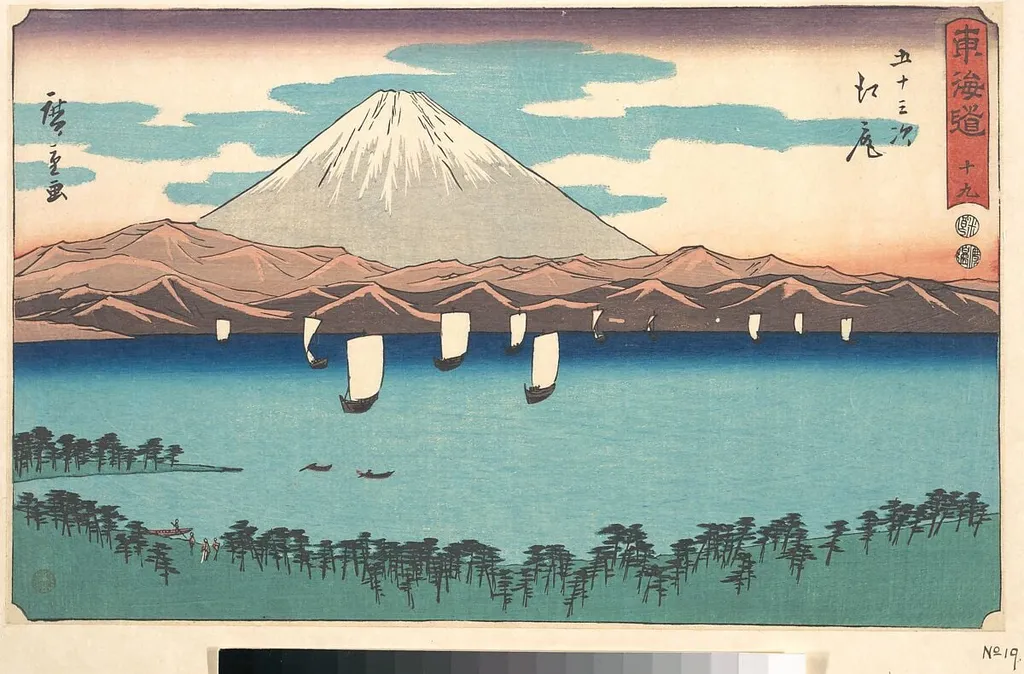
歌川広重画 東海道 十九 五十三次 江尻|Ejiri, Number 19, from the series Fifty-Three Stations of the Tōkaidō Road (Tōkaidō gojūsan tsugi), also known as the Clerical Script Tōkaidō (Reisho Tōkaidō) is an ink print by the Romanticist artist Utagawa Hiroshige. It dates from 1850 and is held in the collection of the Metropolitan Museum of Art.
About this work
Overview
Created circa 1850 by Utagawa Hiroshige, this woodblock print is the nineteenth image in his series documenting the fifty‑three post stations along the Tōkaidō, the historic coastal highway linking Edo and Kyoto. The work portrays the Ejiri station, a seaside stop that Hiroshige rendered with his characteristic emphasis on atmosphere and travel.
Subject & Meaning
The scene presents a tranquil bay where small vessels glide toward a distant, snow‑capped mountain. Dark green pines line the shore, while a few diminutive figures walk or row, suggesting ordinary travelers pausing on their journey. The composition balances the serenity of water with the looming presence of nature, evoking the fleeting moments encountered along the road.
Technique & Style
Executed in the ukiyo‑e woodblock method, the print relies on clean, precise lines and a limited palette of bright blues, greens, and warm earth tones. Hiroshige’s use of subtle gradations in sky and water creates a sense of stillness, while the contrast between the white sails and the snowy peak highlights depth without excessive detail.
History & Provenance
Part of the “Clerical Script Tōkaidō” (Reisho Tōkaidō) edition, the series was published in the early 1850s for a growing market of travelers and collectors. Original impressions were produced in Edo and later circulated among Western collectors during the late 19th‑century Japonisme wave, entering museum collections worldwide.
Context
During the late Edo period, the Tōkaidō road was a vital artery for commerce and communication. Hiroshige’s series offered a visual itinerary, combining topographical accuracy with poetic mood, and stood apart from contemporaneous ukiyo‑e that favored urban pleasure districts.
Legacy
Hiroshige’s Ejiri print exemplifies his influence on landscape representation, informing later Western artists such as the Impressionists. Its compositional economy and atmospheric focus continue to be studied as a benchmark of mid‑19th‑century Japanese printmaking.
Artist & collection
Artist
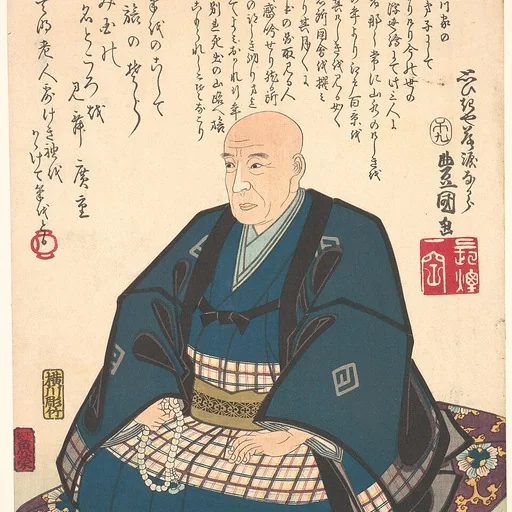
Utagawa Hiroshige (歌川 広重) or Andō Hiroshige (安藤 広重), born Andō Tokutarō (安藤 徳太郎; 1797 – 12 October 1858), was a Japanese ukiyo-e artist, considered the last great master of that tradition.

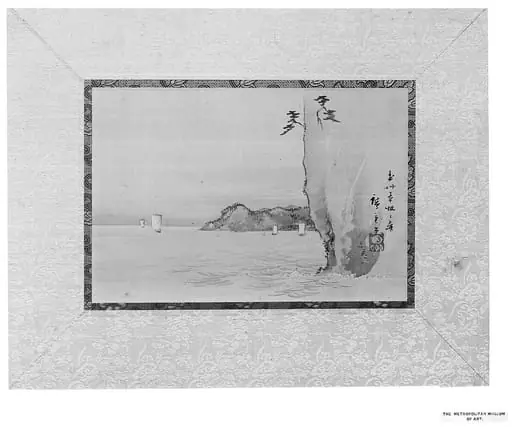
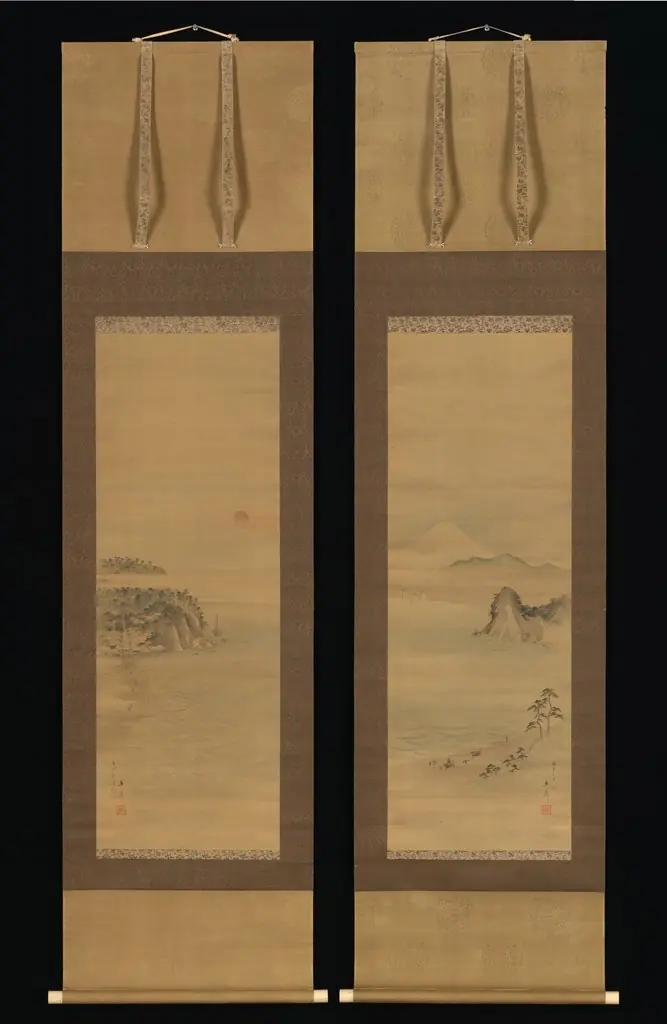
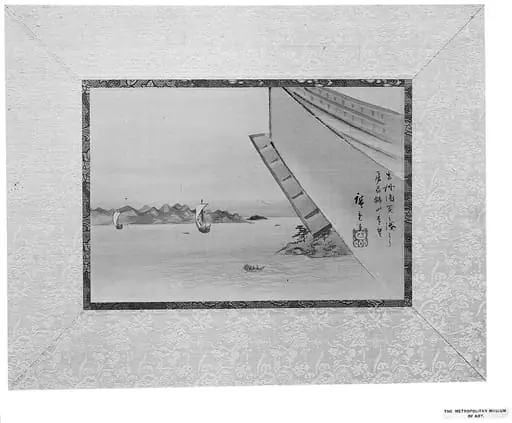
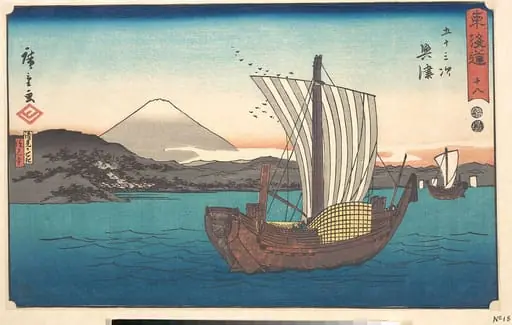 東海道五十三次 奥津 清見かせき 清見寺|Okitsu
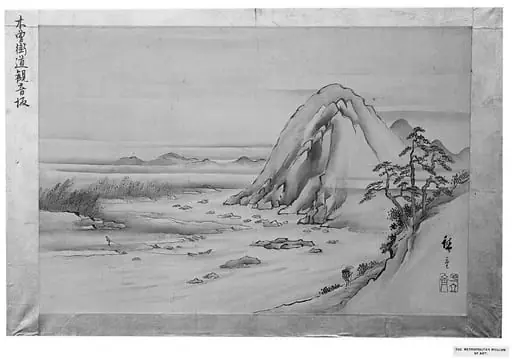
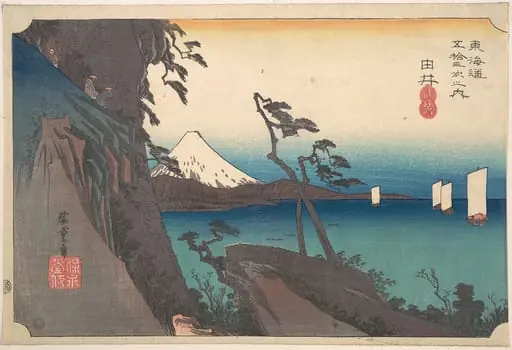 東海道五十三次之内 由井 薩埵嶺|Satta Peak at Yui
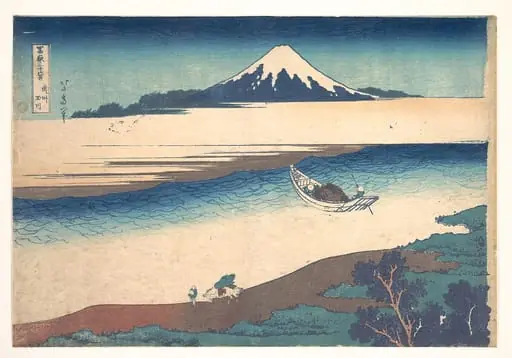 冨嶽三十六景 武州玉川|Tama River in Musashi Province (Bushū Tamagawa), from the series Thirty-six Views of Mount Fuji (Fugaku sanjūrokkei)
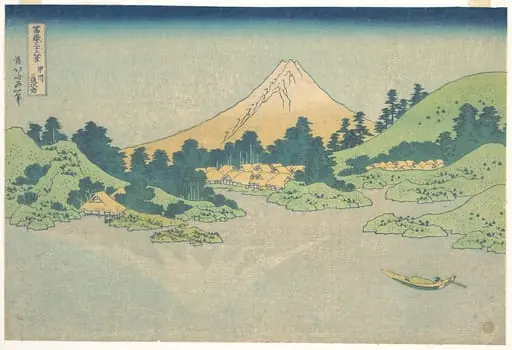 冨嶽三十六景 甲州三坂水面|Reflection in Lake at Misaka in Kai Province (Kōshū Misaka suimen), from the series Thirty-six Views of Mount Fuji (Fugaku sanjūrokkei)
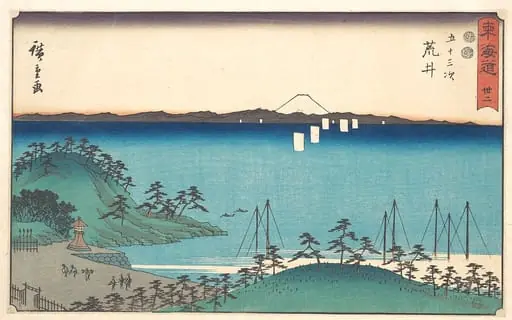 東海道五十三次 荒井|Arai
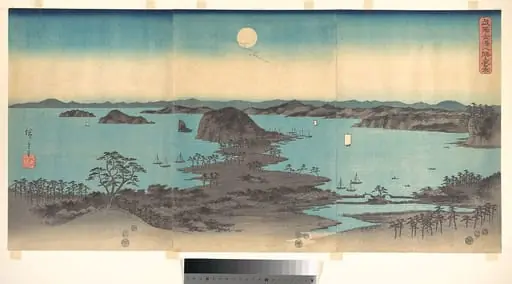 奥村 政信画 浮絵 「紋尽名古屋曽我」|Full Moon at Kanazawa, Province of Musashi
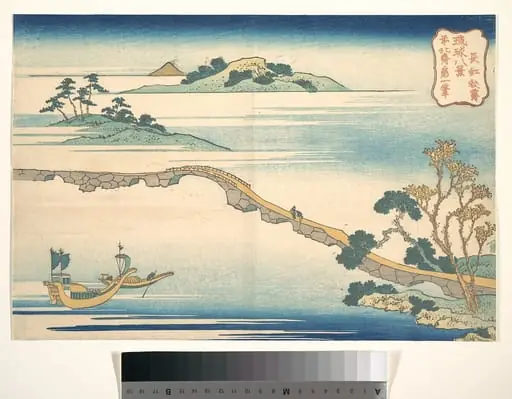 琉球八景 長虹秋霽|Autumn Sky at Chōkō (Chōkō shūsei), from the series Eight Views of the Ryūkyū Islands (Ryūkyū hakkei)
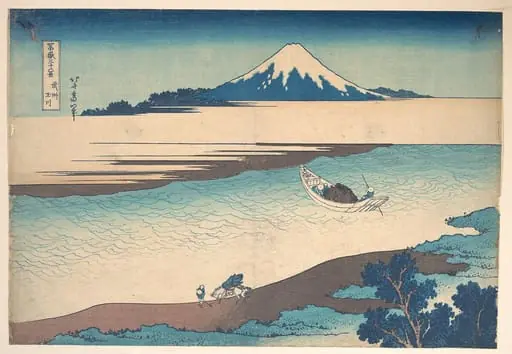 冨嶽三十六景 武州玉川|Fuji—The Tama River, Musashi Province, from the series Thirty-six Views of Mount Fuji (Fugaku sanjūrokkei)