Artwork
名所江戸百景 王子装束えの木大晦日の狐火|Foxes Meeting at Oji
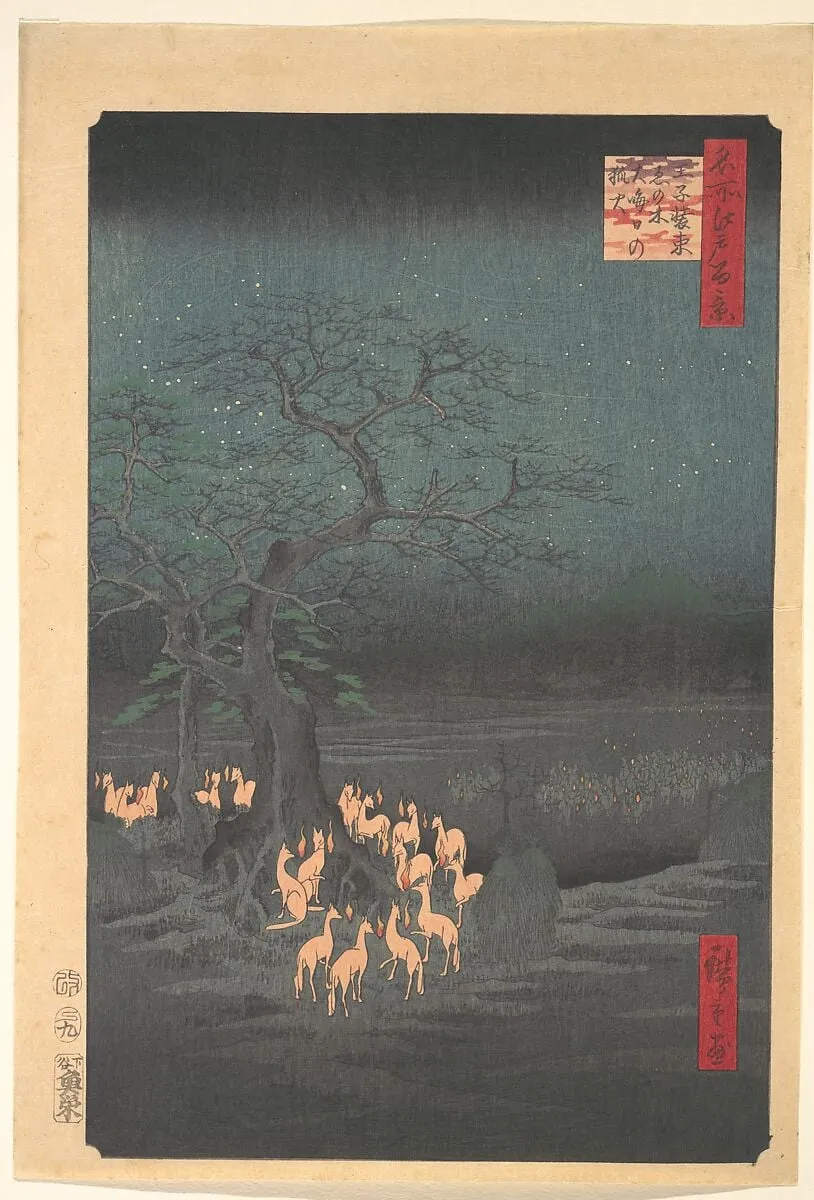
名所江戸百景 王子装束えの木大晦日の狐火|Foxes Meeting at Oji is an ink print by the Impressionist artist Utagawa Hiroshige. It dates from 1857 and is held in the collection of the Metropolitan Museum of Art.
About this work
Overview
Utagawa Hiroshige’s 1857 woodblock print “Foxes Meeting at Oji” belongs to his series One Hundred Famous Views of Edo. Executed in ink and color on paper, the image portrays a winter night scene in which a stark, leaf‑less tree dominates the foreground while a group of foxes gathers nearby, their forms illuminated by the legendary fox fire.
Subject & Meaning
The composition centers on the folkloric phenomenon of kitsune‑bi, the mysterious lights said to be produced by foxes in Japanese legend. By placing the animals around a solitary tree against a muted, nocturnal landscape, Hiroshige evokes the eerie, otherworldly atmosphere associated with these supernatural encounters.
Technique & Style
Hiroshige employs the ukiyo‑e woodblock method, using fine line work to render the tree’s skeletal branches and softer washes for the night sky and water. The palette is restrained, dominated by cool blues and grays, while subtle color accents highlight the foxes and suggest flickering firelight.
History & Provenance
Created during the late Edo period, the print reflects a shift from the genre’s typical focus on urban leisure to more atmospheric, seasonal subjects. It entered the collection of The Metropolitan Museum of Art, where it remains part of the museum’s Japanese prints holdings.
Context
While most prints in the One Hundred Famous Views of Edo depict recognizable cityscapes and popular districts, this piece stands out for its emphasis on a mythic rural scene. It illustrates the broader Edo‑era interest in seasonal change and supernatural folklore, integrating them into a visual record of the capital’s environs.
Artist & collection
Artist
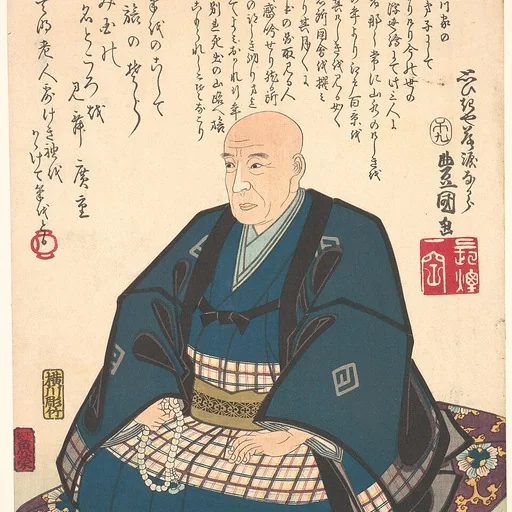
Utagawa Hiroshige (歌川 広重) or Andō Hiroshige (安藤 広重), born Andō Tokutarō (安藤 徳太郎; 1797 – 12 October 1858), was a Japanese ukiyo-e artist, considered the last great master of that tradition.

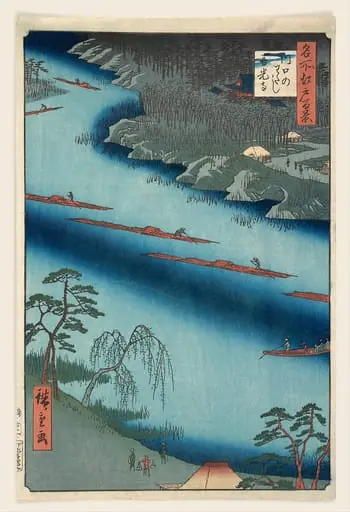 名所江戸百景 川口のわたし善光寺|Kawaguchi
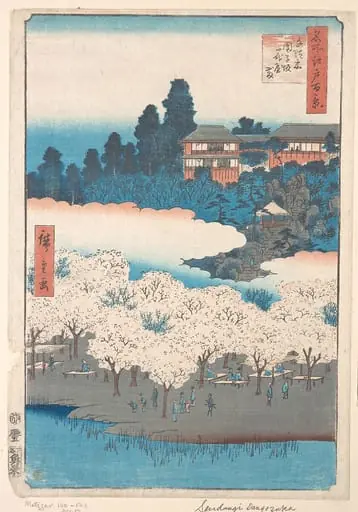 名所江戸百景 千駄木団子坂花屋敷|Sendagi Dangozaka
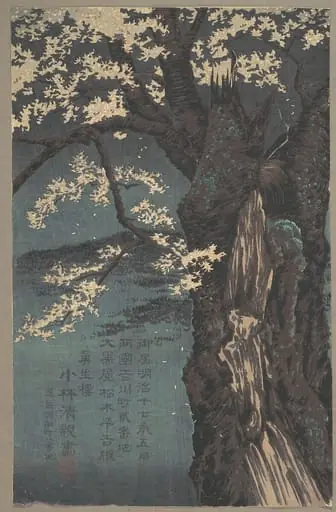 Untitled
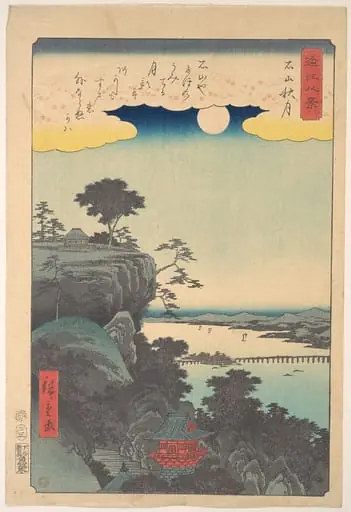 近江八景 石山秋月|The Autumn Moon on Ishiyama
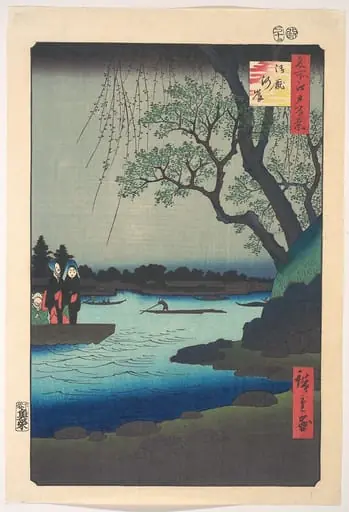 名所江戸百景 御厩河岸|Ommayagashi, Sumida River
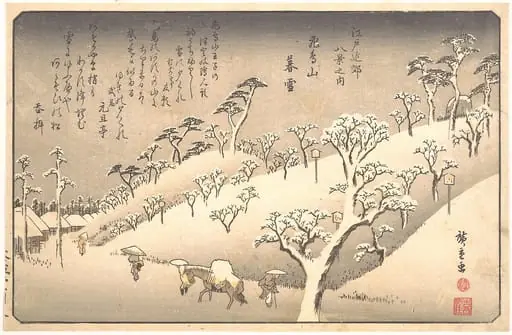 Asukayama Bosetsu|江戸近郊八景之内 飛鳥山暮雪|Asukayama in the Snow at Evening
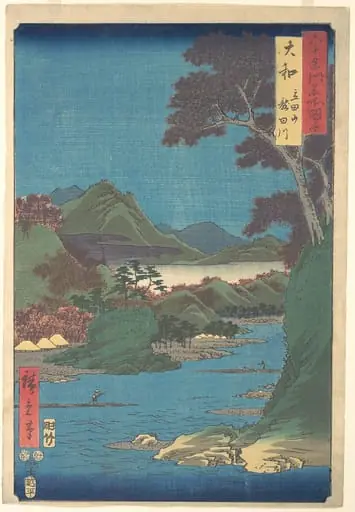 六十余州名所図会 大和 立田山 龍田川|Yamato, Tatsutayama, Tatsutagawa
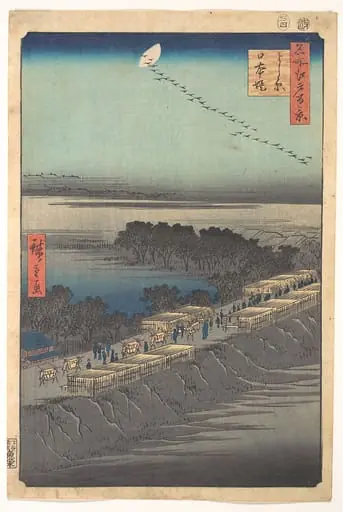 「名所江戸百景 よし原 日本堤」|“Nihon Embankment at Yoshiwara,” from the series One Hundred Famous Views of Edo (Meisho Edo hyakkei, Yoshiwara, Nihonzutsumi)