Artwork
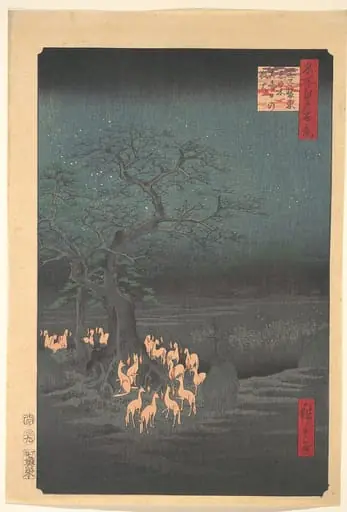
名所江戸百景 王子装束ゑの木大晦日の狐火|Shozokuenoki Tree at Oji: Fox–fires on New Years Eve
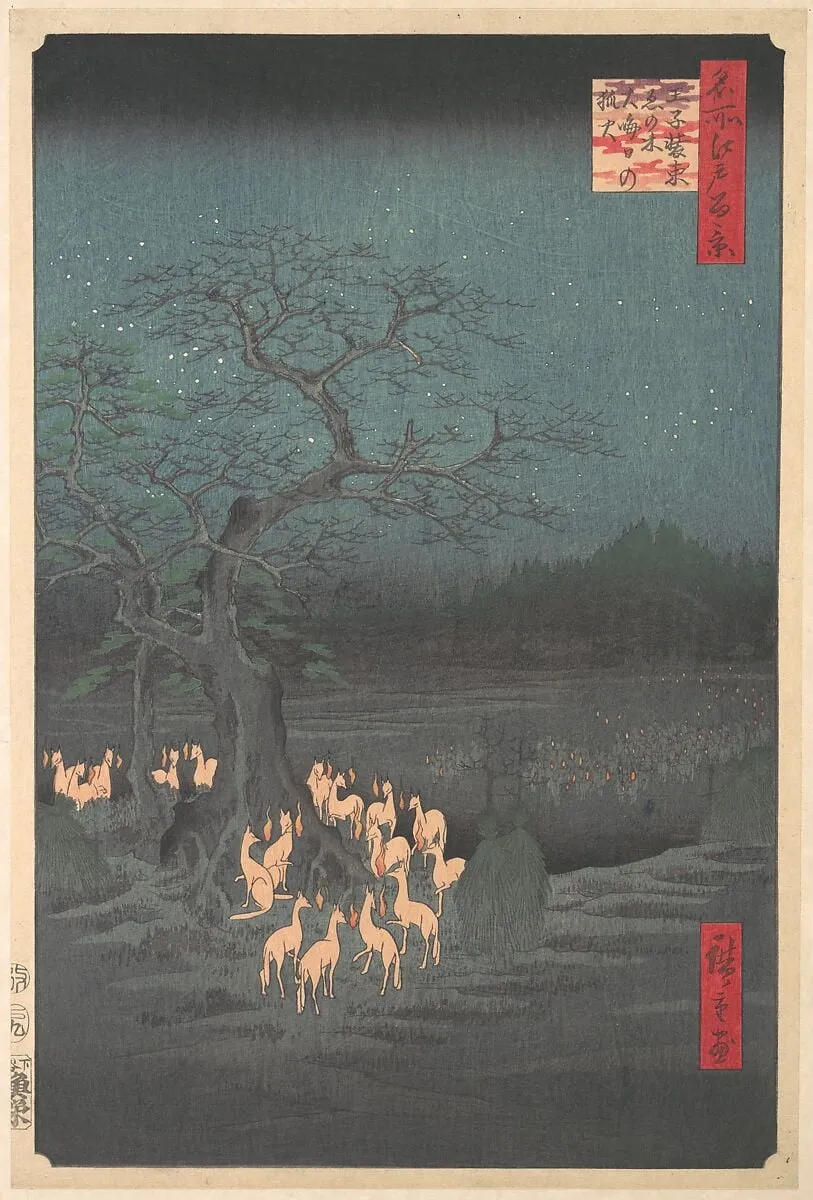
名所江戸百景 王子装束ゑの木大晦日の狐火|Shozokuenoki Tree at Oji: Fox–fires on New Years Eve is an ink print by the Impressionist artist Utagawa Hiroshige. It dates from 1857 and is held in the collection of the Metropolitan Museum of Art.
About this work
Overview
Shozokuenoki Tree at Oji: Fox–fires on New Year’s Eve is a 1857 woodblock print by Utagawa Hiroshige, part of his One Hundred Famous Views of Edo series. The print captures a serene, mythically tinged scene in Oji, Edo (now Tokyo), on New Year’s Eve.
Subject & Meaning
The print features the illuminated Shozokuenoki tree, its bare branches and roots prominently displayed, surrounded by white foxes with glowing tails at its base. The scene blends natural landscape with Japanese folklore, evoking tranquility and wonder. The foxfire, a traditional element, adds a layer of mystique.
Technique & Style
Hiroshige employed woodblock print techniques with ink and color on paper. The composition uses color to create depth and contrast, notably through the foxes’ glowing tails against a dark blue, starry sky, enhancing the magical and calm atmosphere.
History & Provenance
Created in 1857 for One Hundred Famous Views of Edo, this work reflects Hiroshige’s deviation from typical ukiyo-e themes of urban life, instead emphasizing landscape. Part of a larger series, its provenance is tied to the collection and dissemination of this renowned print series.
Context
Within ukiyo-e, Hiroshige’s focus on landscapes was distinctive, differing from the prevalent themes of entertainment and figures. This piece, with its folklore elements, also touches on traditional Japanese cultural narratives.
Legacy
As part of One Hundred Famous Views of Edo, Shozokuenoki Tree at Oji contributes to Hiroshige’s lasting impact on the perception of Edo’s landscapes and the global influence of ukiyo-e on later art movements.
Artist & collection
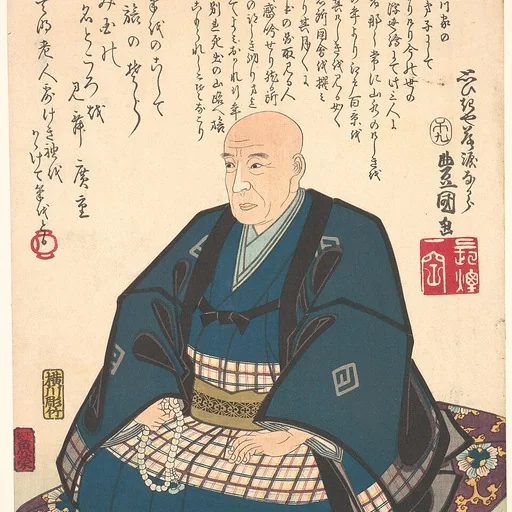
Artist
Utagawa Hiroshige (歌川 広重) or Andō Hiroshige (安藤 広重), born Andō Tokutarō (安藤 徳太郎; 1797 – 12 October 1858), was a Japanese ukiyo-e artist, considered the last great master of that tradition.