Artwork
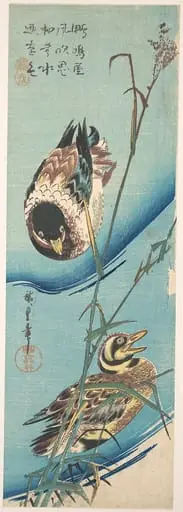
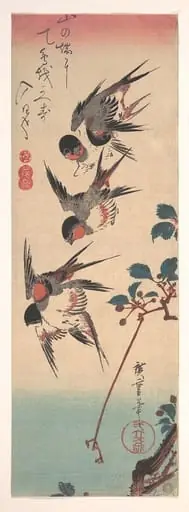
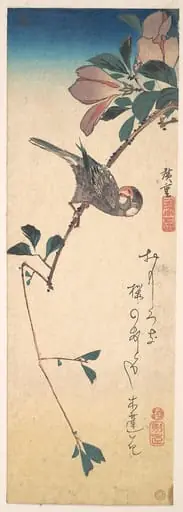
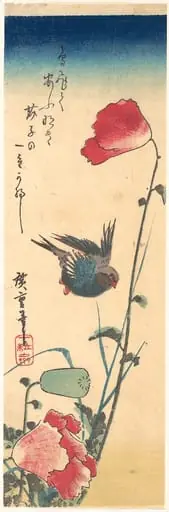
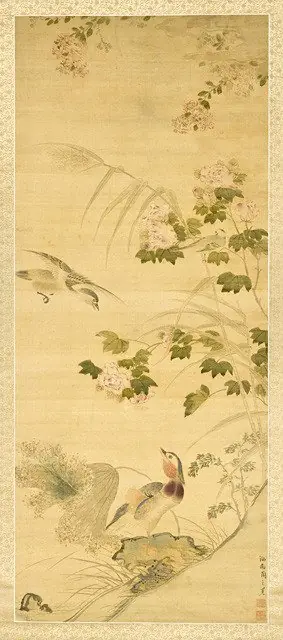
Mandarin Ducks and Flowering Plants
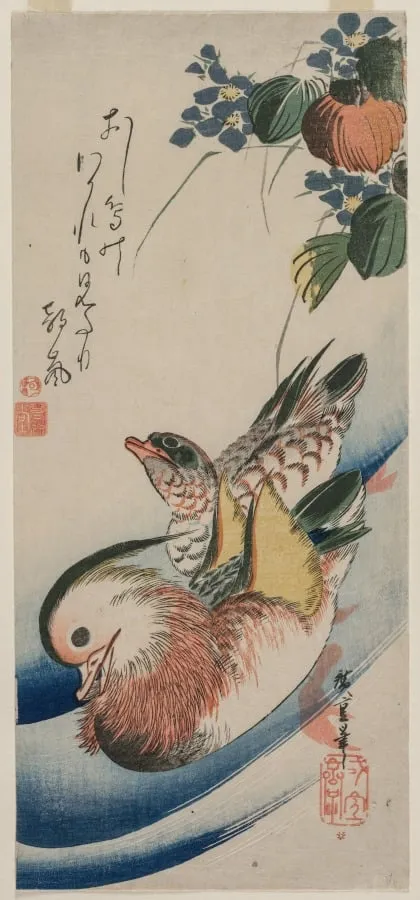
Mandarin Ducks and Flowering Plants is a print by the Romanticist artist Utagawa Hiroshige. It dates from 1834 and is held in the collection of the Cleveland Museum of Art.
- Accession no.
- 1985.314
- Credit line
- The Kelvin Smith Collection, given by Mrs. Kelvin Smith
About this work
The feathers are painted with quick, varied brushstrokes, some dark, some light, giving the bird texture and life.
You see a single mandarin duck standing on one leg among water plants and pink flowers.
In Japanese art, ducks often come in pairs, they mate for life. Here, the duck’s turned head hints at its missing partner. The feathers are painted with quick, varied brushstrokes, some dark, some light, giving the bird texture and life. This kind of picture, called kachōga, was a favorite in Edo-period Japan, especially for collectors.
To see more like this, look up japan, edo period (1615–1868).
Overview
This print, titled Mandarin Ducks and Flowering Plants, features a single mandarin duck standing among water plants and flowers.
Subject & Meaning
The depiction of a duck, often symbolizing fidelity and tranquility in Asian art, is suggestive of a pair due to the bird's turned head, implying the presence of a mate.
Technique & Style
The duck's plumage is rendered through varied brushstrokes and ink tones, conveying texture and vitality. This style is characteristic of kachōga, or bird and flower pictures.
Context
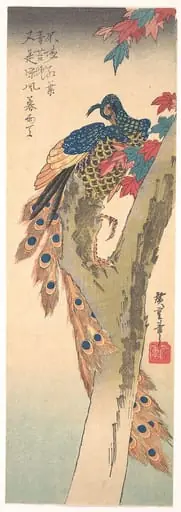
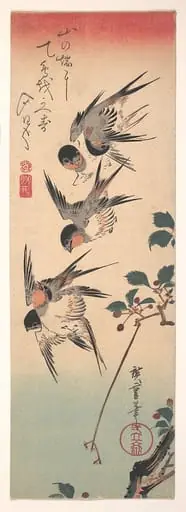
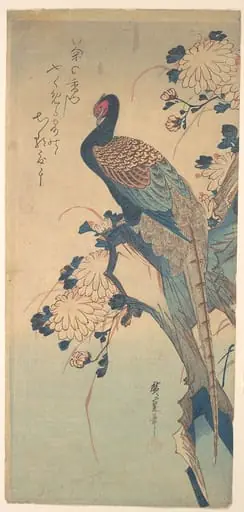
Kachōga was a popular theme among Japanese collectors during the 19th century, with artists like Hiroshige producing notable works in this genre.
Artist & collection
Artist
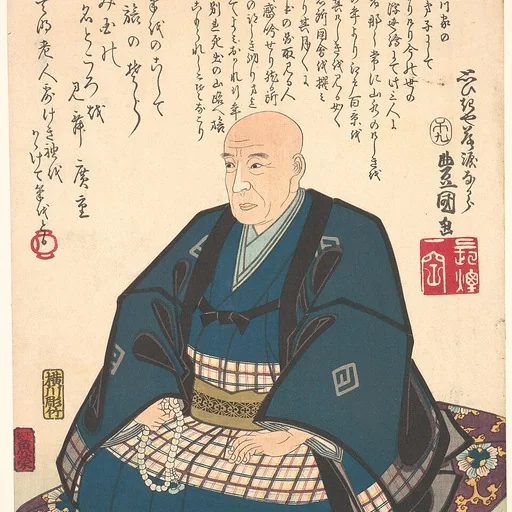
Utagawa Hiroshige (歌川 広重) or Andō Hiroshige (安藤 広重), born Andō Tokutarō (安藤 徳太郎; 1797 – 12 October 1858), was a Japanese ukiyo-e artist, considered the last great master of that tradition.