Artwork
The Fifty-Three Stations of the Tokaido: Chiryu
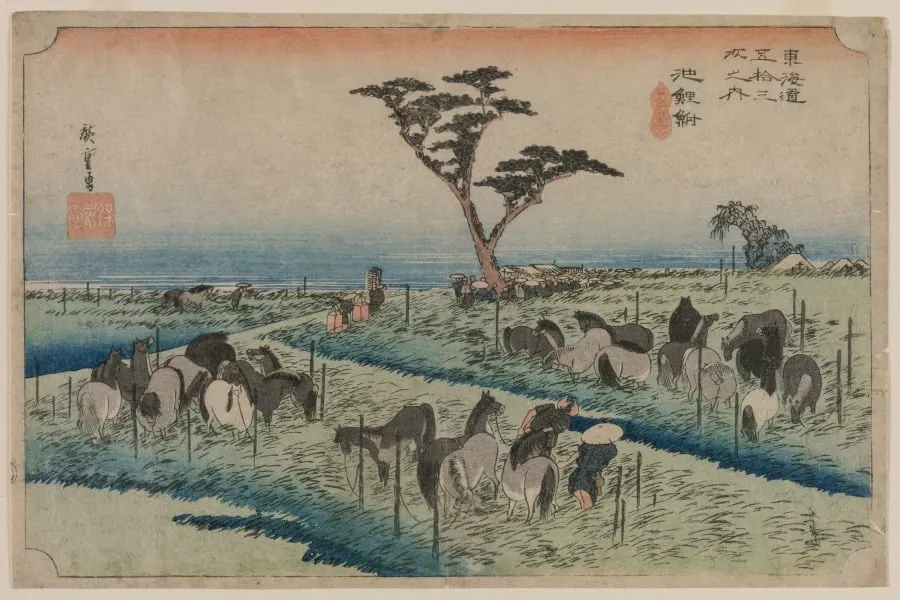
The Fifty-Three Stations of the Tokaido: Chiryu is a print by the Romanticist artist Utagawa Hiroshige. It dates from 1834 and is held in the collection of the Cleveland Museum of Art.
- Accession no.
- 1985.239
About this work
Overview
Created in 1834, this woodblock print is one of the fifty-three images that compose Utagawa Hiroshige’s series documenting the Tōkaidō, the main coastal highway linking Edo and Kyoto. The particular scene portrays the post‑town of Chiryu, a modest stop along the route, and exemplifies Hiroshige’s shift toward landscape subjects during the later Edo period.
Subject & Meaning
The composition centers on a tranquil pasture where a small herd of horses grazes beneath a solitary tree, separated from the background by a low fence. Distant figures and additional horses suggest the routine movement of travelers, emphasizing the ordinary rhythm of life along the road rather than any dramatic event.
Technique & Style
Hiroshige employs flat, unmodulated color fields and precise line work to delineate forms, while subtle gradations of blue and pink in the sky create a sense of atmospheric depth. The use of atmospheric perspective and restrained palette reflects his mature approach to ukiyo‑e landscape, focusing on mood and spatial recession rather than intricate detail.
History & Provenance
The print was produced as part of the larger Tōkaidō series, which quickly became a benchmark for travel imagery in Japanese printmaking. Issued by a Edo‑based publisher, the work circulated among merchants and travelers, contributing to the popular visual record of the highway that persisted throughout the nineteenth century.
Artist & collection
Artist
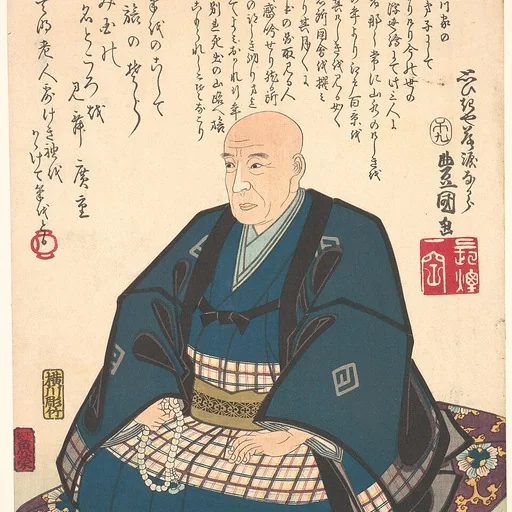
Utagawa Hiroshige (歌川 広重) or Andō Hiroshige (安藤 広重), born Andō Tokutarō (安藤 徳太郎; 1797 – 12 October 1858), was a Japanese ukiyo-e artist, considered the last great master of that tradition.

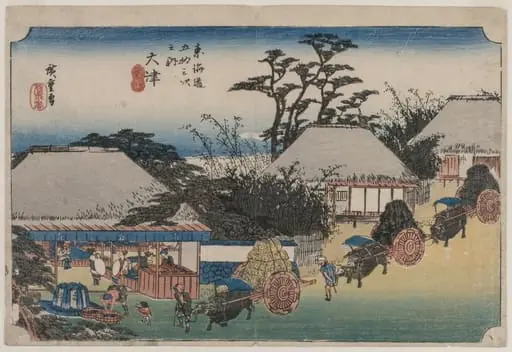
- The Fifty-Three Stations of the Tokaido: Otsu
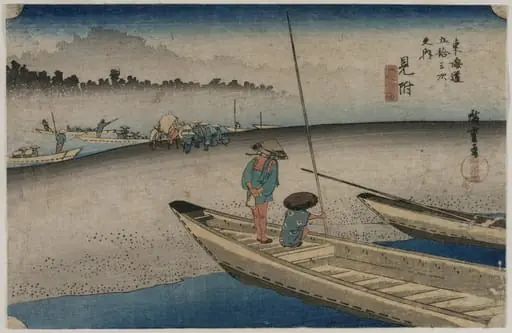 Picture of the Tenryu River near Mitsuke (Station 29), from the series Fifty-Three Stations of the Tokaido
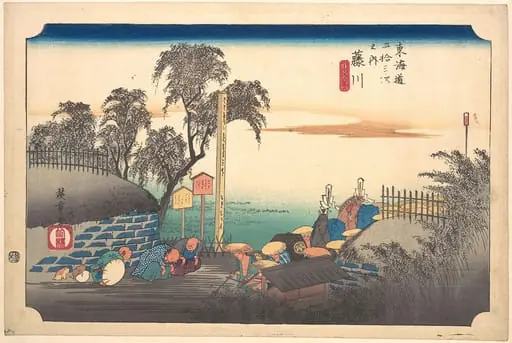 東海道五十三次之内 藤川 棒鼻の図|Station Thirty-Eight: Fujikawa, Scene at the Border, from the Fifty-Three Stations of the Tokaido
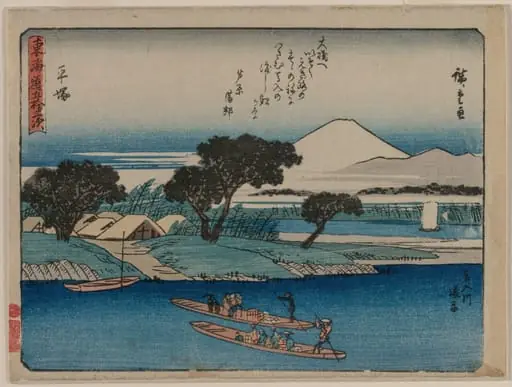 The Fifty-Three Stations of the Tokaido: Hiratsuka
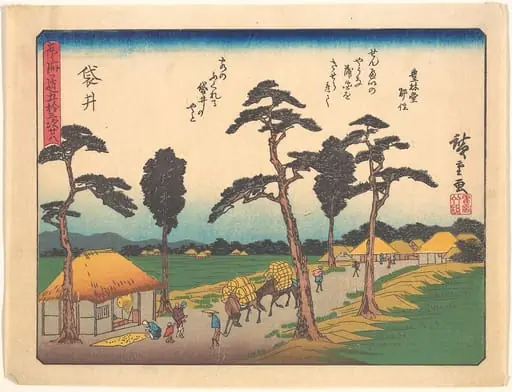 東海道五十三次 袋井|Fukuroi, from the series The Fifty-three Stations of the Tōkaidō Road
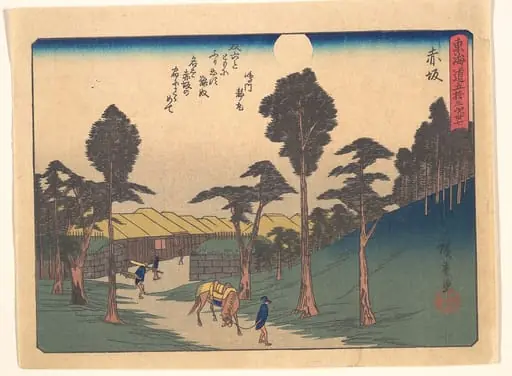 東海道五十三次 赤坂|Akasaka, from the series The Fifty-three Stations of the Tōkaidō Road
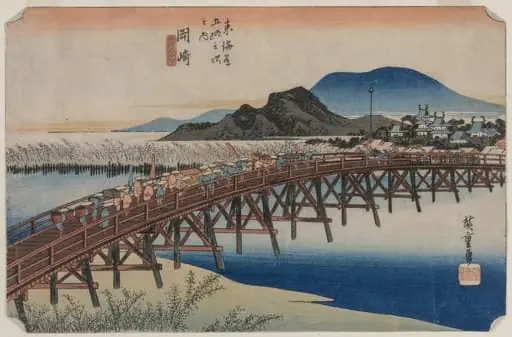 Yahagi Bridge at Okazaki (Station 39), From the series Fifty-Three Stations of the Tokaido