Artwork
Mt. Fuji and Mt. Ashigara from Numazu from the series Vertical Tokaido (or "Famous Places of the Fifty-three Stations of the Tōkaidō")
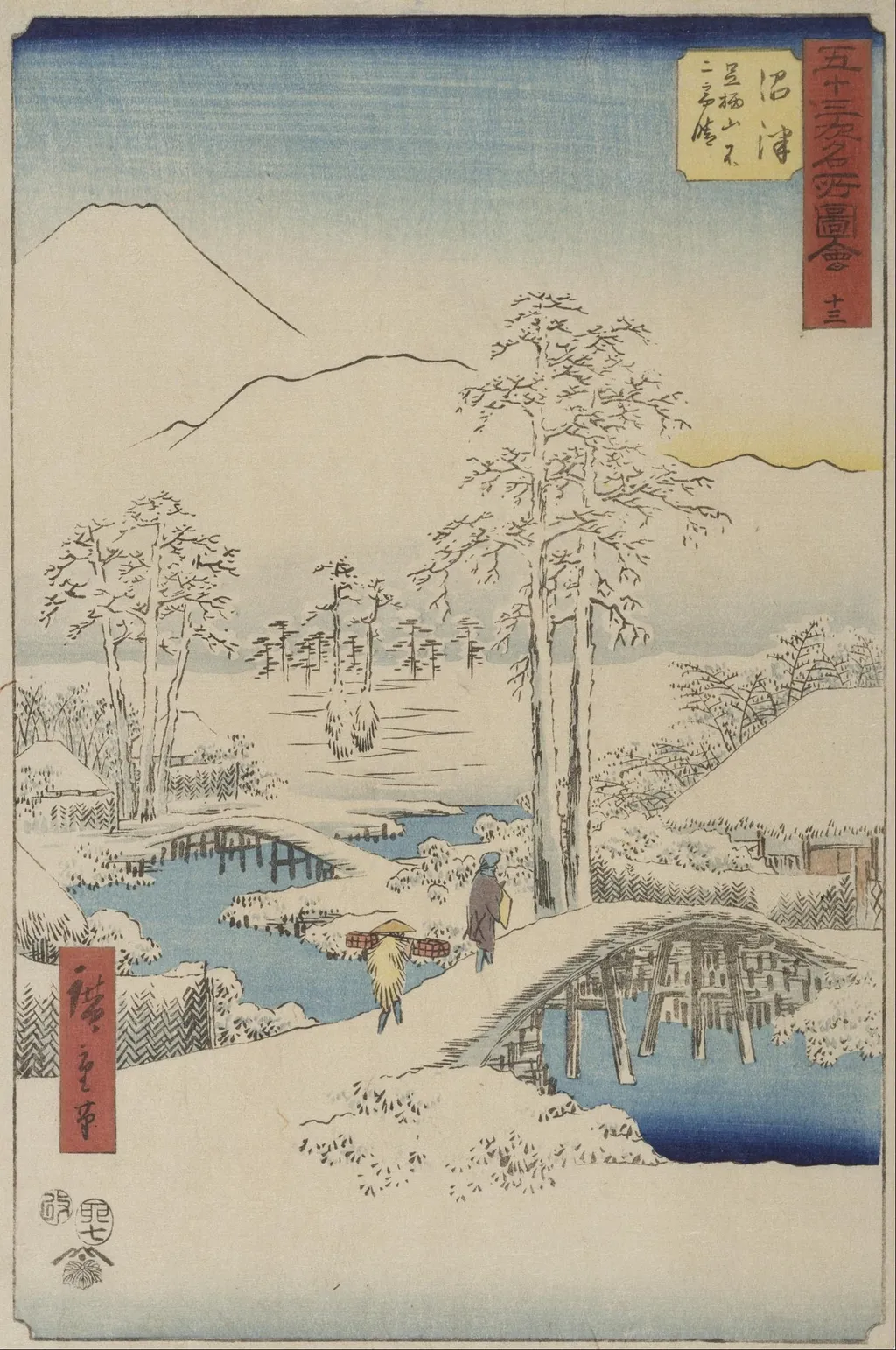
Mt. Fuji and Mt. Ashigara from Numazu from the series Vertical Tokaido (or "Famous Places of the Fifty-three Stations of the Tōkaidō") is an unspecified painting by the Ukiyo-e artist Utagawa Hiroshige. It dates from 1837 and is held in the collection of the Museum of Fine Arts, Houston.
About this work
Overview
Created circa 1837 by Utagawa Hiroshige, this vertical-format print is part of his series depicting scenes along the Tōkaidō, the historic road linking Edo and Kyoto. It portrays a winter view from Numazu, where the distant silhouette of Mt. Fuji dominates the sky above the nearer Mt. Ashigara, set against a quiet, snow‑laden landscape.
Subject & Meaning
The composition juxtaposes a solitary traveler in a bright yellow kimono with the expansive, mist‑veiled mountains, suggesting both the personal experience of travel and the enduring presence of Japan’s iconic peaks. The tranquil atmosphere invites contemplation of nature’s scale and the seasonal quiet of the road.
Technique & Style
Hiroshige employs delicate line work and a restrained palette of soft blues, grays, and whites to render snow and mist. Fine brushstrokes suggest the texture of drifts, while the vertical format emphasizes depth, guiding the eye from the foreground stream and bridge upward to the towering mountains.
History & Provenance
The print was produced as a woodblock illustration for the “Vertical Tōkaidō” series, a departure from Hiroshige’s earlier urban subjects toward landscape. It entered the museum’s collection through a mid‑20th‑century acquisition of Japanese prints, remaining an example of Edo‑period travel imagery.
Context
During the Edo period, the Tōkaidō road was a major conduit for travelers, merchants, and officials. Hiroshige’s series documented the route’s varied scenery, reflecting a growing public interest in travel and the natural world, and contributing to the broader ukiyo‑e shift toward landscape motifs.
Own this work as a print
Artist & collection
Artist
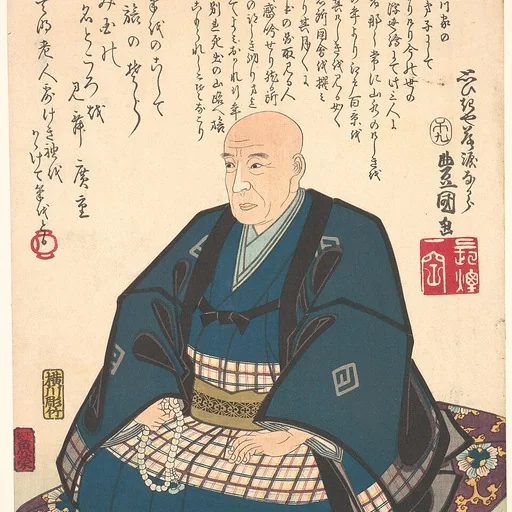
Utagawa Hiroshige (歌川 広重) or Andō Hiroshige (安藤 広重), born Andō Tokutarō (安藤 徳太郎; 1797 – 12 October 1858), was a Japanese ukiyo-e artist, considered the last great master of that tradition.

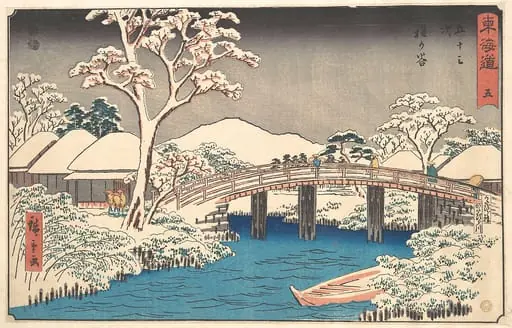 東海道五十三次 程ヶ谷 かたびら橋 かたびら川|Hodogaya
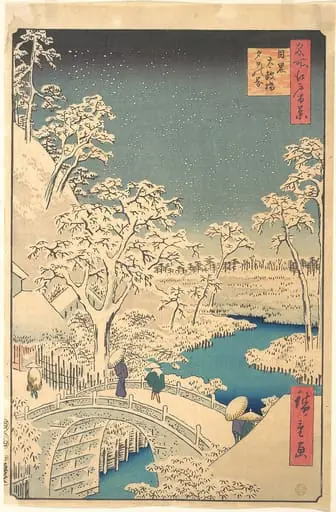 名所江戶百景 目黒太鼓橋夕ひの岡|Taiko Bridge, Meguro, on a Snowy Evening
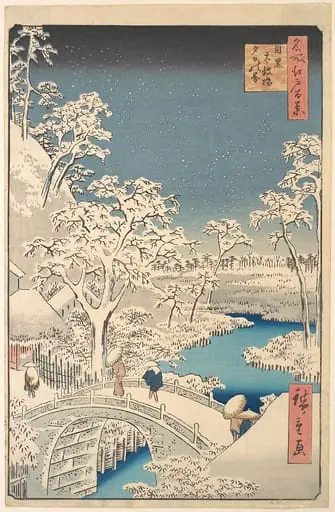 名所江戸百景 目黒太鼓橋夕日の岡|The Taiko (Drum) Bridge and the Yuhi Mound at Meguro
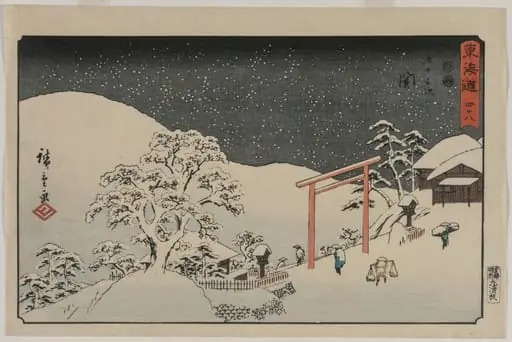 Seki, from the series The Fifty-Three Stations of the Tōkaidō
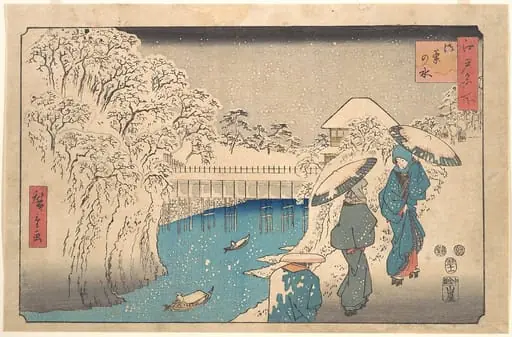 江戸名所 御茶の水|Meguro
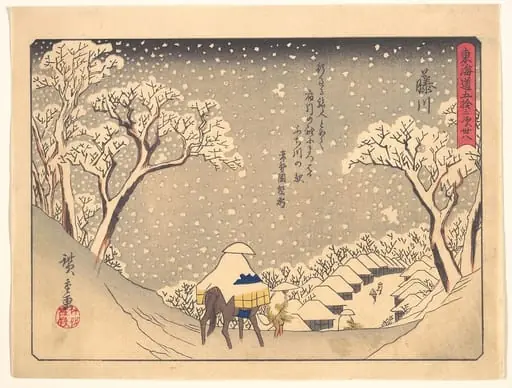
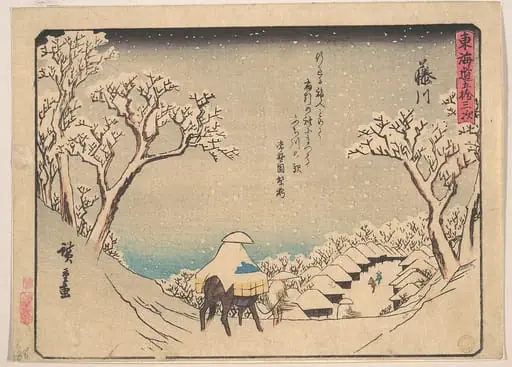 東海道五十三次 藤川|Fujikawa
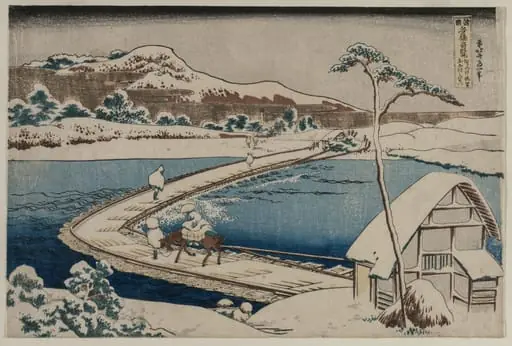 An Ancient Picture of the Boat Bridge at Sano in Kozuke Province from the series Curious Views of Famous Bridges in the Provinces
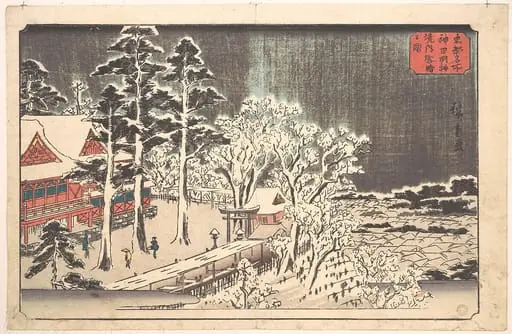 東都名所 神田明神境内雪晴之図|“Clear Weather after Snow in the Precincts of the Kanda Myōjin Shrine” (Kanda Myōjin keidai yukibare no zu), from the series Famous Places in the Eastern Capital (Tōto meisho)
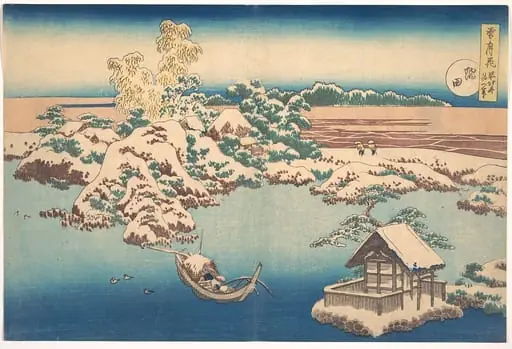 雪月花 隅田|Snow on the Sumida River (Sumida), from the series, Snow, Moon, and Flowers (Setsugekka)