Artwork
江戸高名会亭尽 向島の図 平岩|Mukojima no Zu (Hira-Iwa)
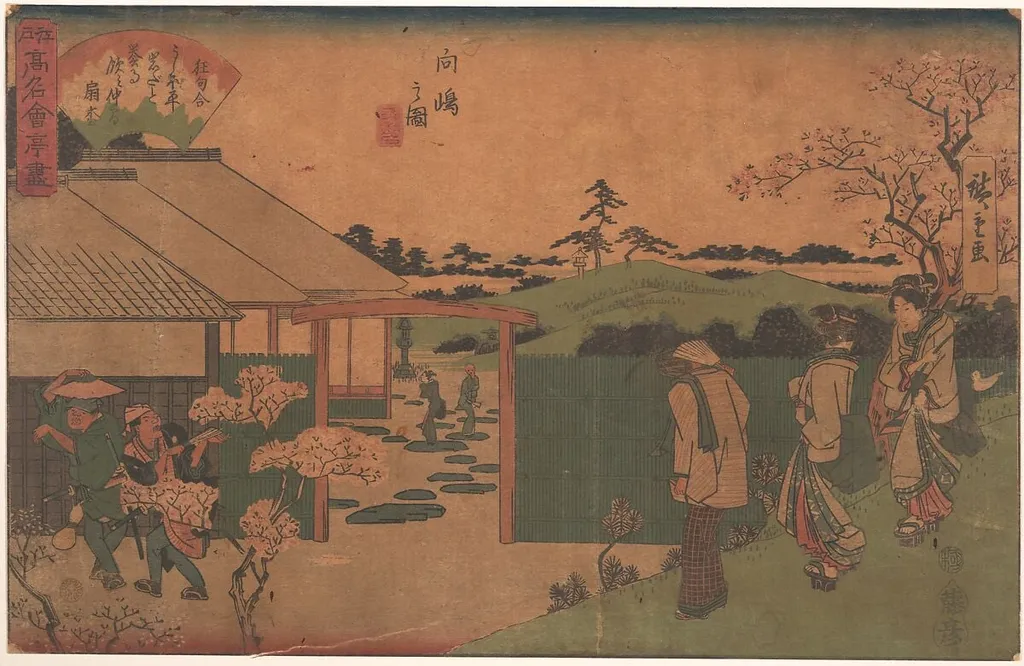
江戸高名会亭尽 向島の図 平岩|Mukojima no Zu (Hira-Iwa) is an ink print by the Romanticist artist Utagawa Hiroshige. It dates from 1840 and is held in the collection of the Metropolitan Museum of Art.
- Accession no.
- JP1174
- Credit line
- Rogers Fund, 1919
About this work
Overview
Mukojima no Zu (Hira-Iwa) is a woodblock print created by Utagawa Hiroshige around 1840. It is a landscape print featuring a scenic view, characteristic of Hiroshige's work.
Subject & Meaning
The print depicts a serene garden scene at Mukōjima, with people strolling and interacting. The composition includes a pond, fence, and bridge, set against a backdrop of trees and hills. A red sign with Japanese text is prominently displayed on the left.
Technique & Style
The work is executed in ink and color on paper, utilizing flat colors and bold black outlines. Hiroshige employed simple shapes to convey a sense of activity within a compact space, adhering to the horizontal-format tradition of ukiyo-e.
History & Provenance
The print is part of The Metropolitan Museum of Art's collection. As a representative work of Hiroshige, it showcases his focus on landscapes, diverging from the typical urban subjects of the ukiyo-e genre.
Artist & collection
Artist
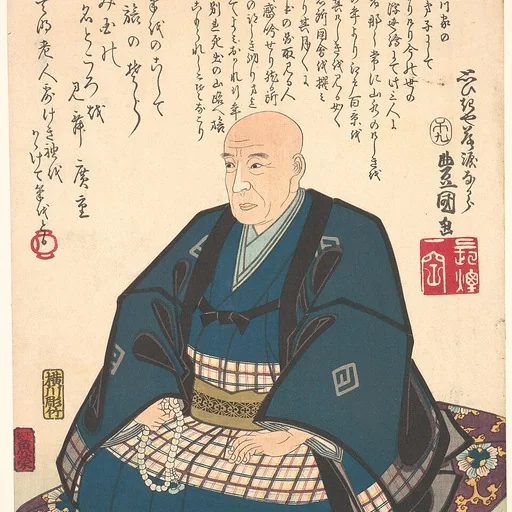
Utagawa Hiroshige (歌川 広重) or Andō Hiroshige (安藤 広重), born Andō Tokutarō (安藤 徳太郎; 1797 – 12 October 1858), was a Japanese ukiyo-e artist, considered the last great master of that tradition.

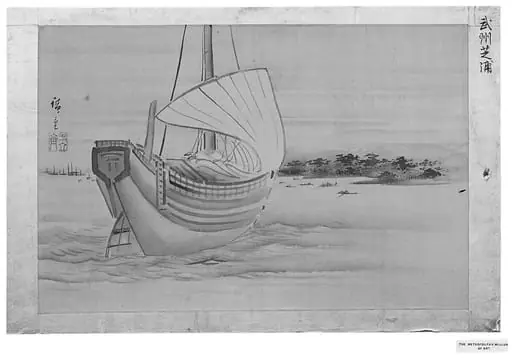
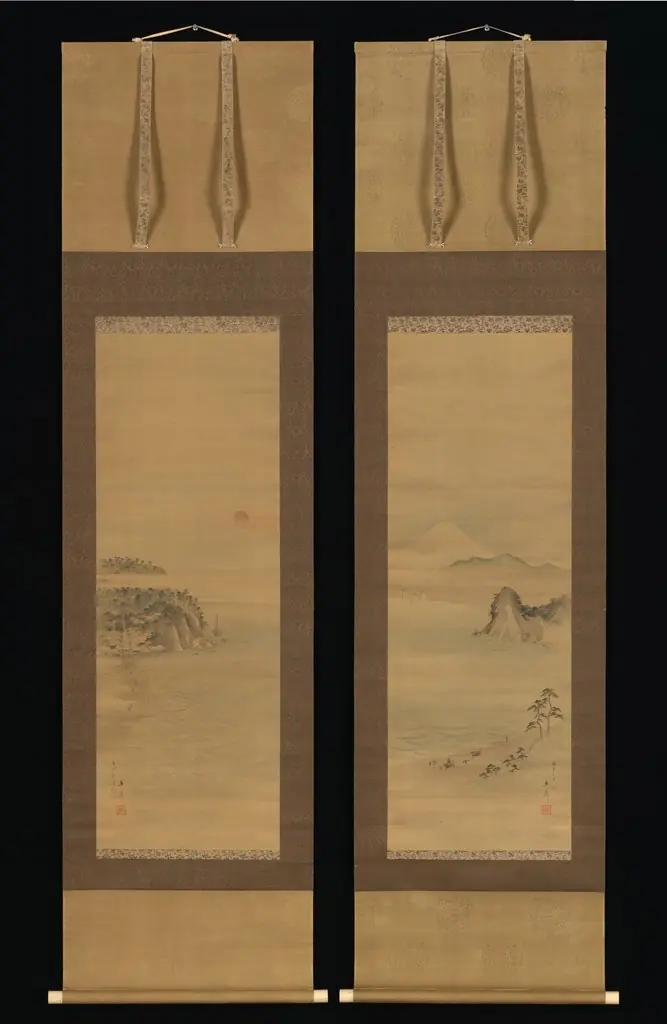
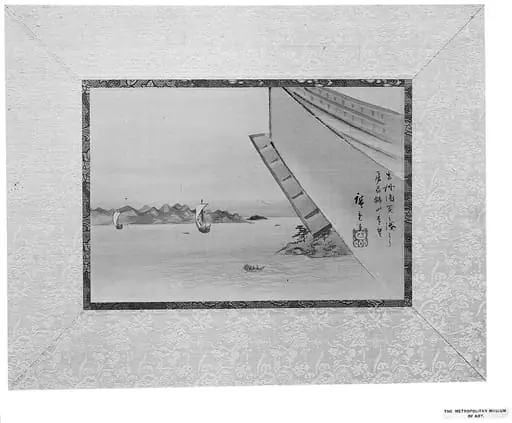
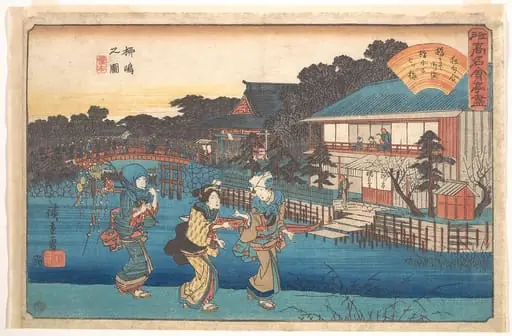
- 江戸高名会亭尽 柳島の図 橋本|Yanagishima no Zu
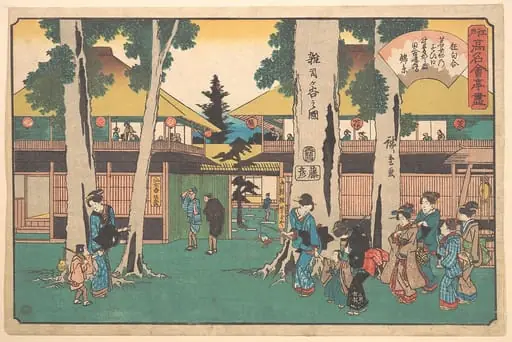 江戸高名会亭尽 雑司ヶ谷の図 茗荷屋|Zoshigaya no Zu (Myoga-ya)
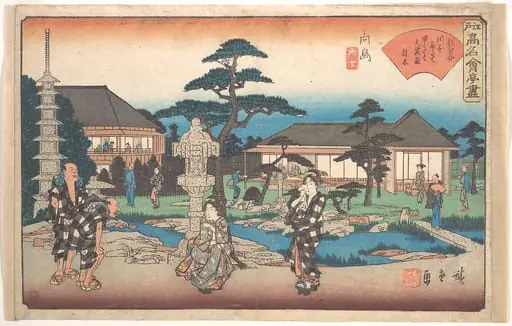 Mukōjima (Daikokuya)|江戸高名会亭尽 向島 大七|The Daikokuya at Mukojima
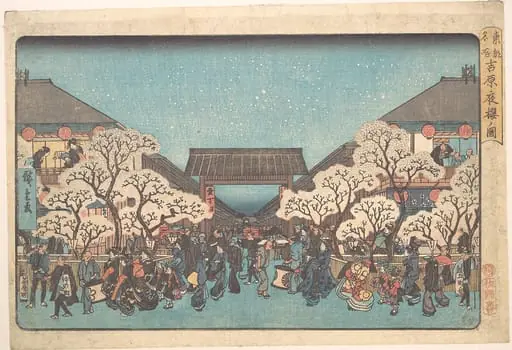 東都名所 吉原夜桜の図|Yoshiwara Yo Zakura no Zu
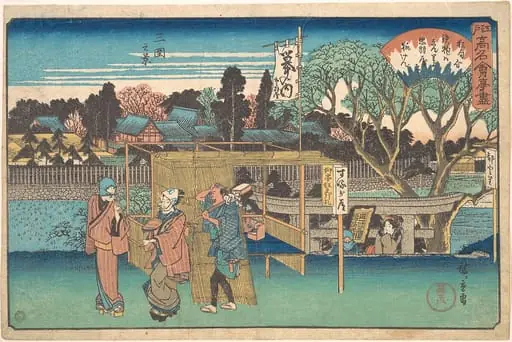 江戸高名会亭尽 三囲之景 出羽屋|Mimeguri no Kei (Toyoha-ya)
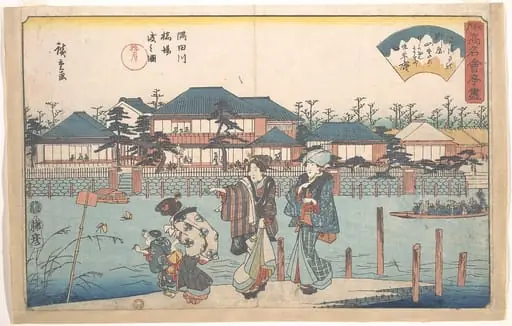 江戸高名会亭尽 隅田川橋場渡之図 柳屋|Sumidagawa Hashiba Watashi Zu (Yanagiya)
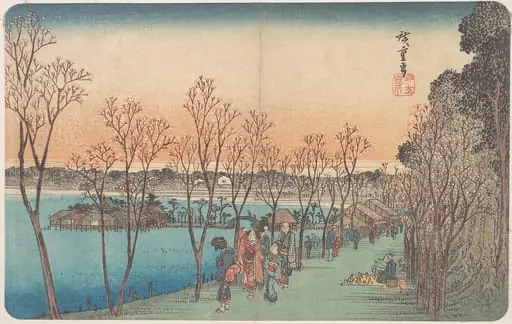 江戸名所 上野不忍の池|Ueno, Shinobazu no Ike
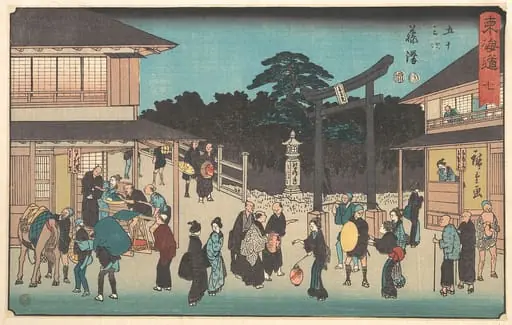 東海道五十三次 藤澤|Fujisawa
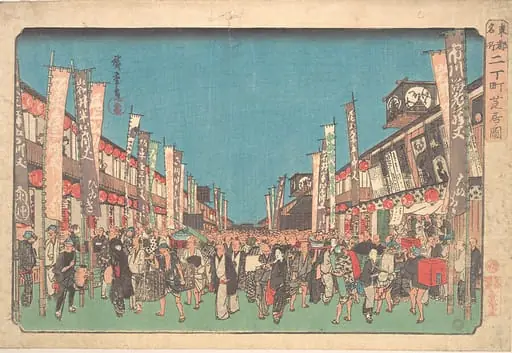 東都名所 二丁町芝居の図|Sakai Cho Shibai no Zu
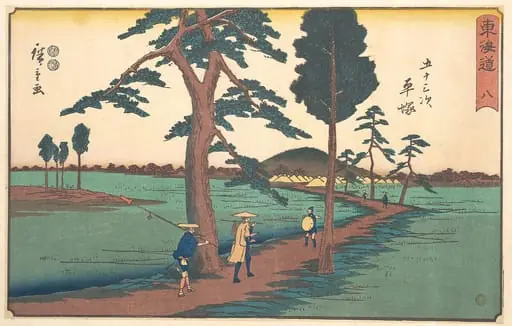 東海道五十三次 平塚|Hiratsuka
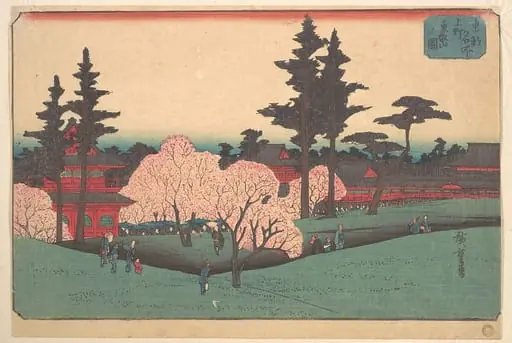 東都名所 上野東叡山ノ圖|Ueno Toezan no Zu
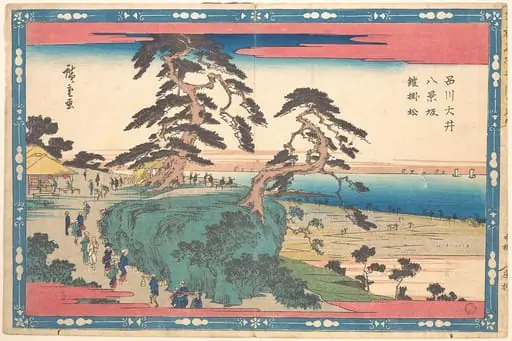 東都名所 品川大井 八景坂鎧掛松|Shinagawa Hakkei Zaka