Artwork
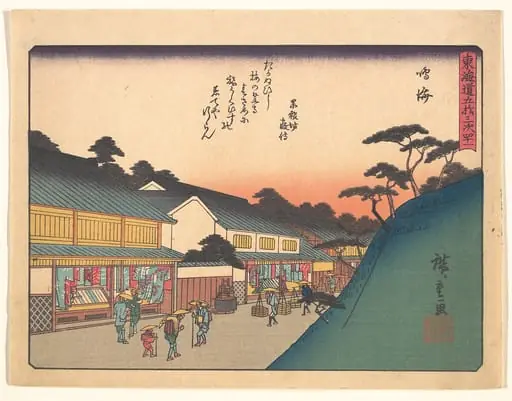
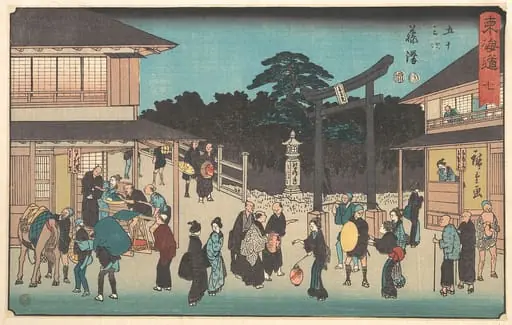
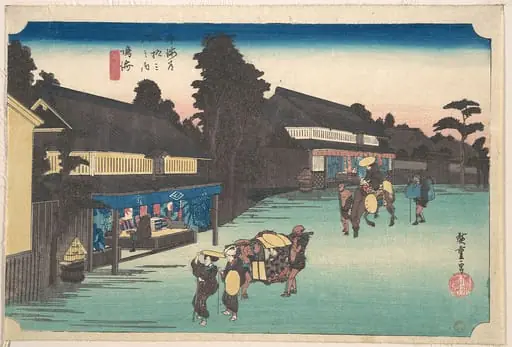
東海道五十三次之内 鳴海 名物有松絞|Narumi, Meibutsu Arimatsu Shibori
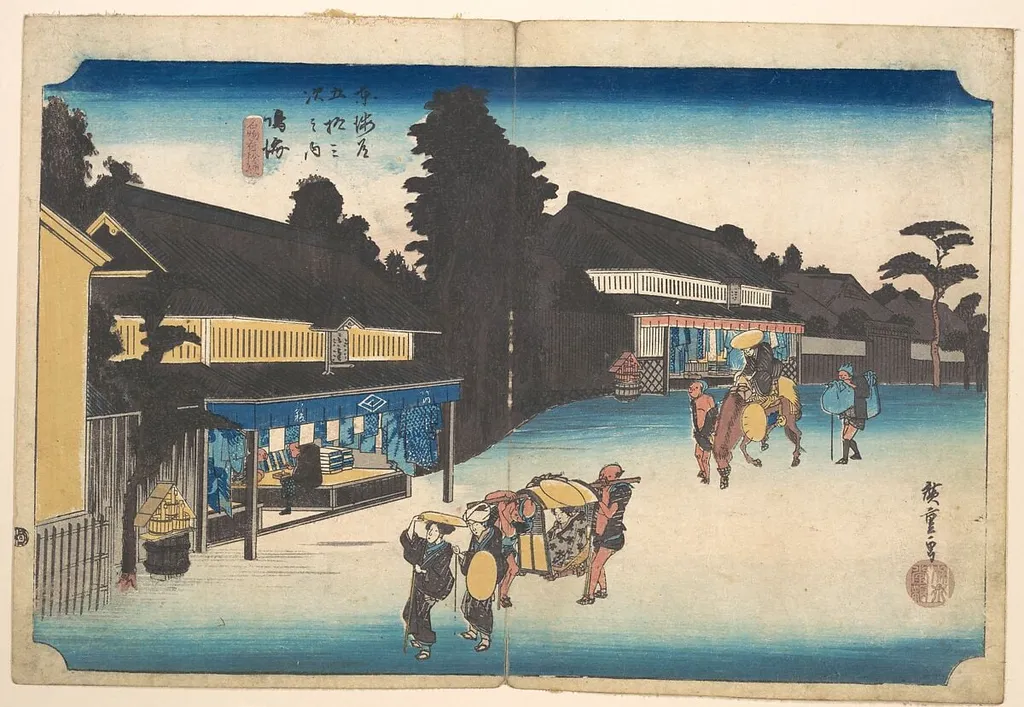
東海道五十三次之内 鳴海 名物有松絞|Narumi, Meibutsu Arimatsu Shibori is an ink print by the Baroque artist Utagawa Hiroshige. It dates from 1734 and is held in the collection of the Metropolitan Museum of Art.
- Accession no.
- JP1475
- Credit line
- Gift of Mrs. Henry J. Bernheim, 1945
About this work
Overview
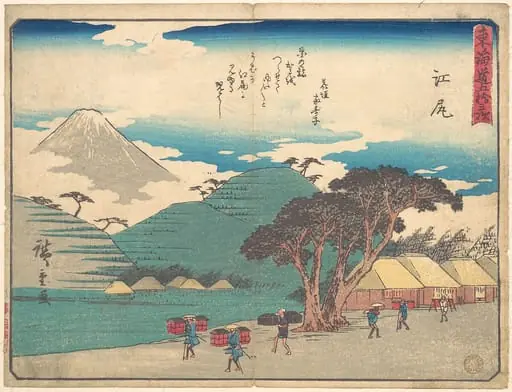
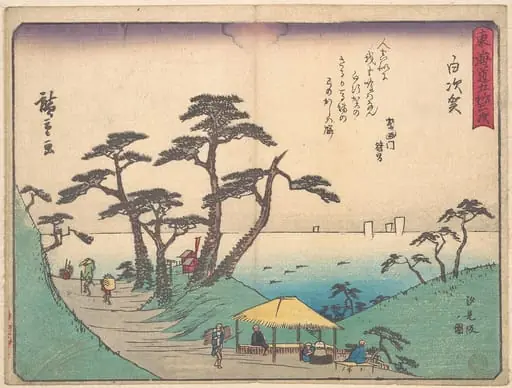
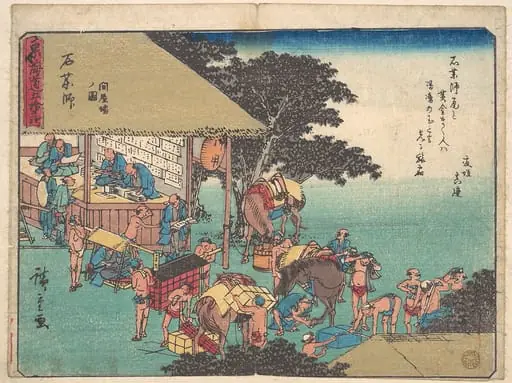
This woodblock print, 'Narumi, Meibutsu Arimatsu Shibori,' is part of Utagawa Hiroshige's 'The Fifty-three Stations of the Tōkaidō' series. Created in the late Edo period, it showcases the artist's skill in capturing landscapes and regional customs.
Subject & Meaning
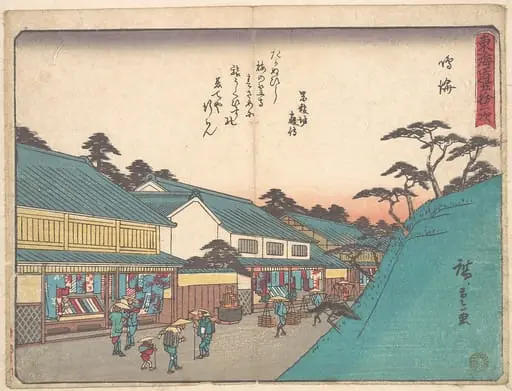
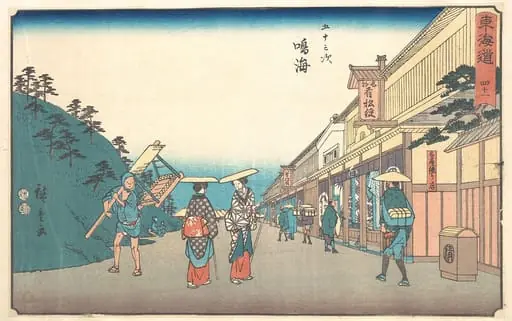
The print depicts a lively scene at Narumi station, featuring people and horses in front of buildings with a blue awning and fence. It highlights Arimatsu shibori, a local tie-dyeing technique, reflecting Hiroshige's focus on regional details and customs.
Technique & Style
Executed in ink and color on paper, the print exemplifies Hiroshige's expertise in ukiyo-e, a genre typically associated with urban entertainment. Instead, Hiroshige emphasizes landscape and regional themes, using composition and color to convey a sense of activity and movement.
Artist & collection
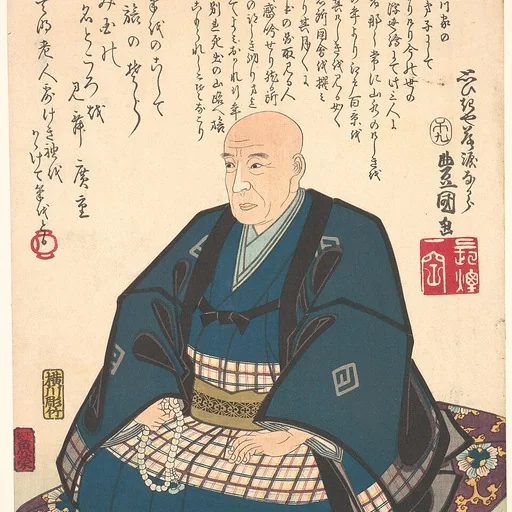
Artist
Utagawa Hiroshige (歌川 広重) or Andō Hiroshige (安藤 広重), born Andō Tokutarō (安藤 徳太郎; 1797 – 12 October 1858), was a Japanese ukiyo-e artist, considered the last great master of that tradition.