Artwork
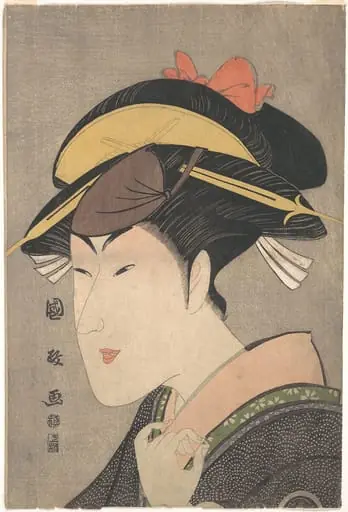
Portrait of the Actor Nakayama Tomisaburo as a Woman
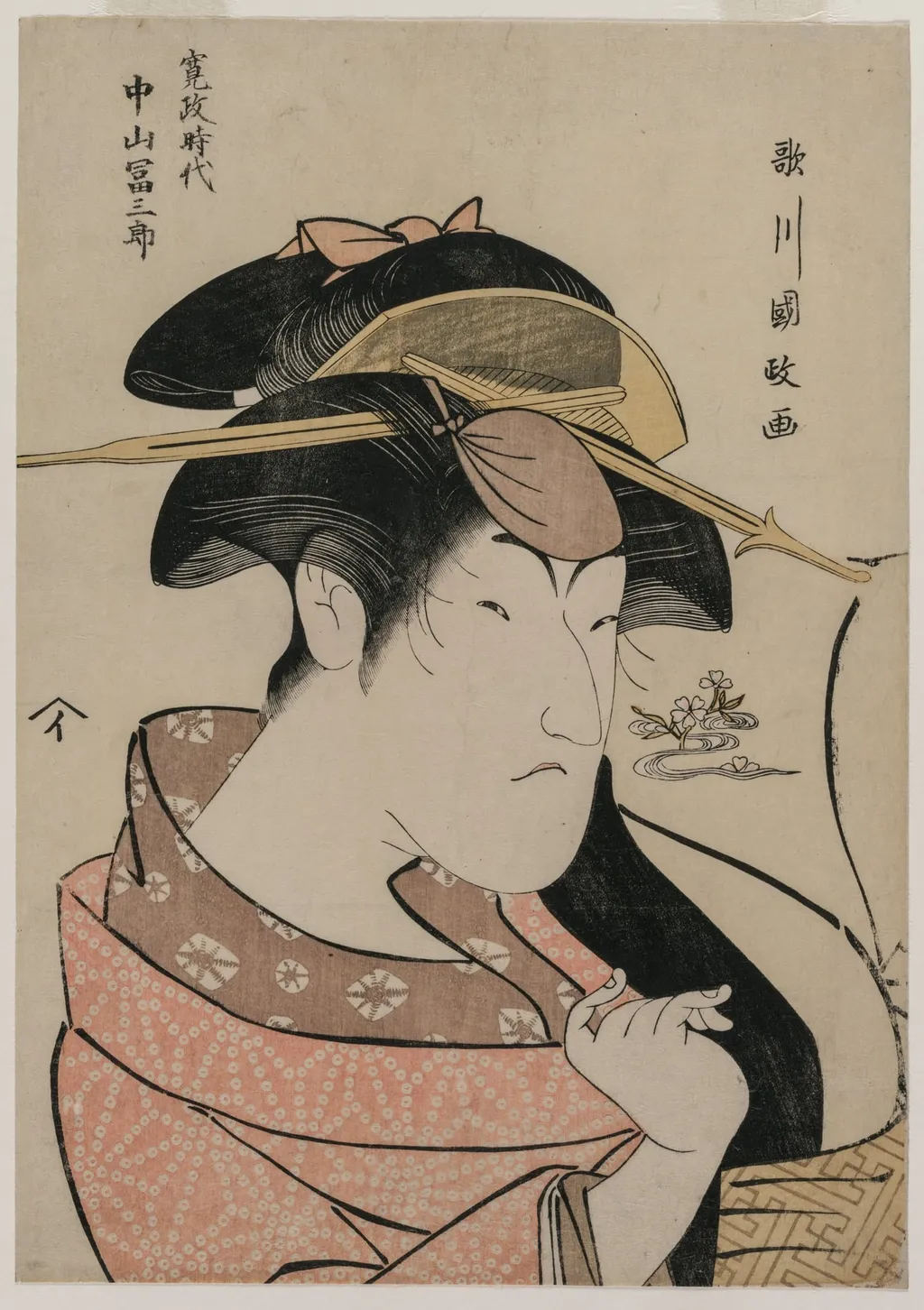
Portrait of the Actor Nakayama Tomisaburo as a Woman is a print by the Romanticist artist Utagawa Kunimasa. It dates from 1800 and is held in the collection of the Cleveland Museum of Art.
- Accession no.
- 1930.200
- Credit line
- Bequest of Edward L. Whittemore
About this work
Overview
Portrait of the Actor Nakayama Tomisaburo as a Woman is a Japanese ukiyo-e woodblock print created by Utagawa Kunimasa around 1800. The work belongs to the yakusha-e genre, which focuses on portraits of kabuki actors in character.
Subject & Meaning
The print depicts Nakayama Tomisaburo, a kabuki actor, dressed in female attire, indicating the actor's portrayal of a female role on stage. The calm facial expression, combined with the hat and fan, subtly suggests the blurring of real and performed identity.
Technique & Style
Executed in the traditional ukiyo-e technique, the print features a simple, expressive background with bold brushstrokes, contrasting with the detailed, patterned clothing of the subject. The composition highlights Kunimasa's balance between simplicity and nuanced detail.
History & Provenance
Created circa 1800 by Utagawa Kunimasa, a member of the Utagawa school, the print reflects the artist's specialization in yakusha-e and bijin-ga. Kunimasa's career was influenced by his apprenticeship under Utagawa Toyokuni in Edo.
Context
This work is contextualized within the flourishing kabuki theater and ukiyo-e print culture of late 18th-century Edo. It showcases the societal acceptance of male actors portraying female roles (onnagata) in traditional Japanese theater.
Own this work as a print
Artist & collection
Artist
Utagawa Kunimasa (歌川 国政; 1773 – December 26, 1810) was a Japanese ukiyo-e artist of the Utagawa school.

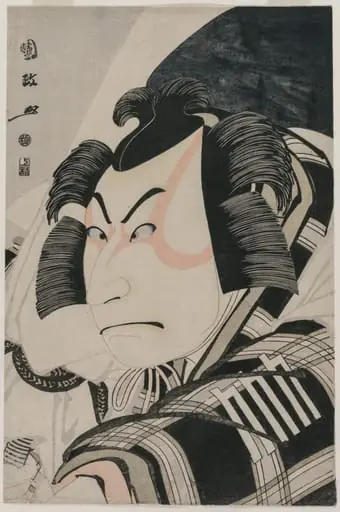
- 吾妻美人ゑらみ|A Tea-house Waitress
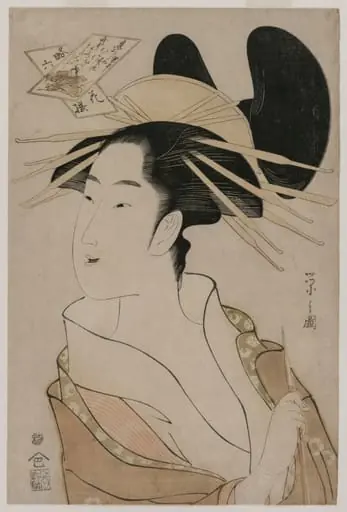 Portrait of a Courtesan Holding a Pipe (from the series The Six Immortal Poets in Modern Dress)
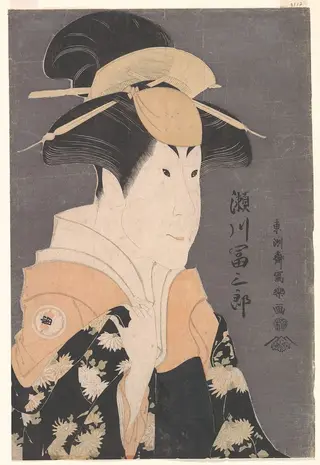 Untitled
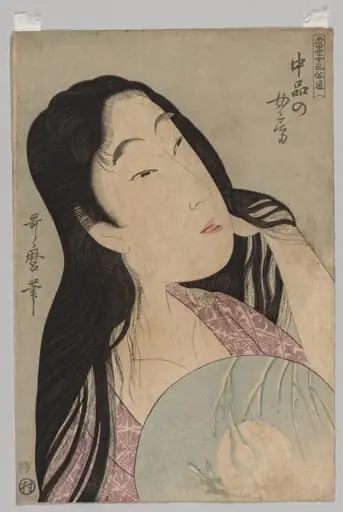 Bust of Woman with Loose Hair Holding Fan
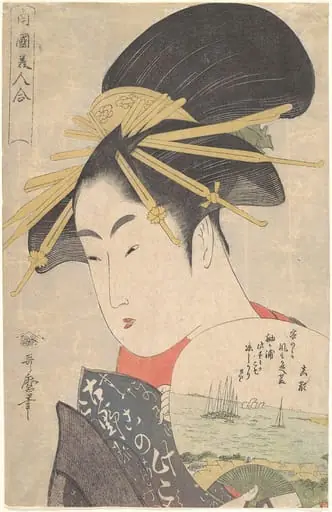 喜多川歌麿画 「南国美人合」 此すミ|The Courtesan Konosumi, from the series “Beauties of the Southern Quarter”(Nangoku bijin awase)
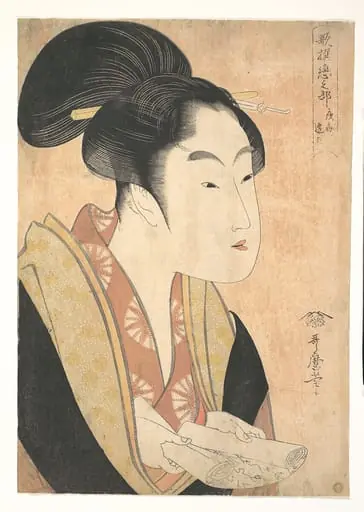 歌撰恋之部 夜毎に逢恋|A Young Woman Reading A Letter
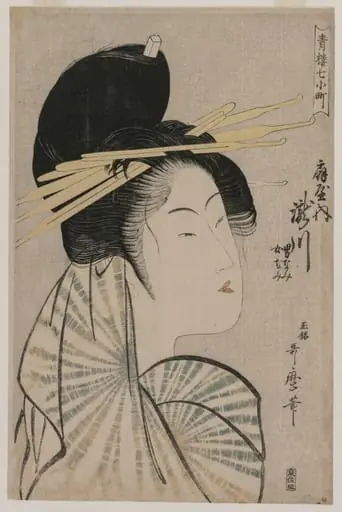 The Courtesan Takigawa of Ogiya (from the series Seven Aspects of Komachi in the Green Houses)
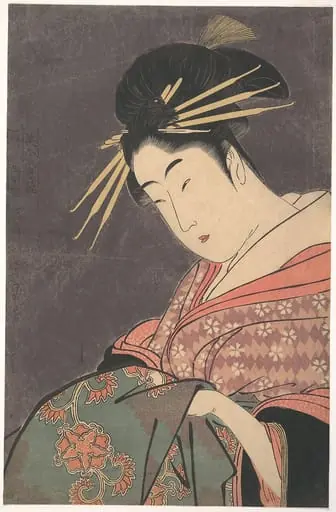 喜多川歌麿画 「美人気量競 五明楼 花扇」|“Hanaōgi of the Gomeirō,” from the series Comparing the Charms of Beauties (Bijin kiryō kurabe: Gomeirō Hanaōgi)
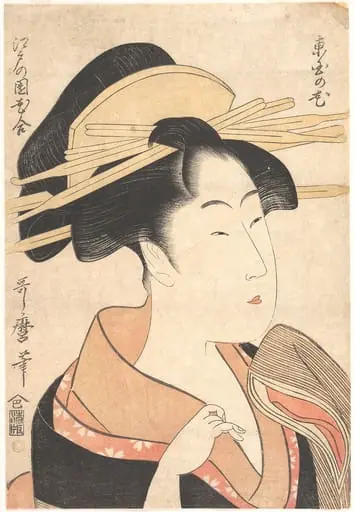 江戸の園花合 東屋の花|Azumaya no Hana
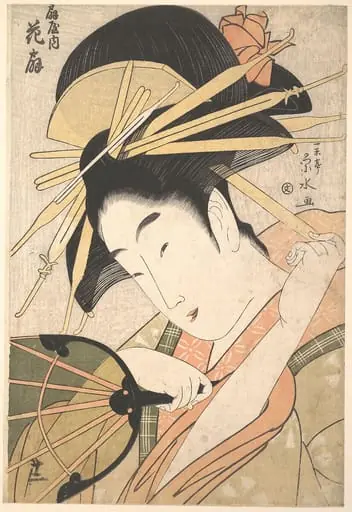 一楽亭栄水画 「扇屋内 花扇」|The Courtesan Hanaōgi of the Ōgiya Brothel (Ōgiya no uchi Hanaōgi)
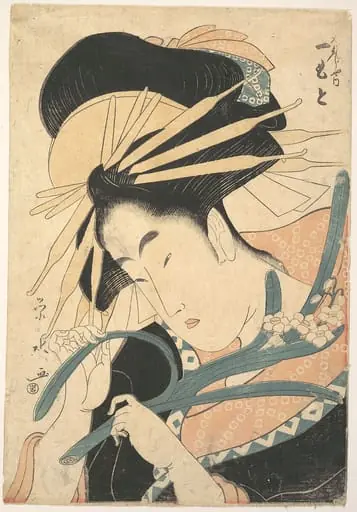 Untitled