Artwork
江戸の園花合 東屋の花|Azumaya no Hana
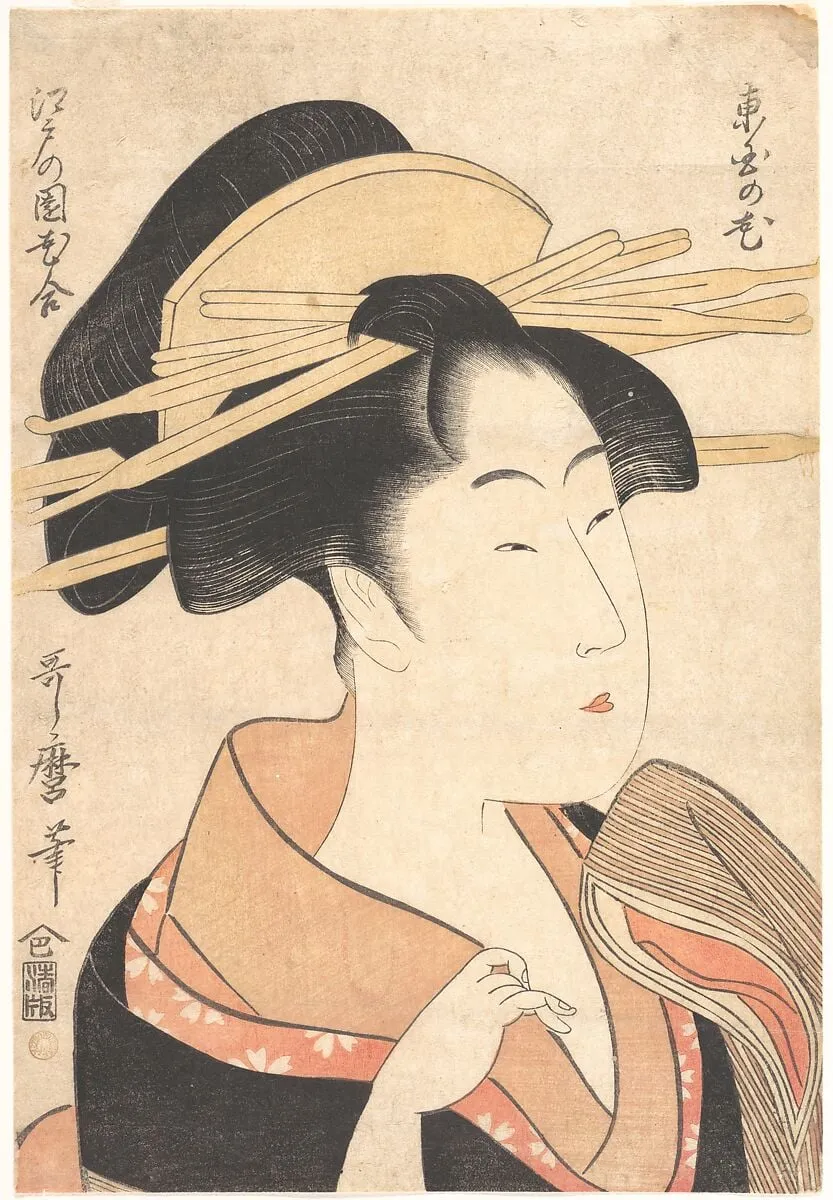
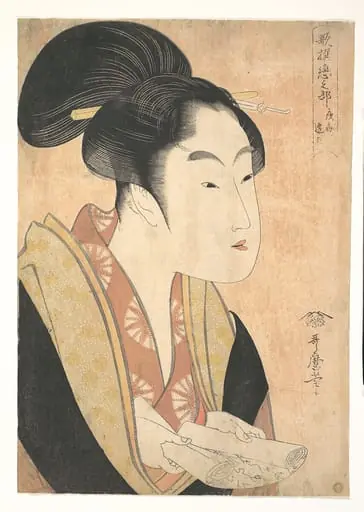
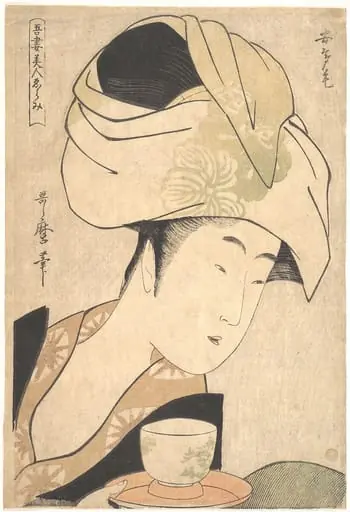
江戸の園花合 東屋の花|Azumaya no Hana is an ink print by the Romanticist artist Kitagawa Utamaro. It dates from 1790 and is held in the collection of the Metropolitan Museum of Art.
About this work
Subject & Meaning
These accessories function as iconographic markers of female identity within the bijin-ga genre, conveying social refinement and aesthetic ideals of the time.
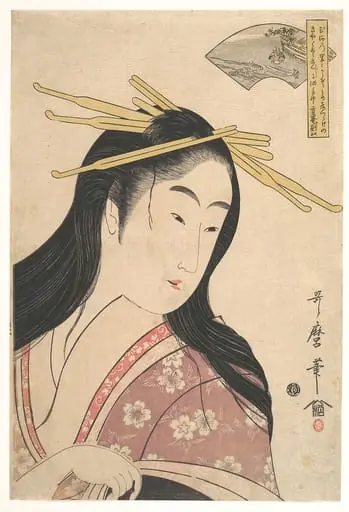
The print portrays a woman adorned with a kanzashi hair ornament and a comb, visual symbols traditionally associated with femininity and marital status in Edo-period culture. These accessories function as iconographic markers of female identity within the bijin-ga genre, conveying social refinement and aesthetic ideals of the time. Utamaro’s focus on such details underscores the work’s thematic emphasis on contemporary beauty practices and the subtle social narratives embedded in everyday appearance.
Technique & Style
The work is a polychrome woodblock print (nishiki-e) produced in 1790 by Kitagawa Utamaro, employing carved cherry woodblocks, mineral and organic pigments, and sumi ink on a soft, sized paper support typical of late eighteenth-century Japanese printmaking.
The composition is rendered in the ōkubi-e mode, with the woman’s head and upper torso filling most of the vertical sheet, emphasizing facial features and hair details. The line is crisp and unmodulated, while color areas, especially the patterned kimono, are printed with flat, saturated fields and subtle bokashi gradations. Fine bokashi is also used to model the face, neck, and background, producing a refined interplay of contour and tonal transition.
History & Provenance
The woodblock print titled Azumaya no Hana was created by the artist Kitagawa Utamaro in 1790. This work, classified as an ōkubi-e and bijin-ga within the ukiyo-e genre, depicts a woman adorned with a kanzashi and comb. The piece was produced using traditional woodblock printing techniques with ink and color applied to paper. It is currently held in the collection of the Metropolitan Museum of Art.
The woodblock print Azumaya no Hana by Kitagawa Utamaro is held in the collection of the Metropolitan Museum of Art. Created in 1790, the work measures 33.2 cm in height and 22.5 cm in width. The provided sources confirm its classification as a print within the museum's holdings but do not list a specific accession or inventory number. Furthermore, no information regarding the exhibition history of this specific piece is available in the current documentation.
Legacy
The print’s composition of a woman adorned with kanzashi and a comb has informed subsequent ukiyo-e depictions of fashionable Edo women, reinforcing the visual vocabulary of bijin-ga that emphasizes elaborate hair ornaments as markers of refinement. Its inclusion in major collections such as the Metropolitan Museum of Art has contributed to scholarly reassessments of Utamaro’s role in elevating portraiture within the nishiki-e tradition, shaping contemporary understandings of his impact on later artists who adopted similar motifs in bijin-ga and ōkubi-e works.
Overview
Azumaya no Hana is a woodblock print by Kitagawa Utamaro, created around 1790. It is part of a series titled Flower Contests of Edo Gardens.
Context
The Flower Contests of Edo Gardens series explores the connection between women and nature, with each scene featuring a different seasonal flower.
Artist & collection


 Untitled
 Untitled
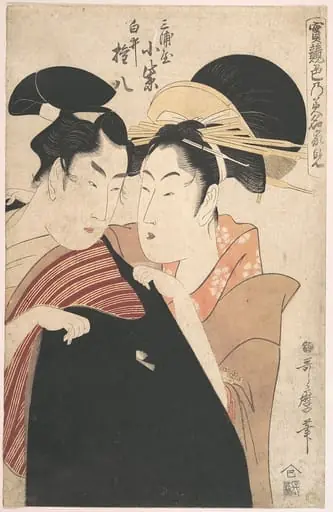 実競色乃美名家見 三浦屋小紫 白井権八|The Lovers Miura-ya Komurasaki and Shirai Gonpachi.
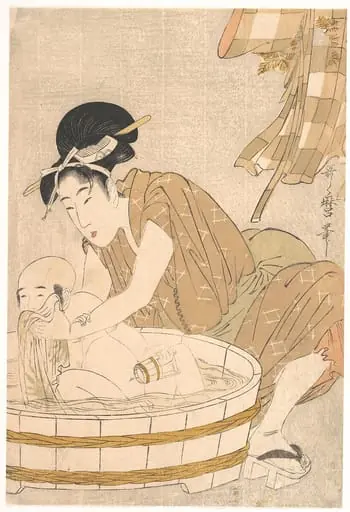 行水|Bathtime (Gyōzui)
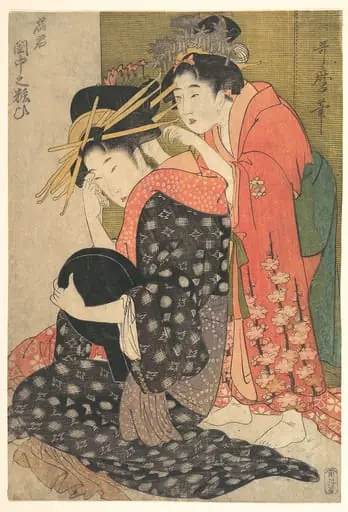 名君 閨中の粧ひ|The Oiran Yoso-oi Seated at Her Toilet
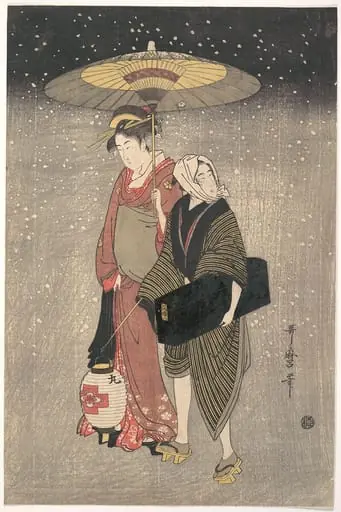 Untitled
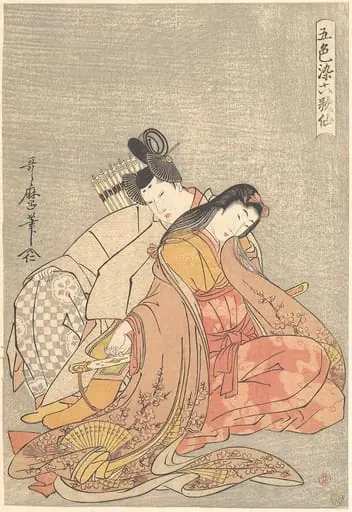 『五色染六歌仙』 在原業平と小野小町|“The Poet Ariwara no Narihira (825–880) and Ono no Komachi,” from the series Five Colors of Love for the Six Poetic Immortals (Goshiki-zome rokkasen)
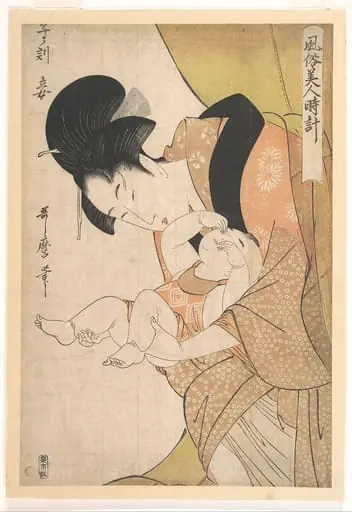 風俗美人時計 子ノ刻 妾|Midnight: Mother and Sleepy Child