Artwork
Soap Bubbles
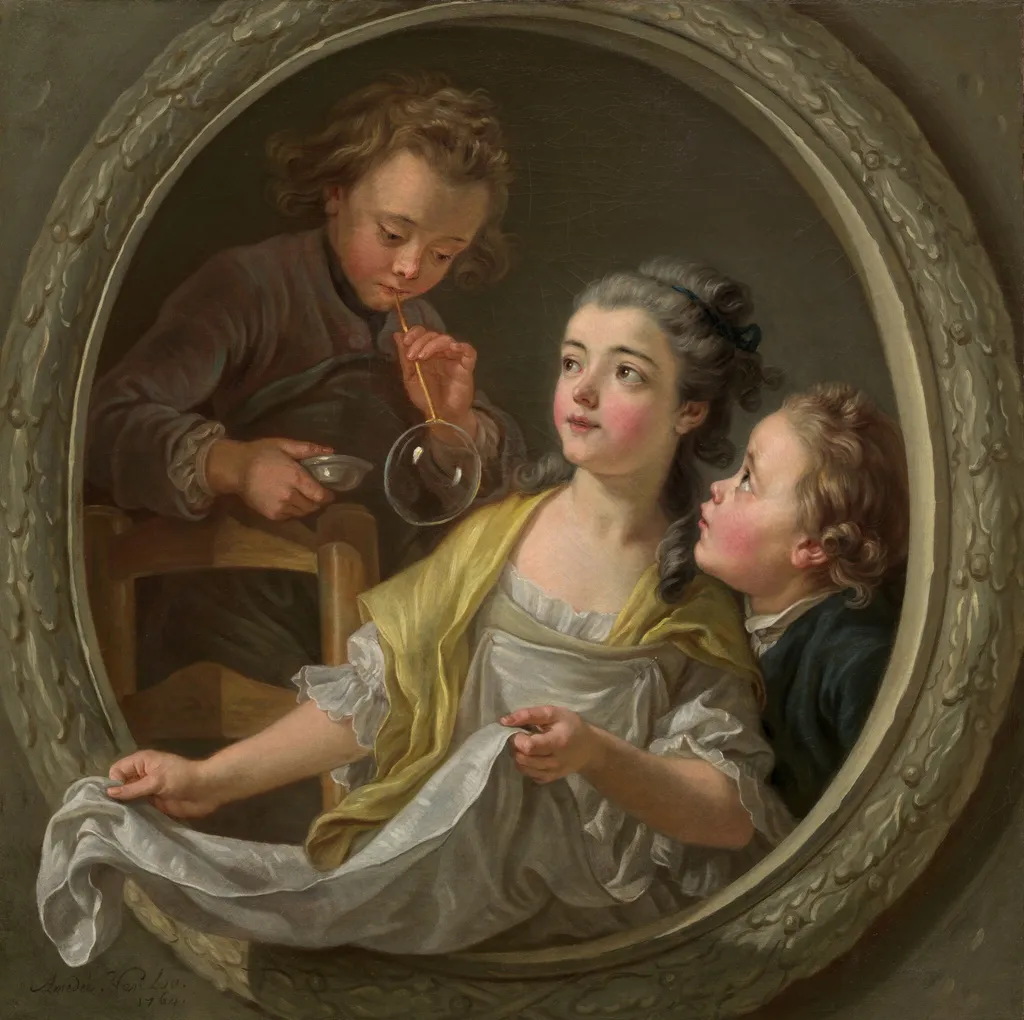
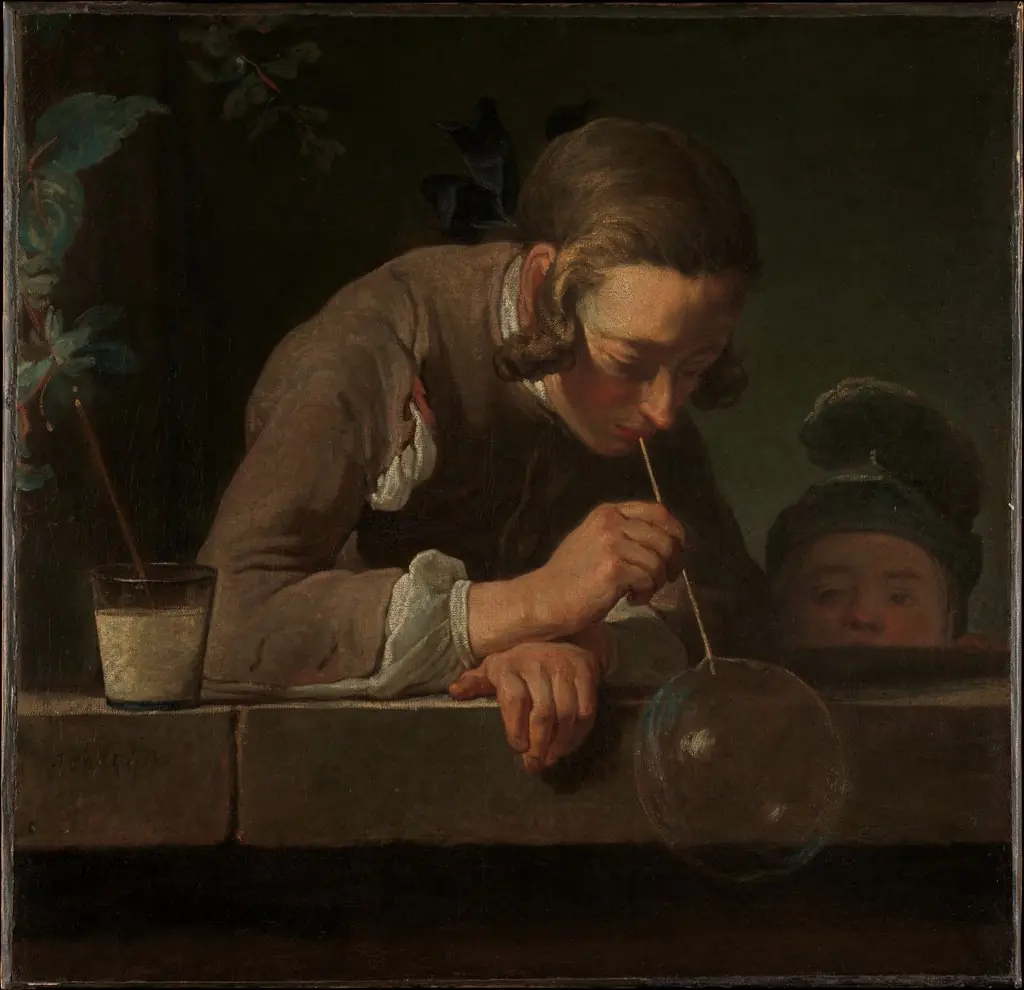
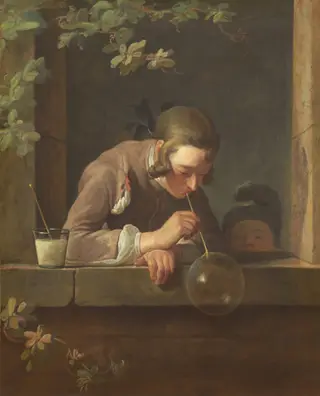
Soap Bubbles is an oil painting by the Rococo painting artist Charles-Amédée-Philippe van Loo. It dates from 1764 and is held in the collection of the National Gallery of Art.
- Inscription
- Inscribed:lower left: Amedee Van Loo. / 1764
About this work
Technique & Style
Its execution employs oil paint applied in thin, even layers that define the delicate translucency of the bubbles and the surrounding interior space.
The work titled Soap Bubbles is executed in oil on canvas, a support typical of mid‑eighteenth‑century easel painting. According to the National Gallery of Art catalogue, the painting measures approximately 88.6 cm in height by 88.5 cm in width and dates to 1764. Its execution employs oil paint applied in thin, even layers that define the delicate translucency of the bubbles and the surrounding interior space. The composition is classified as a genre scene, reflecting the Rococo interest in everyday leisure activities.
History & Provenance
Soap Bubbles, an oil on canvas painting by Charles-Amédée-Philippe Van Loo, was executed in 1764. Its early ownership is traced to the Prussian royal collection, having been associated with Princess Anna Amalie of Prussia (or possibly her sister Luise Amalie) by the late 18th century; the work remained in the family’s possession through Emperor Wilhelm II, who inherited it by descent. The painting passed through the Parisian dealer Wildenstein & Co. in 1929, was sold to Robert W. Schuette and Florence Harkness, and was gifted to the National Gallery of Art in Washington, D.C., in 1945.
Documentation of its location in Charlottenburg Palace and exhibitions in Paris (1900) and New York (1935) corroborates this chain.
The painting Soap Bubbles by Charles-Amédée-Philippe van Loo is held in the collection of the National Gallery of Art in Washington, D.C., where it was accessioned in 1945 as a gift from Robert W. and Florence Steuber Gaines Harkness Schuette. Its inventory number is 1945.10.1. The work was previously part of the Prussian royal collection, specifically associated with Princess Anna Amalie of Prussia, and later owned by Emperor Wilhelm II before passing through the Wildenstein gallery in 1929.
It was exhibited at Wildenstein's in 1929 and later at The Metropolitan Museum of Art in 1935, where reviews noted its provenance from the former German Emperor's collection.
Overview
Charles-Amédée-Philippe van Loo's 1764 painting, Soap Bubbles, is an oil on canvas work representative of the Rococo period. It presents a genre scene, focusing on an everyday moment rather than grand historical or mythological narratives. The artwork captures a young boy engrossed in the simple act of blowing soap bubbles, rendered with a characteristic lightness and decorative quality.
Subject & Meaning
The painting depicts a young boy, his gaze directed upwards with an expression of curiosity, as he creates delicate soap bubbles. His attire is modest, and the background is understated, drawing attention to the ephemeral forms of the bubbles themselves. This type of genre scene often reflects on the fleeting nature of childhood or life's transient pleasures, a common theme explored through the symbolism of bubbles.
Context
Van Loo became a member of the esteemed Académie Royale de Peinture et de Sculpture in 1747, a significant achievement that solidified his position in the French art world. While Soap Bubbles is a genre scene, he was also recognized for his allegorical compositions and portraiture, including a notable depiction of the Marquis de Sade. His diverse output reflects the varied demands and opportunities available to successful artists in 18th-century Paris.
Own this work as a print
Artist & collection

Artist
Charles-Amédée-Philippe van Loo
Charles-Amédée-Philippe van Loo (25 August 1719 – 15 November 1795) was a French painter of allegorical scenes and portraits.