Artwork
Soap Bubbles
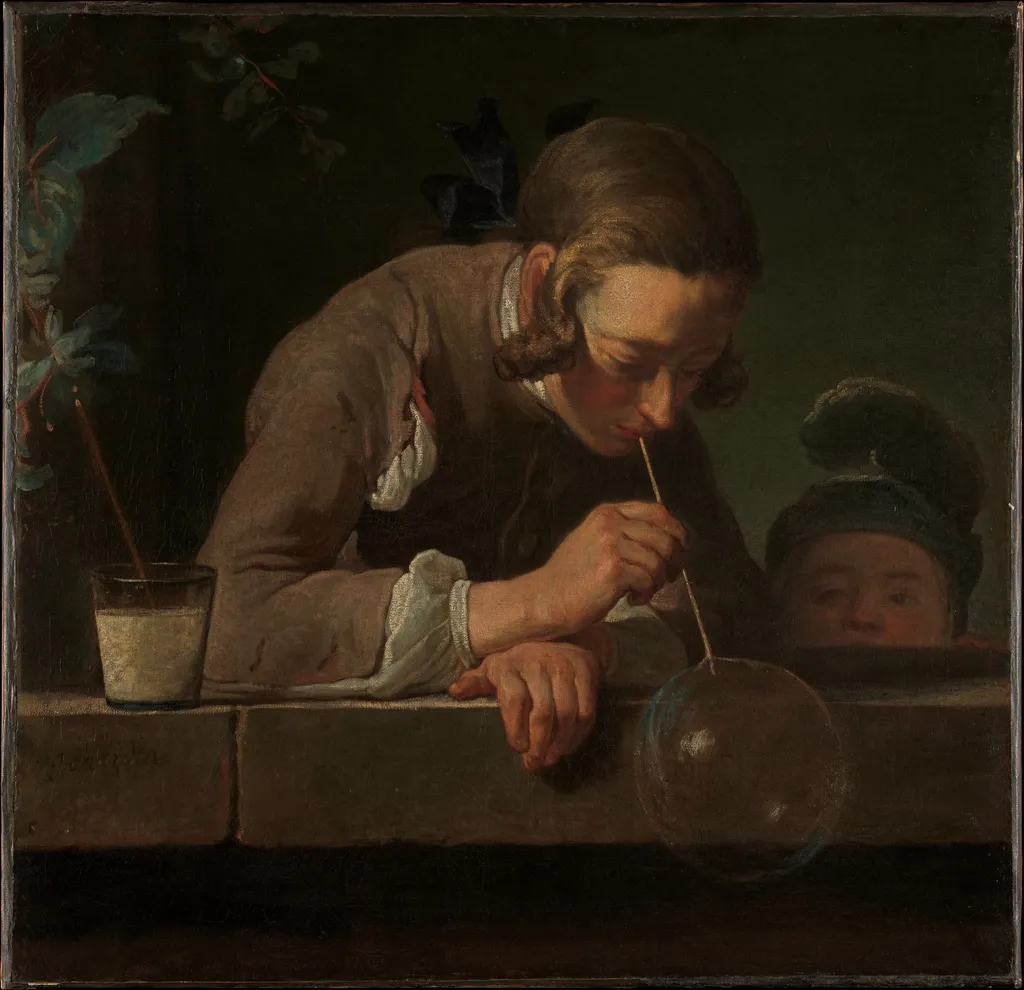
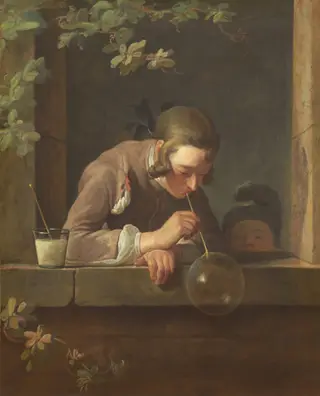
Soap Bubbles is an oil painting by the Academic Art artist Jean-Baptiste-Siméon Chardin. It dates from 1733 and is held in the collection of the Metropolitan Museum of Art.
About this work
Subject & Meaning
The soap bubble is a long-established vanitas motif, signifying the transience of life, the brevity of earthly pleasures, and the fragility of human existence.
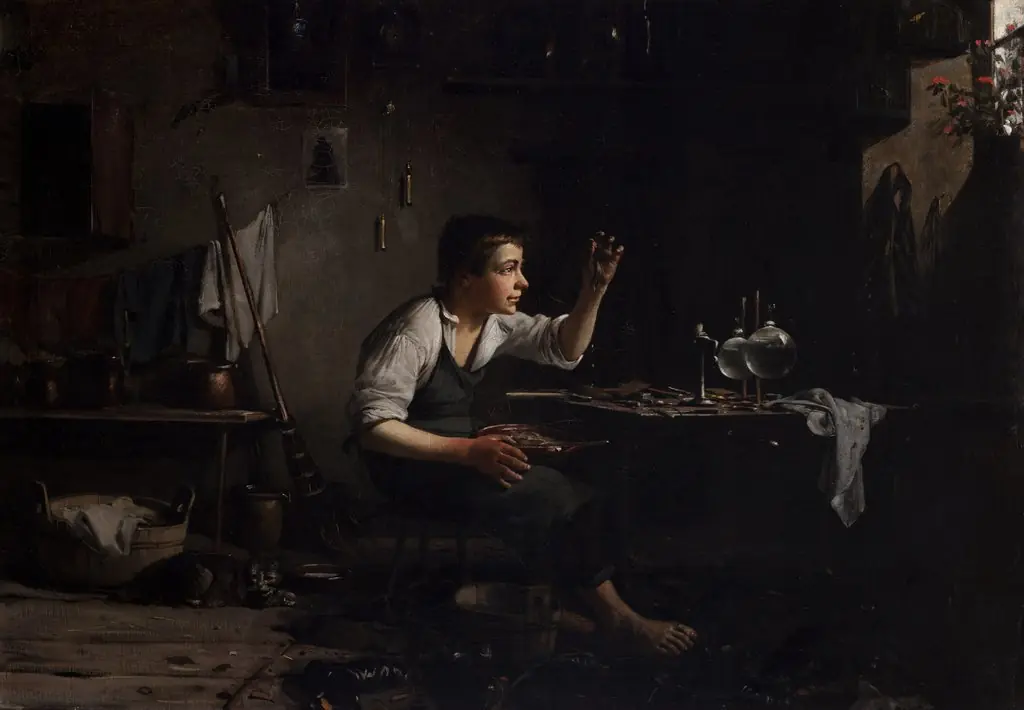
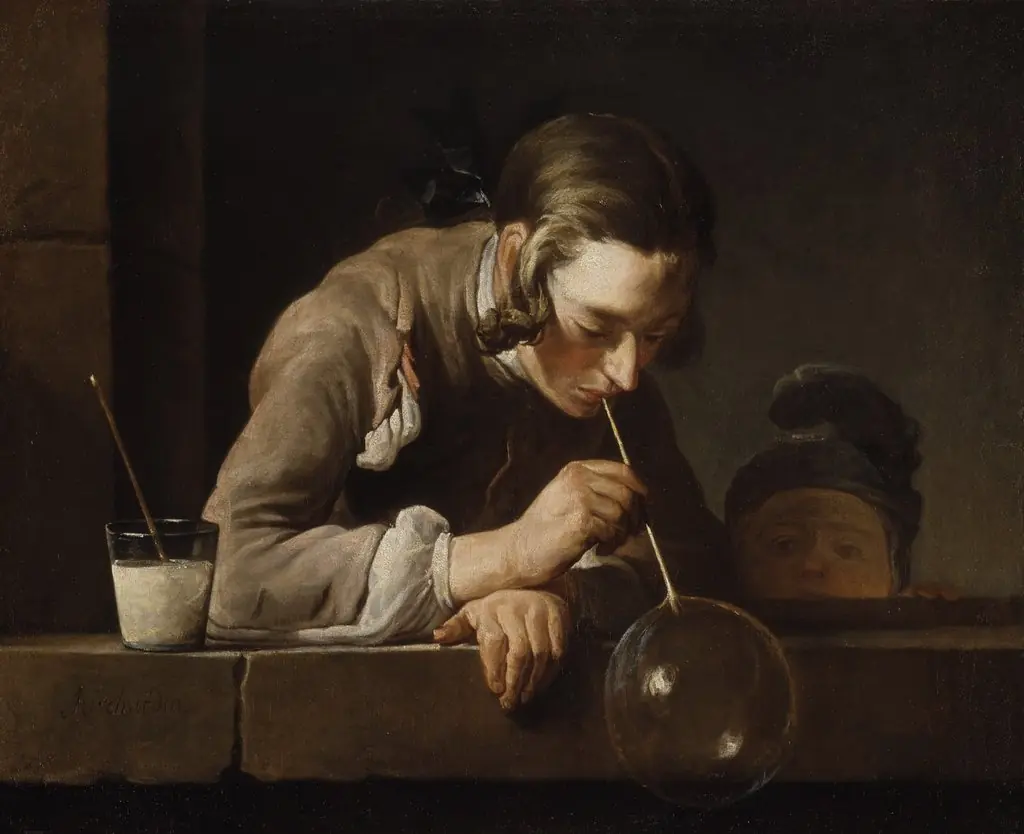
Chardin's Soap Bubbles depicts a young boy blowing a soap bubble while a man observes him, with the fragile sphere itself rendered as the painting's central focus. The work belongs to the tradition of genre painting, in which everyday domestic activities carry layered symbolic weight. The soap bubble is a long-established vanitas motif, signifying the transience of life, the brevity of earthly pleasures, and the fragility of human existence.
By pairing the act of blowing with a watching figure, Chardin transforms a simple children's pastime into a meditation on innocence, time's passage, and mortality, themes characteristic of eighteenth-century French reflection on the ephemeral.
History & Provenance
Jean-Baptiste-Siméon Chardin painted Soap Bubbles in 1733, an oil on canvas work measuring 61 × 63.2 cm, classified as a genre scene within the academic art movement. The painting’s creation is documented in contemporary records and later catalogues, confirming its date of inception as 1733. After leaving the artist’s studio, the work entered a succession of private collections, being owned by Jacques Doucet, David David-Weill, Louis-François Trouard, Antoine Charles Dulac, and Fritz Mannheimer before accession by the Metropolitan Museum of Art, where it is now housed in the Munich Central Collecting Point. Its provenance reflects a clear chain of ownership from early 20th‑century collectors to its present institutional location.
Soap Bubbles is held by the Metropolitan Museum of Art in New York. According to Wikidata, the painting is recorded as part of that museum's collection while also being associated with the Munich Central Collecting Point, a wartime repository. Its documented provenance traces through a succession of owners: Louis-François Trouard, Antoine Charles Dulac, Jacques Doucet, David David-Weill, and Fritz Mannheimer.
The sources do not specify an accession number for the work, nor do they list any exhibition history.
Legacy
Chardin's Soap Bubbles (1733), an oil-on-canvas genre scene measuring 61 by 63.2 centimeters, portrays a young man blowing soap bubbles and is classified as an academic art work. After its creation, the painting passed through the hands of notable collectors such as Jacques Doucet, David David-Weill, Louis-François Trouard, Antoine Charles Dulac, and Fritz Mannheimer before entering the Metropolitan Museum of Art. This provenance and its continued museum presence attest to the painting's enduring reputation and legacy as a valued genre scene.
Overview
Soap Bubbles depicts a young boy intently engaged in blowing soap bubbles. Rendered in oil paint, the artwork captures a singular moment of childhood concentration. The figure, dressed in simple attire, leans against a windowsill, his gaze fixed on the ephemeral forms he creates. This painting offers a quiet observation of a common pastime.
Technique & Style
The artist employs oil paint to create a dramatic contrast between light and shadow, a technique known as chiaroscuro. Soft illumination highlights the boy's face and hands, drawing the viewer's attention to his expression and activity. The background recedes into deep, almost black tones, further emphasizing the central figure and the delicate, luminous quality of the bubbles.
Own this work as a print
Artist & collection
Artist
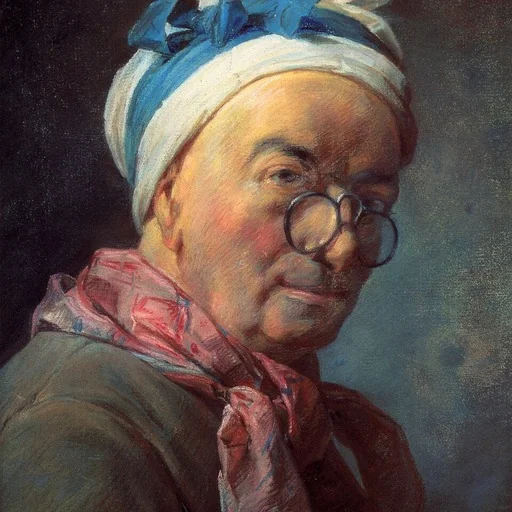
Jean Siméon Chardin (French:; November 2, 1699 – December 6, 1779) was an 18th-century French painter.