Artwork
Parthenon
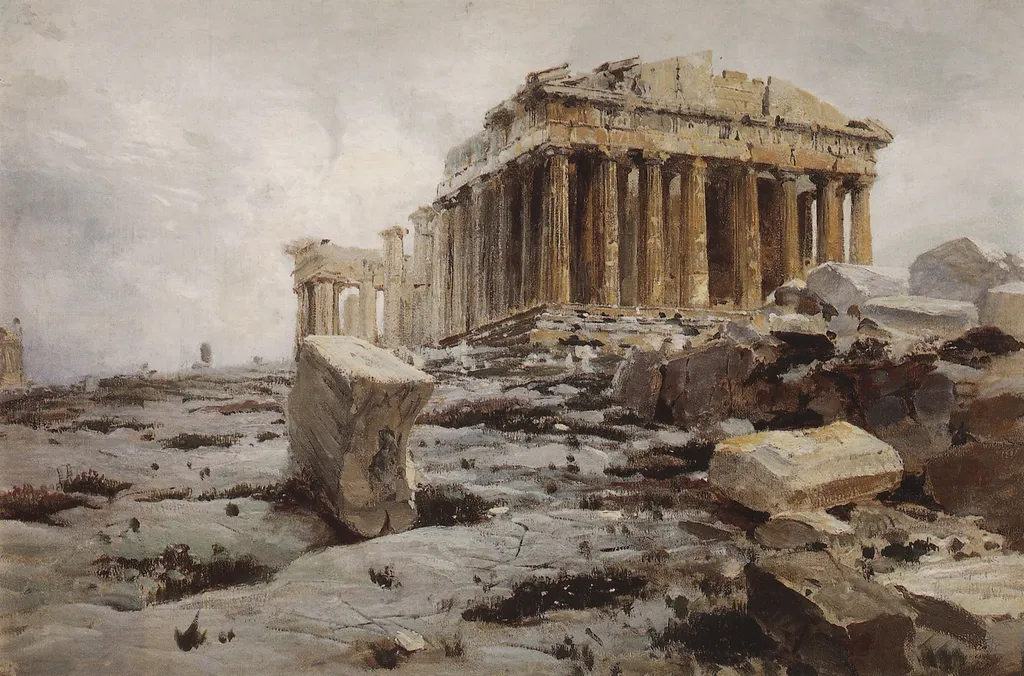
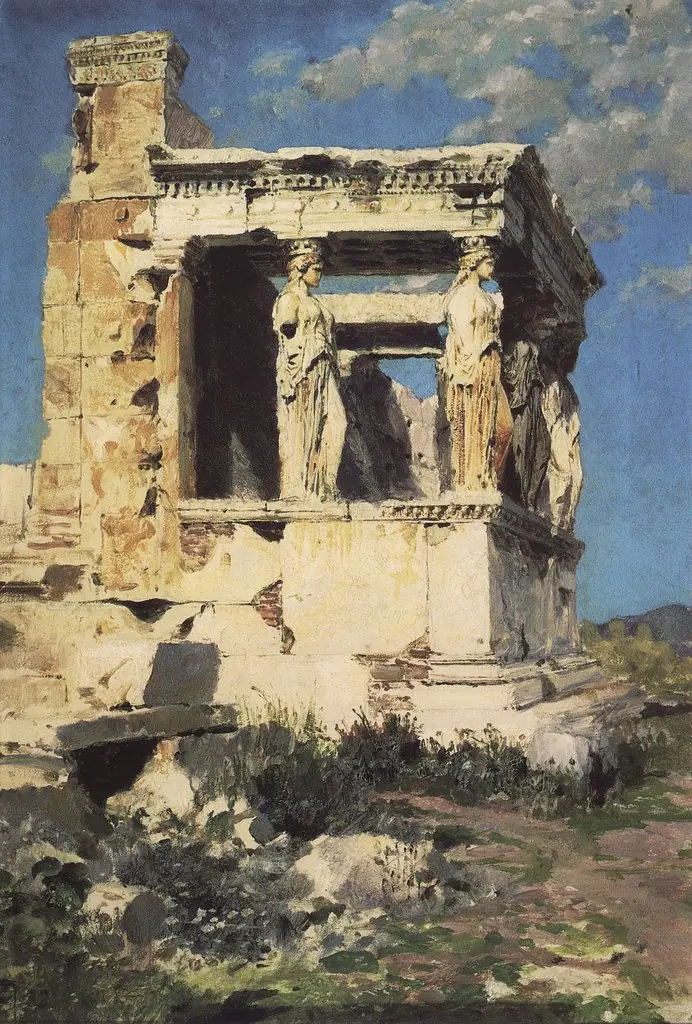
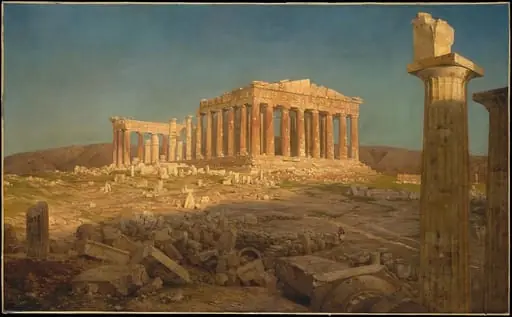
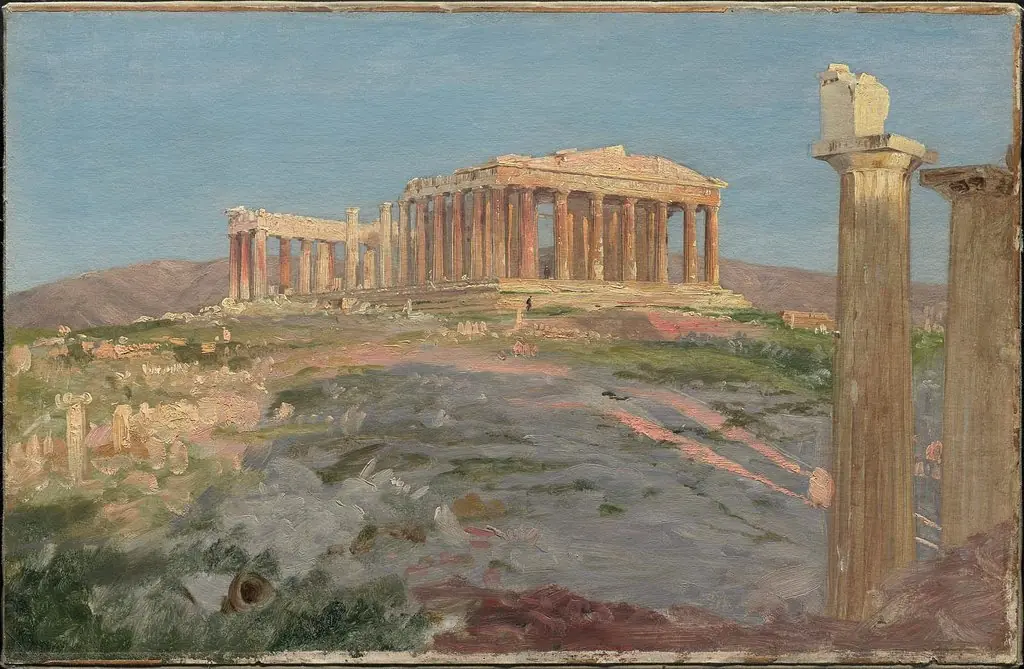
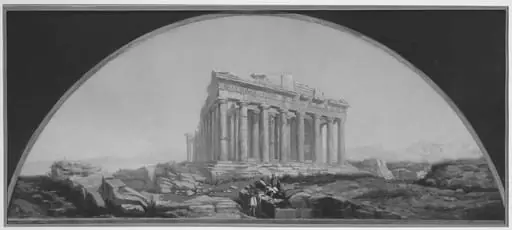
Parthenon is an oil painting by the Impressionist artist Vasily Polenov. It dates from 1891 and is held in the collection of the Tretyakov Gallery.
About this work
Technique & Style
3 cm in width, classifying it as a small-scale architectural view.
Created in 1881, this work is an oil painting executed on canvas. The piece measures 29.8 cm in height and 43.3 cm in width, classifying it as a small-scale architectural view. Stylistically, the composition depicts the Parthenon and the Acropolis of Athens, focusing on the ancient Greek temple ruins set against a sky filled with clouds.
The handling of the medium captures the structural details of the ruins alongside atmospheric elements, presenting the site as a historical subject within the genre of architectural landscape painting.
History & Provenance
Vasily Polenov created the oil painting Parthenon in 1881. Executed on canvas, the work depicts the ancient Greek temple and ruins of the Acropolis of Athens under a cloudy sky. The painting entered the collection of the Tretyakov Gallery, where it remains housed.
While specific commissioning details or an ownership chain prior to the gallery are not provided in the available records, the work is consistently attributed to Polenov with an inception date of 1881.
The painting is housed in the Tretyakov Gallery in Moscow. Its accession number is not specified in the provided sources. It was created in 1881 and has been part of the gallery's collection since its inception.
The work has been exhibited at the Tretyakov Gallery as part of its permanent display of Russian realist paintings.
Context
Vasily Polenov's 1881 oil painting Parthenon, measuring 29.8 cm by 43.3 cm, presents an architectural view of the Acropolis ruins as housed in the Tretyakov Gallery collection. The work is recognized within scholarly discourse for its atmospheric treatment of classical subject matter, reflecting 19th-century Russian artistic engagement with antiquity. Its creation aligns with Polenov's broader practice of historical and archaeological themes, situating it within the context of Russian realist painting while maintaining a distinct focus on antiquarian subjects.
The painting's depiction of the Parthenon's remaining columns and structure against a cloud-filled sky demonstrates compositional choices that contributed to discussions of perspective and historical ambiance in late 19th-century art criticism.
Overview
Created in 1891 by Russian landscape painter Vasily Dmitrievich Polenov, Parthenon is an oil on canvas that portrays the ancient Acropolis of Athens. The work belongs to the late‑19th‑century Peredvizhniki circle, a group known for realist tendencies, yet the painting adopts an impressionistic handling of light and atmosphere.
Subject & Meaning
The composition centers on the weathered Parthenon, its marble columns rising from a rugged outcrop under a muted sky. By emphasizing the building’s age and the soft, diffused light, Polenov suggests the passage of time and the enduring presence of cultural heritage, inviting contemplation of history’s quiet continuity.
Own this work as a print
Artist & collection
Artist
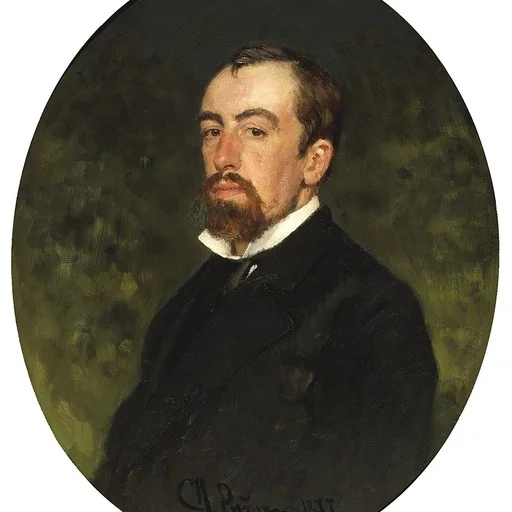
Vasily Dmitrievich Polenov (Russian: Василий Дмитриевич Поленов; 1 June 1844 – 18 July 1927) was a Russian landscape painter associated with the Peredvizhniki movement of realist artists.