Artwork
Apostolul Petru
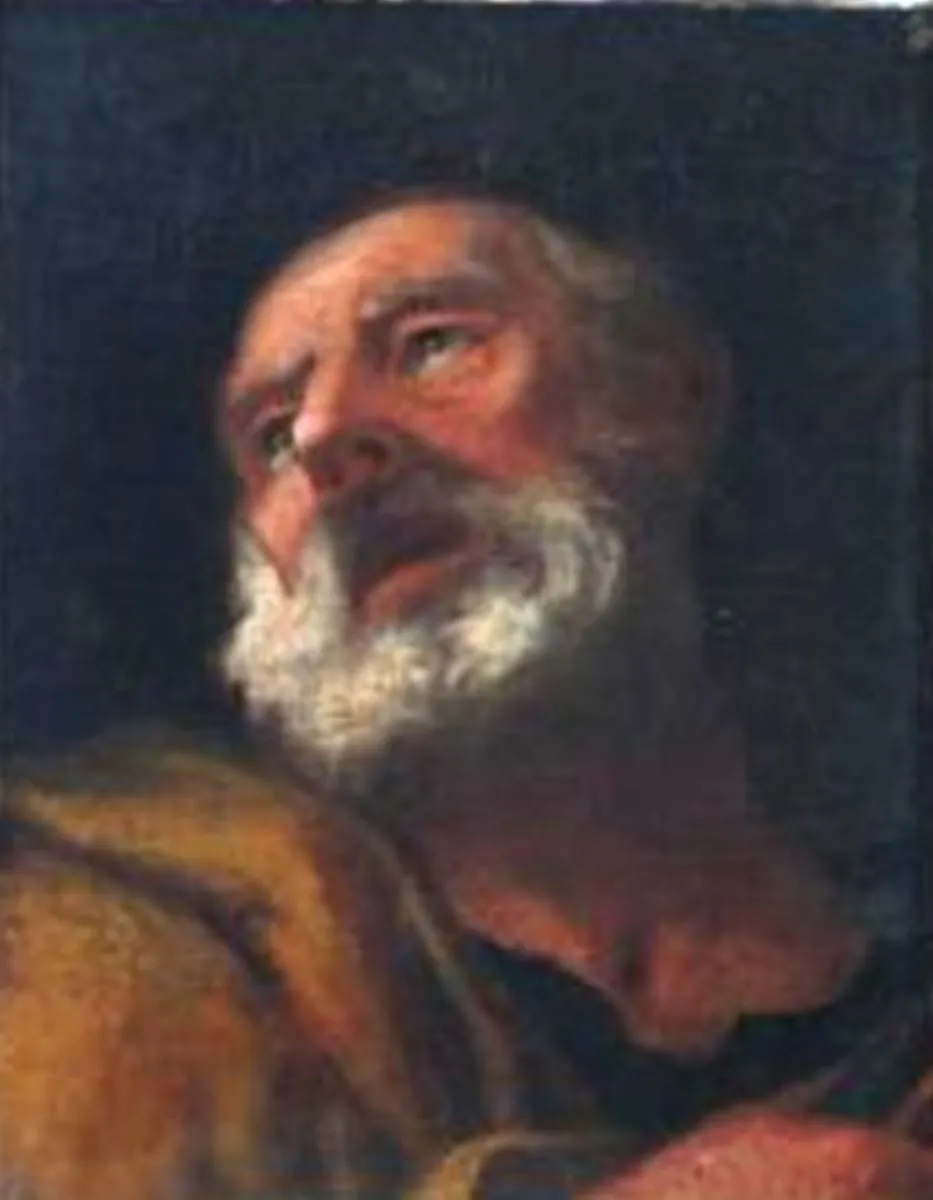
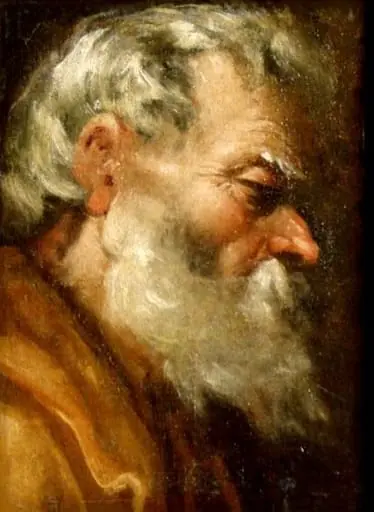
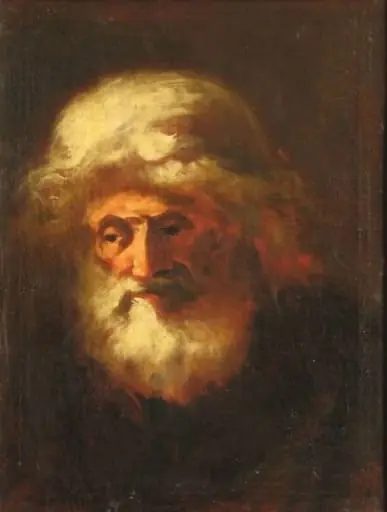
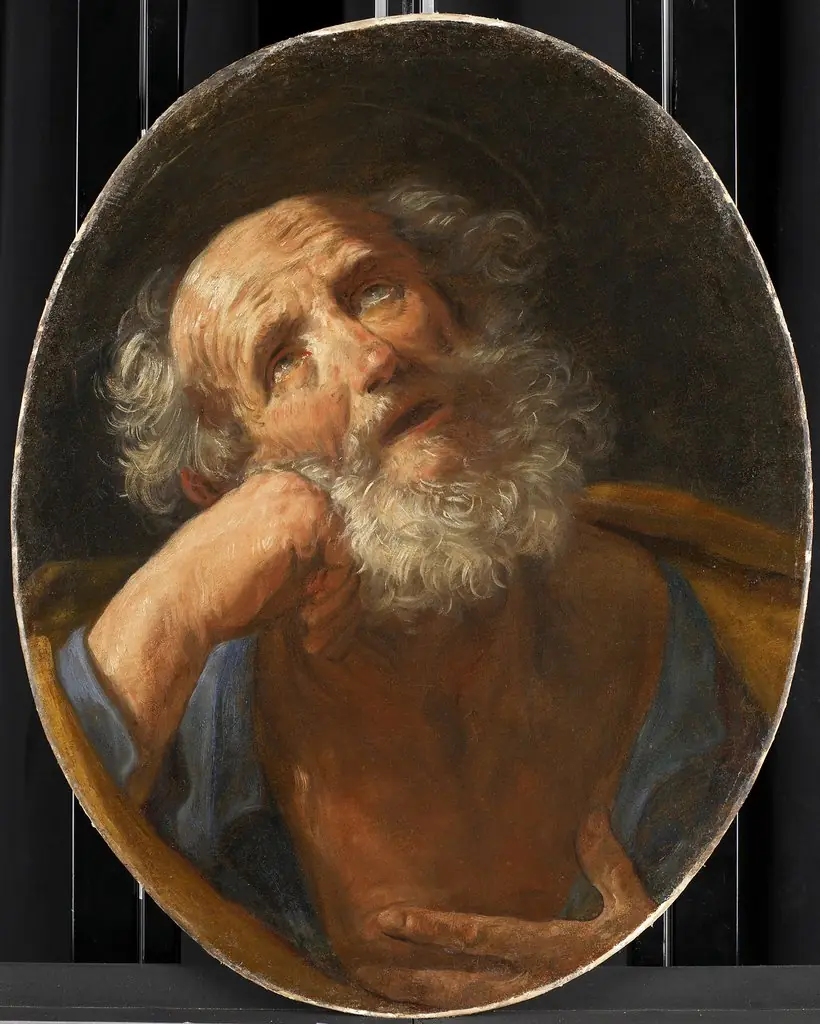
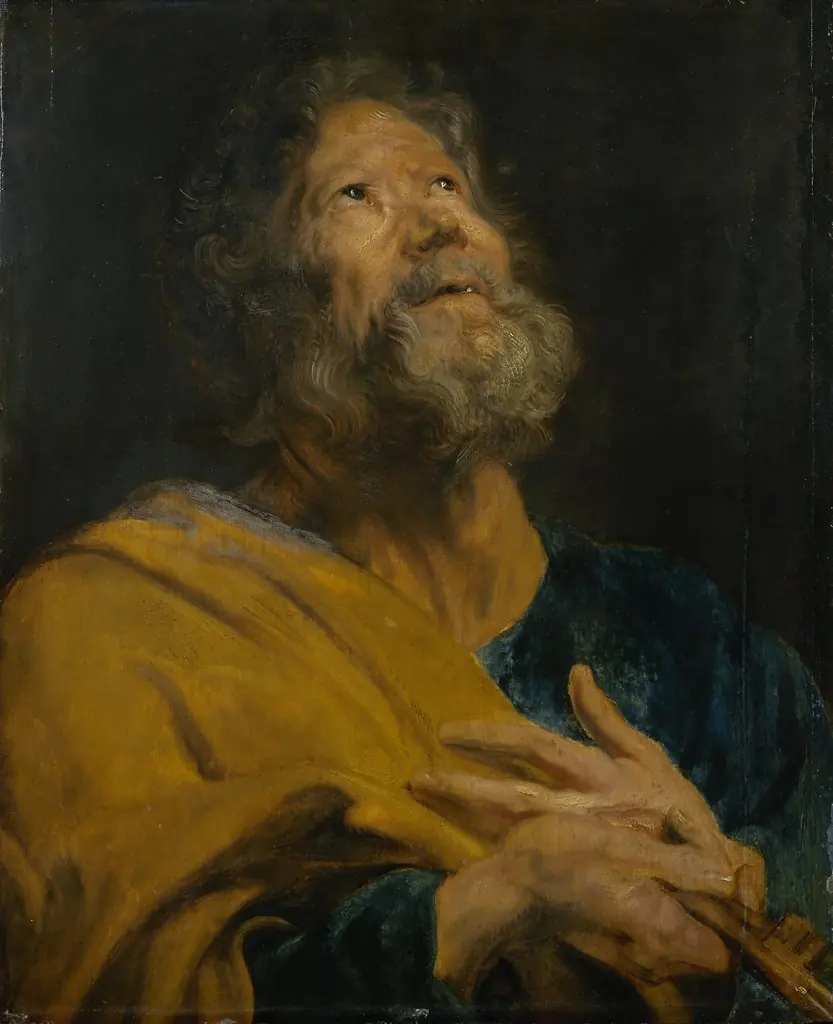
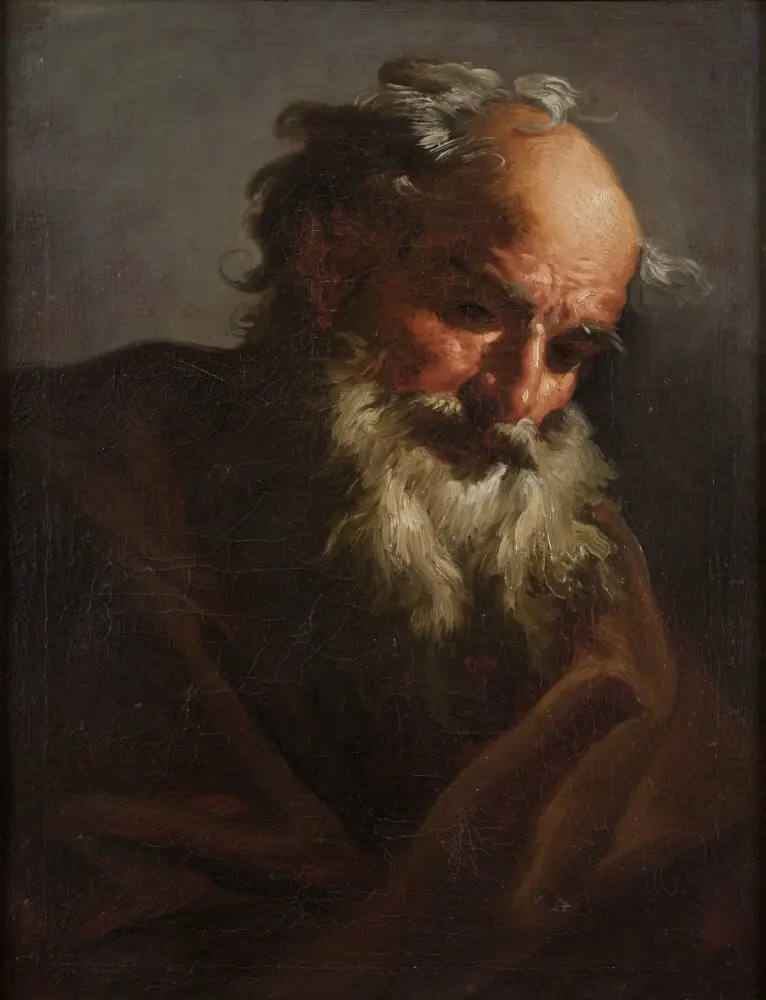
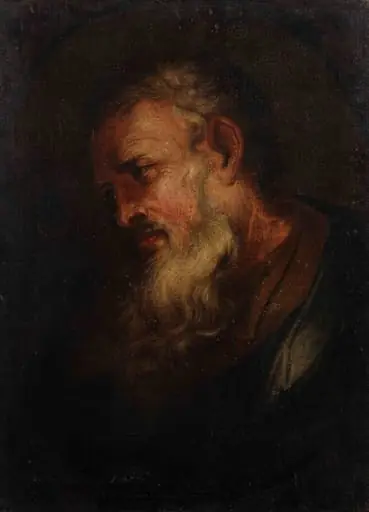
Apostolul Petru is an unspecified painting by the Baroque artist Pietro della Vechia. It is held in the collection of the Timișoara National Museum of Art. This portrait presents Saint Peter, one of Christ’s apostles, rendered in a half-length format.
About this work
Overview
The composition is tightly framed, eliminating distractions and directing focus to the subject’s gaze and expression.
This portrait presents Saint Peter, one of Christ’s apostles, rendered in a half-length format. The figure is illuminated against a deep, unbroken background, emphasizing his facial features and upper torso. The composition is tightly framed, eliminating distractions and directing focus to the subject’s gaze and expression. The work relies on strong contrasts of light and dark to convey presence and inner gravity.
Subject & Meaning
The figure is identified as Saint Peter, traditionally depicted with a white beard and solemn demeanor. His upward gaze suggests contemplation, prayer, or divine revelation, common iconographic cues for apostolic insight. The absence of attributes like keys or scrolls shifts emphasis from symbolic identity to psychological depth, inviting reflection on spiritual resolve rather than doctrinal markers.
Technique & Style
The artist employs chiaroscuro to model the face with subtle gradations of light and shadow, lending volume and emotional weight. Warm, earthy pigments ground the skin tones, while the dark background enhances the figure’s emergence from obscurity. Brushwork is restrained, favoring smooth transitions over texture, reinforcing the quiet intensity of the moment rather than ornamental detail.
History & Provenance
The painting’s origin and early ownership are not documented in available records. Its style aligns with late Renaissance or early Baroque devotional portraiture, suggesting creation between the late 1500s and early 1600s. It likely served a private or ecclesiastical context, intended for personal meditation rather than public display.
Context
During the Counter-Reformation, images of apostles were widely used to reinforce faith and personal devotion. Portraits like this one, stripped of elaborate symbolism, reflected a growing preference for intimate, emotionally resonant depictions of sacred figures. Such works catered to a spiritual climate valuing inner conviction over external spectacle.
Legacy
Though not attributed to a major named artist, the painting exemplifies a widespread devotional mode in early modern Europe. Its quiet power lies in its restraint, using minimal means to evoke spiritual gravity. It remains a representative example of how religious imagery evolved toward psychological realism in private worship settings.
Artist & collection
Artist
Pietro della Vecchia had a habit of slipping jokes into sacred scenes, his angels sometimes look like mischievous Venetian street kids, and saints wear the faces of his neighbors.