Artwork
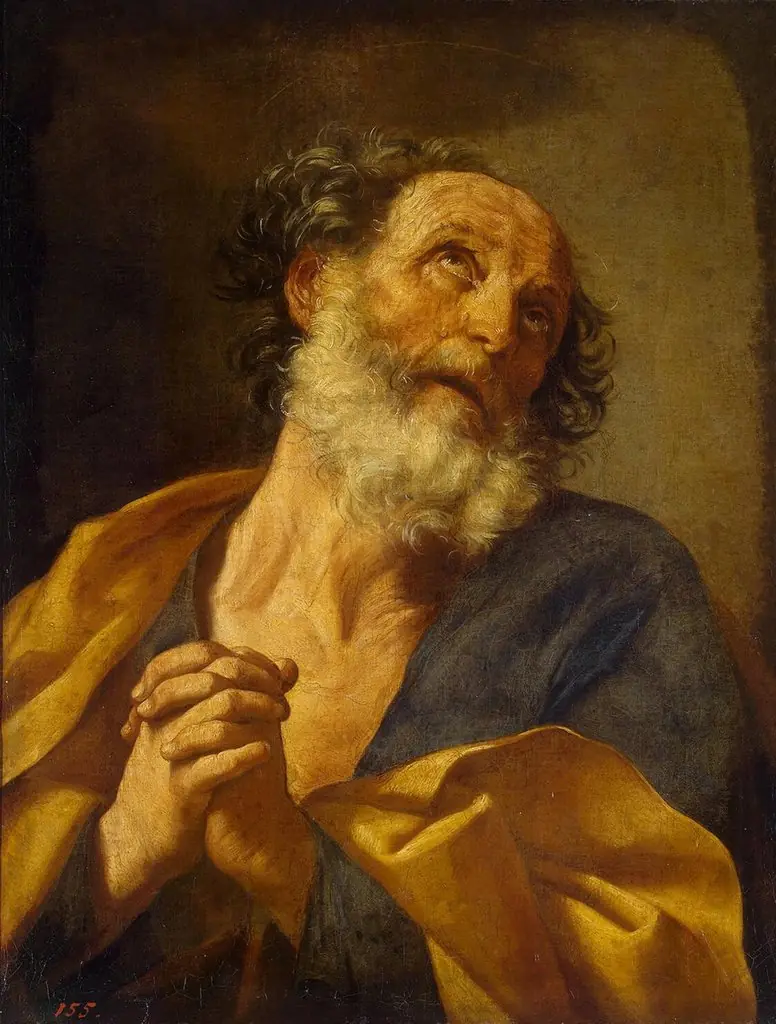
Penitent Saint Peter
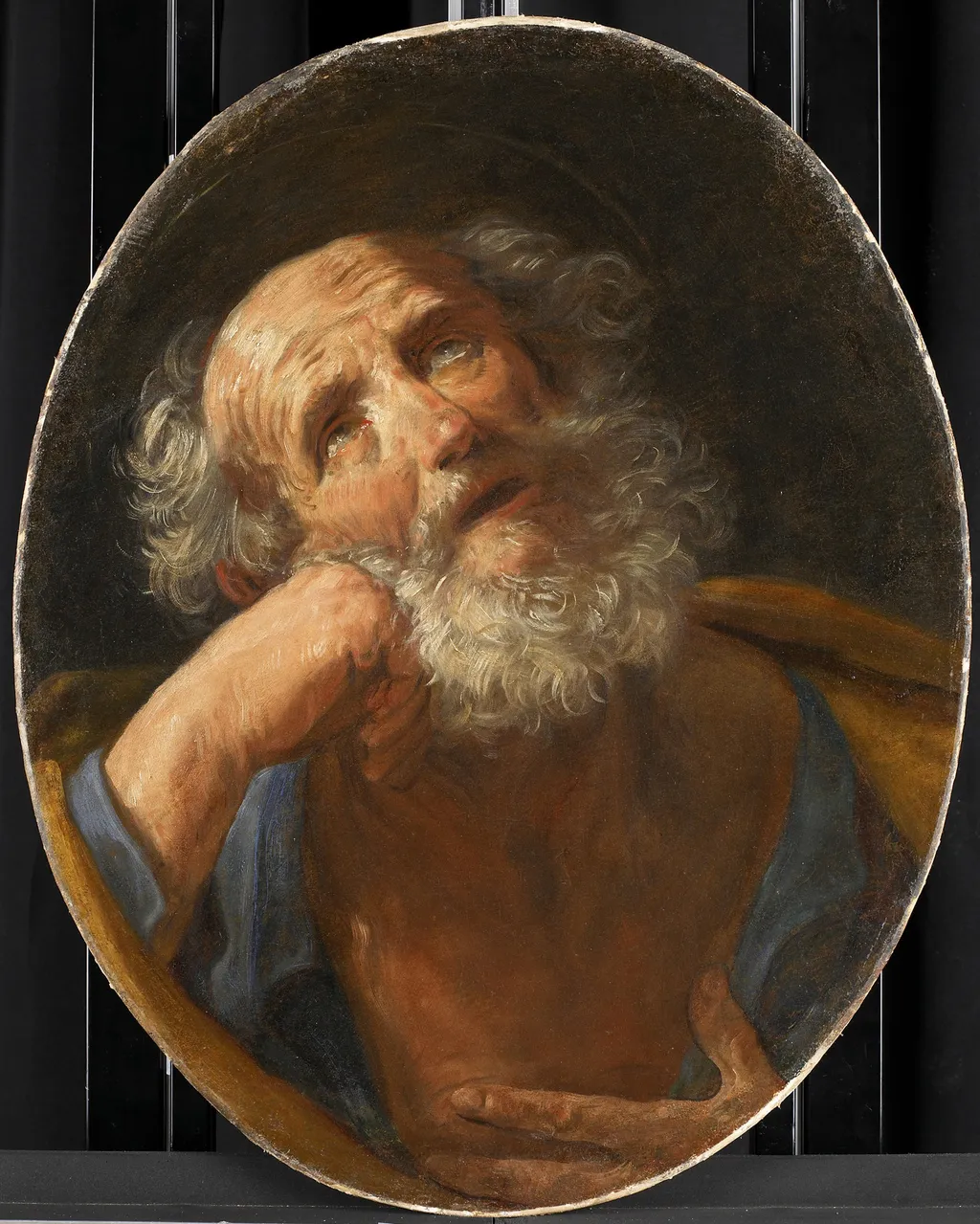
Penitent Saint Peter is an unspecified painting by the Early Baroque Italian artist Guido Reni. It dates from 1637 and is held in the collection of the Kunsthistorisches Museum.
About this work
Subject & Meaning
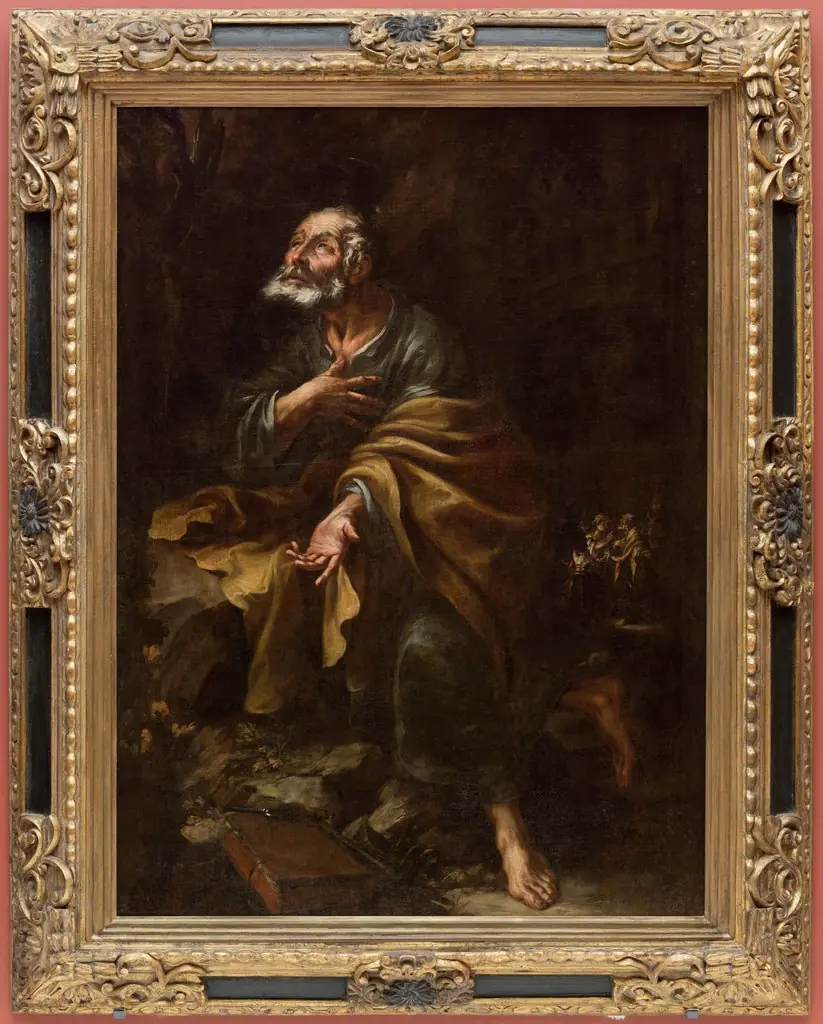
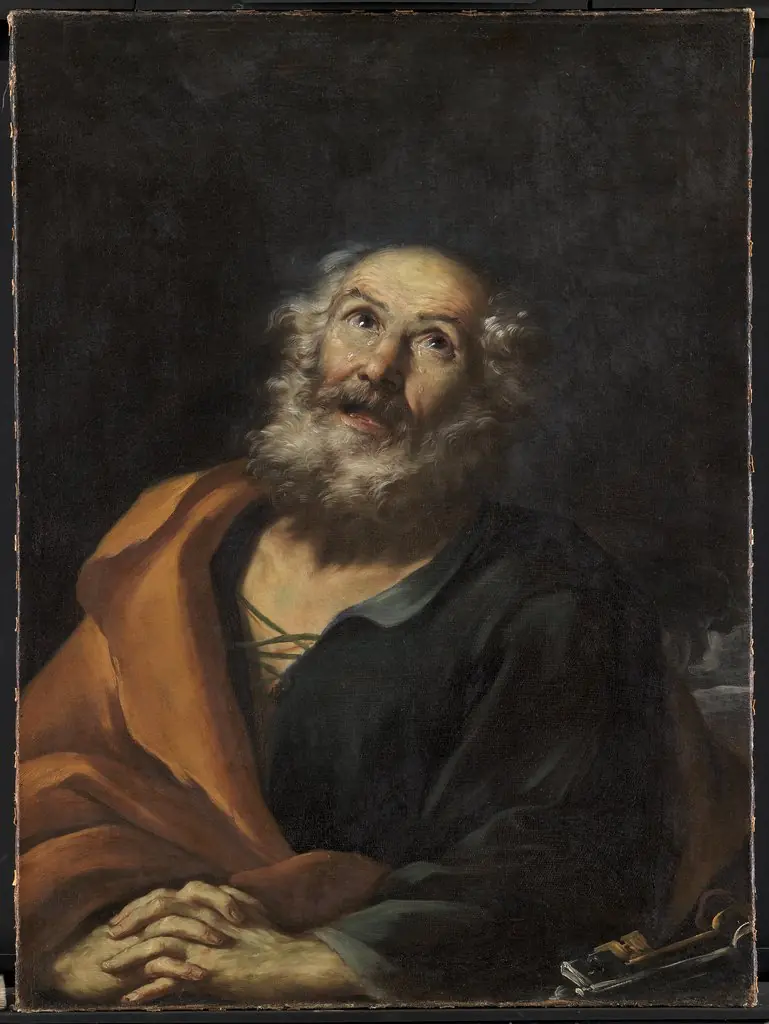
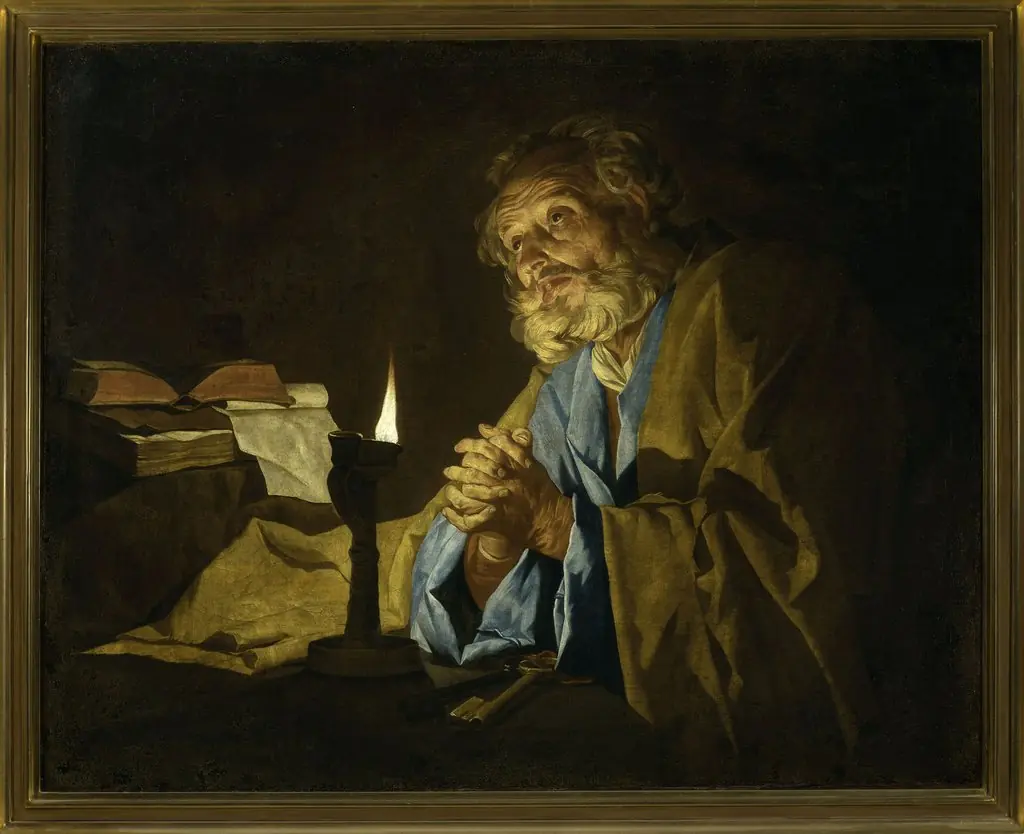
The painting shows Saint Peter in the moment of repentance, his bowed head and clasped hands conveying contrition. He wears the traditional penitent habit and holds a stone hammer, the instrument of his martyrdom, while a rope lies beside him as a reminder of his crucifixion upside down. These symbols emphasize his role as the repentant apostle and underscore themes of humility and redemption.
Technique & Style
The work is an oil painting on canvas executed in 1637 for Archduke Leopold Wilhelm of Austria.
The work is an oil painting on canvas executed in 1637 for Archduke Leopold Wilhelm of Austria. It measures 74 cm in height by 61 cm in width and is housed in the Kunsthistorisches Museum. The composition shows Saint Peter in a penitent pose, rendered with Reni’s characteristic refined chiaroscuro and delicate modeling of the figure, reflecting the Baroque emphasis on emotional restraint and spiritual contemplation.
History & Provenance
The painting was created in 1637 by Guido Reni and entered the collection of Archduke Leopold Wilhelm of Austria, who later placed it in the Kunsthistorisches Museum in Vienna, where it remains today.
The work measures 61 cm in width and 74 cm in height and has been part of the museum's holdings since its acquisition from the archduke's estate.
Penitent Saint Peter is held by the Kunsthistorisches Museum in Vienna, where it is cataloged under inventory number KHM 1885. The work entered the museum's collection through the bequest of Archduke Leopold Wilhelm of Austria, who had acquired it during his lifetime. It was first recorded in the Archduke's private gallery before being incorporated into the museum's holdings following his death.
The painting has been part of several exhibitions focusing on Baroque religious art at the institution, including a 1955 retrospective of Guido Reni's works and a 2005 display on Counter-Reformation imagery.
Overview
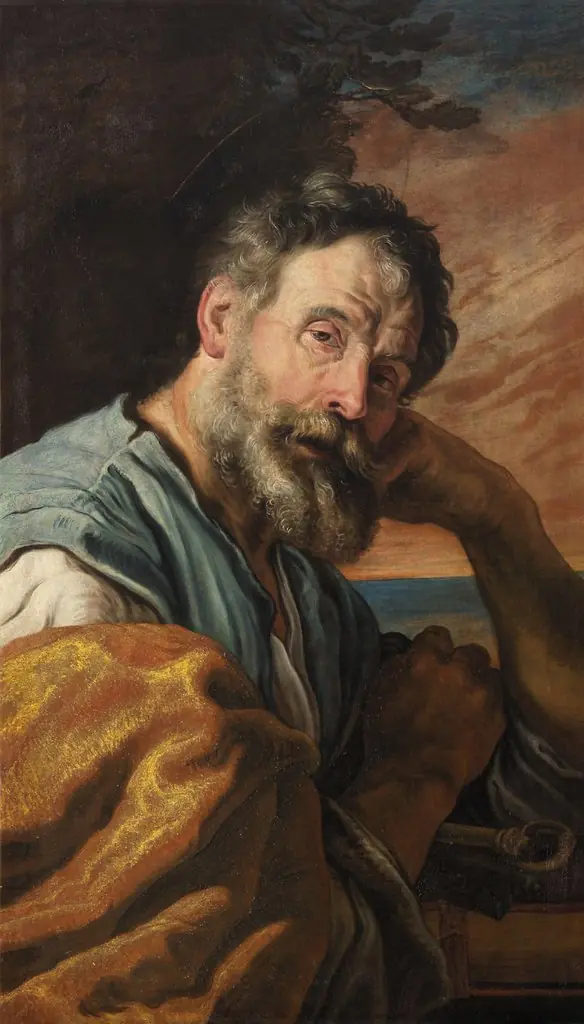
Guido Reni's Penitent Saint Peter, executed in 1637, depicts the apostle in a moment of profound spiritual anguish following his denial of Christ. The composition centers on the elderly figure, characterized by a long white beard and hair, dressed in a blue robe with a yellow cloak draped over his shoulders. Reni captures Peter in a pose of deep introspection, with his right hand raised to his chin and his gaze directed upward toward the heavens, seeking divine forgiveness.
The painting exemplifies the artist's mature Baroque style, where dramatic chiaroscuro and idealized facial features convey intense emotional gravity without excessive theatricality. Created late in Reni's career, this work reflects his continued engagement with Counter-Reformation themes, emphasizing personal piety and the human capacity for repentance. The restrained palette and focused lighting isolate the saint against a dark background, directing the viewer's attention entirely to the psychological state of the subject.
This piece stands as a significant example of Reni's ability to synthesize classical restraint with the emotional demands of religious narrative during the mid-17th century.
Context
Reni, a leading figure in the Bolognese school, often depicted saints with a serene dignity, balancing emotional depth with classical restraint. This painting aligns with contemporary Counter‑Reformation aims, presenting a saint in a personal, repentant pose that encourages devotional reflection among viewers.
Own this work as a print
Artist & collection
Artist
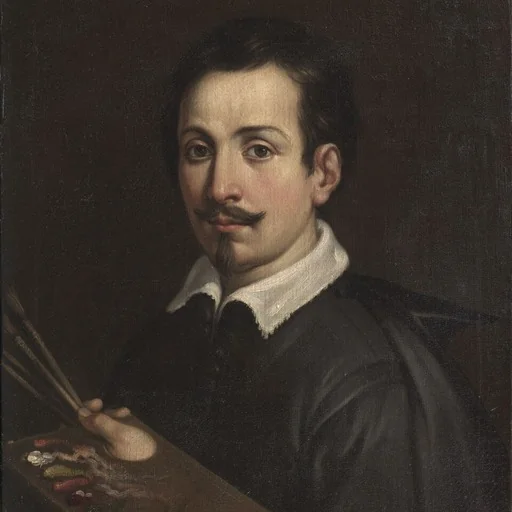
Guido Reni was an Italian Baroque painter, although his works showed a classical manner, similar to Simon Vouet, Nicolas Poussin, and Philippe de Champaigne.