Artwork
August
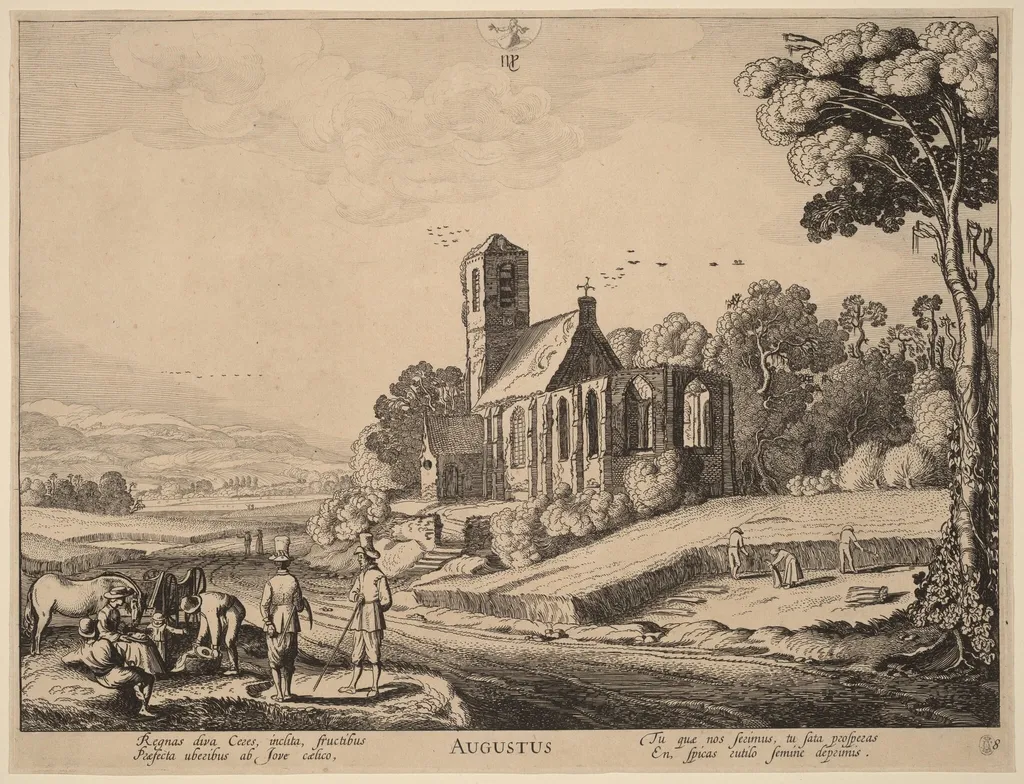
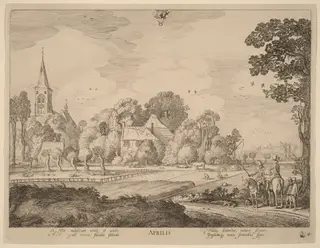
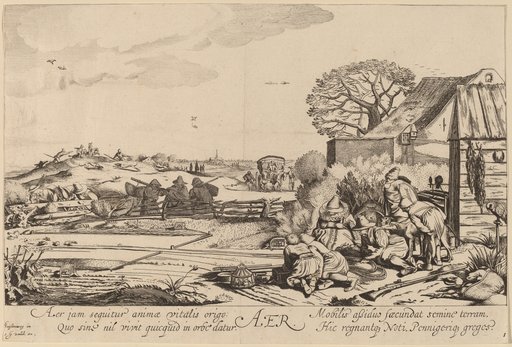
August is an ink print by the Renaissance artist Velde, Jan van de, II. It dates from 1617 and is held in the collection of the National Gallery of Art.
About this work
Overview
August is a 1617 etching by Jan van de Velde II, a Dutch Golden Age printmaker. The work exemplifies his typical subjects: natural and rural scenes.
Subject & Meaning
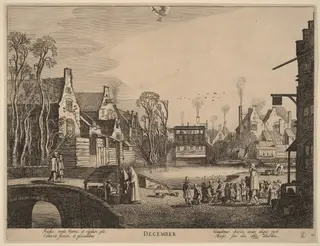
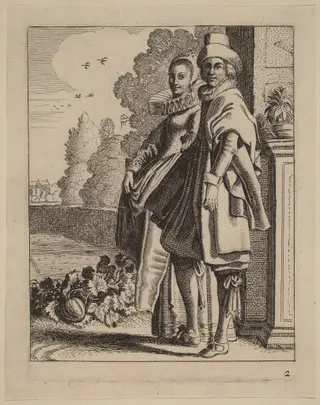
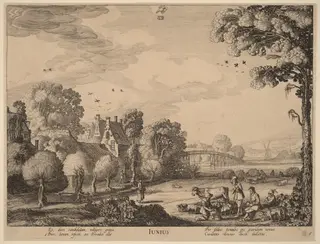
The print portrays a serene countryside setting with a church, river, trees, fields, and figures engaged in daily activities like tending animals and crops, conveying a sense of peaceful rural life.
Technique & Style
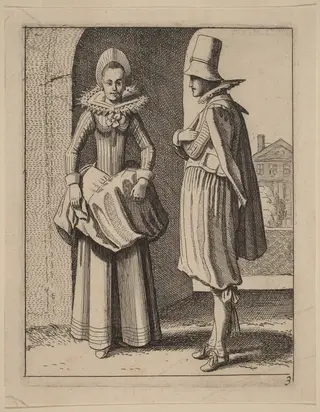
Executed in black-and-white, the etching showcases Van de Velde's use of fine lines to detail textures and patterns, such as clothing folds and grass, characteristic of the etching process where acid-etched metal plates create the image.
History & Provenance
Created in 1617, August is part of Van de Velde II's printmaking output. He was the son of Jan van de Velde the Elder and father of Jan Jansz van de Velde, a still-life painter, indicating his place within a family of artists.
Context
This work reflects the Dutch Golden Age's emphasis on natural and rural themes in art, with Van de Velde II contributing through his printmaking.
Legacy
While specific legacy details of August are not highlighted, as a work of Van de Velde II, it contributes to the broader appreciation of Dutch Golden Age printmaking and its themes.
Own this work as a print
Artist & collection
Artist
Jan van de Velde the younger (1593 – c. 1 November 1641) was a Dutch Golden Age painter and printmaker, mostly of animal, landscape and still-life subjects. He was the son of Jan van de Velde the Elder and the father of…