Artwork
Water
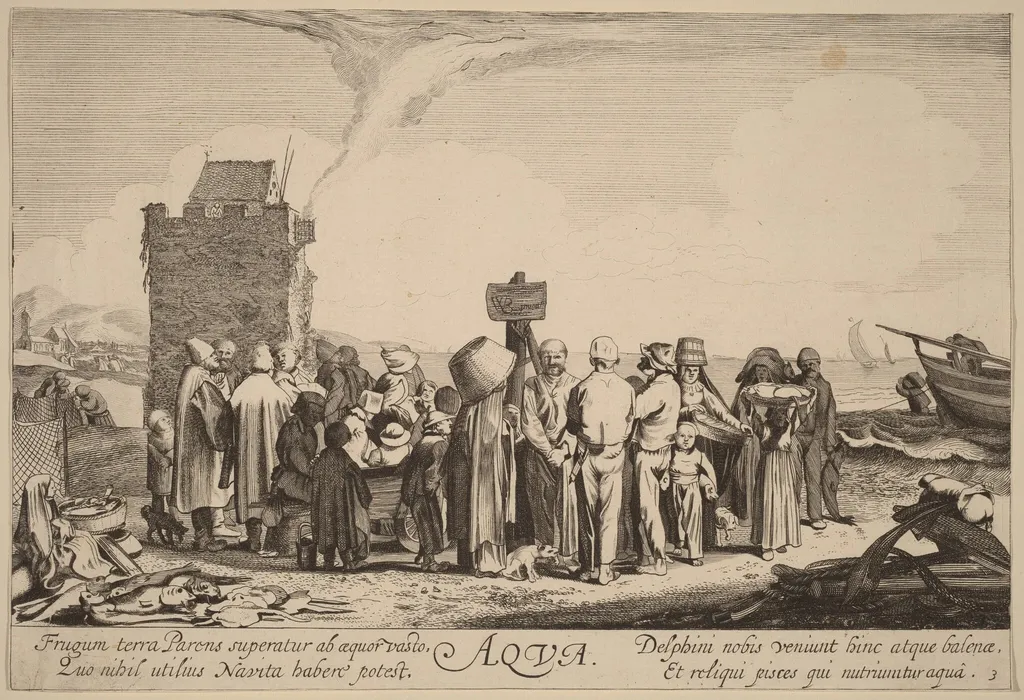
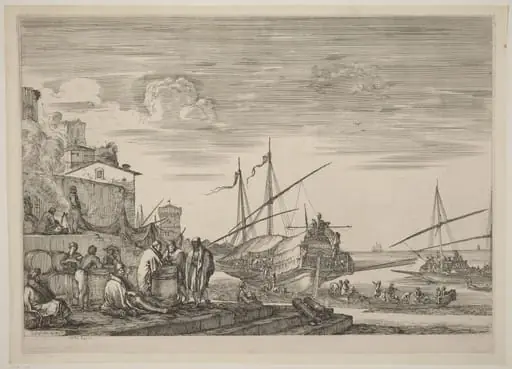
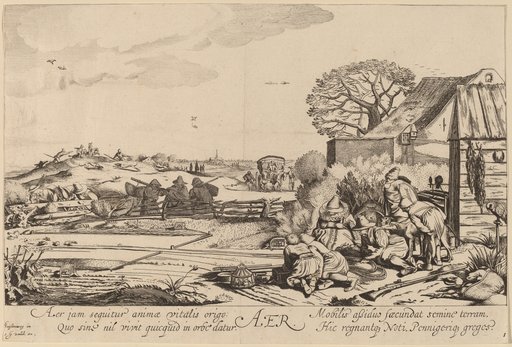
Water is an ink print by the Renaissance artist Velde, Jan van de, II. It dates from 1617 and is held in the collection of the National Gallery of Art.
About this work
Overview
Though less known than his contemporaries, he produced a significant body of work focused on everyday scenes of nature and labor.
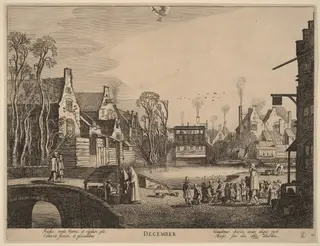
Created in 1617, Water is an etching by Jan van de Velde II, a Dutch artist active during the early Golden Age. Though less known than his contemporaries, he produced a significant body of work focused on everyday scenes of nature and labor. This print belongs to a series exploring elemental themes, with water as its central subject, reflecting a broader interest in the relationship between human activity and the natural world.
Subject & Meaning
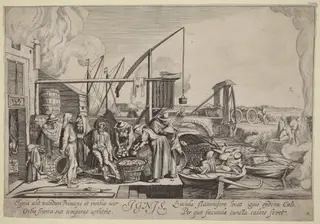
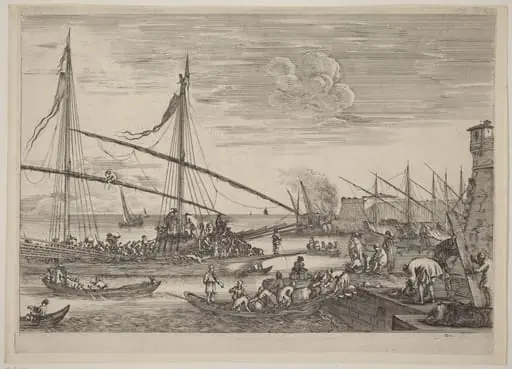
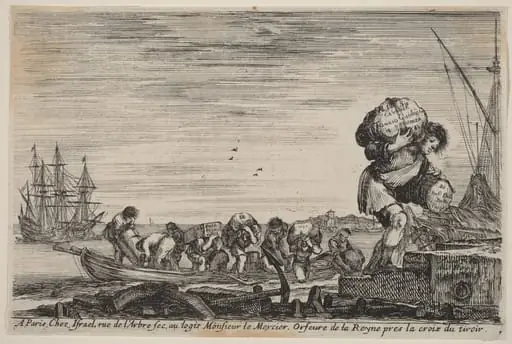
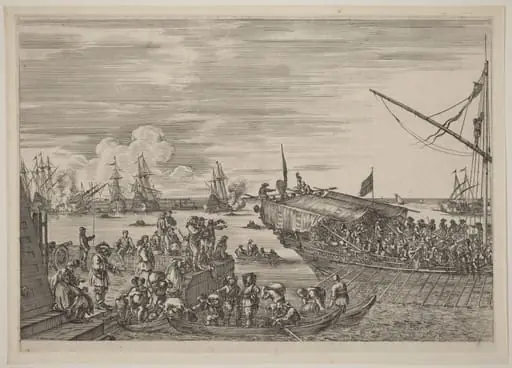
The scene captures a bustling harbor at work: figures unload fish and goods from boats, tend to children, and converse near the shore. A distant tower suggests a fortified town, anchoring the composition in a real coastal setting. The presence of animals and domestic activity implies a rhythm of daily life sustained by maritime trade.
The choppy water and anchored vessels convey motion and stillness in balance, evoking the quiet persistence of coastal economies.
Technique & Style
Van de Velde employed etching, a method involving acid-bitten lines on a metal plate to hold ink. His fine, controlled strokes render textures with precision, the ripple of water, the weave of baskets, the folds of clothing. The contrast between dense shadow and clean, open areas gives the scene depth without heavy tonal gradation. The technique allows for sharp detail, emphasizing the immediacy of the moment rather than idealized form.
History & Provenance
Jan van de Velde II came from a family of artists; his father, Jan van de Velde the Elder, was a respected engraver, and his son, Jan Jansz, became a noted still-life painter. Water was made early in his career, during a period when Dutch printmakers were expanding the range of secular subjects beyond religious or mythological themes. The print circulated among collectors and artists, contributing to the growing market for genre scenes in print form.
Context
In early 17th-century Holland, economic growth fueled by trade led to increased interest in depictions of daily life. Artists like van de Velde turned to landscapes, seascapes, and labor scenes as subjects worthy of artistic attention. Water aligns with this trend, reflecting a cultural shift toward valuing the ordinary.
The print’s focus on a working harbor mirrors the nation’s identity as a maritime power, grounded in commerce and coastal resilience.
Legacy
Though not widely celebrated in his lifetime, van de Velde’s prints influenced later Dutch genre artists through their quiet observation and technical clarity. Water exemplifies the shift from grand narratives to intimate, grounded scenes. His work helped establish etching as a legitimate medium for capturing the textures of everyday life, paving the way for artists like Rembrandt and Hobbema who would deepen the emotional resonance of similar subjects.
Own this work as a print
Artist & collection
Artist
Jan van de Velde the younger (1593 – c. 1 November 1641) was a Dutch Golden Age painter and printmaker, mostly of animal, landscape and still-life subjects. He was the son of Jan van de Velde the Elder and the father of…