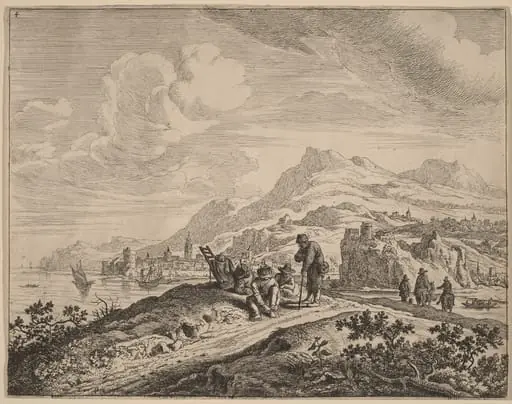
Artwork
Fisher of Men
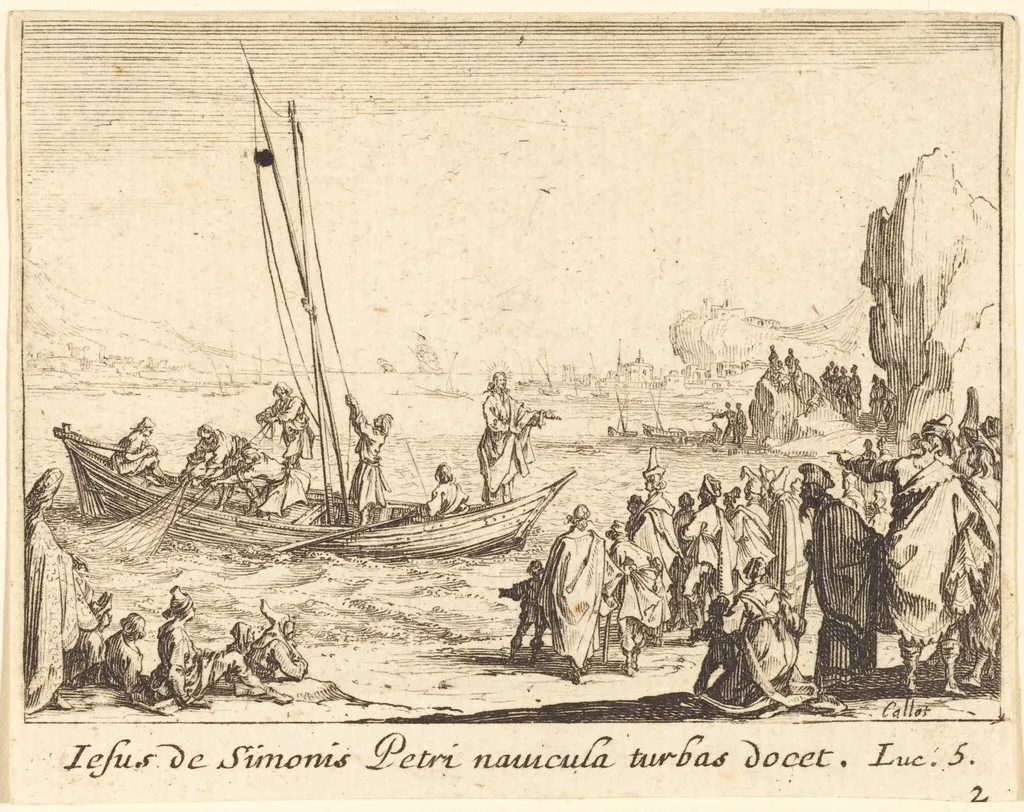
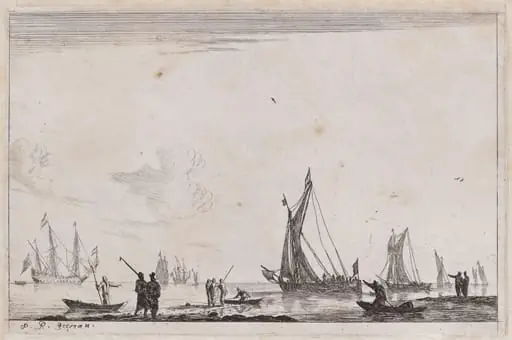
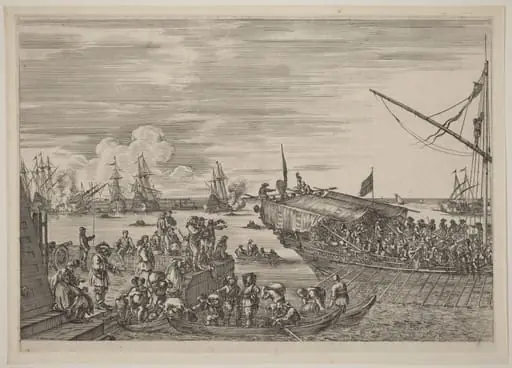
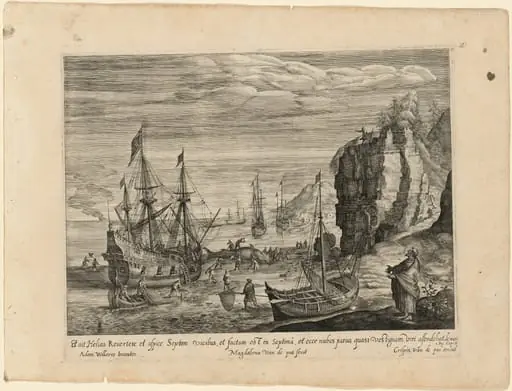
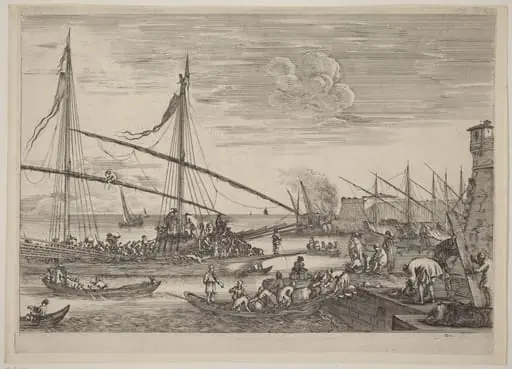
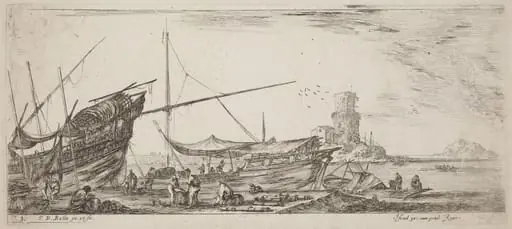
Fisher of Men is an ink print by the Baroque artist Jacques Callot. It dates from 1635 and is held in the collection of the National Gallery of Art.
About this work
Overview
Callot’s skill in etching allowed him to render complex scenes with fine, controlled lines, characteristic of his Baroque-era approach to printmaking.
Jacques Callot’s Fisher of Men, created in 1635, is an etching on laid paper that exemplifies his technical precision and narrative depth. As part of a vast body of over 1,400 prints, this work captures a moment of communal activity by a waterfront, blending religious symbolism with keen observation of everyday life. Callot’s skill in etching allowed him to render complex scenes with fine, controlled lines, characteristic of his Baroque-era approach to printmaking.
Subject & Meaning
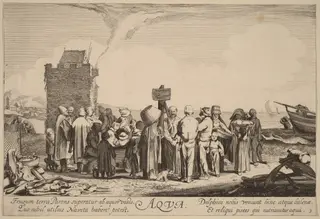
The scene depicts a group of figures gathered near a small boat, some gesturing toward the water, evoking the biblical parable of Christ calling disciples to become 'fishers of men.' While not explicitly religious in iconography, the composition invites this interpretation through its focus on gathering, instruction, and movement toward the water. The presence of multiple boats and onlookers suggests a broader community engaged in a moment of shared significance.
Technique & Style
Callot employed fine, incised lines to build texture in the water, clothing, and architectural details, demonstrating his refined control of the etching needle. The composition is densely populated yet carefully organized, with figures grouped to guide the viewer’s eye across the scene. The use of laid paper, with its subtle grid-like texture, enhances the tactile quality of the print, reinforcing the artist’s attention to surface and detail.
History & Provenance
Created during Callot’s mature period in Nancy, the work reflects his ongoing engagement with both religious themes and the social fabric of early 17th-century Lorraine. Though its early ownership is undocumented, the print entered institutional collections in the 19th century, where it was recognized for its technical accomplishment and historical insight. It remains part of the broader corpus of Callot’s prints preserved in major European collections.
Context
In the 1630s, etching was a widely practiced medium for disseminating images across Europe, and Callot was among its most influential practitioners. His works often documented contemporary life amid the turmoil of the Thirty Years’ War, yet Fisher of Men turns inward, focusing on quiet human interaction rather than conflict. This shift reflects a broader trend among printmakers to explore spiritual and domestic narratives alongside political ones.
Legacy
Callot’s influence extended through generations of printmakers who adopted his detailed line work and compositional clarity. Fisher of Men exemplifies how etching could convey narrative complexity without color or scale, making it accessible to a wide audience. The print endures as a testament to his ability to infuse ordinary scenes with layered meaning, bridging the sacred and the secular through meticulous draftsmanship.
Own this work as a print
Artist & collection
Artist
Jacques Callot (French: ; c. 1592 – 1635) was a baroque printmaker and draftsman from the Duchy of Lorraine. He is an important person in the development of the old master print. He made more than 1,400 etchings that…

 Holy Family at supper
 Restoration of the Aqueduct at Pisa
 Restoration of the Aqueduct at Pisa
 Square in Paris with Many Figures
 Square in Paris with Many Figures
 Horsemen Attacked by Robbers
 HOW WILL A COVERED PART BE CORRECTED?HOW WIKA A COVERED HEART DEED CORRECTED?
![Christ Walking on the Water [second plate], by Jacques Callot](https://artifactworldgallery.com/img/jacques-callot--christ-walking-on-the-water-second-plate--2069f3bfe4cb2126-w320.webp) Christ Walking on the Water [second plate]
Christ Walking on the Water [second plate]