Artwork
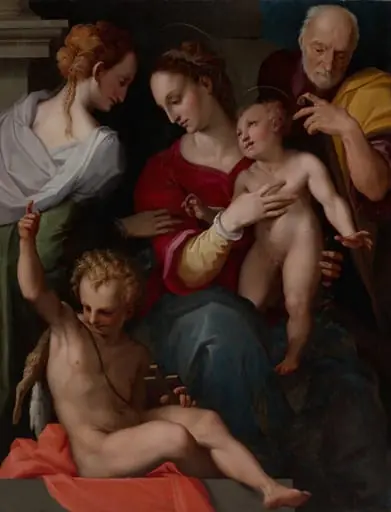
The Holy Family with the Infant St John, St Elizabeth and St Anna
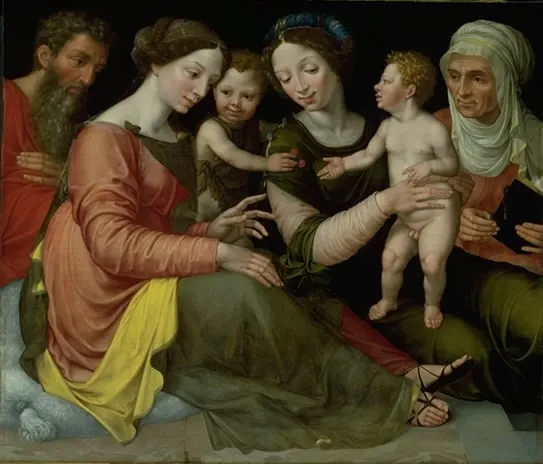
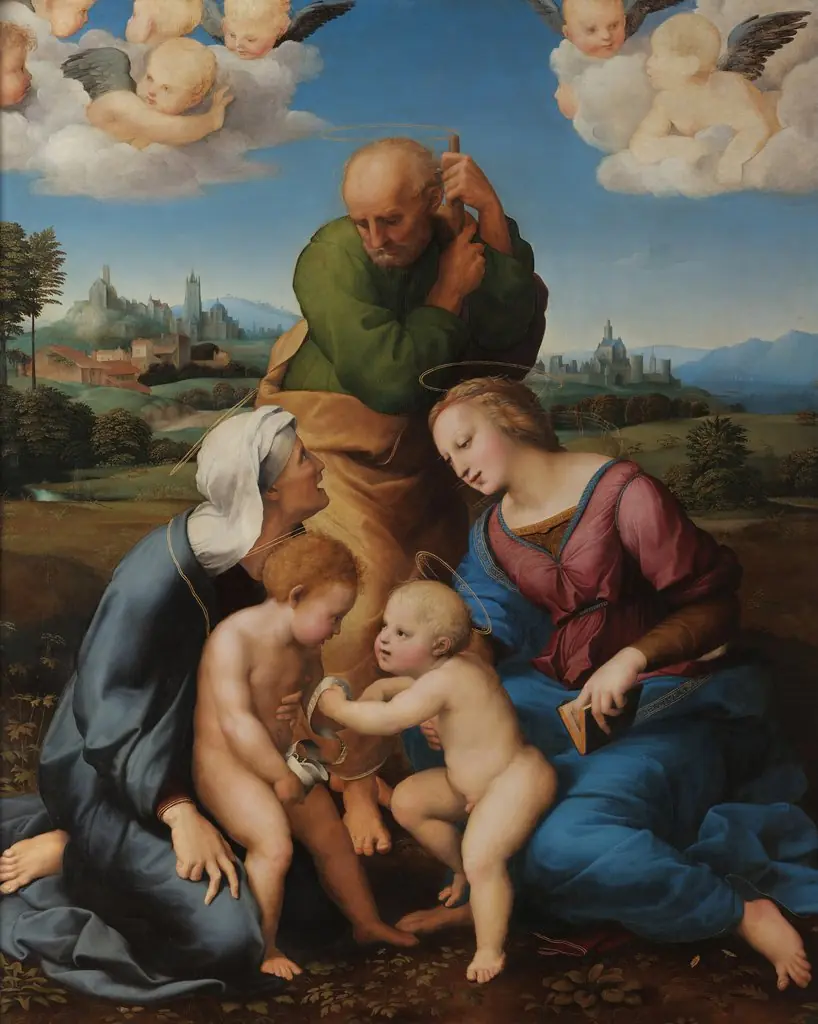
The Holy Family with the Infant St John, St Elizabeth and St Anna is an oil painting by the Early Baroque Italian artist Vincent Sellaer. It dates from 1550 and is held in the collection of the Statens Museum for Kunst.
About this work
Subject & Meaning
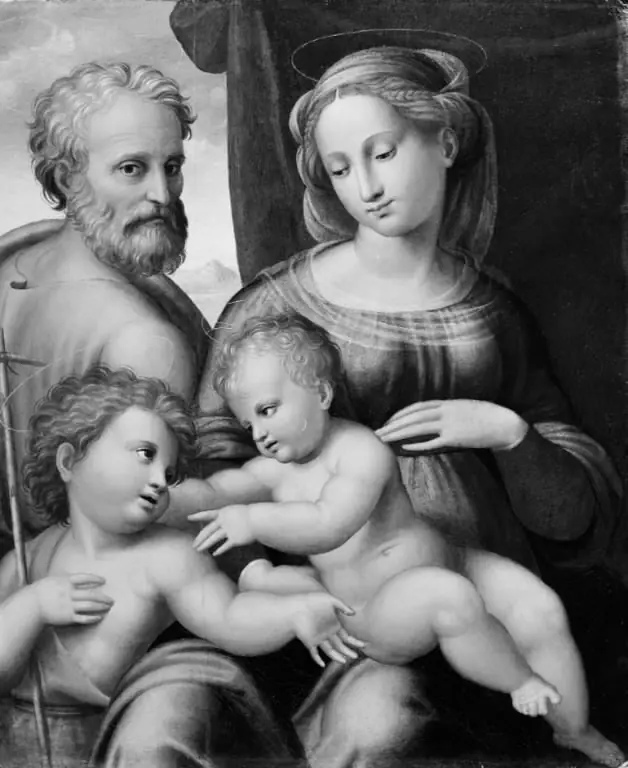
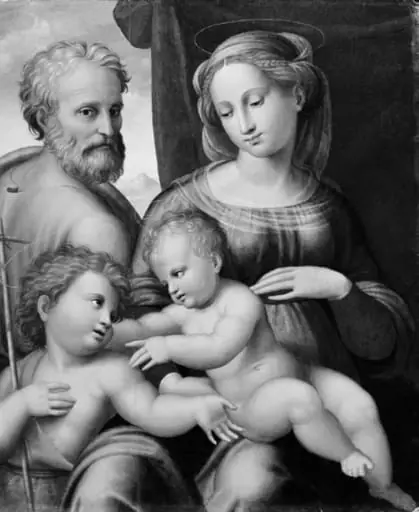
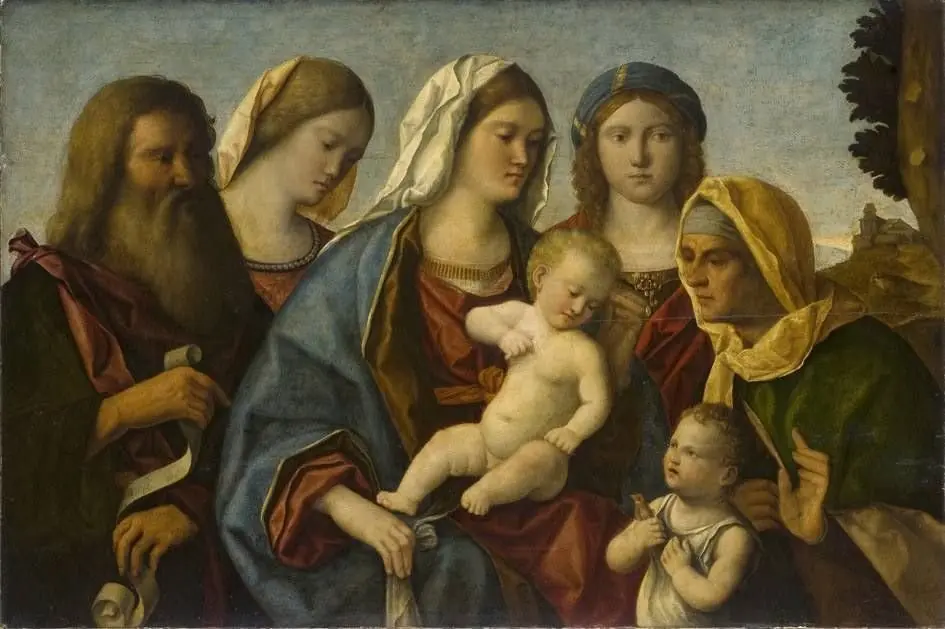
Created in 1550 by Vincent Sellaer, this religious oil painting depicts a gathering of the Holy Family alongside Saint Elizabeth and Saint Anna.
Created in 1550 by Vincent Sellaer, this religious oil painting depicts a gathering of the Holy Family alongside Saint Elizabeth and Saint Anna. The composition centers on the Child Saint John, who is shown in the presence of these key biblical figures. As a work of religious art, the piece illustrates the intimate familial bonds within the sacred narrative, bringing together the parents of Jesus, the mother of John the Baptist, and the grandmother of Jesus.
The inclusion of these specific saints emphasizes themes of lineage and divine connection central to Christian iconography of the period.
History & Provenance
The Holy Family with the Infant St John, St Elizabeth and St Anna was created by Vincent Sellaer in 1550. Executed in oil paint on panel, the work belongs to the religious art genre and depicts the Child Saint John alongside other biblical figures. The painting is currently held in the collection of the Statens Museum for Kunst.
No specific details regarding the original commission, the initial ownership chain, or the precise circumstances of its creation are provided in the available records.
Overview
The Holy Family with the Infant St John, St Elizabeth and St Anna is a 16th-century oil painting created by Flemish Renaissance artist Vincent Sellaer around 1550. The work combines Italian early Baroque influences with northern European stylistic elements.
Technique & Style
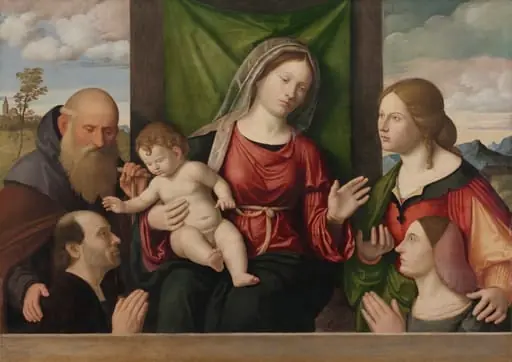
Sellaer employed chiaroscuro to create a peaceful atmosphere, with soft, glowing light accentuating the figures' faces and hands, set against a dark background. The clothing features gentle, realistic folds, blending northern attention to detail with Italian compositional harmony.
Context
Created during the early Baroque period, the work reflects the artistic exchange between Flemish and Italian schools, characteristic of the Renaissance's later phase.
Legacy
While specific influences or notable reproductions of the painting are not detailed, it remains a representative example of the blended stylistic approaches of its time, preserved for study in a major museum collection.
Artist & collection
Artist
Vincent Sellaer (1490–1564), was a Flemish Renaissance painter known for his mythological and religious subjects. His works stand out through their monumentality of form and their mixing of Italian and northern styles.

 The Holy Family and St John
 The Holy Family and St John
 Hl. Sippe
 Virgin and Child with Saints and Donors
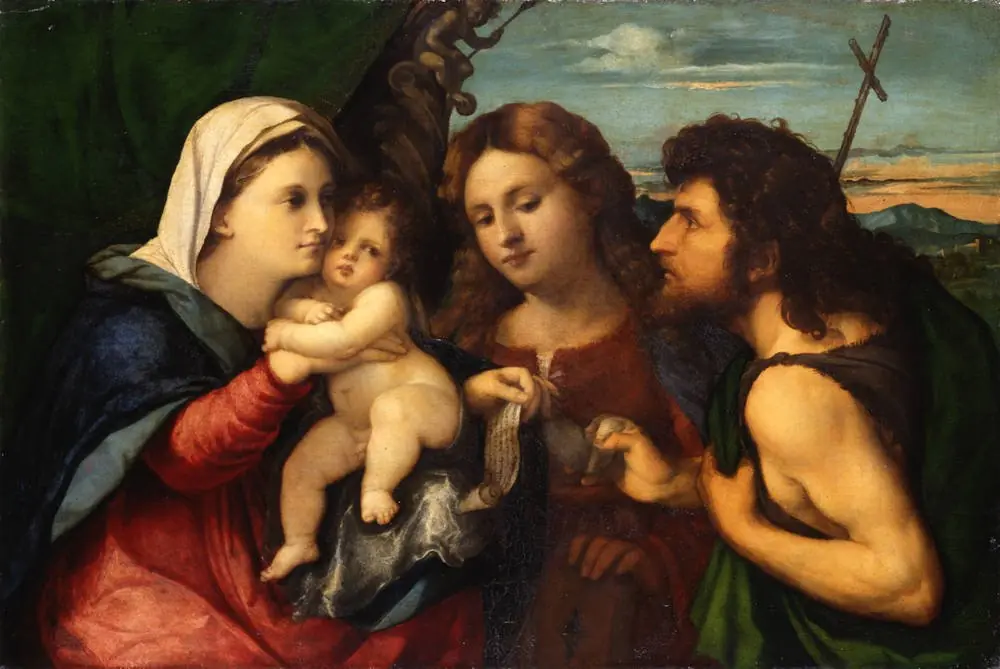 Maria mit dem Kind, Johannes dem Täufer und der heiligen Katharina
 Holy Family with the Mystic Marriage of Saint Catherine
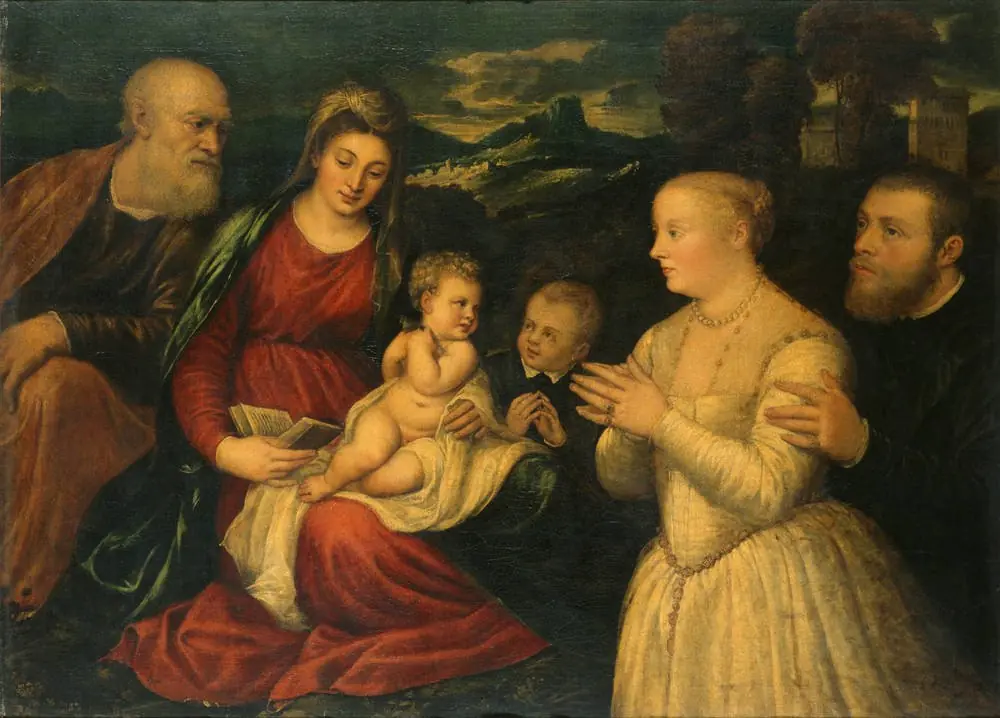 The Holy Family with Donors
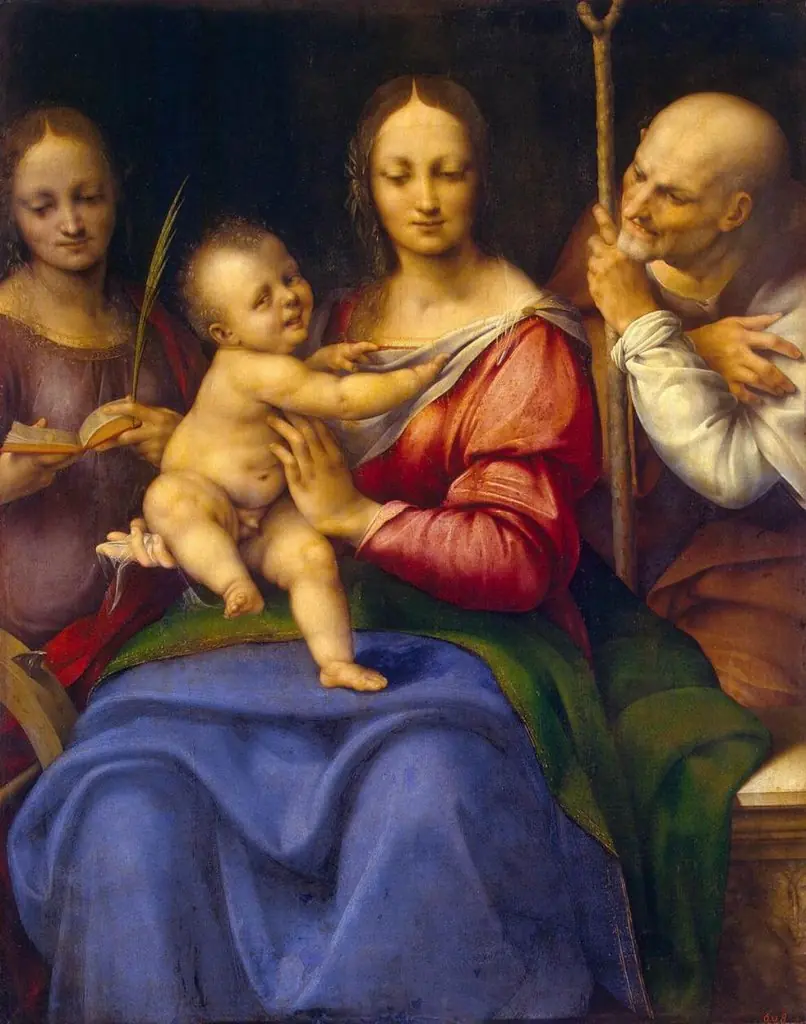 Holy Family with St Catherine
 Canigiani Holy Family