Artwork
The Holy Family with Donors
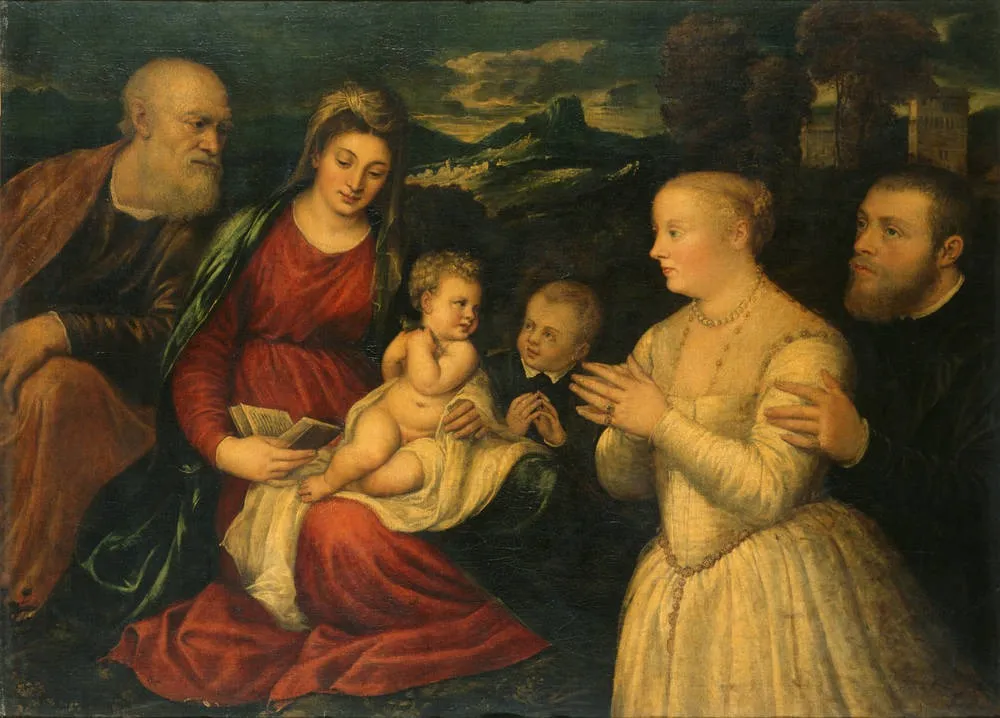
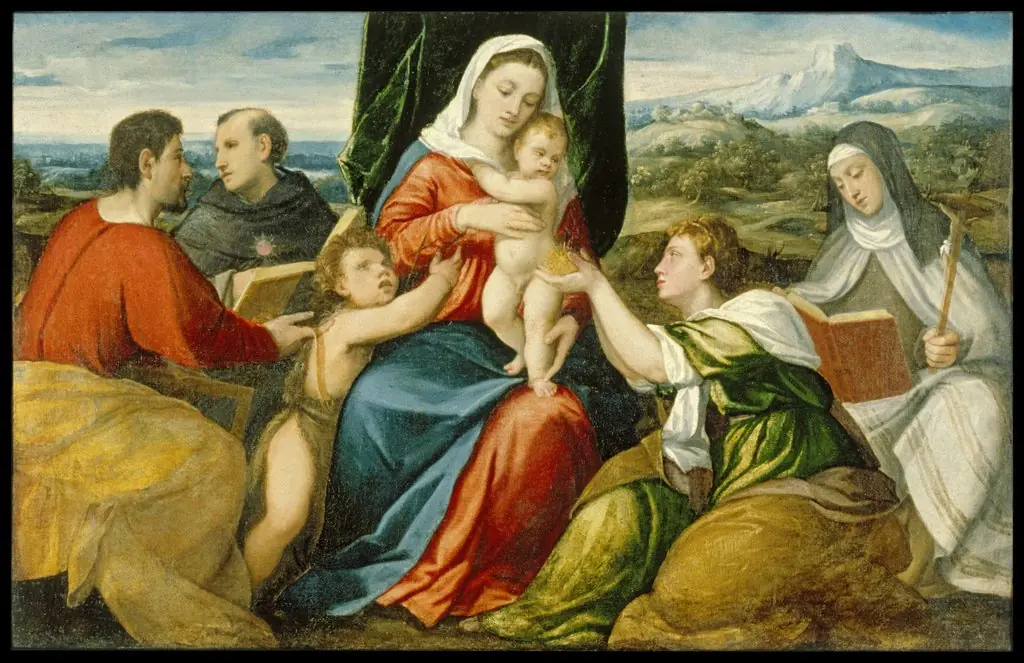
The Holy Family with Donors is an oil painting by the Mannerist artist Unknown. It dates from 1560 and is held in the collection of the Staatliche Kunstsammlungen Dresden. The work depicts a modest interior that opens onto a landscape, populated by five figures.
About this work
Overview
The Holy Family with Donors is a religious painting dated to 1560. The work is executed in oil paint on canvas, measuring 118 cm in height by 161 cm in width. Attributed to the school of Titian, the composition merges a traditional sacred scene with contemporary portraiture. The painting is held in the Staatliche Kunstsammlungen Dresden and resides in the Gemaldegalerie Alte Meister.
Subject & Meaning
The inclusion of the donors within the sacred space signifies their piety and desire for spiritual proximity to the holy figures.
The artwork depicts the Holy Family alongside two kneeling donor figures. At the center left, the Virgin Mary, dressed in a red gown with green drapery, sits holding the Christ Child on her lap while looking down at an open book in her left hand. Beside her sits an older, bearded man in brown and rose robes, likely Saint Joseph, with his right arm resting on his knee. A small child in dark clothing stands between Mary and a kneeling female donor, who wears an elaborate cream-colored gown with a pearl necklace and clasps her hands in prayer. Behind the female donor, a bearded man in black places his right hand on her shoulder, representing the male donor. The inclusion of the donors within the sacred space signifies their piety and desire for spiritual proximity to the holy figures.
Technique & Style
Executed in oil on canvas, the painting demonstrates the stylistic hallmarks of the Venetian school. The composition is arranged horizontally, with six figures set against a dark landscape featuring distant hills, a cloudy sky, and a building with trees in the far right background. The palette relies on deep reds, warm browns, creamy whites, and dark greens. Light falls softly from the upper left, illuminating the faces and fabrics while allowing the background to recede into shadow. The surface displays smooth brushwork, with careful attention given to the rendering of textile textures and flesh tones.
History & Provenance
Created in 1560, the painting entered the collection of the Staatliche Kunstsammlungen Dresden, where it is housed in the Gemaldegalerie Alte Meister. The specific commission and early ownership chain remain undocumented in the available records, though the depiction of the donors indicates the work was originally a private devotional commission. An etching and engraving of the same title, dating to the 1750s and held by the Los Angeles County Museum of Art under accession number M.73.132.3, suggests the composition circulated in print form in later centuries.
Context
The painting is cataloged as a work of the school of Titian, placing its creation within the orbit of one of the leading figures of the Venetian High Renaissance. The date of 1560 situates the work in a period when Titian's workshop was highly productive, often executing variants of successful compositions for diverse patrons. The integration of donor portraits into sacred narratives was a well established convention in Renaissance art, allowing wealthy patrons to commemorate their devotion within an intimate, devotional format. The warm coloration and soft lighting reflect the Venetian tradition's emphasis on colorito over linear design.
Artist & collection









- The Holy Family
 The Holy Family
 Holy Family with Sts Catherine, Anne and John
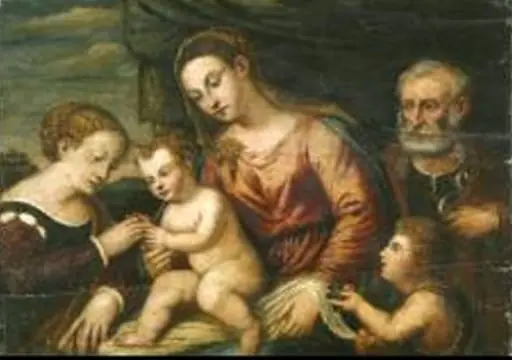 Logodna mistică a sfintei Ecaterina de Alexandria
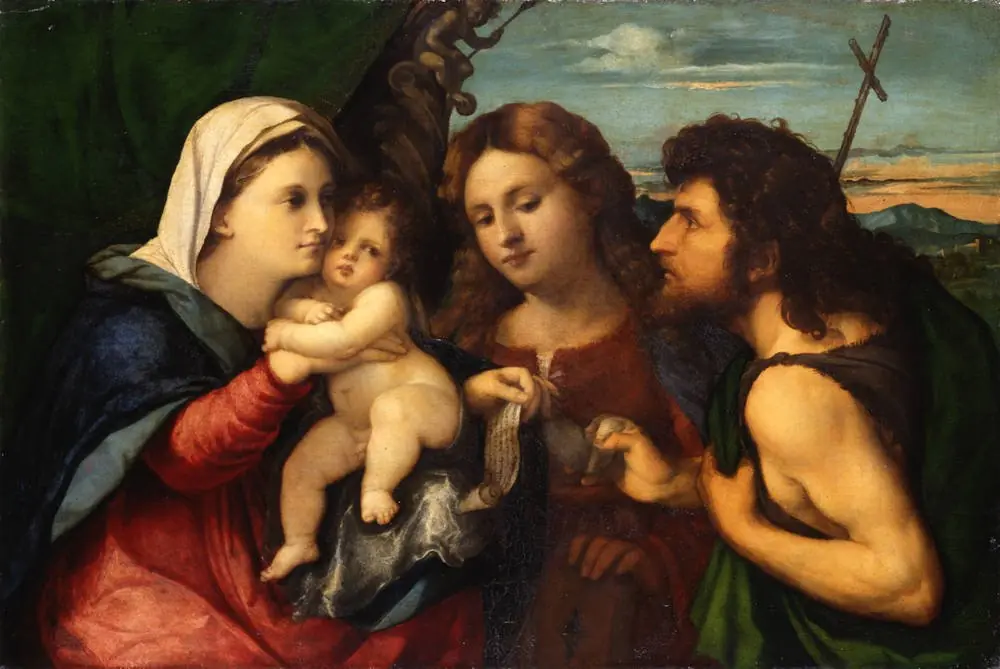 Maria mit dem Kind, Johannes dem Täufer und der heiligen Katharina
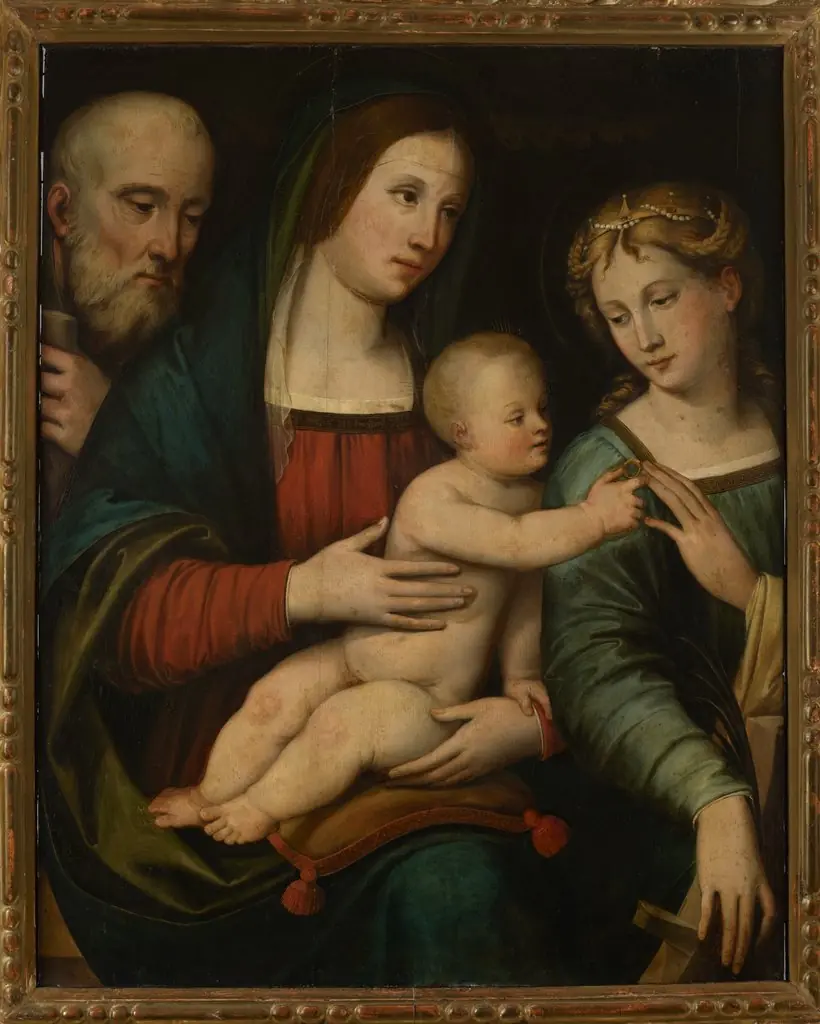 Mystic Marriage of St Catherine of Alexandria
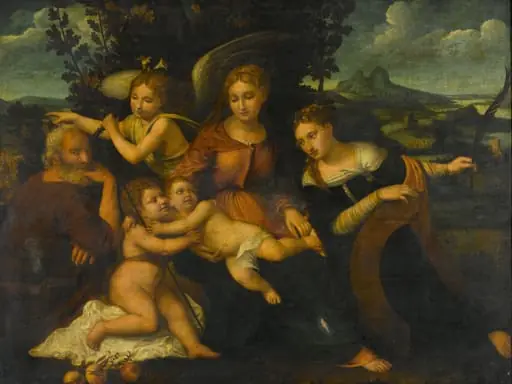 Holy Family with Saint Catherine
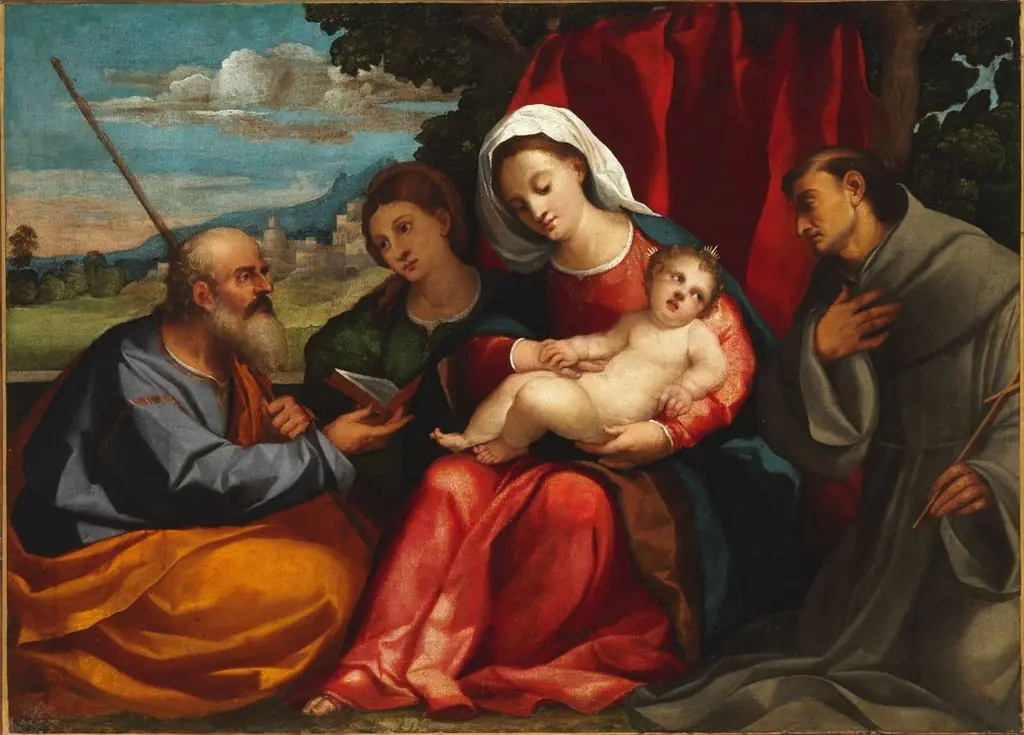 The Holy Family with a Female Saint and Saint Francis of Assisi
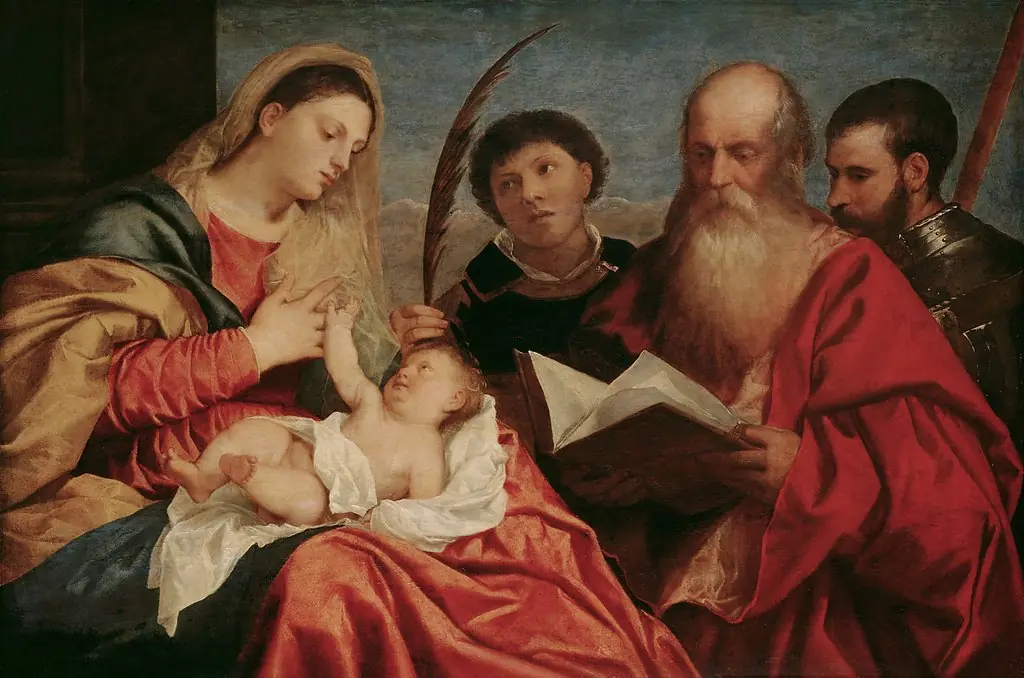 Virgin and Child with Saints Stephen, Jerome and Maurice
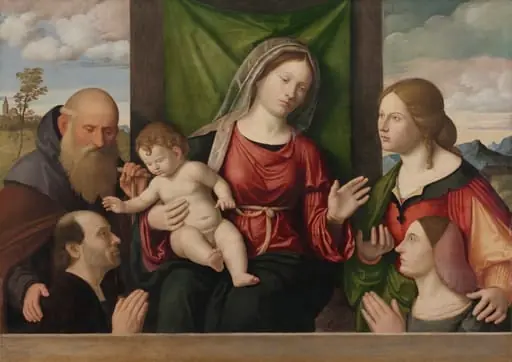 Virgin and Child with Saints and Donors
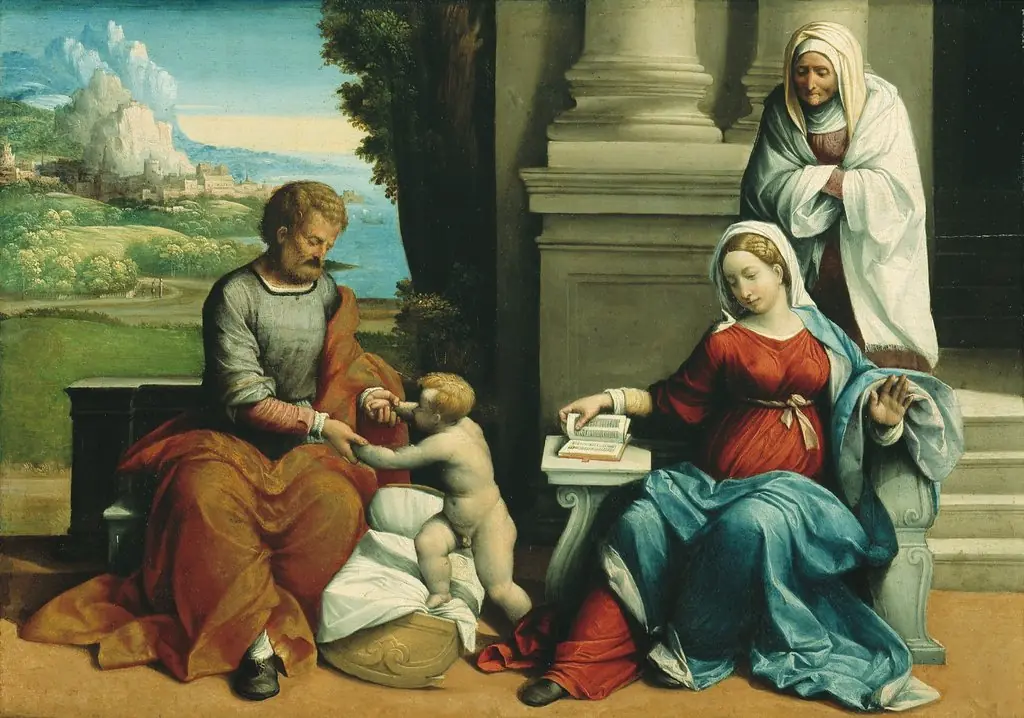 Holy Family with St. Anne
 Madonna and Child with Saints