Artwork
Lilac Bush
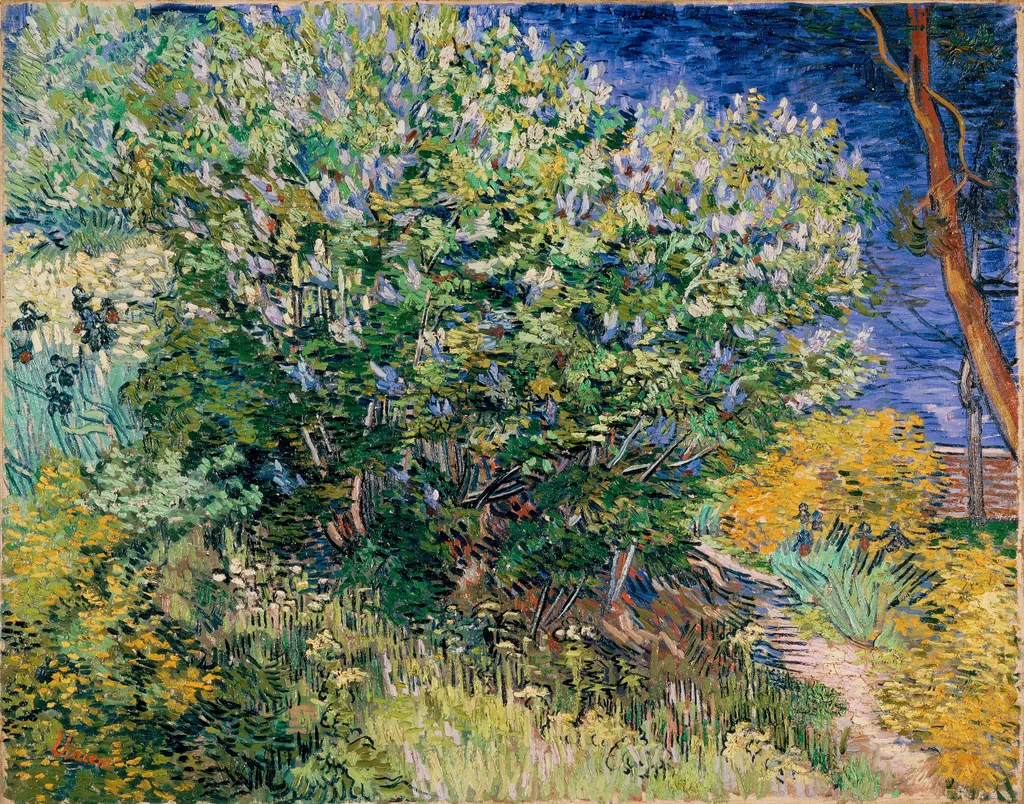
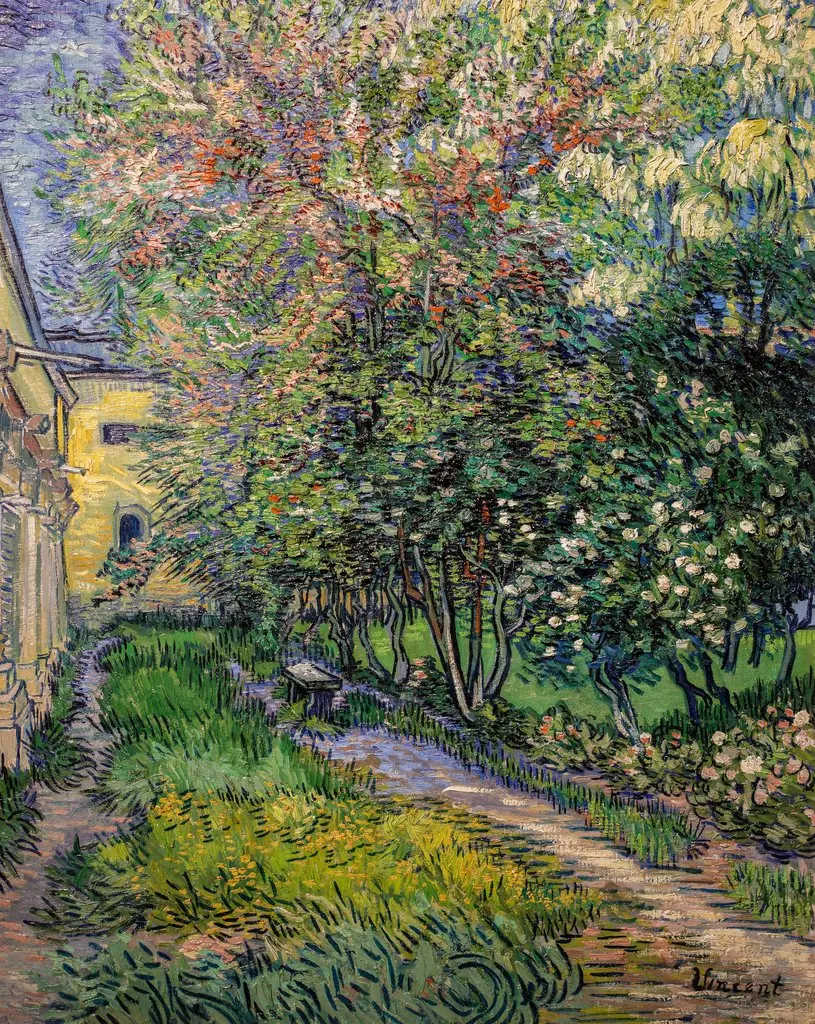
Lilac Bush is an oil painting by the Post-Impressionist artist Vincent van Gogh. It dates from 1889 and is held in the collection of the Hermitage Museum.
About this work
Overview
The work is catalogued as F 579 and JH 1692, and is held in the collection of the Hermitage Museum in Saint Petersburg.
Lilac Bush is an oil on canvas painting by Vincent van Gogh, executed in May 1889 during the artist's voluntary confinement at the psychiatric hospital of Saint-Paul de Mausole in Saint-Rémy-de-Provence. Measuring 73 by 92 centimetres, the landscape depicts a flowering lilac shrub in the hospital garden, rendered with the thick, energetic brushwork characteristic of van Gogh's mature style. The work is catalogued as F 579 and JH 1692, and is held in the collection of the Hermitage Museum in Saint Petersburg. It belongs to a significant cluster of paintings produced immediately after van Gogh's arrival at the asylum, when he turned to the garden's flora as accessible subjects during a period of restricted movement.
Subject & Meaning
The painting presents a dense lilac bush as its central motif, the rounded mass of foliage and blossoms occupying the majority of the pictorial space. No human or animal figures appear; instead, the composition is structured around the living forms of the garden. Van Gogh's choice of subject reflected his belief in the spiritual and restorative power of nature. During his earliest weeks at Saint-Rémy, when he was forbidden from leaving the hospital grounds, the garden became his primary world. The French Wikipedia source notes that van Gogh regarded communion with nature as a means of accessing the sublime, an encounter with what he described as something incomprehensible and transcendent above. The lilac thus functions not merely as botanical record but as a vehicle for spiritual seeking, the dramatic movement of the flowering shrub expressing the emotional intensity of this confinement.
Technique & Style
The painting is executed in oil on canvas with heavily impastoed paint throughout. Short, choppy, clearly visible brushstrokes create a vibrating, textured surface across the entire composition. The bush itself is built from thick, directional strokes of green, yellow-green, and pale lavender that convey abundant foliage and clustered blossoms. Light enters from the upper left, casting lower portions of the shrub into deeper green shadow while the top catches lighter, yellow-tinged highlights. The foreground contains varied vegetation, tall grasses, small flowers, and leafy plants in yellow, green, and turquoise. A curving dirt path enters from the lower right, winding behind the bush toward a bright yellow field in the middle distance. To the right, a tall, slender tree trunk curves upward, its bark marked with orange and brown vertical strokes. Above, the sky is a deep, saturated blue applied with horizontal, wave-like brushstrokes. A signature in reddish paint appears in the lower left corner. The overall effect is one of chromatic intensity and tactile materiality, with the paint itself asserting a physical presence that parallels the organic vitality of the subject.
History & Provenance
Van Gogh began painting almost immediately upon his arrival at Saint-Rémy in early May 1889. In a letter to his brother Theo and Theo's wife Johanna written shortly after his arrival, he mentioned the work among his earliest productions from the asylum: I have two other [paintings] to send, purple irises and a lilac bush. Two subjects taken from the garden. The painting was produced during a period when the artist was confined to the hospital grounds, unable to roam the surrounding countryside. The work eventually entered the collection of the Hermitage Museum in Saint Petersburg, where it remains today.
Context
Lilac Bush belongs to the initial burst of creative activity that followed van Gogh's arrival at Saint-Rémy, a period that also produced some of his most celebrated floral studies including the irises mentioned in the same letter. The hospital garden served as a substitute for the broader Provençal landscape he had painted so intensively in Arles. This circumstance of restricted mobility paradoxically concentrated his attention on intimate, nearby subjects, yielding works of concentrated intensity. The painting sits within van Gogh's broader post-impressionist project of finding emotional and spiritual correlates in the natural world, a concern that animated his entire mature career. The work has been discussed in the standard catalogue raisonné literature, including Jacob Baart de la Faille's six-volume L'Œuvre de Vincent van Gogh published in 1928.
Legacy
As one of van Gogh's garden paintings from Saint-Rémy, Lilac Bush contributes to the understanding of a pivotal period in the artist's biography and oeuvre. The work demonstrates how the constraints of asylum life were transformed into artistic opportunity, a narrative that has shaped popular and scholarly understanding of van Gogh's final years. Held by the Hermitage Museum, one of the world's major repositories of European painting, the work remains accessible to international audiences and scholars. Its place in the permanent collection of this institution ensures its continued visibility within the broader corpus of van Gogh's landscape and floral paintings, a category that has commanded sustained critical and public attention since the artist's death.
Own this work as a print
Artist & collection
Artist
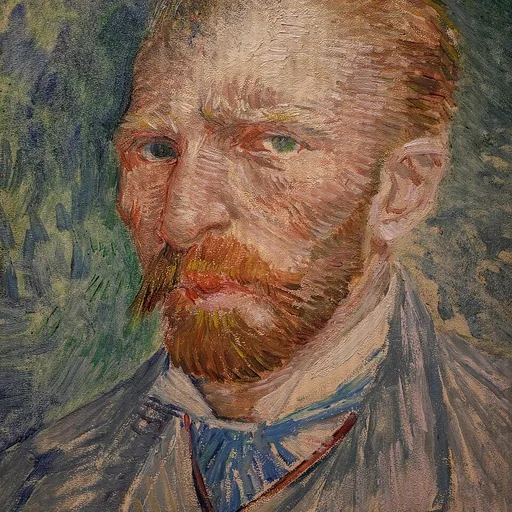
Vincent Willem van Gogh was a Dutch Post-Impressionist painter who is among the most famous and influential figures in the history of Western art.