Artwork
The Mourning Madonna
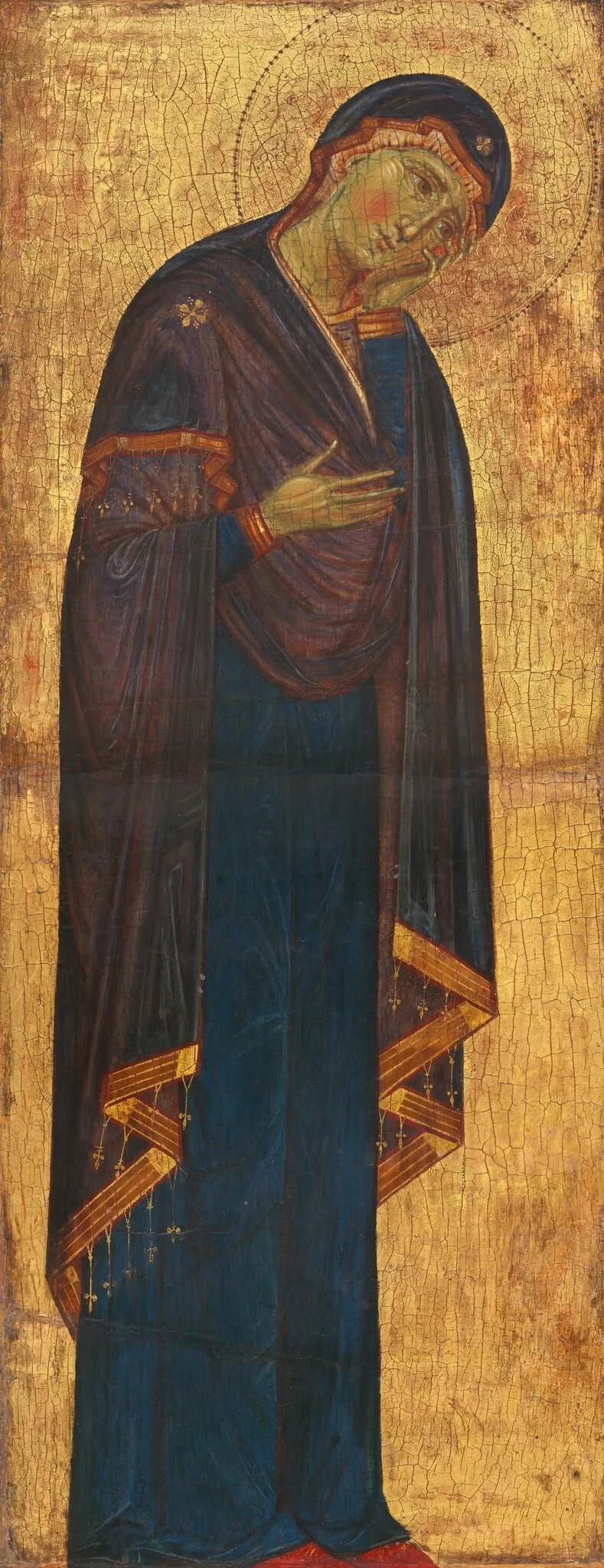
The Mourning Madonna is a tempera painting by the Byzantine icon painting artist Master of the Franciscan Crucifixes. It dates from 1272 and is held in the collection of the National Gallery of Art.
About this work
Technique & Style
The underdrawing, visible in infrared reflectography, reveals confident, economical strokes, while the surface retains traces of punchwork along the halos.
The Mourning Madonna is executed in tempera on a poplar panel support, consistent with late 13th-century Bolognese practice (1). The medium, a mixture of pigment and egg yolk, was applied in thin, matte layers that allowed for fine linear detailing but limited tonal modulation. Gold leaf, now largely abraded, originally embellished the Virgin’s mantle and background, enhancing the work’s devotional luminosity.
Stylistically, the painting exhibits the Master of the Franciscan Crucifixes’ characteristic handling: elongated proportions, rhythmic drapery folds defined by sharp, incised lines, and a restrained emotional expression. The underdrawing, visible in infrared reflectography, reveals confident, economical strokes, while the surface retains traces of punchwork along the halos. Condition issues include localized flaking of the tempera and gold leaf, particularly in the upper register, though the panel itself remains structurally stable.
History & Provenance
The Mourning Madonna originated as two lateral terminals of a painted Crucifix created for the church of San Francesco in Bologna, likely between 1254 and 1278. By 1577, the Crucifix was documented in the Lombardi Malvezzi Chapel within the same church. In 1801, it was transferred to Santa Maria in Borgo, Bologna, where its terminals may have been detached by that time.
The fragments were subsequently acquired in Italy by Osvald Sirén by 1922, then passed to Philip Lehman in New York by 1928. The Samuel H. Kress Foundation purchased the work in June 1943, and it was gifted to the National Gallery of Art, Washington, D.C., in 1952.
The two fragments comprising The Mourning Madonna are held by the National Gallery of Art in Washington, D.C., as part of the Samuel H. Kress Collection. They carry the accession numbers 1952.5.13 and 1952.5.14, having been gifted to the institution by the Samuel H. Kress Foundation in 1952. Prior to this acquisition, the panels were purchased by the Foundation in June 1943 from the estate of Philip Lehman of New York, who had owned them since at least 1928.
Before entering American collections, the work was acquired by the Swedish scholar Osvald Sirén, likely in Italy, by 1922. Historically, these fragments served as lateral terminals for a large Crucifix originally created for the church of San Francesco in Bologna between 1254 and 1278. That larger structure was documented in the Lombardi Malvezzi Chapel in 1577 and later moved to Santa Maria in Borgo in 1801, by which time the terminals may have been detached.
Overview
The Mourning Madonna, a tempera on panel painting from approximately 1272, is attributed to the artist known as the Master of the Franciscan Crucifixes. This religious work exemplifies the Byzantine iconographic tradition prevalent in Italian art of the late 13th century. It portrays the Virgin Mary in a moment of profound grief, reflecting the period's conventional depictions of sacred figures. The painting's composition and subject matter align with the stylistic characteristics associated with the artist's known oeuvre.
Subject & Meaning
The painting centers on the figure of the Virgin Mary, rendered in a posture of deep sorrow. Her head is gently bowed, and her gaze is directed downwards, conveying a sense of introspection and lamentation for the deceased Christ. Her hands are clasped together at her chest, a gesture of prayer and grief.
This formalized portrayal adheres to the established iconography for depicting the Mater Dolorosa, emphasizing her role in the Passion narrative within the Byzantine tradition.
Artist & collection
Artist
Master of the Franciscan Crucifixes
The Master of the Franciscan Crucifixes is the notname given to an Italian painter active in the 1260s and 1270s.

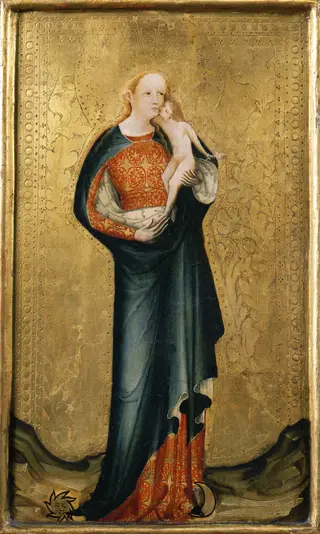
- The Madonna as an apocalyptic woman
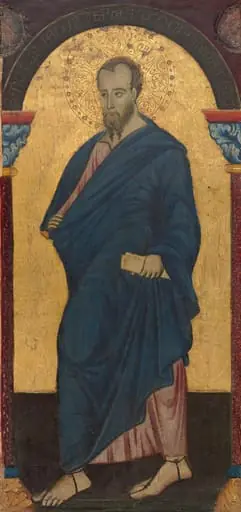 Saint James Minor
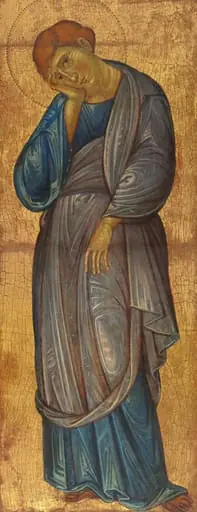 The Mourning Saint John the Evangelist
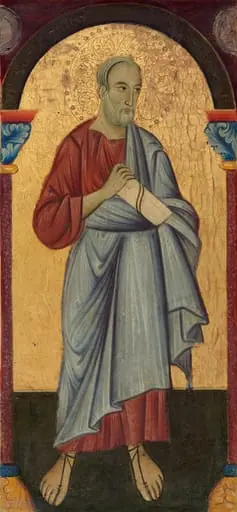 Saint John the Evangelist
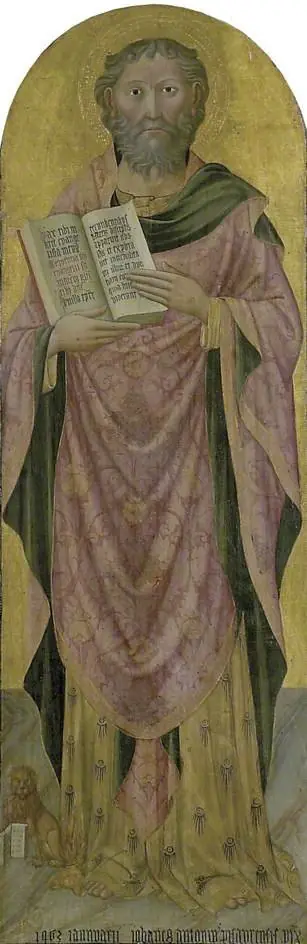 St Mark
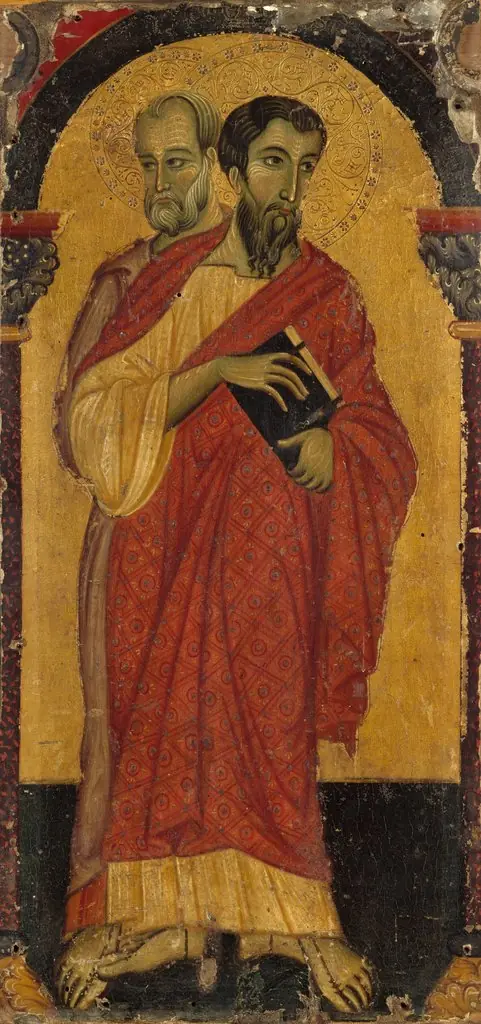 Saints Bartholomew and Simon
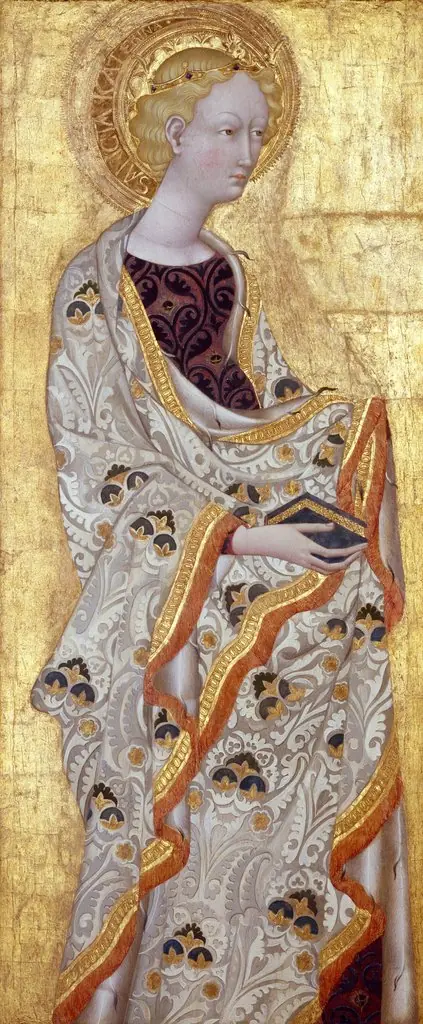 Saint Catherine
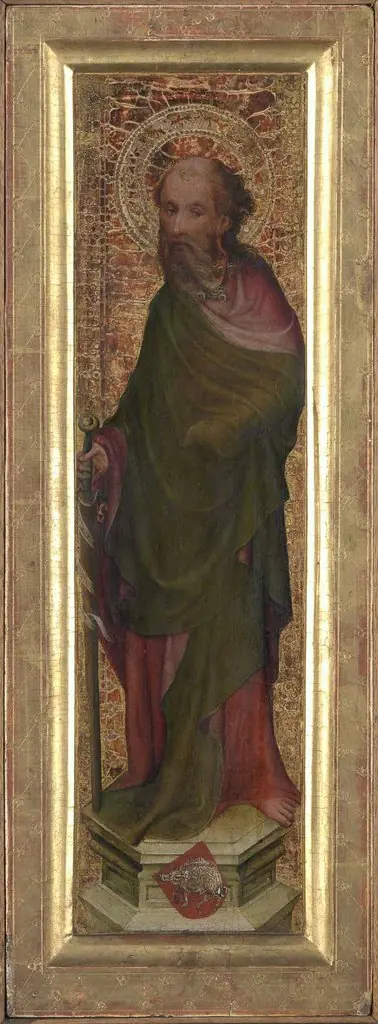 Hl. Paulus Rückseite: Hl. Reinoldus
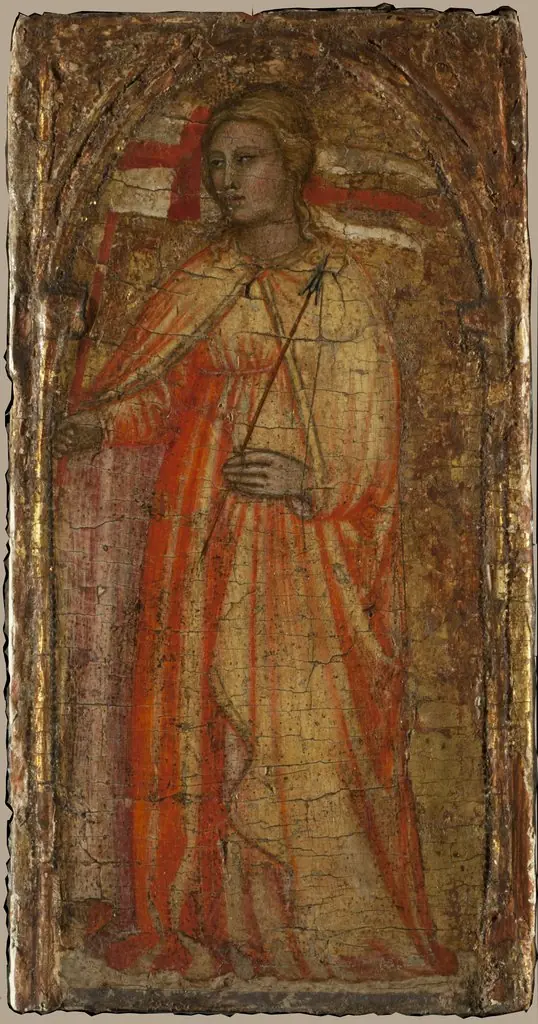 Saint Ursula
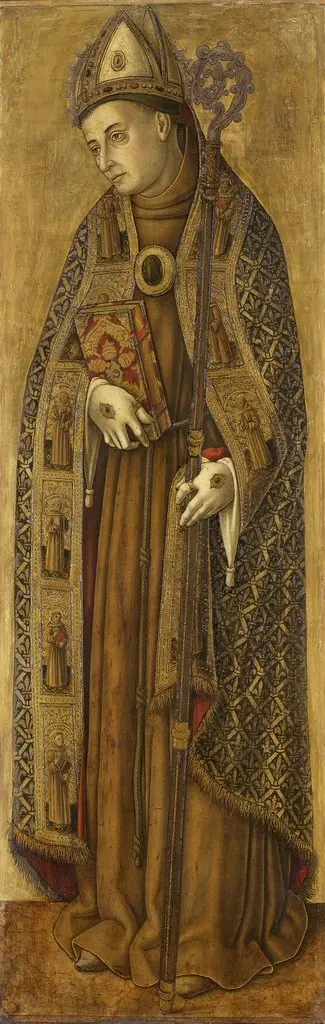 St. Louis of France, pendant to St. Bonaventure
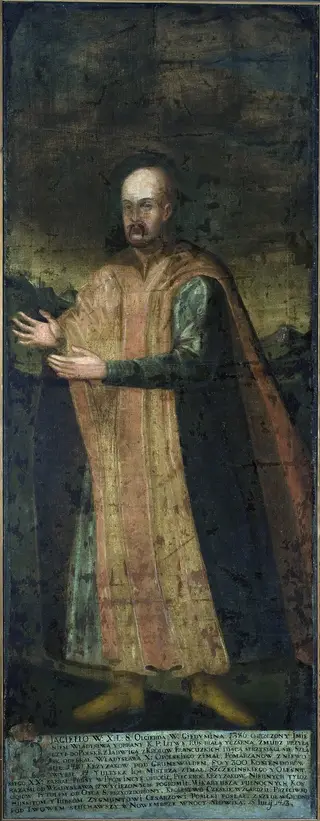 Portrait of king Władysław Jagiełło (1348–1434)
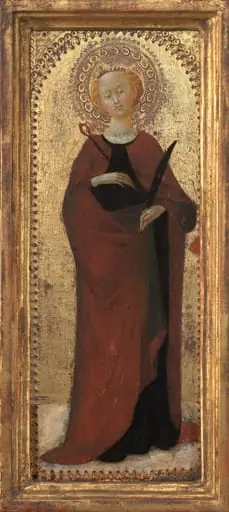 Saint Apollonia