Artwork
Η Προσκύνησις των διδασκάλων της αγιογραφίας
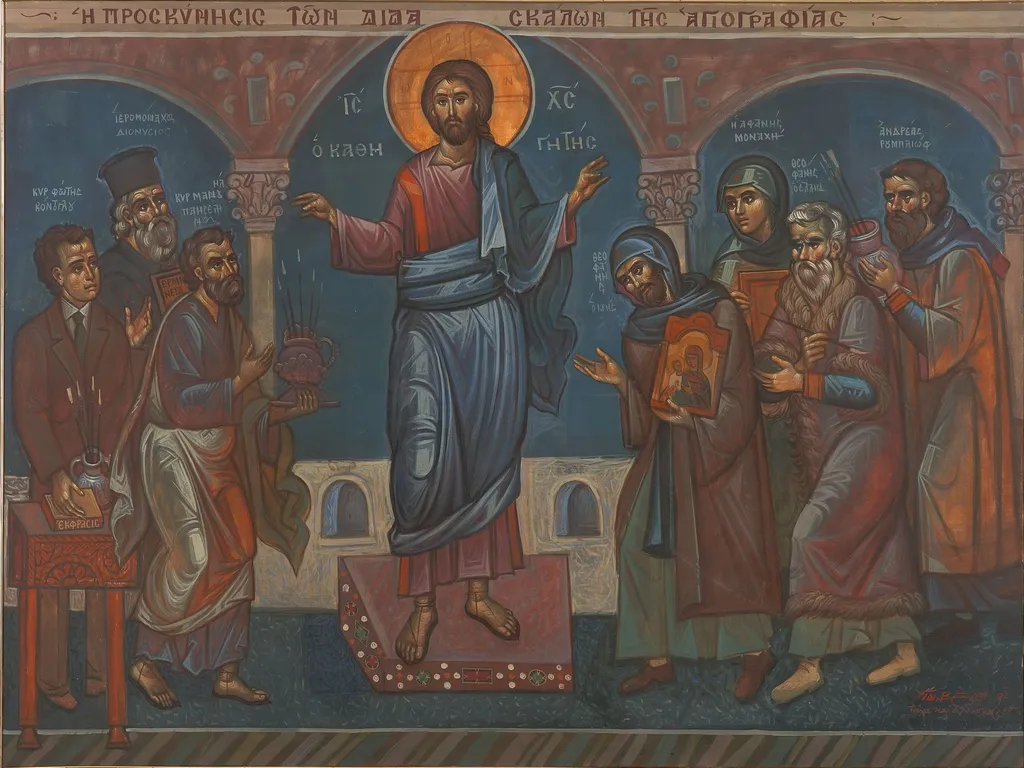
Η Προσκύνησις των διδασκάλων της αγιογραφίας is an unspecified painting by the Byzantine icon painting artist Ioannis Vranos. It dates from 1990 and is held in the collection of the Metropolitan Organisation of Museums of Visual Arts of Thessaloniki – MOMus.
About this work
Overview
Painted in 1990 by Ioannis Vranos, this work depicts a ceremonial gathering centered on a blessed figure. Rendered in a stylized, non-naturalistic manner, it reflects traditions of Byzantine iconography while being a modern creation. The piece resides in the Museum of Ethnography, where it is presented as part of a broader exploration of religious visual culture in Greece.
Subject & Meaning
The central figure, identified by a golden halo and raised hand, is shown bestowing a blessing upon a group of robed individuals.
The central figure, identified by a golden halo and raised hand, is shown bestowing a blessing upon a group of robed individuals. These figures, some holding books or icons, appear to represent teachers or practitioners of sacred art. The gold inscriptions above them likely denote their names or spiritual roles, framing the scene as a veneration of lineage within the tradition of religious image-making.
Technique & Style
The painting employs flat, unmodulated colors and lacks perspective or chiaroscuro, aligning with Byzantine aesthetic principles. Gold leaf outlines halos and inscriptions, while the red platform and blue arches create symbolic spatial boundaries. The figures are arranged hierarchically, with the central figure elevated both physically and visually, reinforcing spiritual authority through composition rather than realism.
History & Provenance
Created in 1990, the work is a contemporary response to historical hagiographic conventions. It entered the collection of the Museum of Ethnography shortly after its completion, where it is contextualized alongside other artifacts of Greek religious life. Unlike medieval icons, this piece is not liturgical but rather a reflective homage to the enduring practices of sacred artistry.
Context
The painting engages with the Greek Orthodox tradition of hagiography, where images of saints and spiritual teachers serve as conduits of reverence. Vranos draws on this visual language without replicating historical examples, instead constructing a modern allegory. The use of Greek script and traditional iconographic elements situates the work within a living cultural continuum rather than a historical relic.
Legacy
As a late 20th-century reinterpretation of sacred imagery, the work contributes to ongoing dialogues about the role of tradition in contemporary religious art. It does not seek to replace historical icons but rather to acknowledge their enduring influence. Its presence in an ethnographic museum underscores its value as a cultural artifact reflecting identity, memory, and spiritual continuity.
Artist & collection
Artist
Museum
Metropolitan Organisation of Museums of Visual Arts of Thessaloniki – MOMus
Continue through works from the same source collection.
- Duminica Tomii
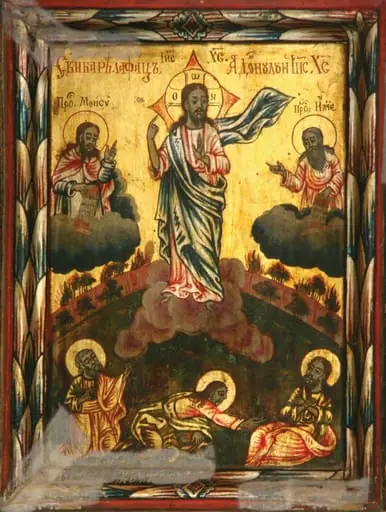 Schimbarea la față
 “Mica Deisis” ; Icoană împărătească Mica Deisis; Icoană împărătească
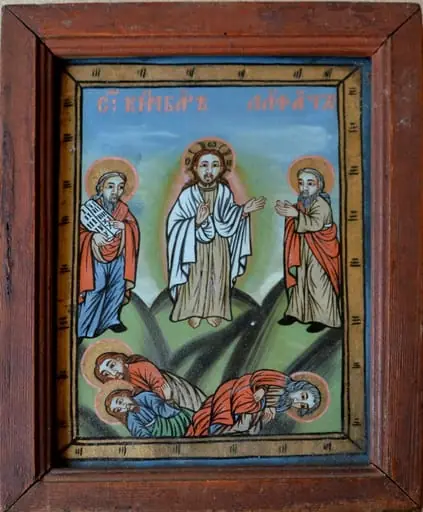 Schimbarea la față
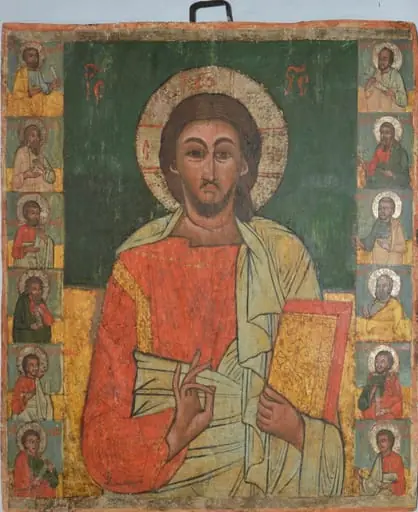 Iisus Hristos Învățător, flancat de apostoli
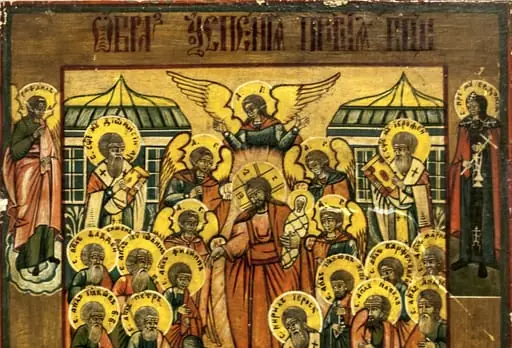 Maica Domului, întinsă pe catafalcul drapat cu material verde, deasupra Iisus Hristos, înconjurat de 5 îngeri(inscripția A:G.pe nimb, ține sufletul Maicii(în fomră de prunc înfășat)pe mâna stângă, iar cu dreapta binecuvântează. Maica are mâinile împreunate pe piept,stola verde cu falduri albe, marforion roșu cu stelele Fecioriei. În jurul catafalcului: Sfântul Kiril Ierosa și sfântul apostol Petru cădelnițând, la picioare Sf. Pavel cu veșmântul stergându-și ocii, Sf. Andrei, alături de alți sfinți ierarhi și apostoli: Sf.Vartolomei, Sf. apostol, ,Sf. Apostol Iakov Zevedei, , Filip, Sf. Apostol Ioan, Simon, Tadei. Îm planul următor, pe fundalul unor clădiri cu arhitectură ipic rusească, Sf. Mucenic Dionisii, și Ierotei, în veșminte argierești, cu Evanghelia în mână. În fața catafalcului redată scena apocrifă, Arhanghelul Mihail taindu-i mâinile cu sabia evreului fanatic Atonie pentru că a îndrăznit să batjocorească patul funerar al Maicii Domnului. Pe chenarul lat 4 sfinți : Sf. Arhanghel Rafail pe nori, Sf. Muceniță Evdochia și sfântul Feodor, în veșminte monahale, cu mătăniile în mână, Sf. Fotinia .Cromatica: Fondul galben ocru, chenar în nuanță mai închisă, colțurile de jos verde, marginal verde și roșu, benzi înguste.Veșminte: roșu cărămiziu, albastru, verde, galben, alb, negru. Linia desenului groasă, culorile tari.
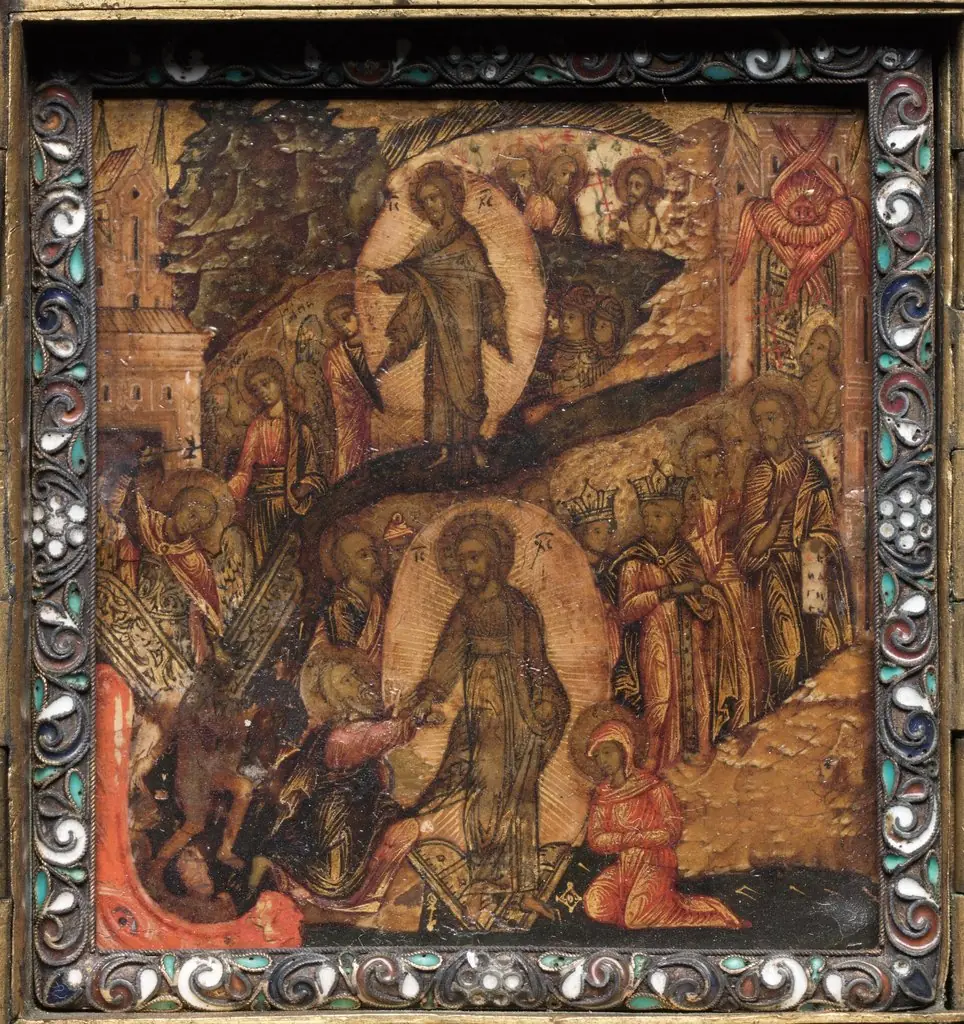 Portable Triptych Icon
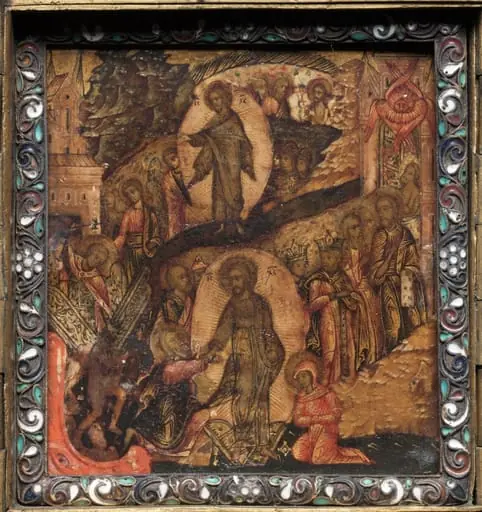 Portable Triptych Icon: The Resurrection and Anastasis
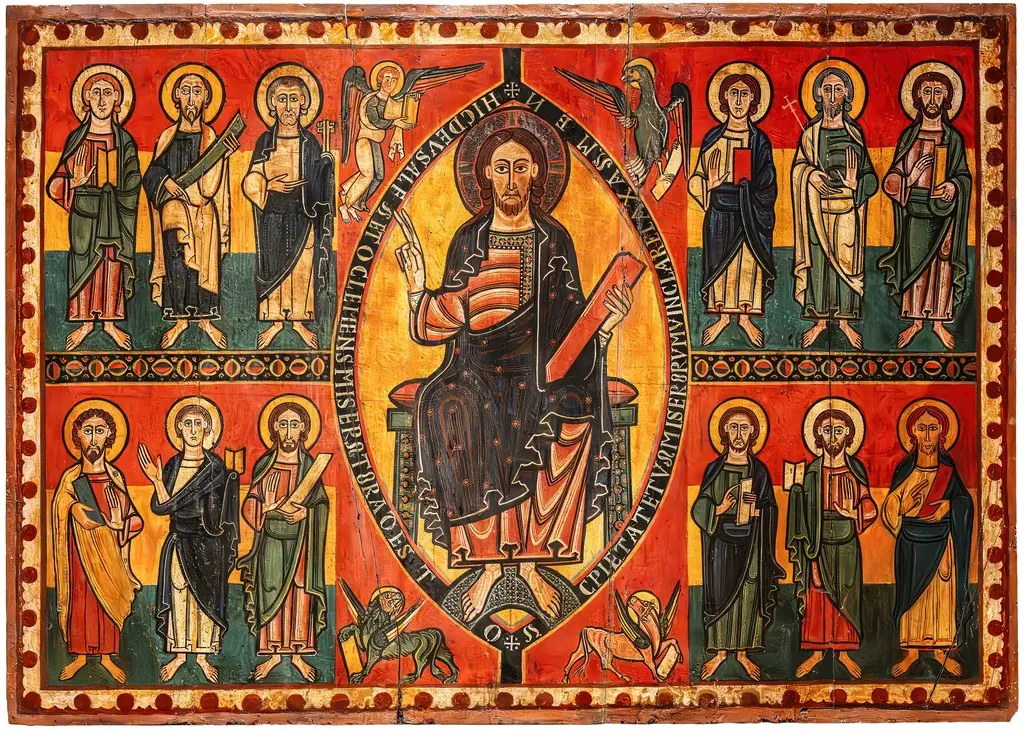 Altar frontal from Esquius
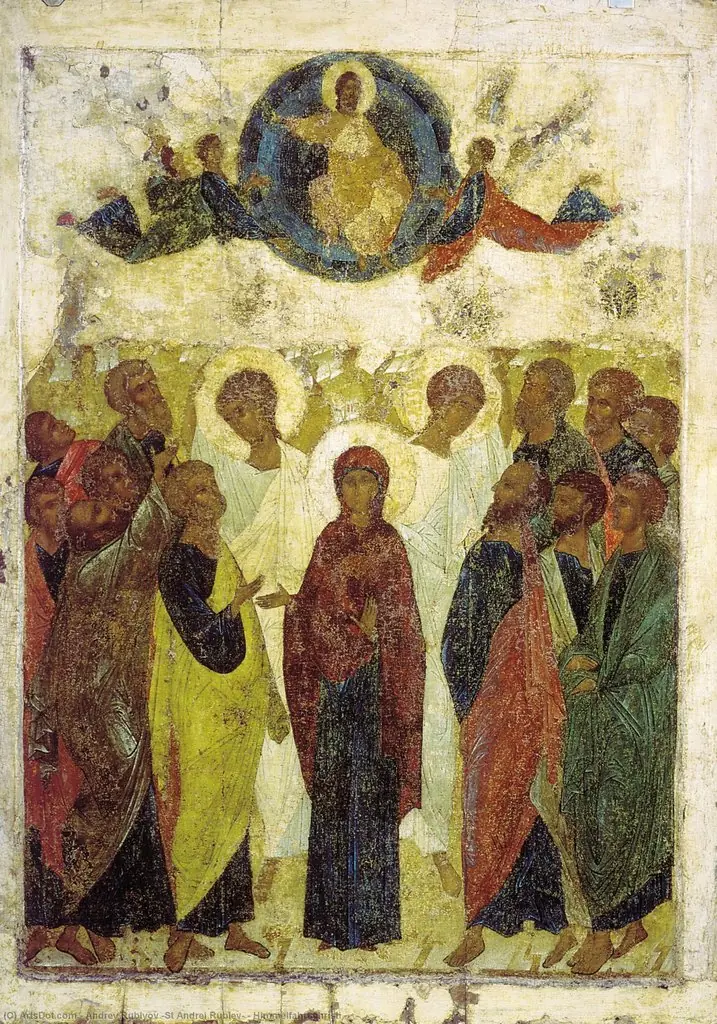 Untitled
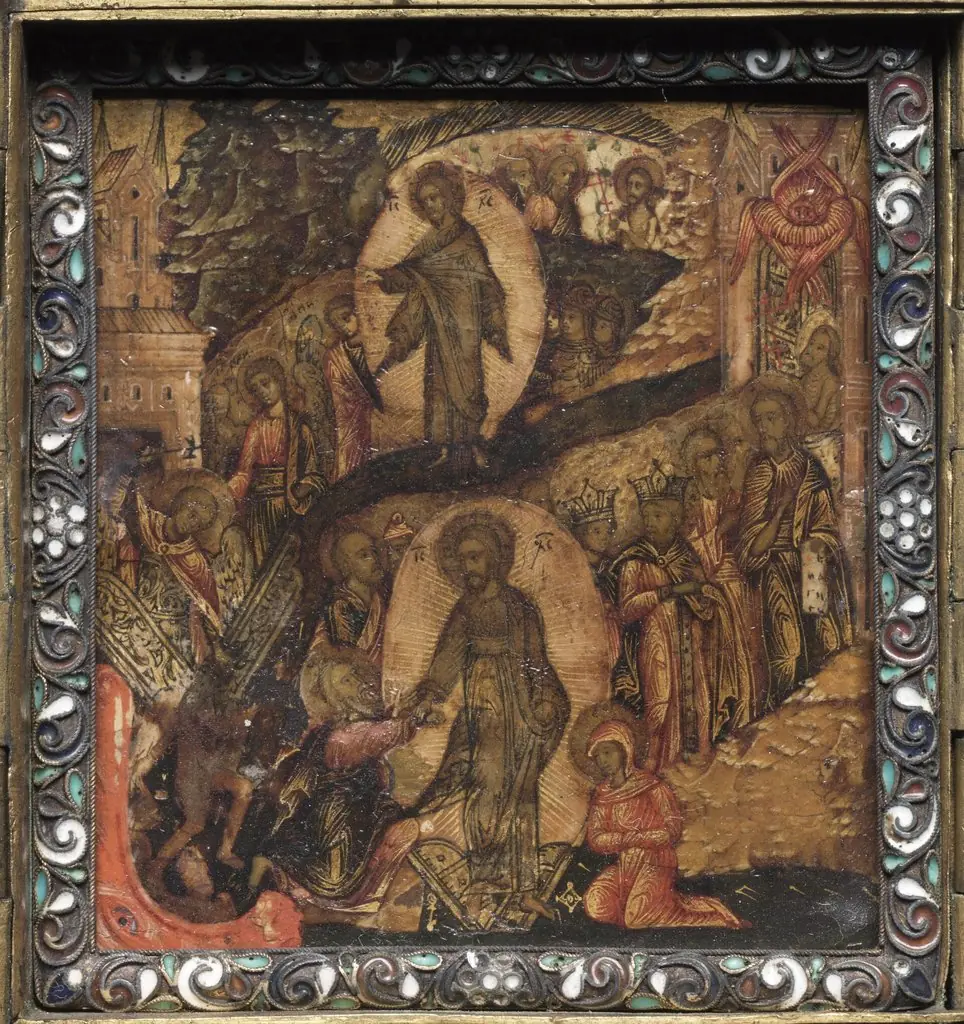 Portable Triptych Icon: The Resurrection and Anastasis
 Head of Christ