Artwork
Portable Triptych Icon: The Resurrection and Anastasis
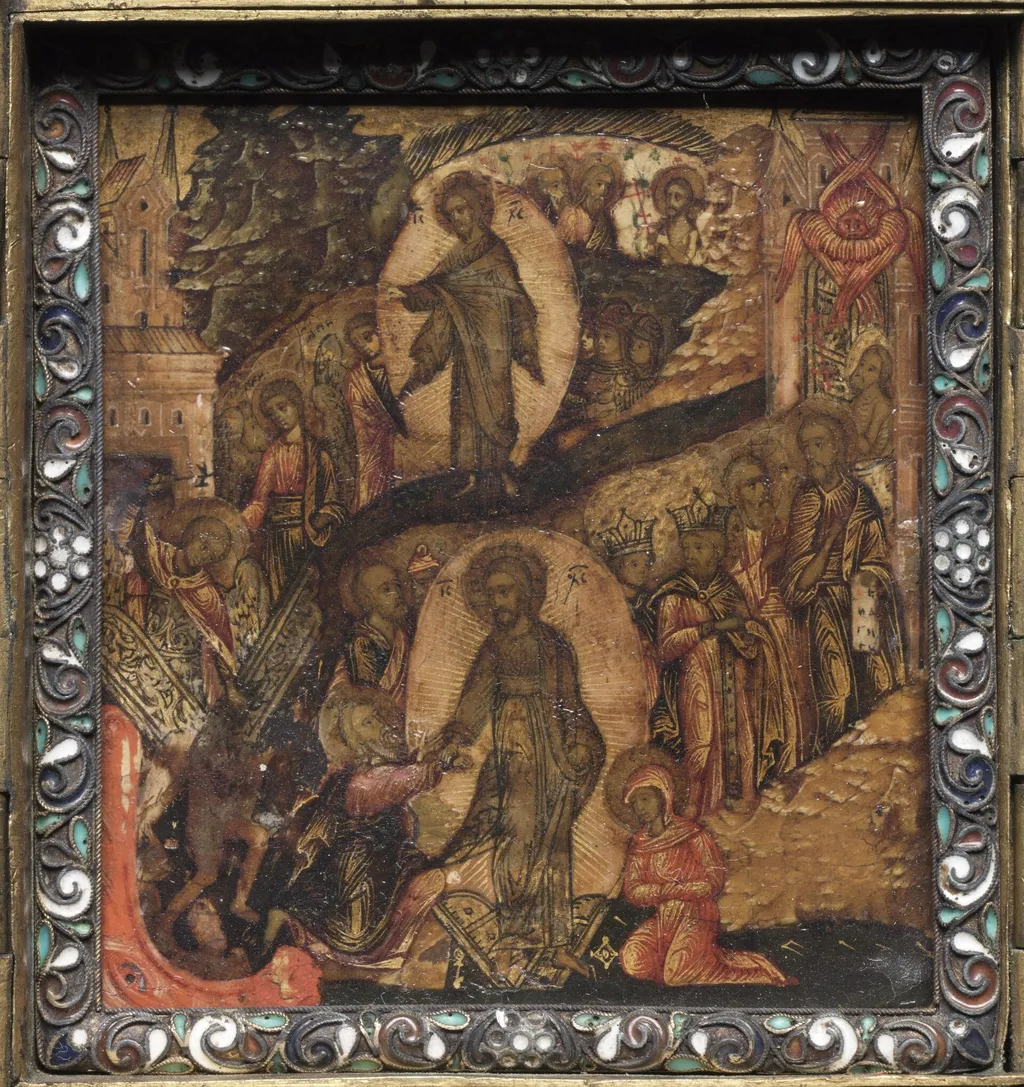
Portable Triptych Icon: The Resurrection and Anastasis is an unspecified painting. It dates from 1649 and is held in the collection of the Cleveland Museum of Art. The work is a small, portable triptych painted on panel, depicting a densely populated scene of figures emerging from a darkened space.
About this work
Overview
The work is a small, portable triptych painted on panel, depicting a densely populated scene of figures emerging from a darkened space. At its core stands a bearded figure clutching a red cloth, surrounded by ascending bodies, some haloed, others reaching toward him. The surrounding ground is filled with numerous faces rendered in gold and earth tones, creating a crowded, devotional composition.
Subject & Meaning
The central bearded figure is traditionally identified as Christ, his red cloth symbolising the resurrection. The upward‑moving figures represent the resurrected dead, the Anastasis, while the haloed individuals suggest sanctified souls. The multitude of faces in the background underscores the universal scope of salvation, inviting viewers to contemplate the collective triumph over death.
Technique & Style
The painter employs a stark chiaroscuro, allowing a luminous aura to surround the central figure while the surrounding space remains in deep shadow.
The painter employs a stark chiaroscuro, allowing a luminous aura to surround the central figure while the surrounding space remains in deep shadow. This contrast heightens the focal point, giving the central figure a beacon‑like presence. Gold leaf and earthy pigments dominate the background, and the composition’s tight grouping reflects the Byzantine iconographic tradition adapted for a portable format.
History & Provenance
Created as a portable triptych, the piece was intended for private devotion rather than public liturgical display. Its worn condition indicates frequent handling, suggesting it circulated among individual owners. While specific provenance details are lacking, the format and stylistic traits align it with Eastern Christian devotional objects produced between the 12th and 15th centuries.
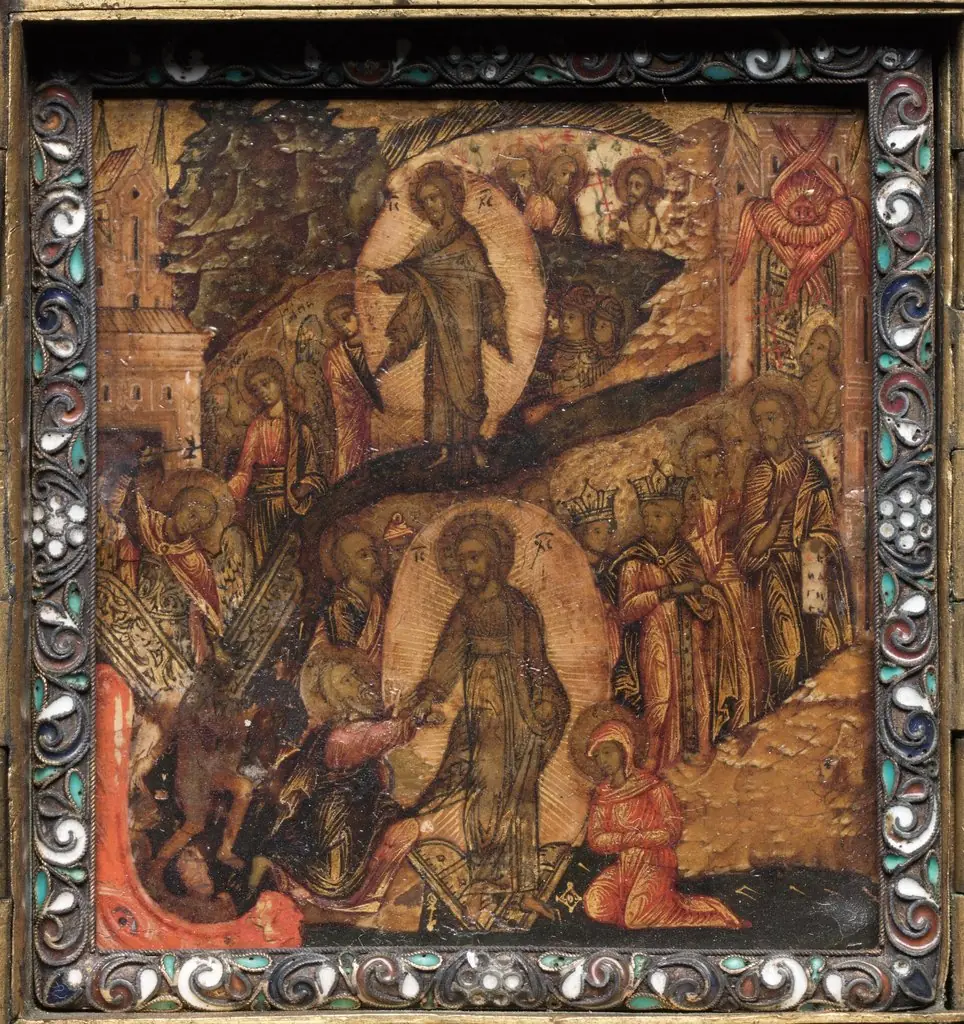
Artist & collection

- Portable Triptych Icon
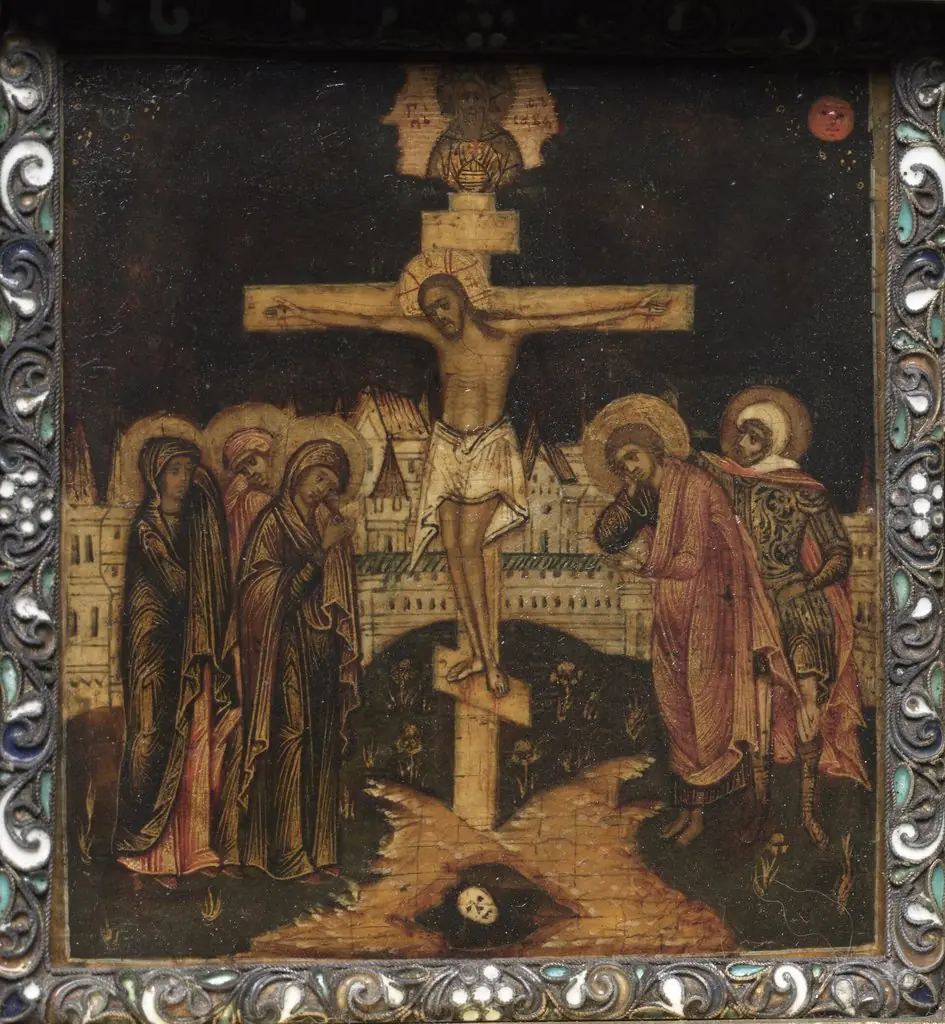 Portable Triptych Icon: The Crucifixion
 Portable Triptych Icon: The Resurrection and Anastasis
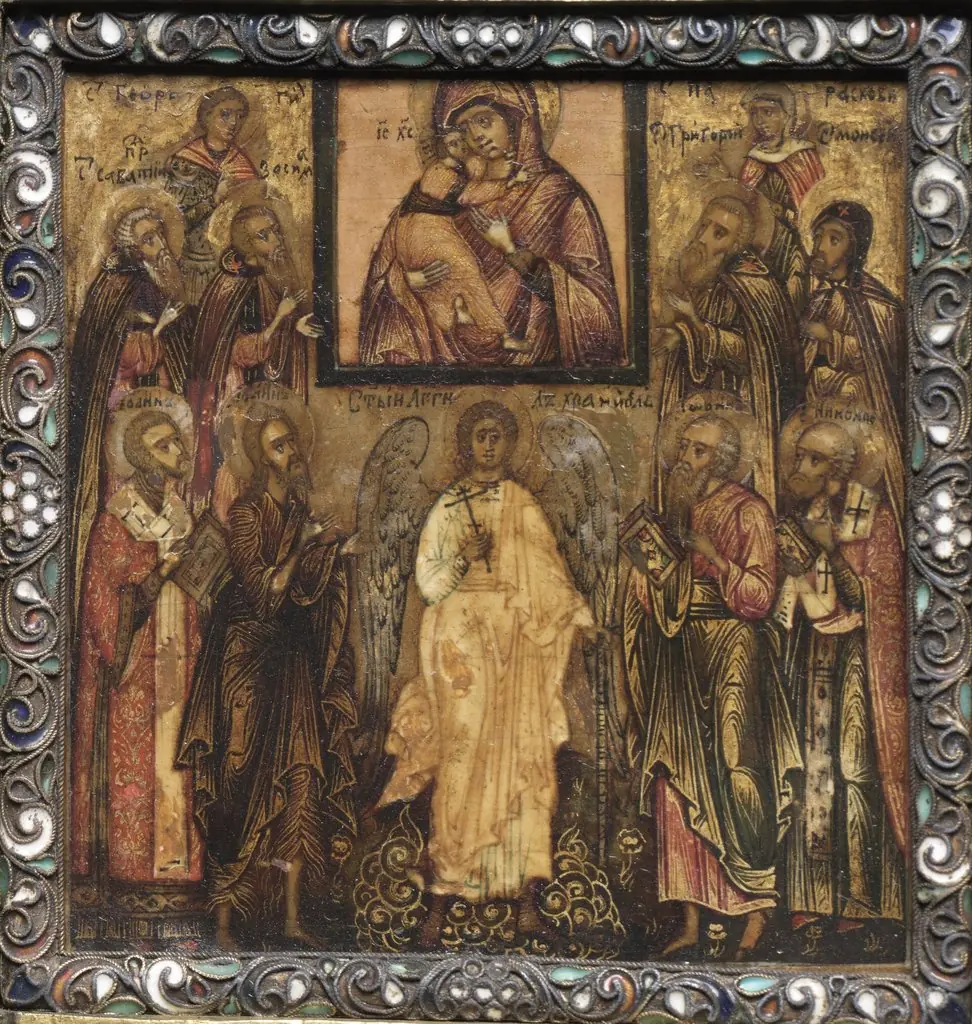 Portable Triptych Icon: Adoration of the Miracle-Working Icon of the Vladimir Mother of God
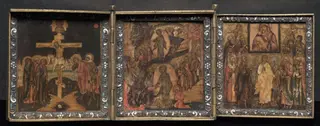 Portable Triptych Icon
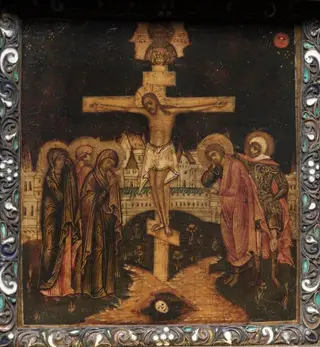 Portable Triptych Icon: The Crucifixion
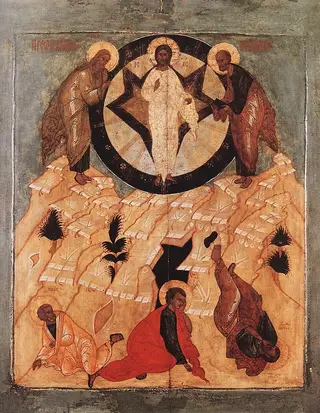 Icon: The Transfiguration
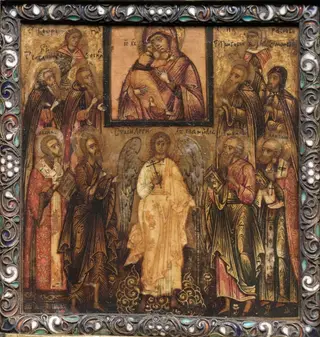 Portable Triptych Icon: Adoration of the Miracle-Working Icon of the Vladimir Mother of God