Artwork
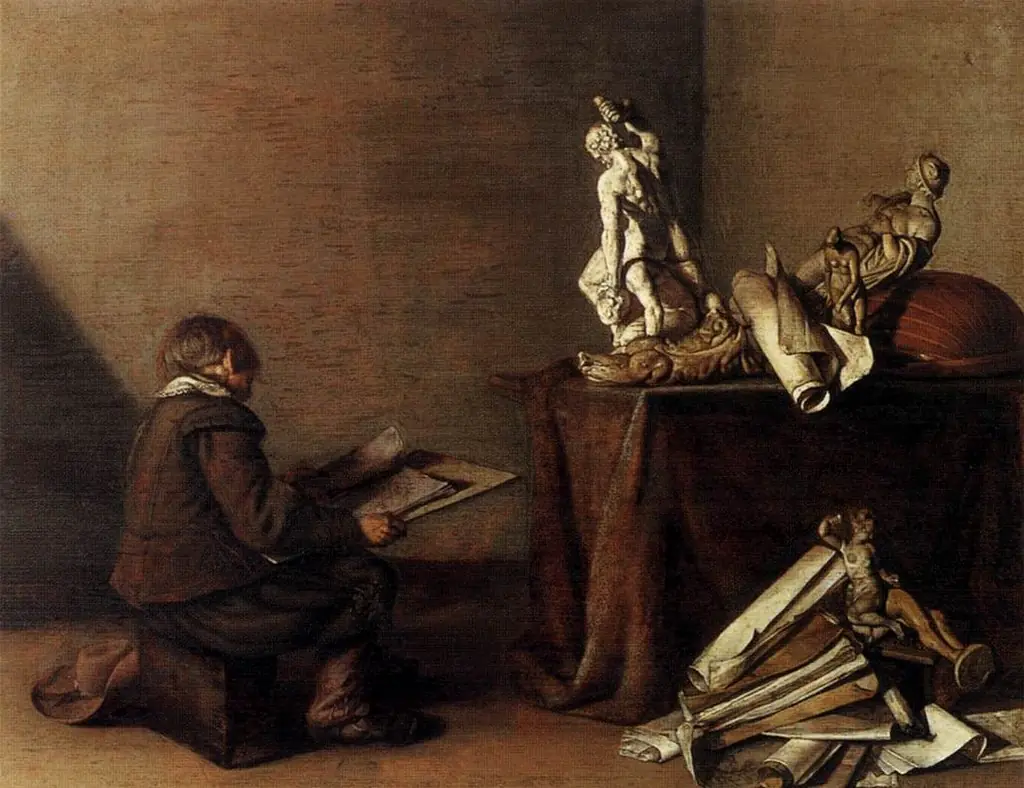
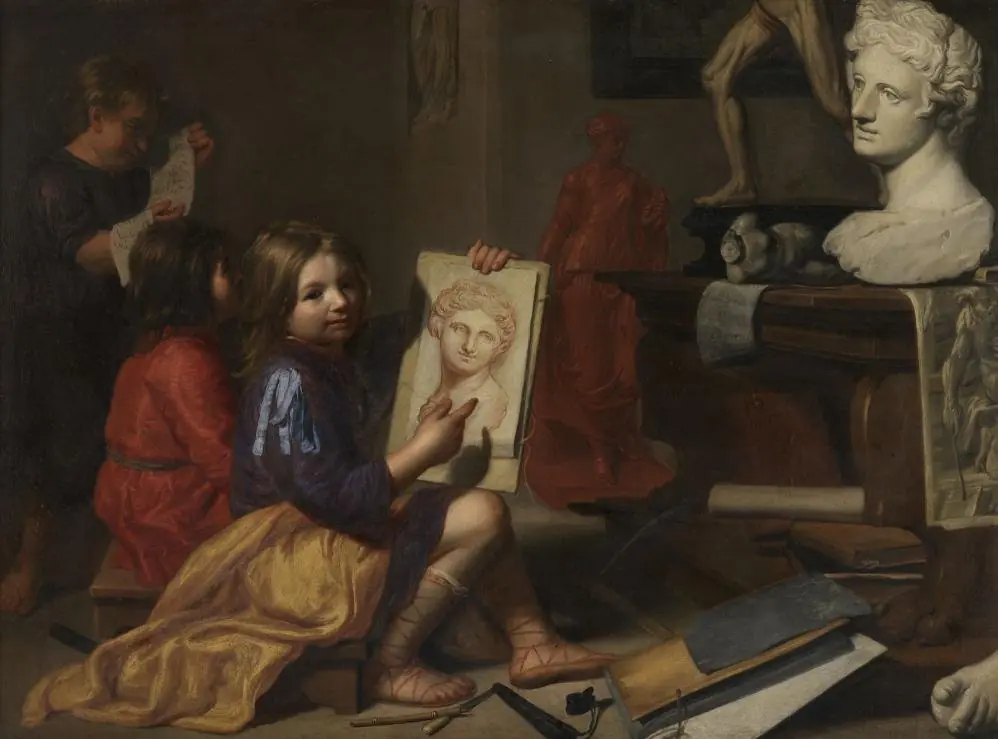
A Young Boy Copying a Painting
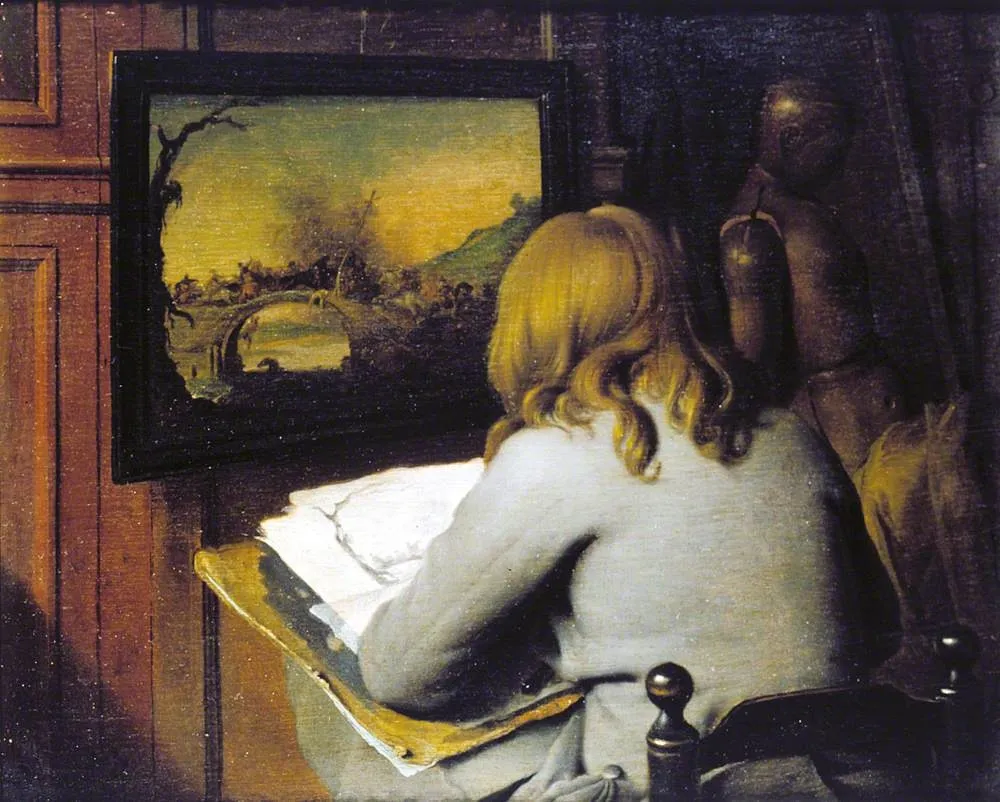
A Young Boy Copying a Painting is an oil painting by the Dutch Golden Age artist Wallerant Vaillant. It dates from 1670 and is held in the collection of the Fitzwilliam Museum.
About this work
Subject & Meaning
The iconography centers on the child’s engagement with art-making, emphasizing imitation and learning through direct engagement with a model.
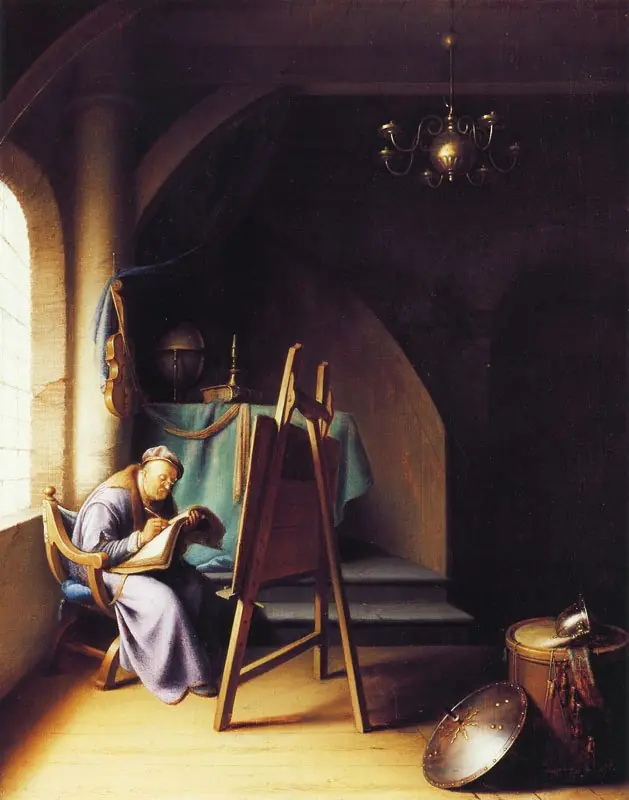
The painting depicts a young boy seated at a table, absorbed in copying a painted composition. His activity suggests themes of instruction, apprenticeship, and the transmission of artistic skill within 17th-century studio practice.
The iconography centers on the child’s engagement with art-making, emphasizing imitation and learning through direct engagement with a model. The presence of the original painting within the scene underscores the didactic purpose of art education, situating the work within contemporary discourses on artistic training and mastery.
Technique & Style
The work is executed in oil paint on a panel support, a medium and substrate combination characteristic of the artist's practice. Measuring approximately 32 cm in height and 40 cm in width, the painting depicts a genre scene focused on a child engaged in the act of copying another artwork. The subject matter highlights the art of drawing and painting, presenting a meta-commentary on artistic training and observation.
The physical dimensions are recorded as 31.6 cm by 39.5 cm in some catalogues, while others round these figures to 32 cm by 40 cm.
History & Provenance
Created in 1670, this oil on panel work was historically attributed to both Wallerant Vaillant and Michiel Sweerts. The painting entered the collection of John Charles Robinson before passing to Francis Cook, 1st Viscount of Monserrate. Ownership subsequently descended through the Cook family line, held successively by Sir Frederick Cook, 2nd Baronet, Herbert Cook, and Sir Francis Cook, 4th Baronet.
The work later came into the possession of Harold Samuel, Baron Samuel of Wych Cross. Upon his death in 1987, Lord Samuel bequeathed the piece to the Guildhall Art Gallery, where it remains part of the permanent collection under accession number 3765.
The painting is held in the collection of the Guildhall Art Gallery, where it carries the accession number 3765. It entered the institution in 1987 as a bequest from Harold Samuel, Baron Samuel of Wych Cross. Prior to this acquisition, the work was part of the Cook collection, passing through the hands of Francis Cook, 1st Viscount of Monserrate, and his successors including Frederick Cook and Herbert Cook, before being owned by John Charles Robinson and eventually Lord Samuel.
The available records do not list specific public exhibitions for this work, focusing instead on its provenance and current location at the gallery situated at Doughty House.
Context
The painting A Young Boy Copying a Painting was created in 1670 by the Dutch artist Wallerant Vaillant, a key figure in the development of genre painting and printmaking in the Netherlands. It exemplifies the tradition of artists copying works by contemporaries, reflecting the period's emphasis on technical study and artistic apprenticeship. The work is part of a distinguished lineage of ownership, having passed through notable collectors including Lord Samuel and members of the Cook family, underscoring its significance within private and institutional collections.
Today, it is held in the Guildhall Art Gallery and has been studied within scholarly discussions of 17th-century artistic practice and the transmission of visual knowledge.
Overview
Wallerant Vaillant, a Dutch painter active in the mid‑17th century, executed this oil on canvas in 1670. The work belongs to the genre‑painting tradition, portraying an everyday interior scene. Today the picture is part of the Fitzwilliam Museum’s collection, where it is displayed as an example of domestic study and artistic apprenticeship.
Artist & collection
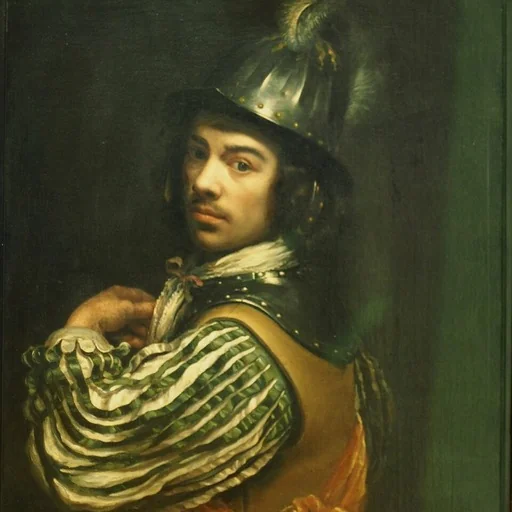
Artist
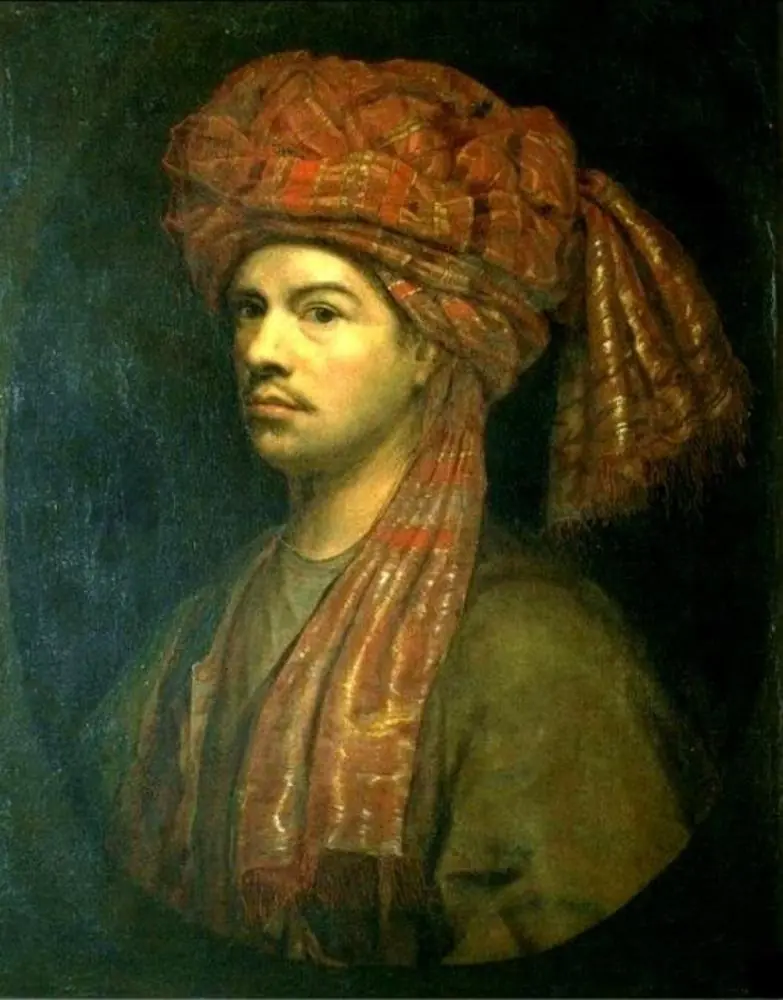
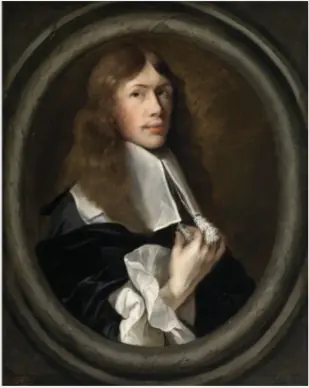
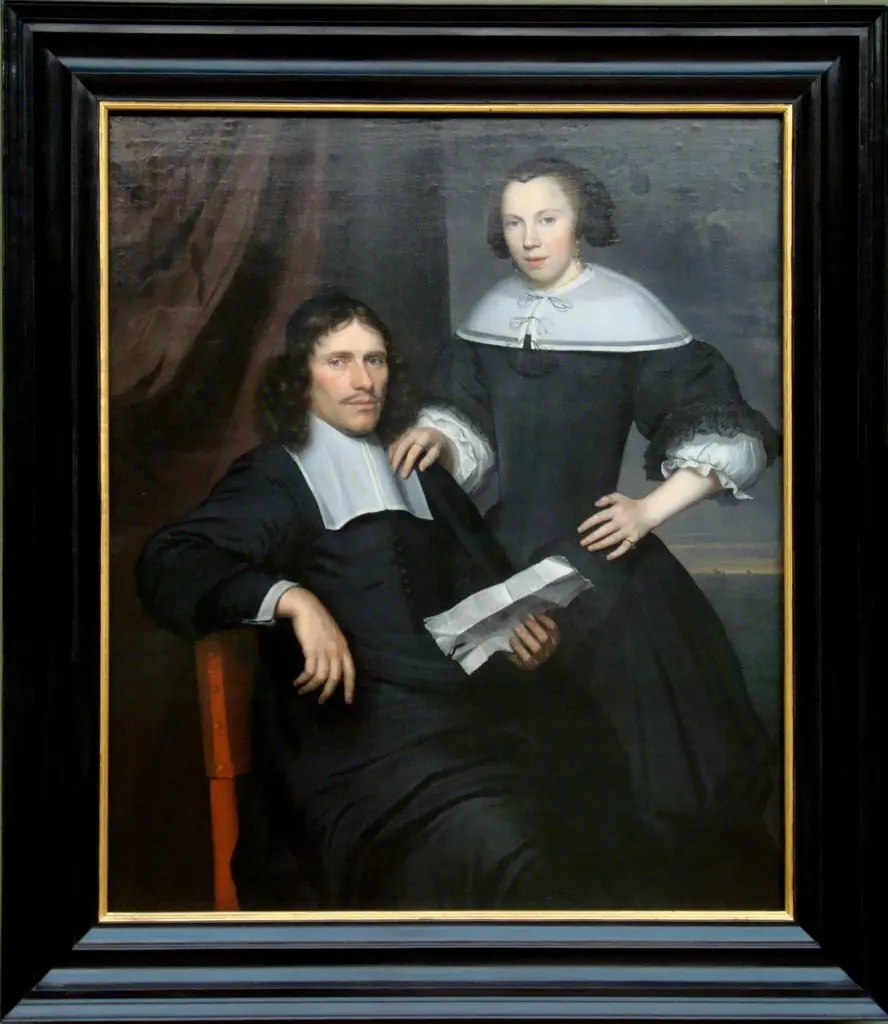
Wallerant Vaillant (30 May 1623 – 28 August 1677) was a painter of the Dutch Golden Age and one of the first artists to use the mezzotint technique, which he probably helped to develop.