Artwork
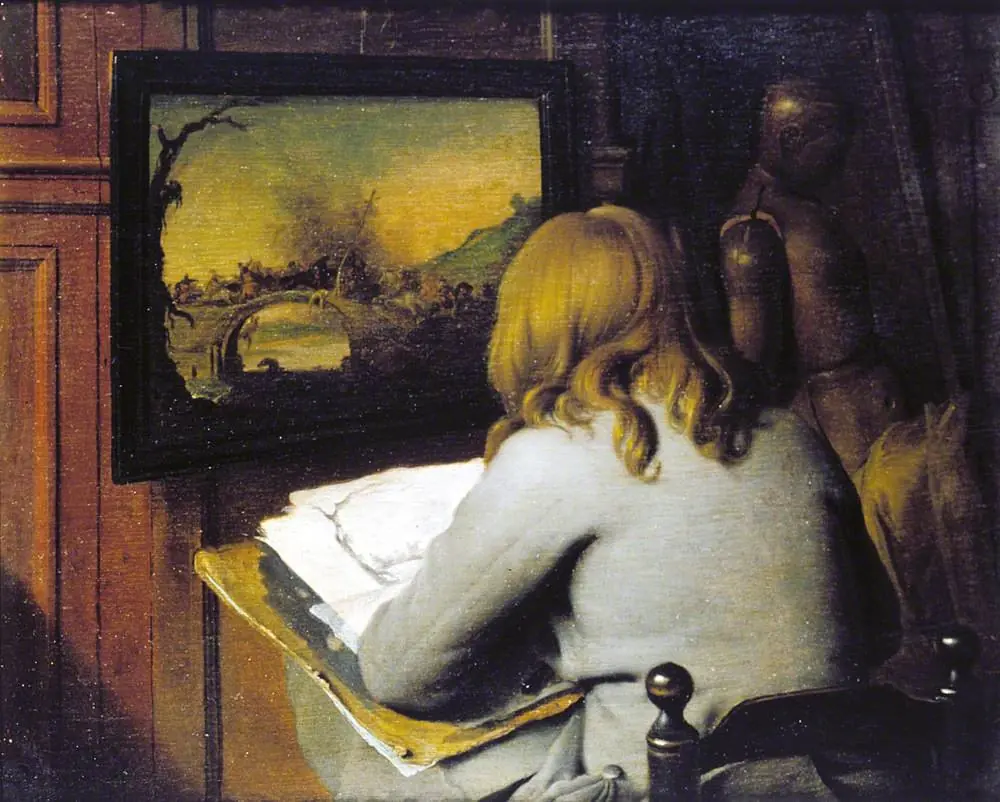
Man writing by an easel
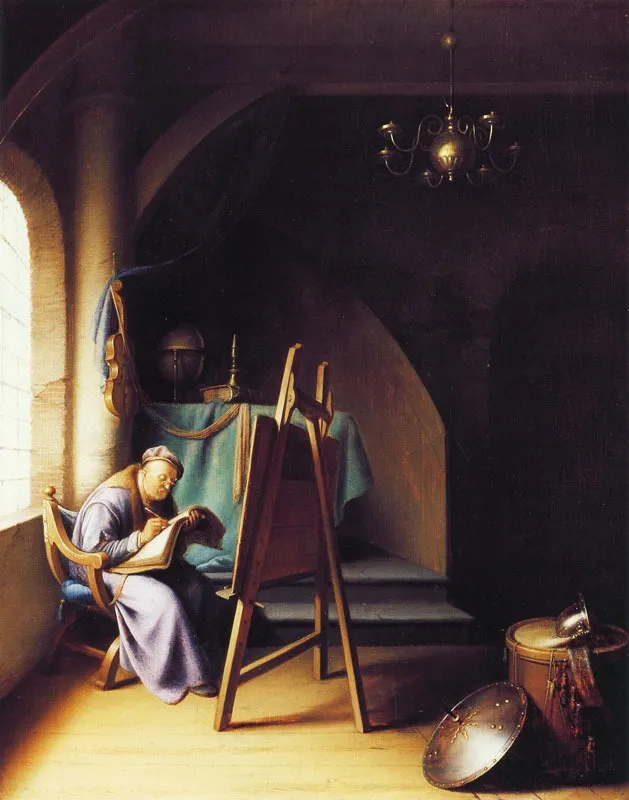
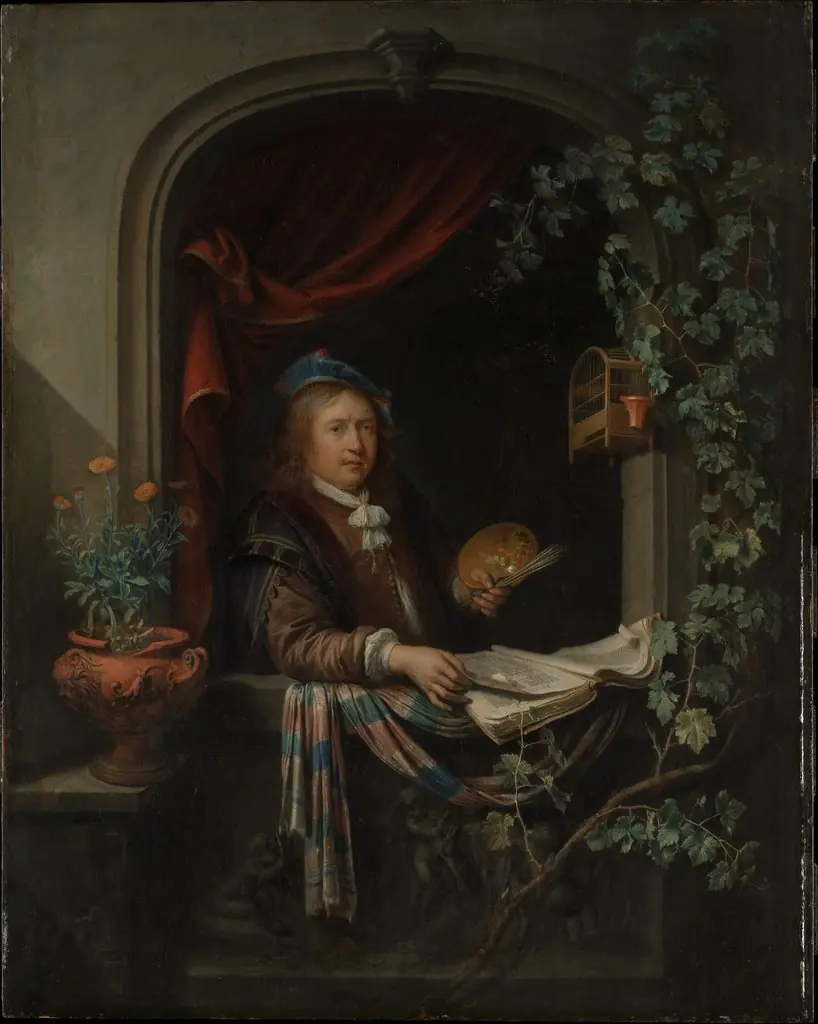
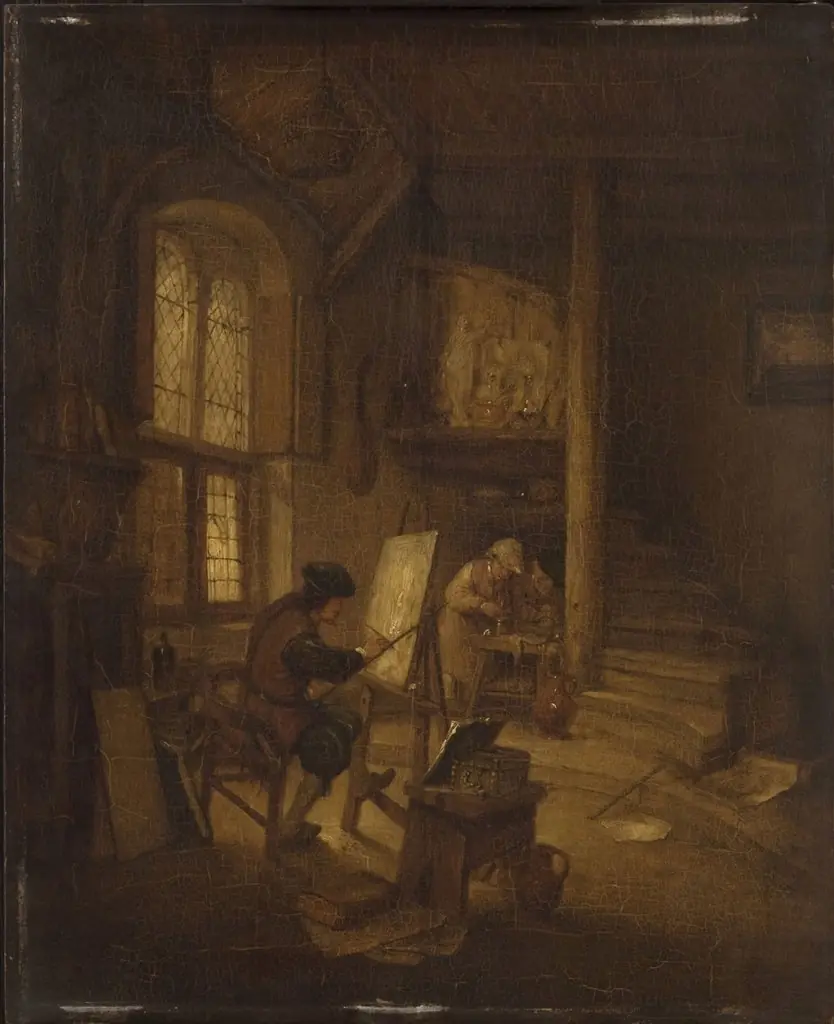
Man writing by an easel is an oil painting by the Dutch Golden Age artist Gerrit Dou. It dates from 1630 and is held in the collection of the Rijksmuseum.
About this work
Subject & Meaning
The composition includes specific attributes such as a book and a quill, which identify the subject as a scholar or scribe immersed in intellectual labor.
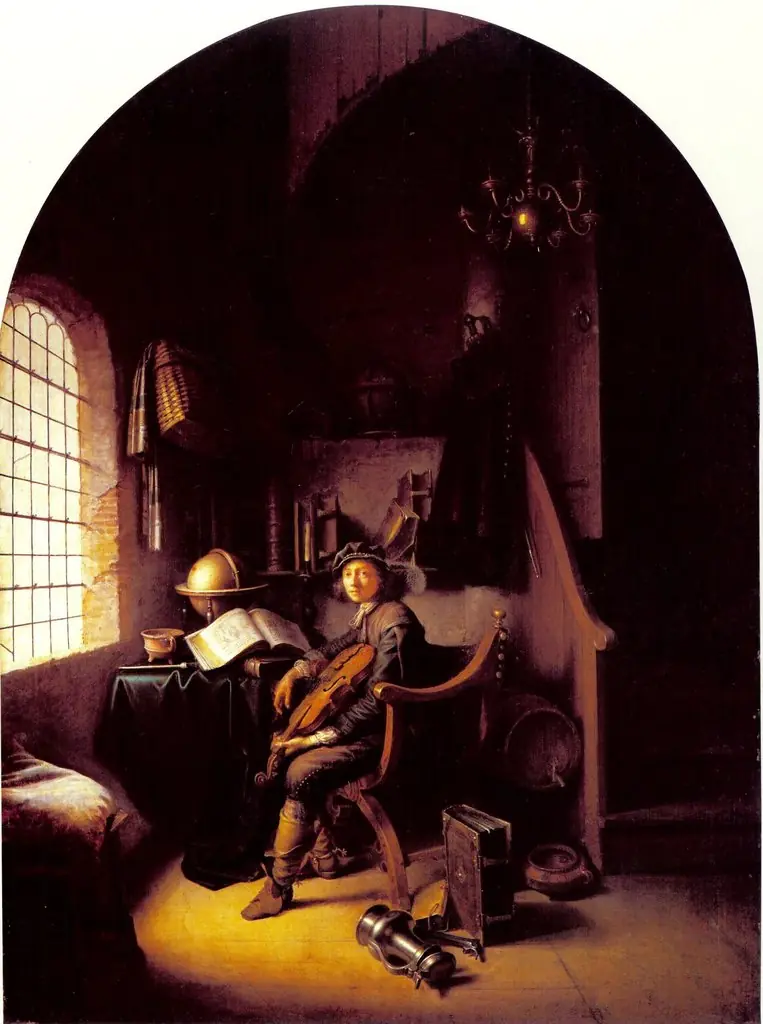
Gerrit Dou's 1630 oil painting depicts a solitary male figure engaged in the act of writing while seated before an easel. The composition includes specific attributes such as a book and a quill, which identify the subject as a scholar or scribe immersed in intellectual labor. As a work of genre art, the piece focuses on the realistic portrayal of everyday activities rather than religious or mythological narratives.
The inclusion of the easel alongside writing implements suggests a thematic connection between the practices of visual artistry and literary composition, highlighting the diligence and concentration required for both pursuits.
Technique & Style
Gerrit Dou's Man writing by an easel (1630) is an oil painting executed on a wooden panel support. The work measures 31.4 cm in height and 24.8 cm in width, presenting a compact format characteristic of the artist's early genre scenes. The style reflects Dou's meticulous attention to detail and the precise rendering of light and texture typical of his Leiden period, focusing on the intimate activity of the subject within a confined pictorial space.
History & Provenance
The painting is dated to 1630, aligning with the artist's early career in Leiden. Ownership traces begin with Gerard Bicker (II) van Zwieten, followed by Hendrik van Heteren, then Adriaan Leonard van Heteren, and Adriaan Leonard van Heteren Gevers. It later passed to Thomas Baring, then to Thomas Baring, 1st Earl of Northbrook, and Francis Baring, 2nd Earl of Northbrook.
By the late 20th century, it was owned by Michal Hornstein, from whom it was acquired by the Rijksmuseum, Amsterdam, where it is currently held.
Context
Created in 1630 by Gerrit Dou, Man writing by an easel is a significant example of early Dutch genre art. As one of the artist's earliest dated paintings, it demonstrates the meticulous technique and attention to detail that would come to define his career within the Leiden school. The painting is currently held in the collection of the Rijksmuseum, having passed through notable private collections including those of the Baring family before entering the public domain.
Overview
Gerrit Dou, a prominent painter of the Dutch Golden Age and a student of Rembrandt, created Man writing by an easel around 1630. This oil painting exemplifies the detailed genre scenes for which Dou became known, capturing a quiet moment of scholarly activity. The work is characterized by its intimate scale and the artist's meticulous rendering of light and texture, reflecting the refined aesthetic of the Leiden fijnschilders. It is currently housed in the Rijksmuseum.
Artist & collection
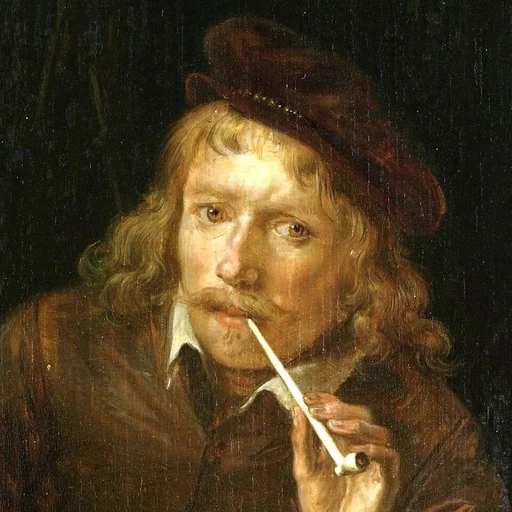
Artist
Gerrit Dou (pronounced; 7 April 1613 – 9 February 1675), also known as Gerard Douw or Dow, was a Dutch Golden Age painter, whose small, highly polished paintings are typical of the Leiden fijnschilders.