Artwork
The artist's Studio
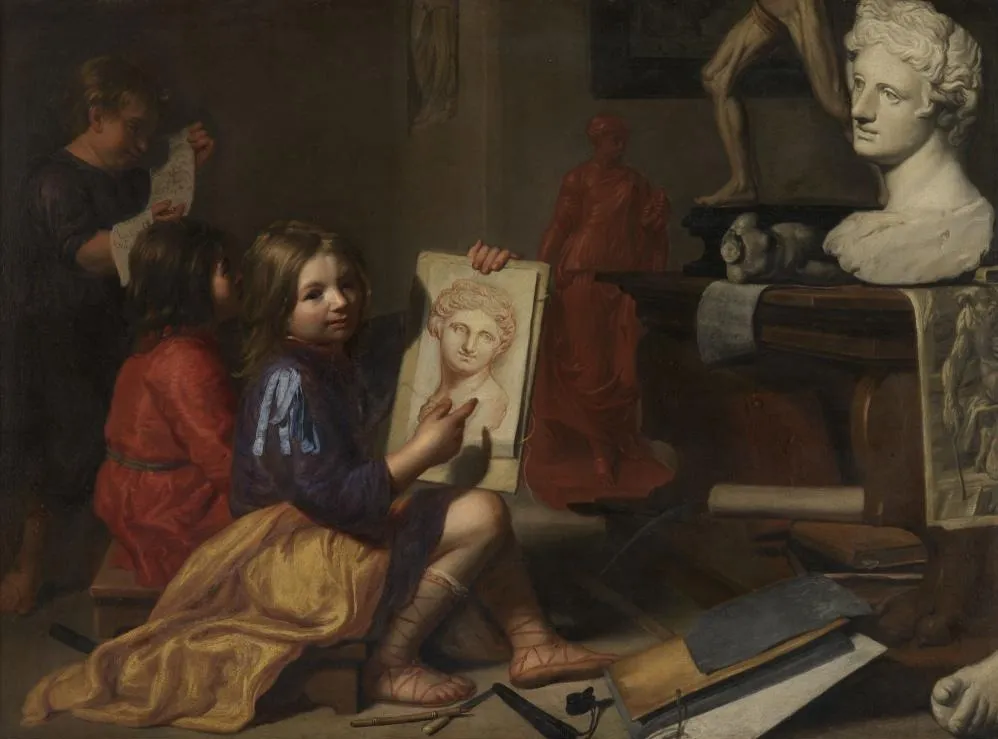
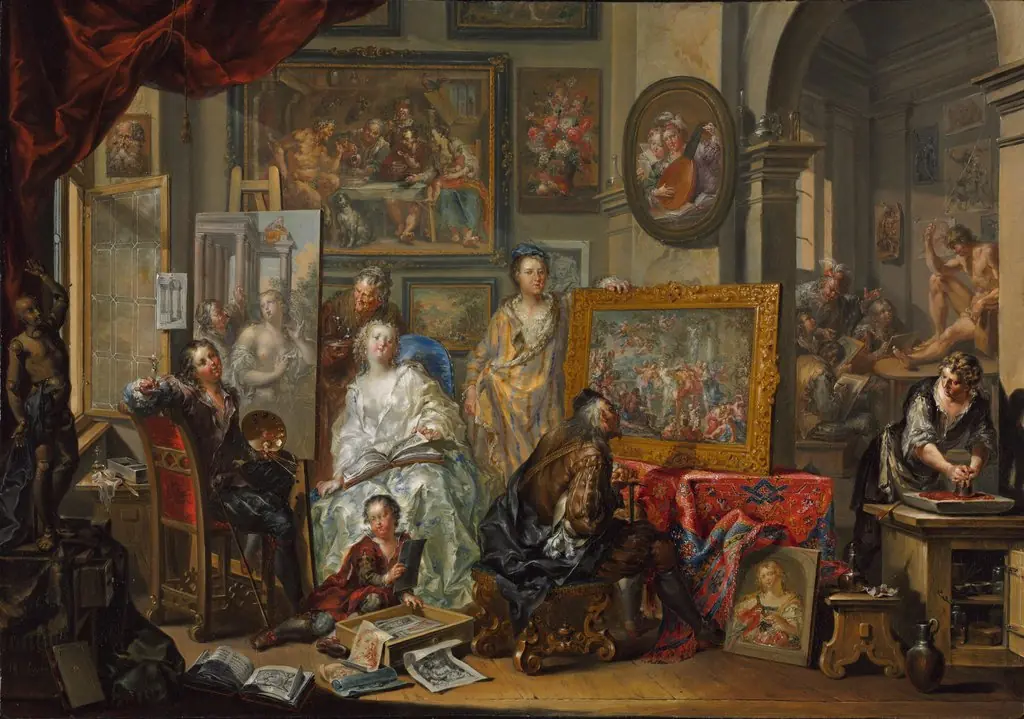
The artist's Studio is an oil painting by the Dutch Golden Age artist Jacob van Oost. It dates from 1666 and is held in the collection of the Groeningemuseum.
About this work
Overview
5 centimetres, the work is held in the collection of the Groeningemuseum in Bruges as part of the Flemish Kunstcollectie.
The Artist's Studio is an oil on canvas painting by the Flemish artist Jacob van Oost, dated 1666. Measuring 111.5 by 150.5 centimetres, the work is held in the collection of the Groeningemuseum in Bruges as part of the Flemish Kunstcollectie. The painting belongs to the genre of studio interiors, a subject that gained particular resonance in seventeenth-century Flemish art, and it offers a rare glimpse into the pedagogical and practical dimensions of artistic training during the period.
Subject & Meaning
The painting depicts an interior studio scene populated by four children engaged in artistic activities. In the foreground, a child wearing a blue tunic and yellow skirt sits on the floor, holding up a drawing of a classical head and pointing to it with the right hand, suggesting instruction or self-correction. To the left, another child in red sits with back turned, while a third child stands examining a sheet of paper. The right side of the composition is dominated by a wooden table bearing a white marble bust, a fragment of a classical statue, and a draped cloth, with a full-length red statue standing behind. The floor is scattered with rolled papers, books, a palette, and drawing implements, while a fragment of another sculpture appears in the lower right corner. The presence of classical sculptures and the children's engagement with drawing and study suggest an allegory of artistic education and the transmission of knowledge. The restrained palette of warm browns, deep reds, golden yellow, and cool white, combined with the directional light from the left, reinforces the serious, contemplative atmosphere of the studio as a space of disciplined learning.
Technique & Style
Van Oost executed the work in oil on canvas with smooth, finished brushwork that demonstrates careful attention to the varied textures of fabric, stone, and paper. Light enters from the left, illuminating the central figures and the marble bust while leaving much of the background in shadow, a handling that creates dramatic focus and spatial depth. The walls are plain and dark, with only a small hanging object and a framed picture barely visible in the background, directing the viewer's attention to the figures and their activities. The compositional balance between the human figures on the left and the sculptural still life on the right reflects the influence of Flemish Baroque conventions, while the overall finish and controlled lighting suggest the artist's mature technical accomplishment in 1666.
History & Provenance
The painting is dated 1666, placing it in the later phase of van Oost's career. It is currently located in the Groeningemuseum in Bruges, where it is held as part of the Flemish Kunstcollectie. The work has been reproduced and distributed through Bridgeman Images, indicating its established place in museum publishing and image licensing.
Context
Jacob van Oost was a prominent Flemish painter active in Bruges, where he became the leading portraitist and genre painter of his generation. The Artist's Studio reflects the broader seventeenth-century Flemish interest in artist studio interiors, a genre that combined realistic depiction with symbolic or allegorical content. The presence of children as the primary subjects, rather than adult apprentices or the master himself, distinguishes this work from many contemporary studio scenes and may reflect particular pedagogical practices or patronal interests. The work's classification as both genre scene and allegory in scholarly literature points to its layered significance within the artistic culture of the Spanish Netherlands.
Legacy
The Artist's Studio has entered the broader visual culture through widespread reproduction and commercial dissemination. The painting is reproduced and sold as giclée prints and hand-painted copies by multiple fine art publishers, with the Groeningemuseum and Bridgeman Images serving as the authoritative sources for licensed reproductions. These commercial afterlives, while not contributing to scholarly reception, indicate the work's continued accessibility and recognisability beyond specialist audiences. The painting remains a significant example of van Oost's oeuvre and of Flemish studio interior painting more generally.
Artist & collection
Artist
Jacob van Oost or Jacob van Oost the Elder (1603–1671) was a Flemish painter of history paintings and portraits.