Artwork
Self-portrait
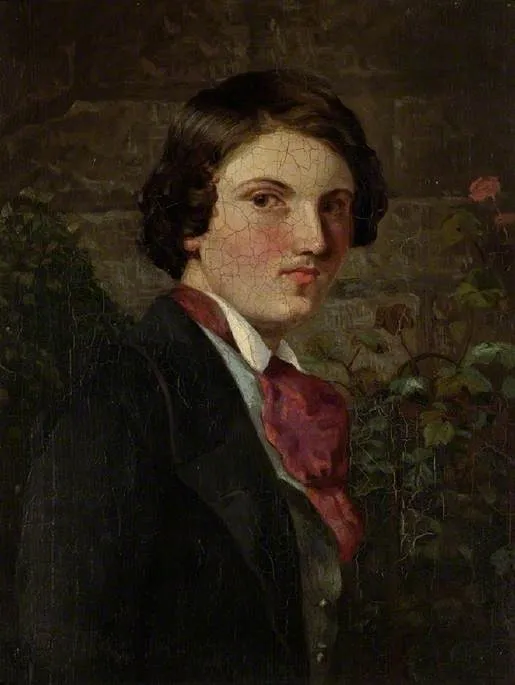
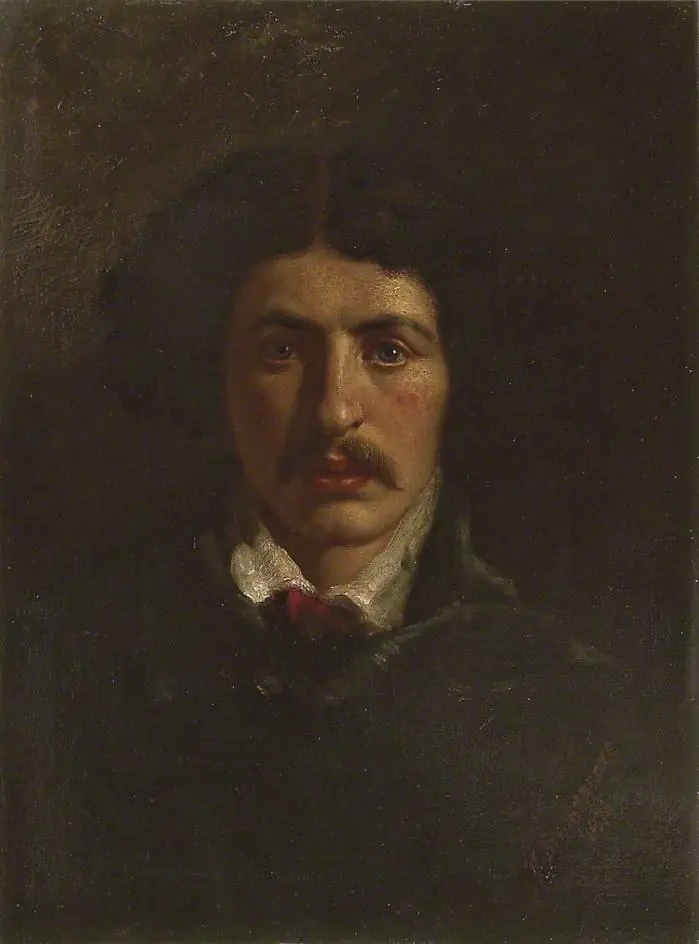
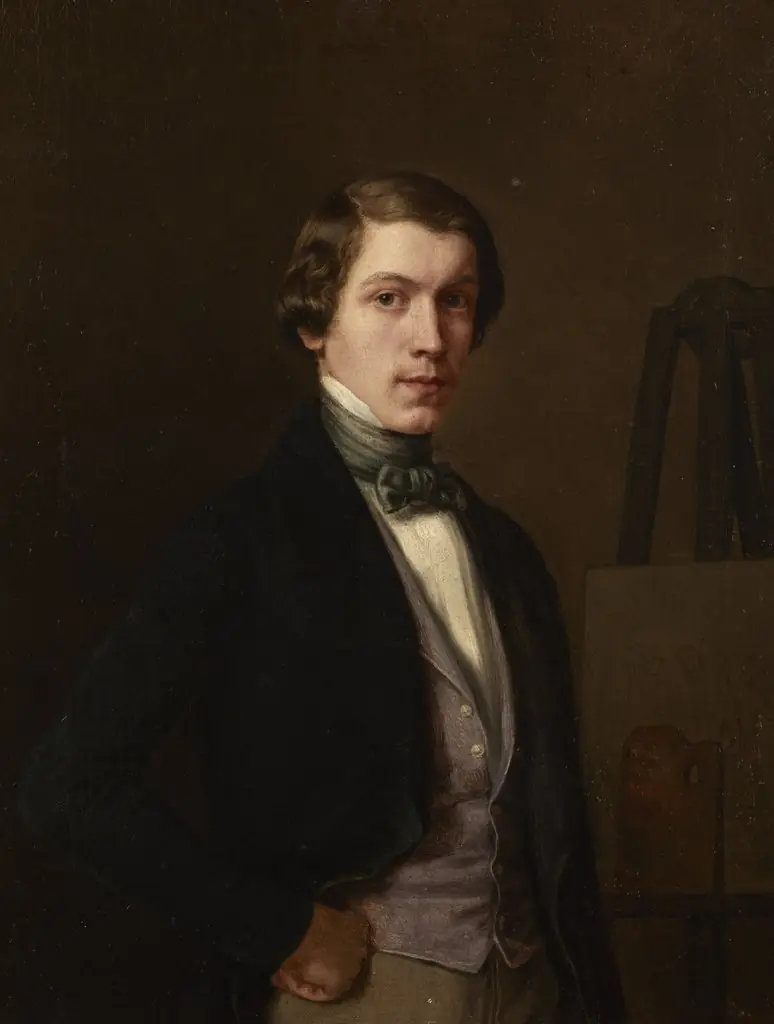
Self-portrait is an oil painting by the Pre-Raphaelite artist Walter Deverell. It dates from 1849 and is held in the collection of the Fitzwilliam Museum.
About this work
Overview
The painting is now part of the Fitzwilliam Museum’s collection, offering a personal glimpse into the artist’s identity at the dawn of his career.
Walter Howell Deverell, an American-born artist active in mid-19th century Britain, created this self-portrait in 1849 during his formative years as a student in London. Though not a formal member of the Pre-Raphaelite Brotherhood, he was closely associated with its founders, Millais, Rossetti, and Hunt, and absorbed their early ideals. The painting is now part of the Fitzwilliam Museum’s collection, offering a personal glimpse into the artist’s identity at the dawn of his career.
Subject & Meaning
The portrait presents Deverell as a young man, dressed in a dark suit with a vivid red cravat, a deliberate accent that signals both individuality and aesthetic awareness. His direct gaze and composed expression convey quiet self-assurance, aligning with the Pre-Raphaelite interest in psychological depth. The absence of symbolic objects or narrative context focuses attention on the sitter’s presence, suggesting an introspective exploration of identity rather than a public persona.
Technique & Style
Deverell employed soft, controlled brushwork to render his features with naturalism, avoiding theatricality. The dark, indistinct background, hinting at foliage and stone, enhances the figure’s prominence through subtle chiaroscuro. The red cravat, sharply contrasted against muted tones, acts as a focal point without overwhelming the composition. This restrained use of color and light reflects the Pre-Raphaelite emphasis on observational truth over idealized form.
History & Provenance
Painted in 1849, the work emerged during Deverell’s time in London, when he was immersed in the intellectual circles surrounding the Pre-Raphaelite Brotherhood. It remained in private hands until its acquisition by the Fitzwilliam Museum, where it has been preserved as part of its 19th-century British art holdings. Its survival offers rare insight into an artist whose career was cut short by early death, making this portrait a significant personal artifact.
Context
In the late 1840s, British art was shifting away from academic conventions toward greater attention to detail, naturalism, and emotional sincerity. Deverell’s self-portrait aligns with this transition, echoing the Pre-Raphaelites’ rejection of studio artifice. Though less known than his peers, his work reflects a broader cultural moment in which young artists sought to redefine artistic identity through honest self-representation and close observation of the visible world.
Legacy
Deverell’s self-portrait endures as a quiet testament to an artist whose life and career were brief but emblematic of a pivotal artistic generation. It captures the ethos of early Pre-Raphaelitism, intimate, observant, and grounded in personal authenticity, before the movement fully crystallized into its more famous phases. The painting remains a valuable record of an individual navigating the boundaries between tradition and innovation in Victorian art.
Artist & collection
Artist
Walter Howell Deverell (1 October 1827 – 2 February 1854) was an American-born British artist who was closely associated with the Pre-Raphaelite Brotherhood.