Artwork
The Green Salon
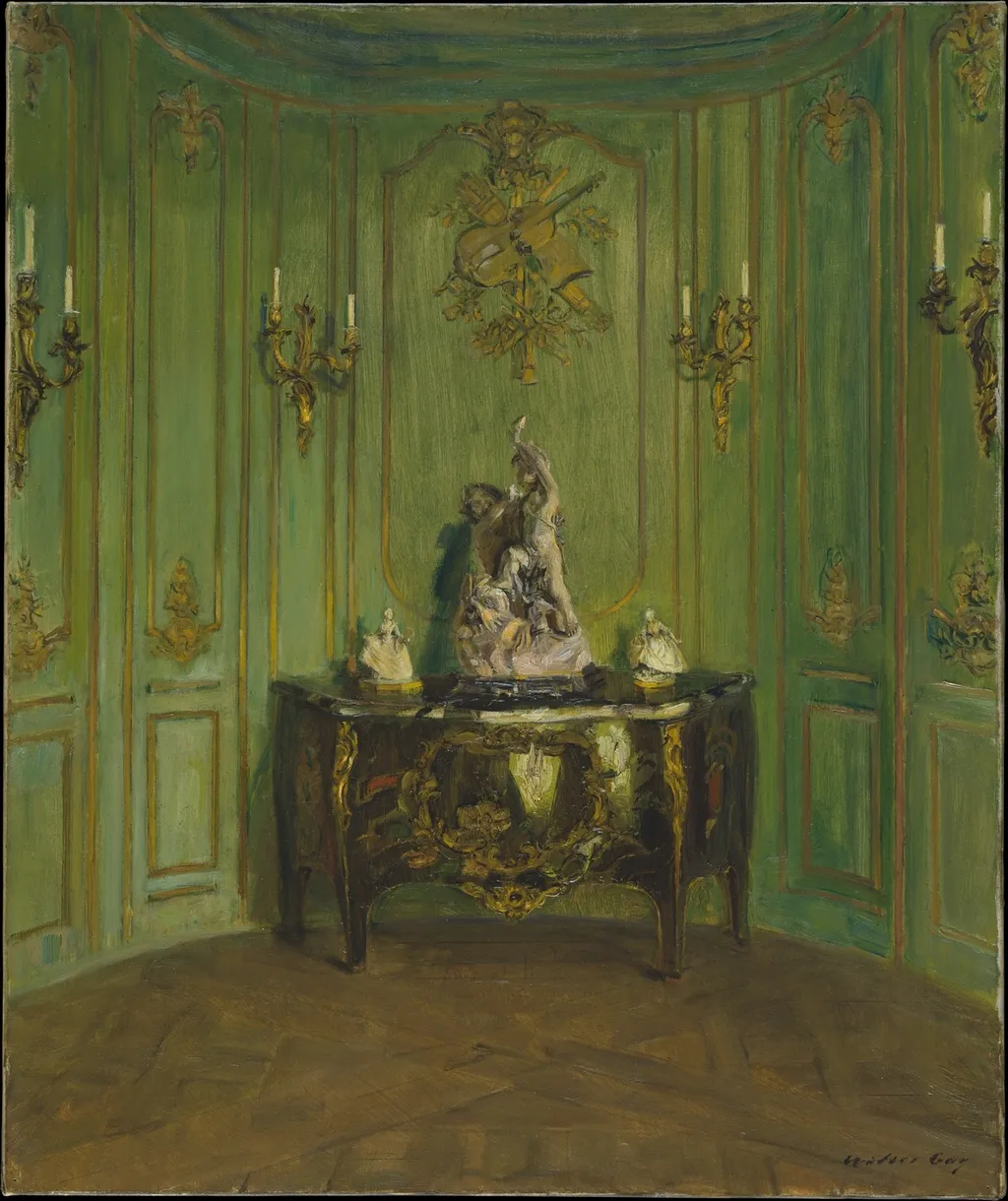
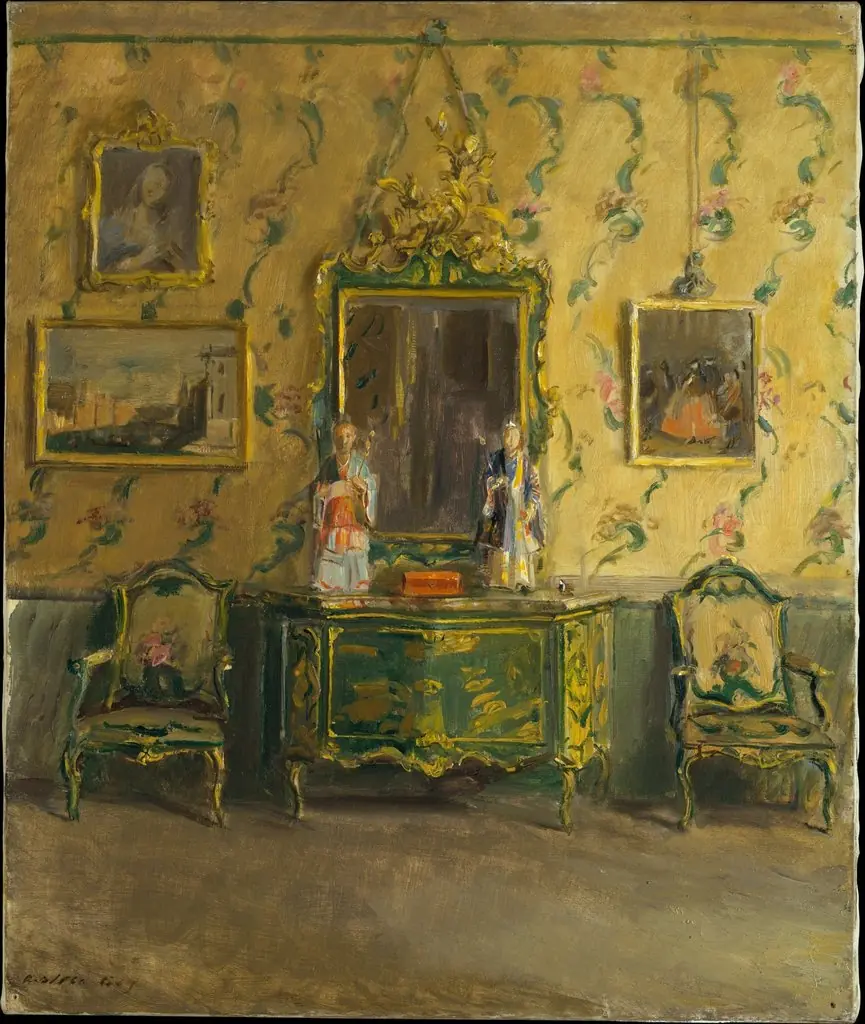
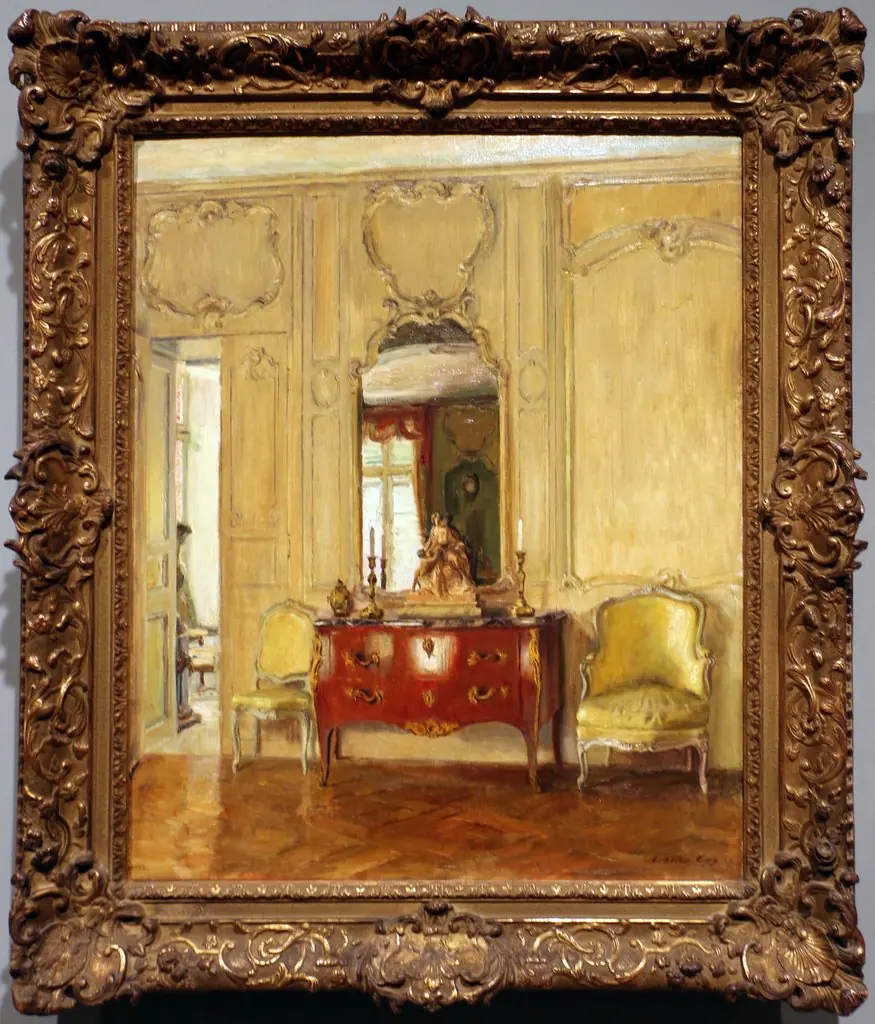
The Green Salon is an oil painting by the Impressionist artist Walter Gay. It dates from 1912 and is held in the collection of the Metropolitan Museum of Art.
About this work
Technique & Style
The application of oil paint on a woven canvas support reflects the traditional methods employed by the artist for this classification of fine art.
Executed in 1912, The Green Salon is an oil painting on canvas by Walter Gay. The work measures 64.8 cm in height and 54.6 cm in width. Stylistically, the piece functions as an interior scene, capturing the architectural and decorative details of a specific room.
The application of oil paint on a woven canvas support reflects the traditional methods employed by the artist for this classification of fine art.
History & Provenance
Walter Gay created the oil painting known as The Green Salon in 1912. The work is executed in oil paint on canvas and measures 64.8 cm in height by 54.6 cm in width. It depicts an interior scene and is currently held in the collection of the Metropolitan Museum of Art.
The Green Salon, painted by Walter Gay in 1912, is held by the Metropolitan Museum of Art, where it forms part of the museum's collection. The work is executed in oil on canvas and measures 64.8 by 54.6 cm.
No specific accession number is recorded in the available sources, and no exhibition history is documented beyond its inclusion in the Metropolitan Museum of Art's holdings.
Context
The Green Salon (1912) by Walter Gay depicts an interior scene bathed in green-toned light, reflecting contemporary design sensibilities. Art historians situate Gay's work within the American academic tradition, noting his role in bridging 19th-century realist techniques with early 20th-century modernist sensibilities. The painting's restrained composition and muted palette contrast with the vibrant colorism of his French contemporaries, highlighting his unique position in transatlantic artistic exchange.
Its inclusion in the Metropolitan Museum of Art's collection underscores scholarly recognition of Gay's contribution to interior genre painting.
Scholarship emphasizes The Green Salon as an exemplar of early 20th-century American realism, particularly its psychological depth in domestic spaces. The work's reception during Gay's lifetime focused on technical mastery rather than revolutionary innovation, aligning with broader academic art values before the rise of modernism. Current research continues to analyze its material composition and historical context within Gay's oeuvre, though consensus remains centered on its formal qualities rather than symbolic interpretation.
Overview
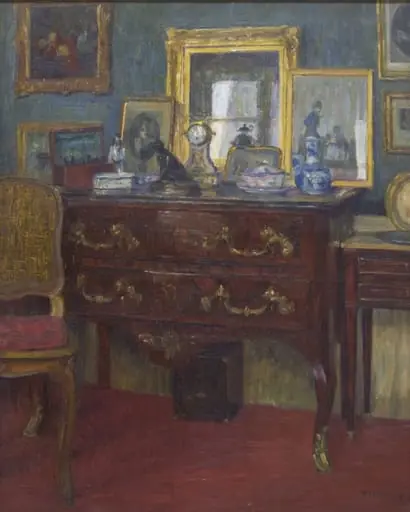
Walter Gay’s 1912 oil painting The Green Salon portrays an elegant interior rendered in muted green walls trimmed with gold. The composition centers on a dark‑stained wooden table supporting two small figurines dressed in period attire, while a chandelier reflected in a wall mirror casts a gentle glow over the scene. The work belongs to the collection of the Metropolitan Museum of Art.
Subject & Meaning
The painting captures a quiet moment within a refined drawing‑room, emphasizing the interplay of light and surface. The presence of the statues and the mirrored chandelier suggests a contemplation of art and domestic luxury, inviting viewers to consider the social rituals of genteel society in the early twentieth century.
Own this work as a print
Artist & collection
Artist
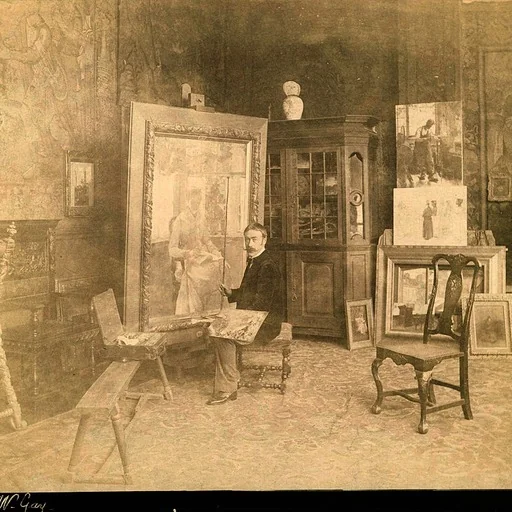
Walter Gay (January 22, 1856 – July 13, 1937) was an American painter noted both for his genre paintings of French peasants, paintings of opulent interior scenes and was a notable art collector.