Artwork
Salón de Porcelana del Palacio Real de Madrid
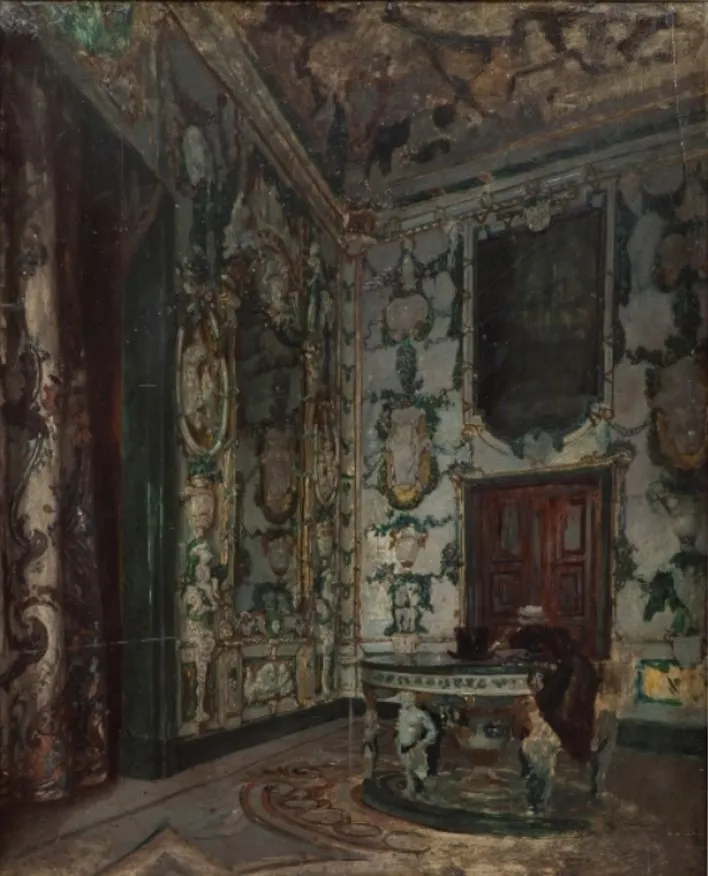
Salón de Porcelana del Palacio Real de Madrid is an oil painting by the Realist artist Vicente Palmaroli. It dates from 1870 and is held in the collection of the Museo del Prado.
About this work
Overview
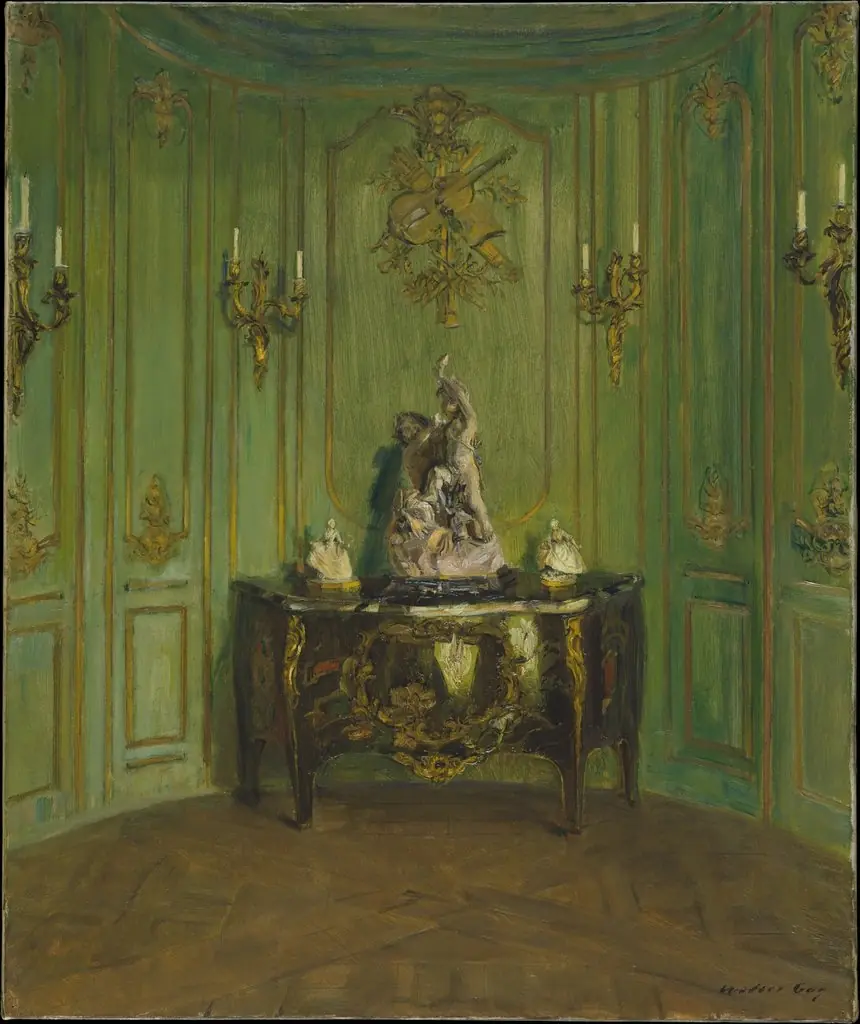
Painted in 1870 by Vicente Palmaroli, this oil on canvas depicts the interior of the Porcelain Room within the Royal Palace of Madrid.
Painted in 1870 by Vicente Palmaroli, this oil on canvas depicts the interior of the Porcelain Room within the Royal Palace of Madrid. The work serves as a precise architectural record of the space, renowned for its walls covered in white and green porcelain tiles featuring intricate geometric and floral motifs. Palmaroli captures the room's specific lighting and spatial depth, centering the composition on a large mirror that reflects the opposite wall, thereby doubling the visual impact of the decorative scheme.
To the right of the mirror, a wooden door provides a structural counterpoint to the repetitive tile patterns. The floor is covered by an ornate rug, grounding the ethereal quality of the porcelain with a sense of domestic warmth. Executed during a period when Palmaroli was establishing his reputation as a court painter, the piece demonstrates his mastery of realism and his ability to render complex textures with fidelity.
The painting stands as a significant document of 19th-century Spanish royal interiors, preserving the aesthetic of the Bourbon restoration era while showcasing the artist's technical skill in depicting light and material surfaces.
Subject & Meaning
The composition captures a sumptuous chamber whose walls feature a white‑and‑green patterned surface, punctuated by a large mirror and a wooden door. A finely woven rug covers the floor, while a modest table in the foreground holds a figurine and a small dog, suggesting a quiet, domestic moment within an aristocratic setting.
Technique & Style
Palmaroli employs a smooth, academic brushwork that emphasizes the reflective qualities of porcelain and glass. The palette balances cool whites and greens with warm wood tones, creating a sense of depth and materiality that highlights the luxurious furnishings.
History & Provenance
Executed in 1870, the painting entered the Museo del Prado’s holdings as part of its 19th‑century Spanish art acquisitions. Its provenance traces directly to the artist’s estate, with no recorded changes of ownership before its museum accession.
Context
The work reflects the 19th‑century Spanish interest in courtly interiors and the decorative arts, aligning with contemporary European trends that celebrated refined domestic spaces as subjects for academic painting.
Legacy
As an example of Palmaroli’s interior genre, the painting contributes to the Prado’s representation of Spanish court life, offering scholars a visual record of royal interior design and the artist’s skill in rendering texture and light.
Artist & collection


- En sal i Palazzo Borghese
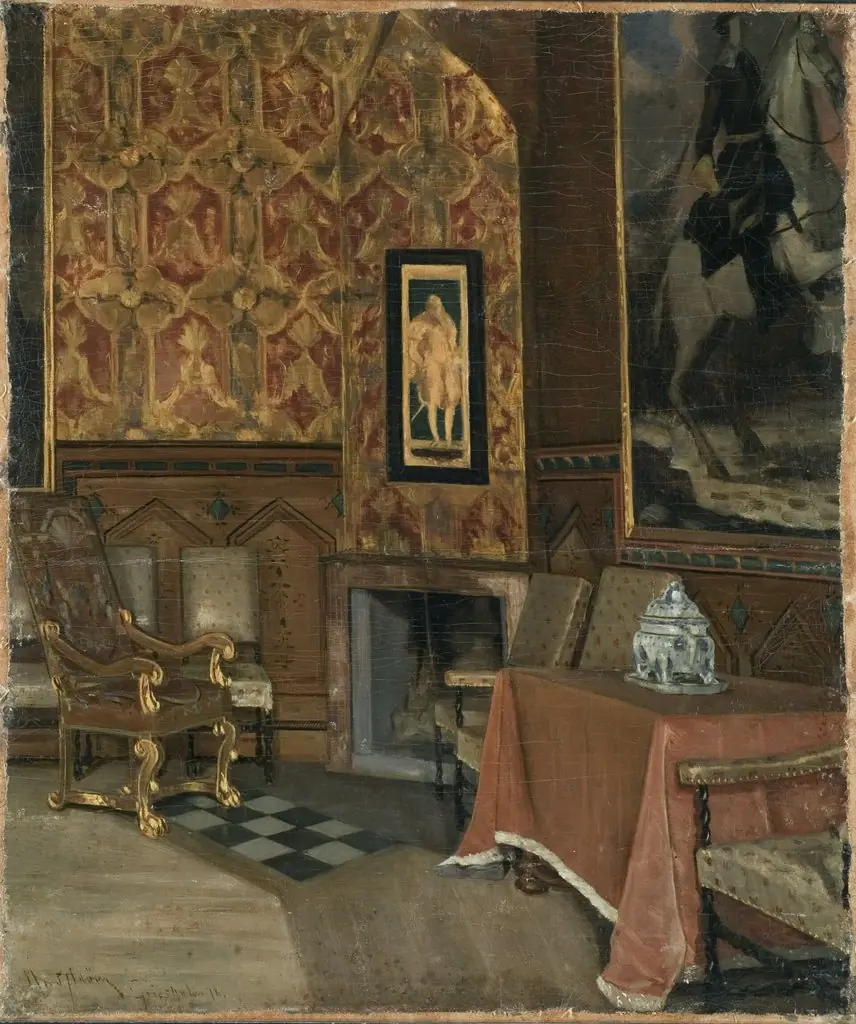 Gripsholms slott, konseljsalen
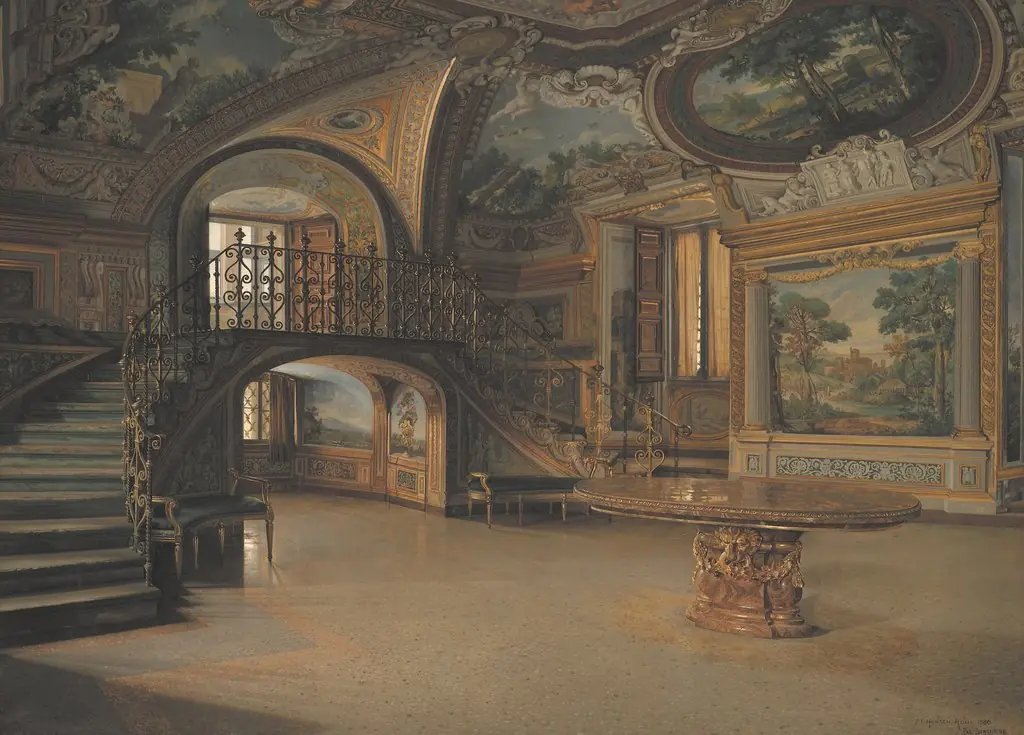 En sal i Palazzo Borghese
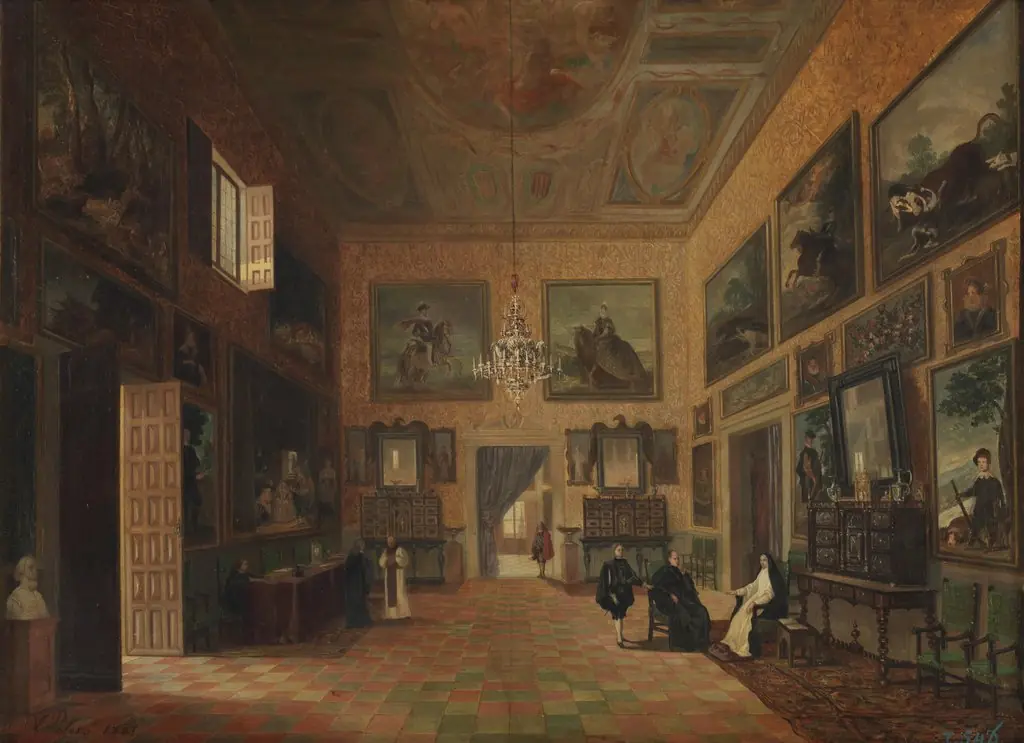 The chamber of Philip IV in the Buen Retiro Royal Palace
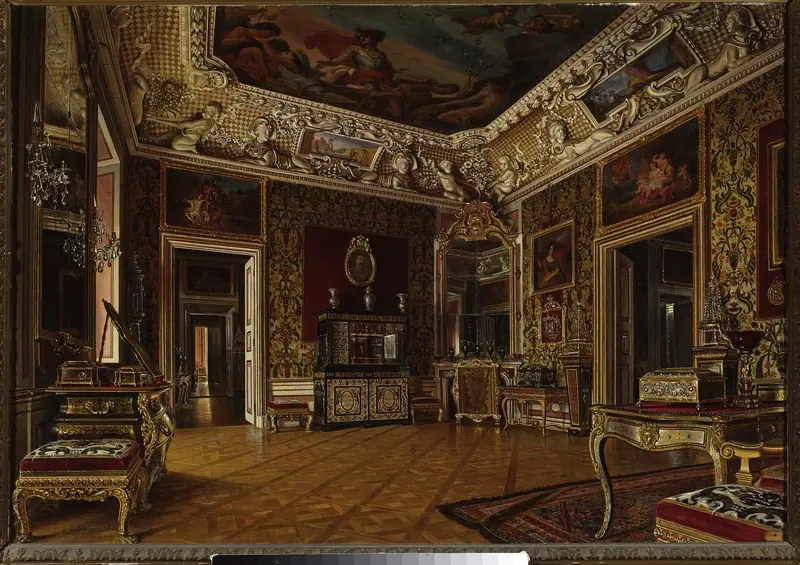 Interior of the royal bedroom at the Wilanów Palace
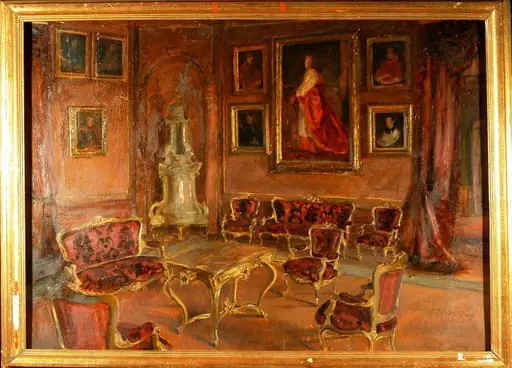 Interior roșu
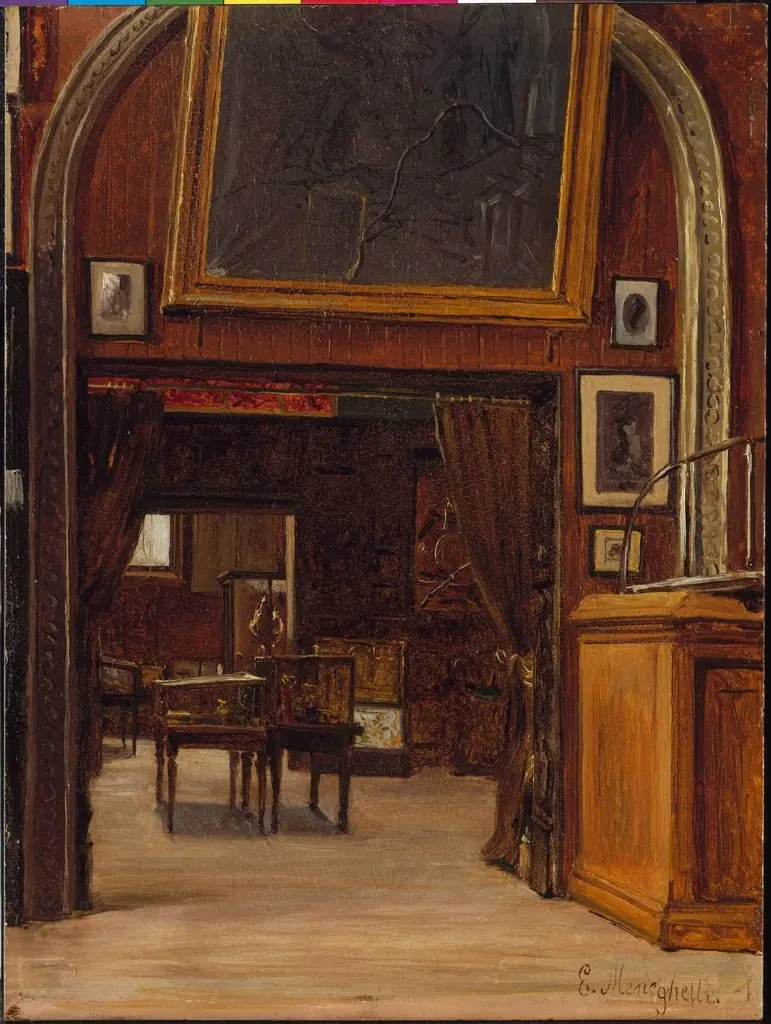 A Gallery in the Old Museum
 În atelierul artistului
 Spinet player in an interior with paintings
 French Interior
 Architectural Study (Door of the Francis I Staircase, Oval Court, Fontainebleau)
 The Green Salon