Artwork
The Lustre Jug
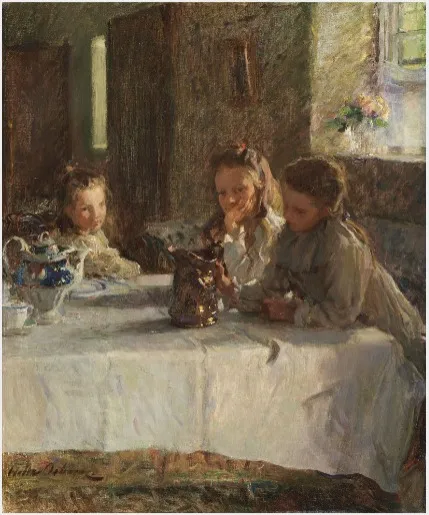
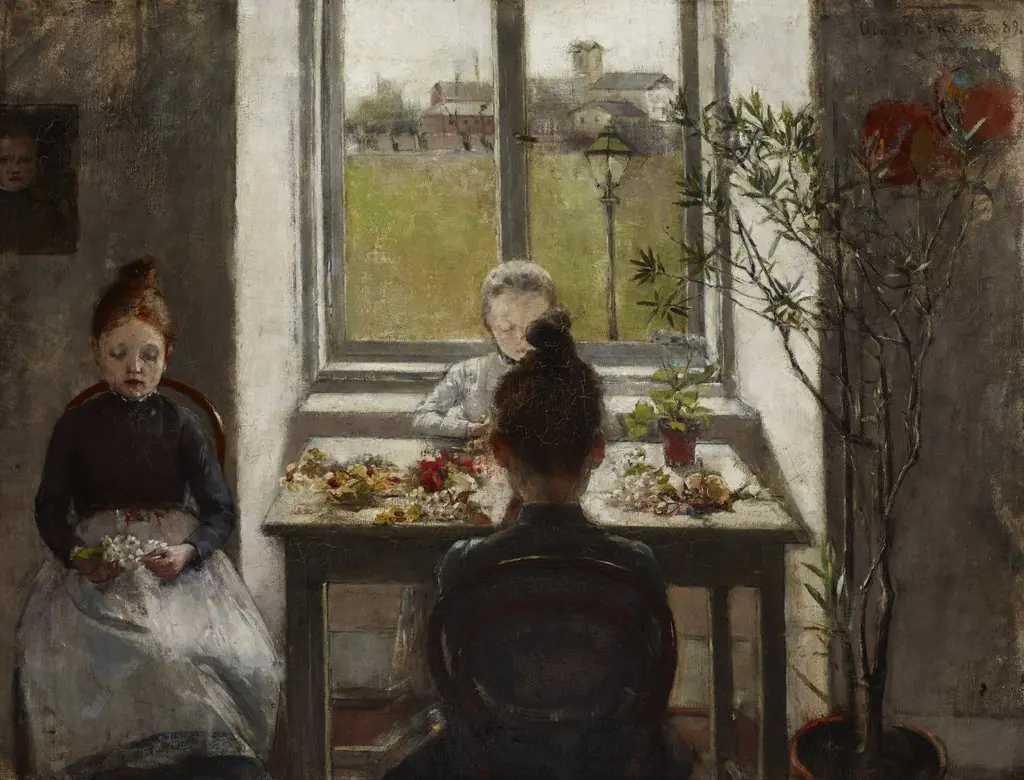
The Lustre Jug is an oil painting by the Impressionist artist Walter Osborne. It dates from 1891 and is held in the collection of the National Gallery of Ireland.
About this work
Overview
Walter Osborne’s The Lustre Jug (c. 1891) is an oil painting that portrays three young girls gathered around a modest table. The figures are dressed in white, their hair neatly tied, and they are surrounded by domestic objects, a jug, a teapot, and cups, set against a windowed backdrop adorned with flowers. The composition captures a quiet, everyday moment in a domestic interior.
Subject & Meaning
The work focuses on a simple, intimate scene of childhood leisure, emphasizing the calm routine of domestic life. By presenting the girls in a shared activity, Osborne highlights themes of familial closeness and the modest comforts of a middle‑class Irish household, reflecting his broader interest in the ordinary experiences of everyday people.
Technique & Style
Executed with loose, textured brushwork, the painting employs a restrained palette of browns, whites, and touches of blue and green. Light entering through the window creates a warm glow that softens the forms, while the visible strokes lend the surface a gentle, atmospheric quality. This approach aligns with Osborne’s Impressionist‑influenced handling of light and color.
History & Provenance
Created around 1891, The Lustre Jug entered the collection of the National Gallery of Ireland, where it remains on display. The acquisition reflects the institution’s commitment to representing Irish artists of the late nineteenth century and to preserving works that document domestic life during that period.
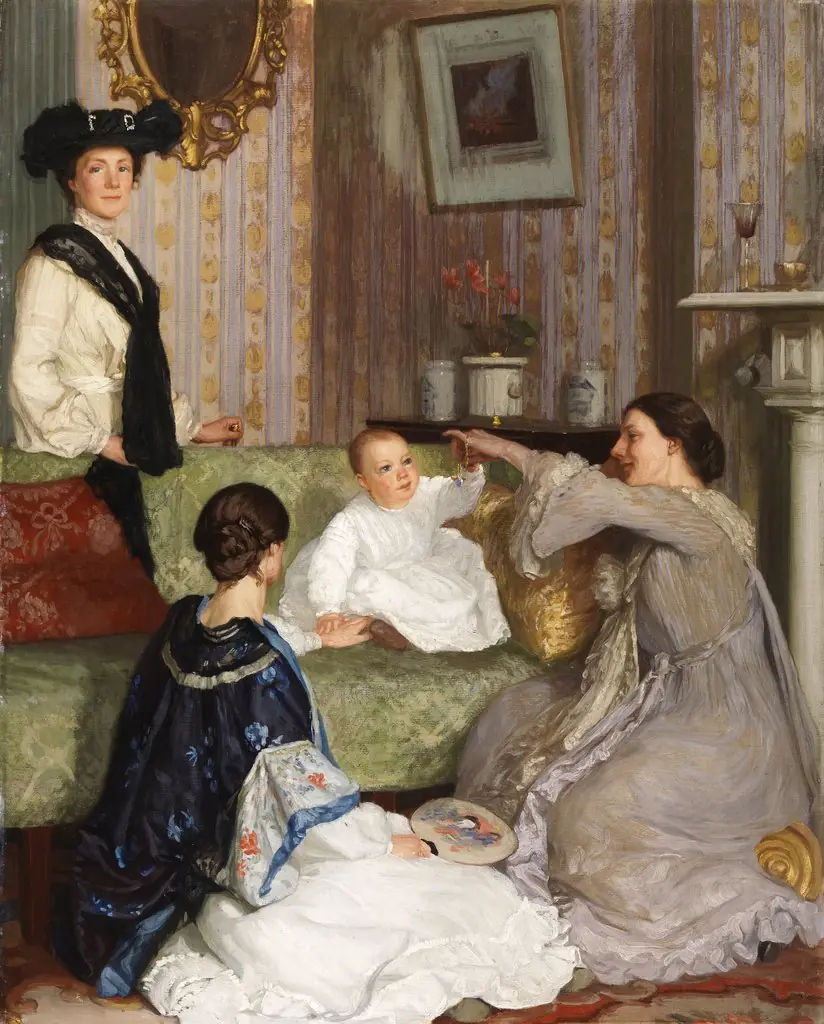
Artist & collection
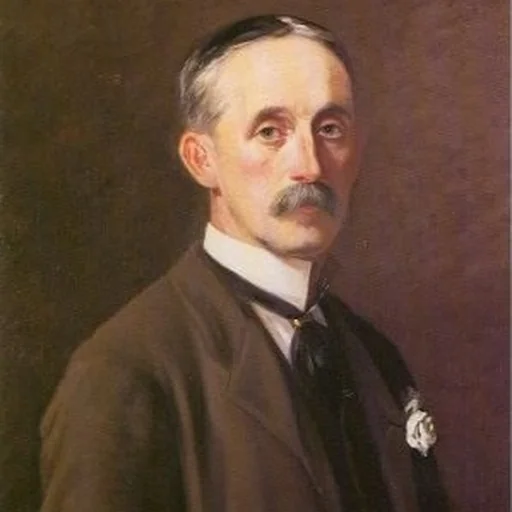
Artist
Walter Frederick Osborne (17 June 1859 – 24 April 1903) was an Irish impressionist and Post-Impressionism landscape and portrait painter, best known for his documentary depictions of late 19th century working class life.

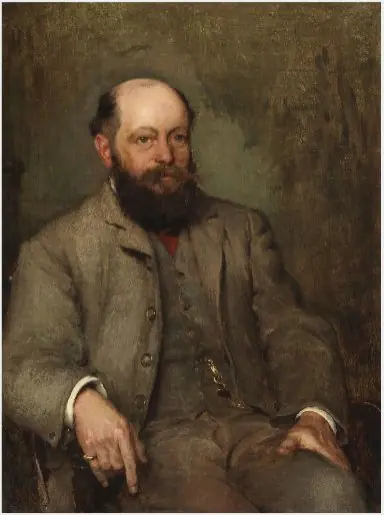 Portrait of Sir Thomas Drew (1838-1910), Architect
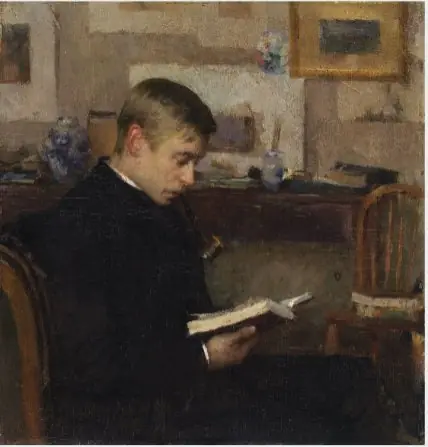 Portrait of Stephen Gwynn (1864-1950), Author
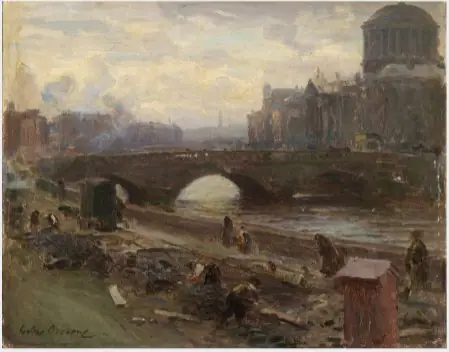 The Four Courts, Dublin
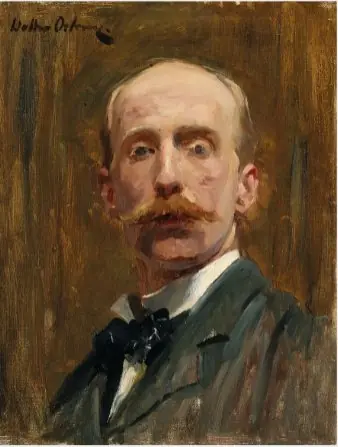 Self-Portrait
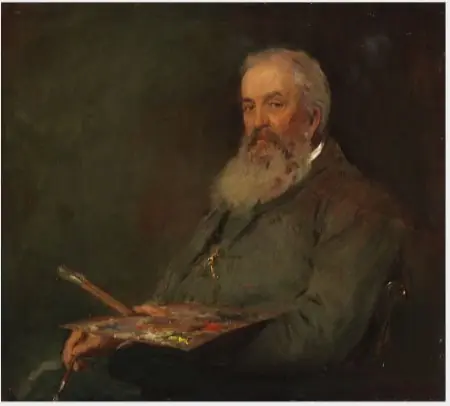 Portrait of Nathaniel Hone (1831-1917), Artist
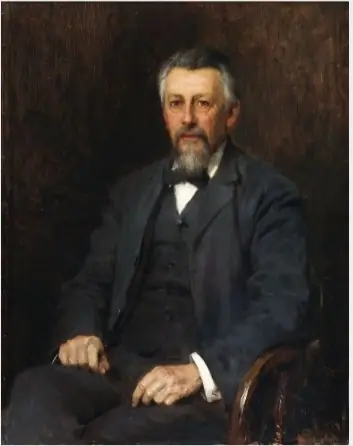 Portrait of Edward Dowden (1843-1913), Poet and Scholar
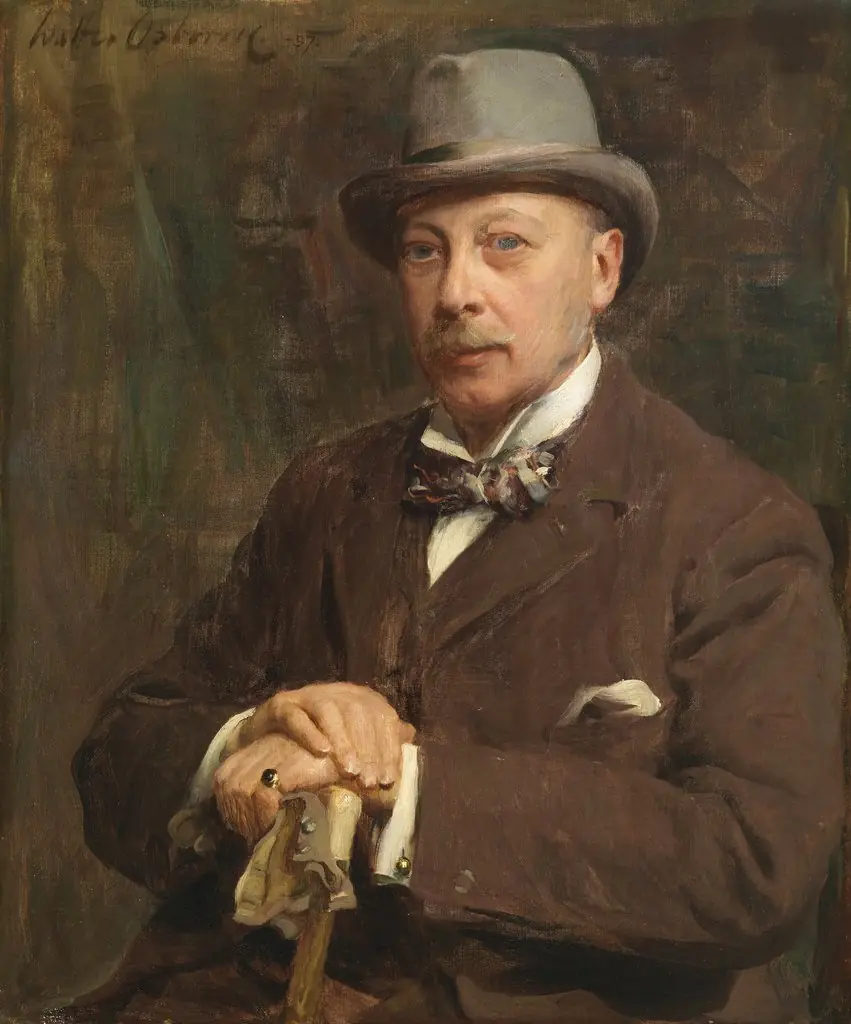 Portrait of a Gentleman
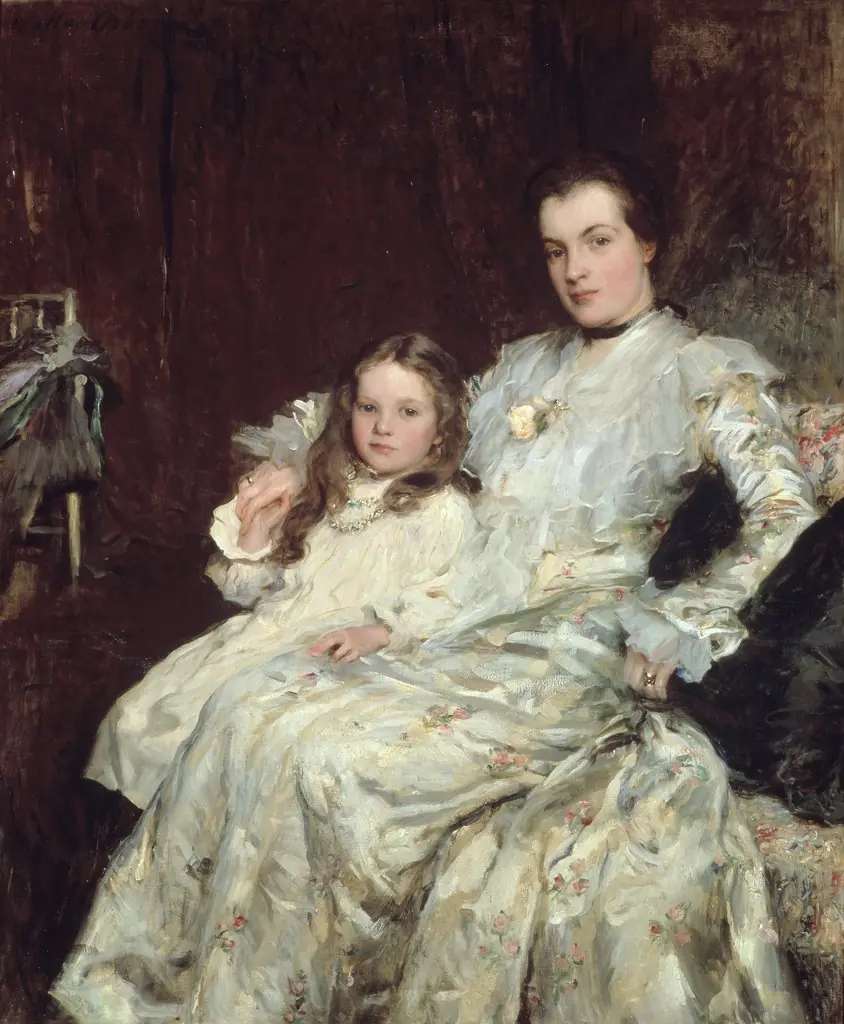 Portrait of Mrs Chadwyck-Healey and her Daughter