Artwork
Seven Beauties of the Bamboo Grove
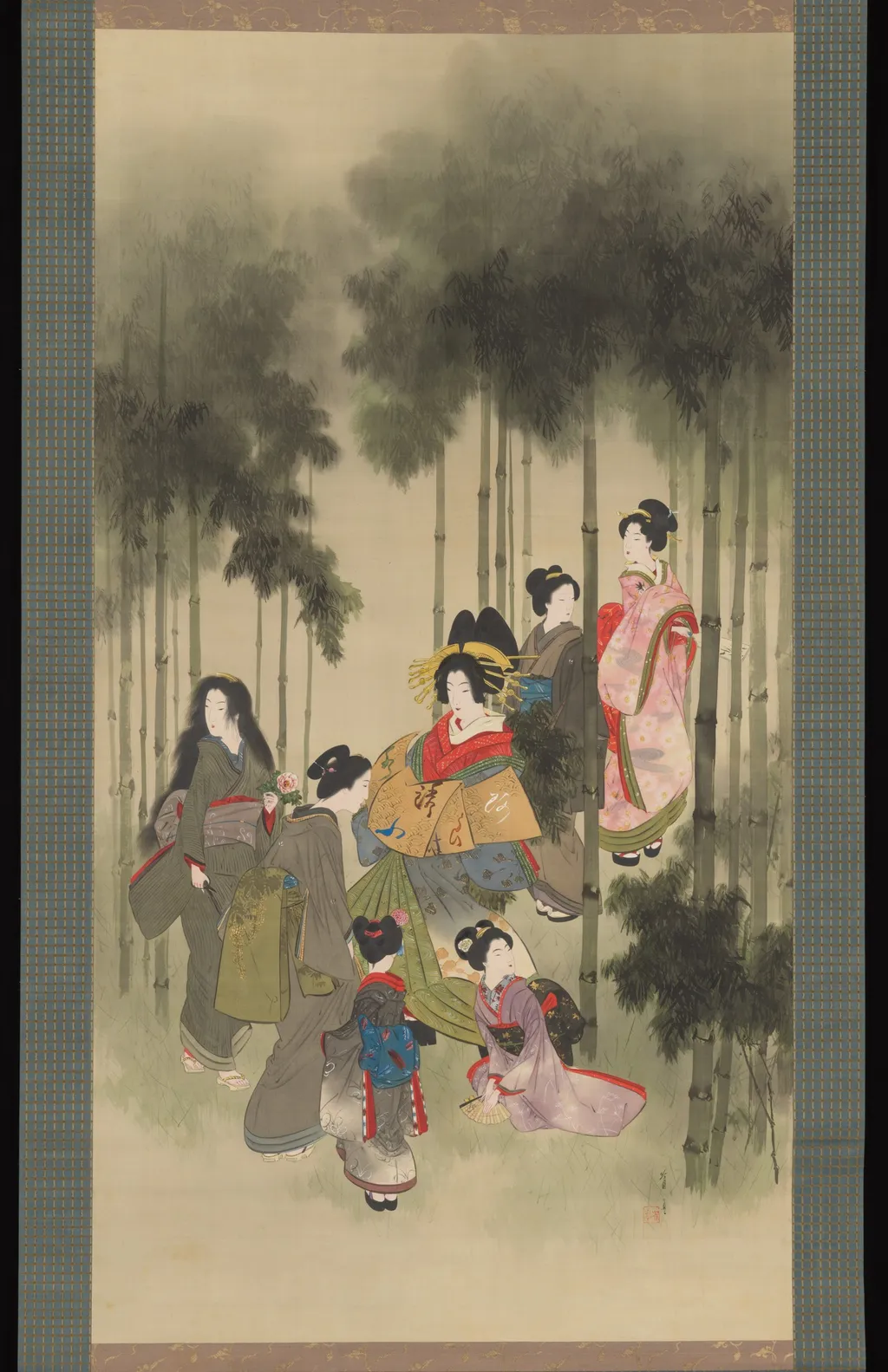
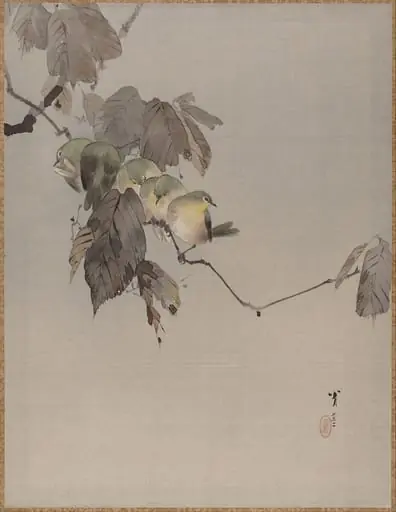
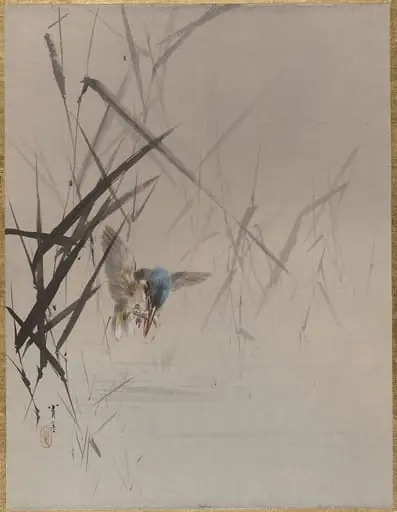
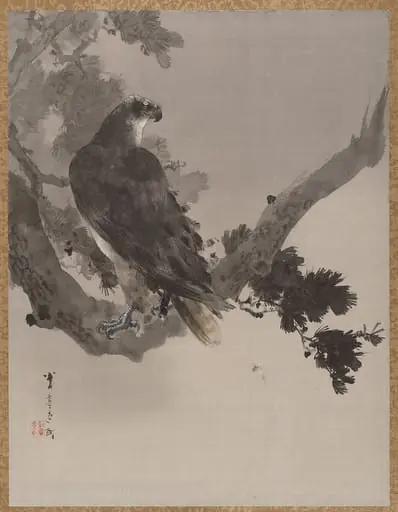
Seven Beauties of the Bamboo Grove is an unspecified painting by the Japonisme artist Watanabe Seitei. It dates from 1909 and is held in the collection of the Metropolitan Museum of Art.
About this work
Overview
Shōtei, who traveled to Europe in the late 1870s, incorporated observational realism learned abroad into classical Japanese subjects.
Created in 1909 by Watanabe Shōtei, this painting belongs to the Nihonga tradition, a movement that sought to modernize Japanese painting while preserving its aesthetic foundations. Shōtei, who traveled to Europe in the late 1870s, incorporated observational realism learned abroad into classical Japanese subjects. The work is part of a series depicting refined female figures in natural settings, reflecting a broader cultural interest in blending Eastern and Western visual languages.
Subject & Meaning
The painting portrays seven women, each associated with a poetic or literary ideal, gathered among bamboo groves, a traditional symbol of resilience and elegance in East Asian culture. Rather than illustrating a specific narrative, the composition evokes quiet contemplation and refined beauty, drawing from classical Japanese poetry and the aesthetic of yūgen. The figures are rendered with subtle grace, their presence harmonizing with the natural environment rather than dominating it.
Technique & Style
Shōtei employed mineral pigments and ink on silk, adhering to traditional Kikuchi Yōsai methods, yet introduced subtle shading and spatial depth influenced by Western naturalism. The brushwork remains delicate and precise, particularly in the rendering of bamboo and textile patterns, while the figures’ faces show a softened modeling absent in earlier Edo-period portraiture. This synthesis reflects his effort to elevate kachōga beyond decorative conventions into a more psychologically nuanced form.
History & Provenance
Painted during Japan’s Meiji era, the work emerged as the nation actively engaged with global art movements. Shōtei’s exposure to the 1878 Paris Exposition informed his approach, though he remained committed to Japanese materials and themes. The painting was likely commissioned by a collector interested in modernized traditional art, and it entered institutional collections in the early 20th century, where it was recognized for its cultural synthesis.
Context
During the Meiji period, Japanese artists navigated tensions between preserving national identity and embracing Western techniques. Shōtei’s work responded to this by reinterpreting classical genres like kachōga with new formal precision. The bamboo grove setting, a recurring motif in East Asian art, was reimagined not as a backdrop but as an active element in the composition, aligning with contemporary literary and philosophical ideals of harmony between human and nature.
Legacy
Watanabe Shōtei’s integration of Western realism into Nihonga influenced a generation of artists seeking to modernize Japanese painting without abandoning its heritage. 'Seven Beauties of the Bamboo Grove' stands as a representative example of this transitional phase, demonstrating how traditional subjects could be revitalized through cross-cultural dialogue. The work remains a reference point in studies of Meiji-era visual culture and the evolution of Japanese artistic identity.
Own this work as a print
Artist & collection

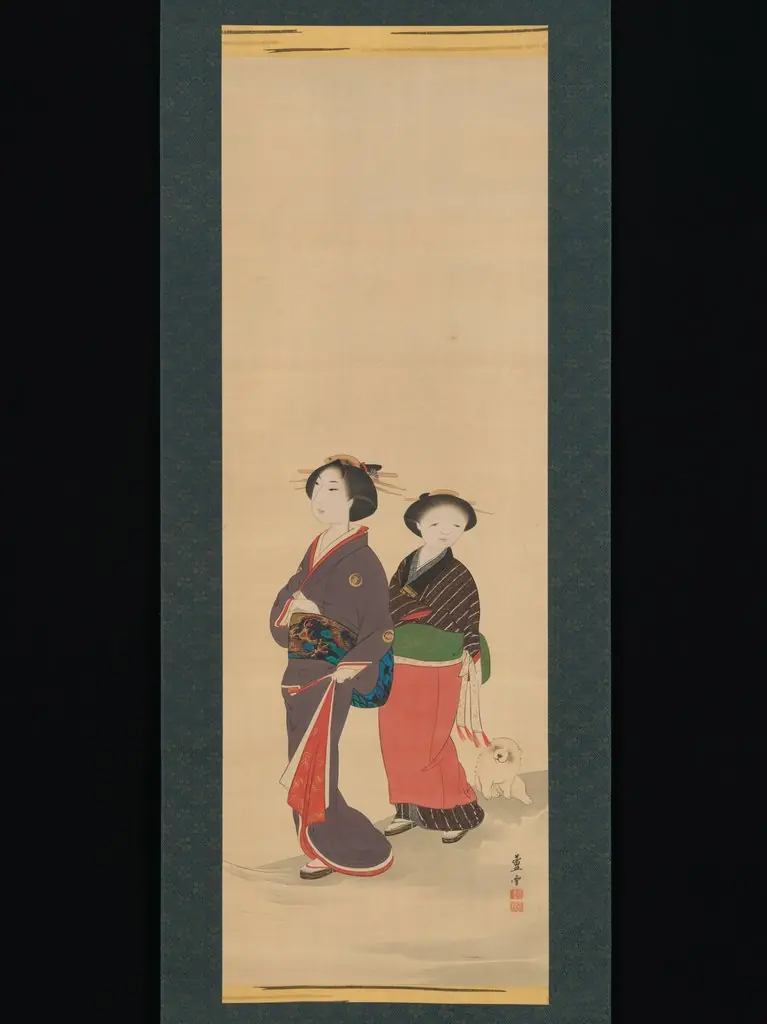
- Two Women and a Puppy
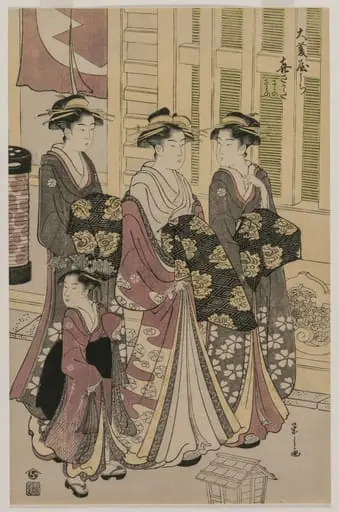 The Courtesan Kisagata of Ohishiya Strolling at Night with Two Shinzo and a Kamuro
 Untitled
 Chōdayu of the Okamotoya from the series ?
 Untitled
 『雛形若菜初模様 四ツ目屋内 にしき木』|The Courtesan Nishikigi of the Yotsumeya Brothel, from the series “A Pattern Book of the Year’s First Designs, Fresh as Spring Herbs” (“Hinagata wakana hatsu moyō”)
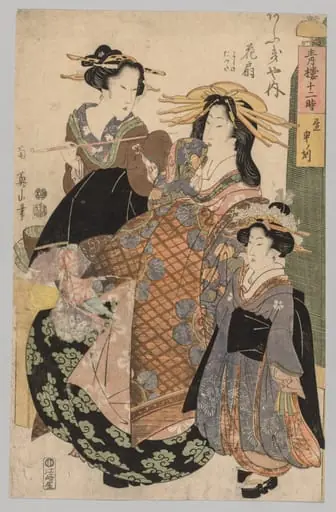 Two Women and a Girl
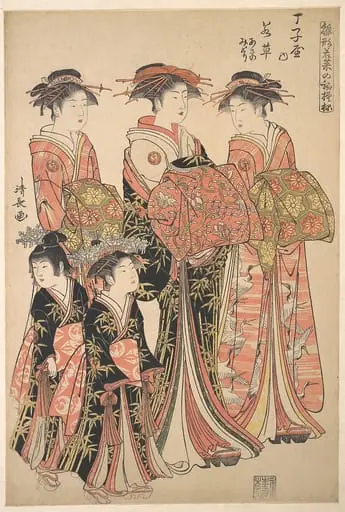 鳥居清長画 「雛形若菜の初模様 丁子屋の若草・ あさの・みどり」|The Courtesan Wakakusa of the Chōjiya Brothel, and Attendants Asano and Midori, from the series “A Pattern Book of the Year’s First Designs, Fresh as Spring Herbs” (Hinagata wakana no hatsumoyō)
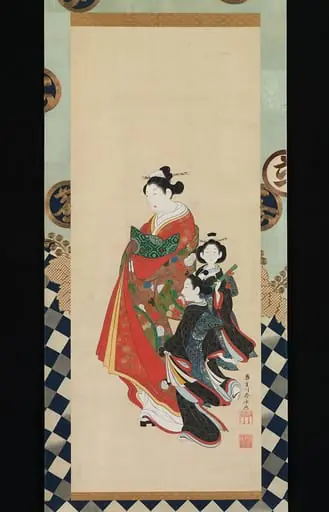 Untitled
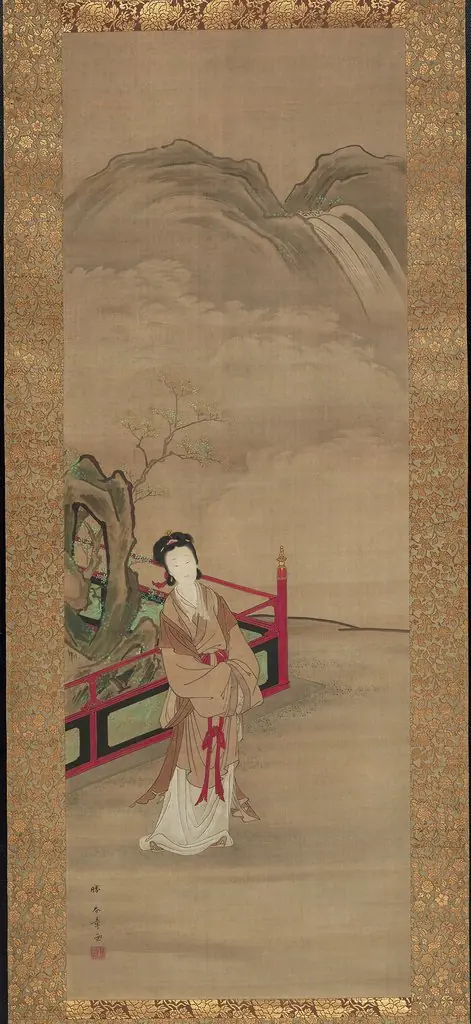 Chinese Beauty (Yang Guifei)
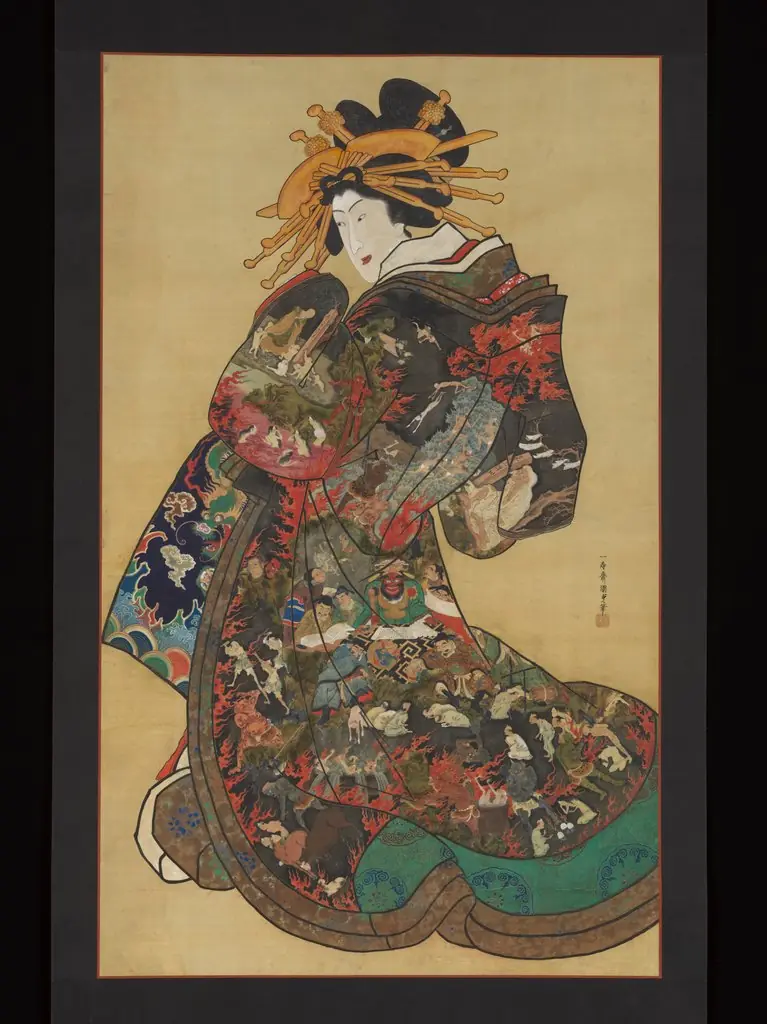 The Hell Courtesan
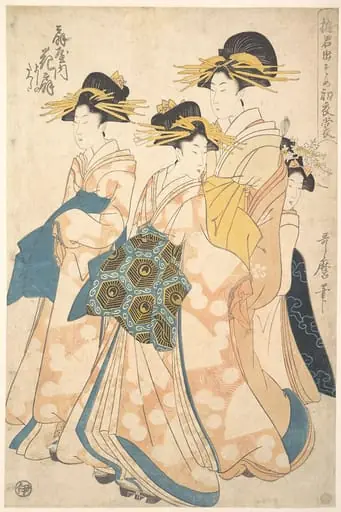 遊君出そめ初衣裳 扇屋内花扇|The Oiran Hanaogi of Ogiya attended by Two Shinzo and Her Kamuro Yoshino