Artwork
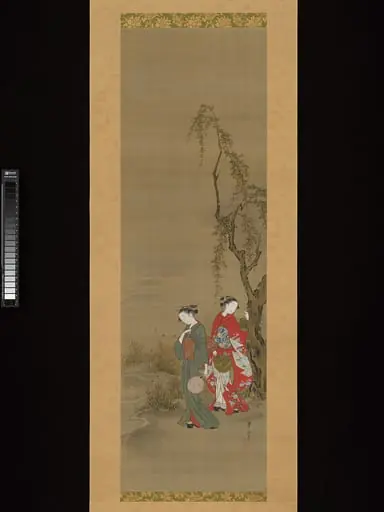
Two Women and a Puppy
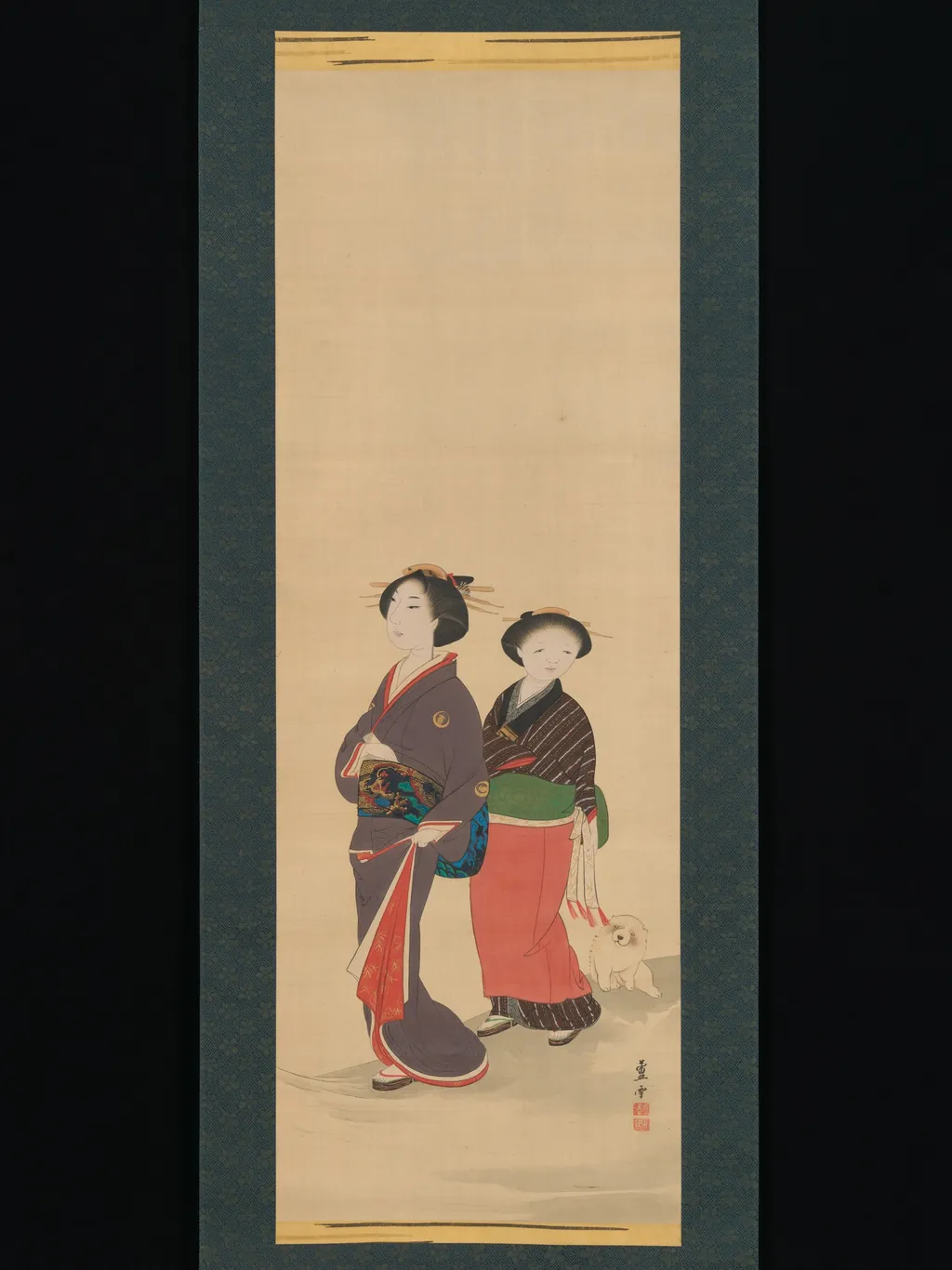
Two Women and a Puppy is an unspecified painting by the Nanga artist Nagasawa Rosetsu. It dates from 1775 and is held in the collection of the Metropolitan Museum of Art.
About this work
History & Provenance
No specific accession number is provided in the available sources, and no exhibition history is documented beyond its inclusion in the museum's holdings.
Created in 1775 by the Japanese artist Nagasawa Rosetsu, Two Women and a Puppy is a painting produced in Japan. The work currently resides in the collection of the Metropolitan Museum of Art. No specific details regarding the original commission, subsequent ownership transfers, or the full provenance chain prior to its museum acquisition are provided in the available records.
Two Women and a Puppy is held in the collection of the Metropolitan Museum of Art, as recorded in its institutional and Wikidata documentation. The work is catalogued as a painting by Nagasawa Rosetsu, dated to 1775 and produced in Japan. No specific accession number is provided in the available sources, and no exhibition history is documented beyond its inclusion in the museum's holdings.
Overview
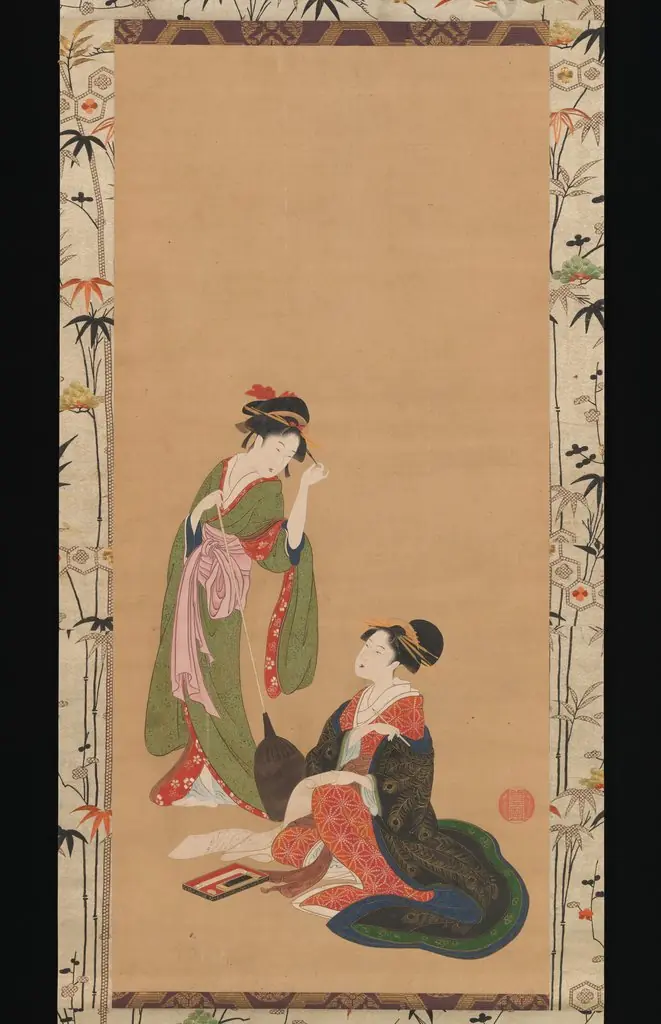
Two Women and a Puppy is a painting by the Japanese artist Nagasawa Rosetsu, completed in 1775. This work, now part of The Metropolitan Museum of Art's collection, portrays two figures in traditional attire accompanied by a small dog. Rosetsu, a prominent painter of the late 18th century, was known for his distinctive style, often blending detailed observation with expressive brushwork, evident in this early work.
Subject & Meaning
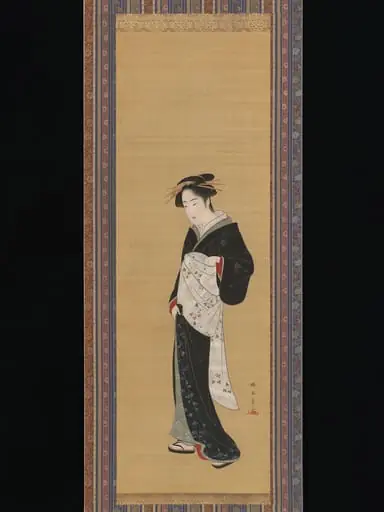
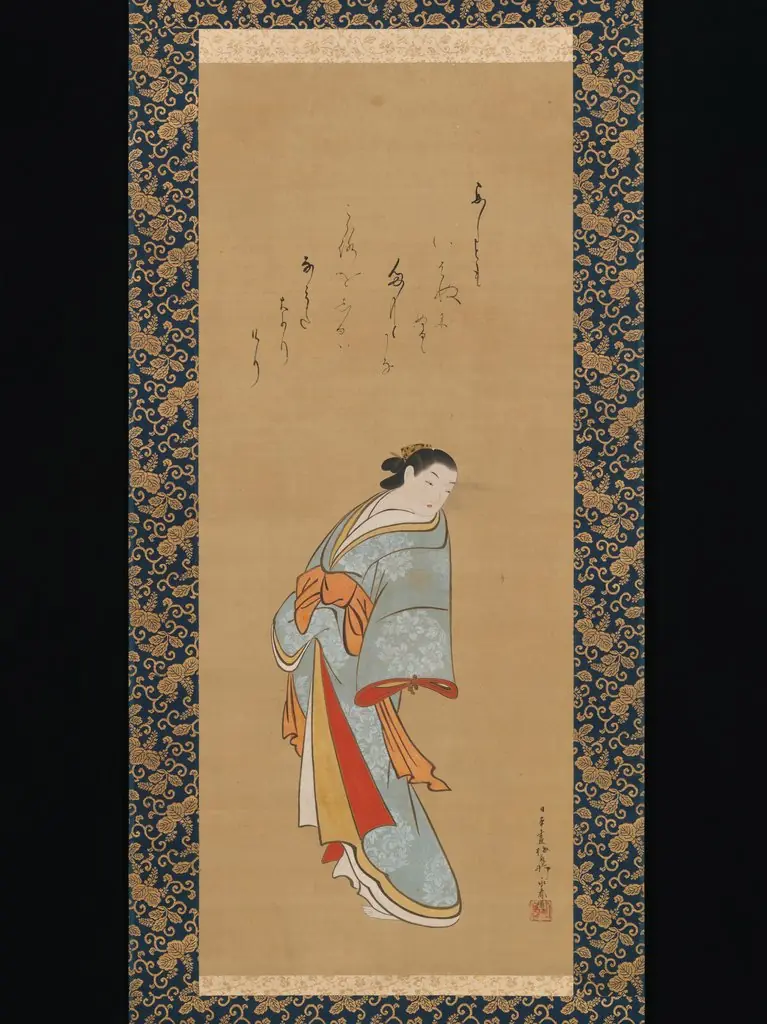
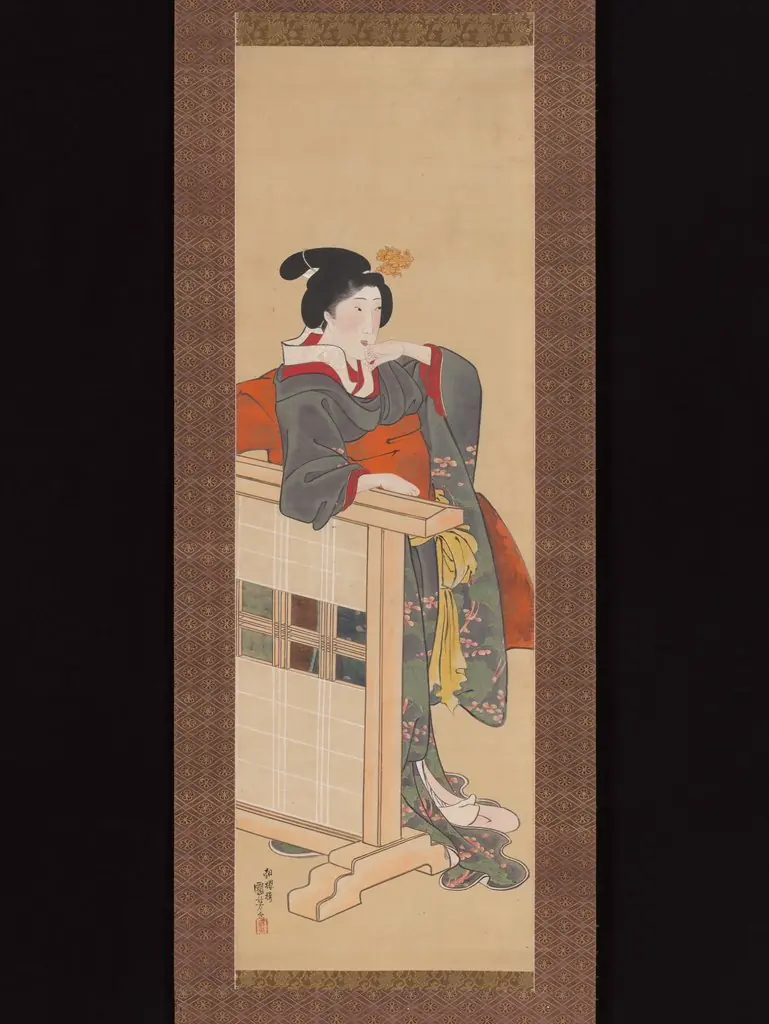
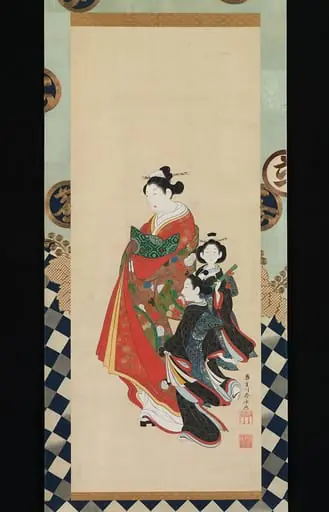
The painting features two women dressed in traditional Japanese robes. One figure wears a dark purple outer garment over red underlayers, while the other is clad in a striped black-and-white robe with a red skirt. Both have simple hairstyles adorned with hairpins.
The woman on the right gently holds a small white puppy on a leash, creating a focal point against the unadorned background.
Technique & Style
Rosetsu's artistic approach is evident in the rendering of the figures' garments, which display subtle embroidery and distinct color blocking. The artist employs a plain background, directing the viewer's attention to the women's poses and the interaction with the puppy. This focus on figures and animals, combined with a balance of detail and simplicity, reflects characteristics of Rosetsu's developing style, which often featured dynamic compositions.
Context
Nagasawa Rosetsu (1754–1799) was a notable painter during Japan's late Edo period, a disciple of the influential Maruyama Ōkyo. While trained in Ōkyo's realistic Maruyama school, Rosetsu developed a highly individualistic and often unconventional style. His works frequently combined meticulous detail with bold, expressive brushstrokes and sometimes playful compositions, distinguishing him among his contemporaries and contributing to the diverse artistic landscape of Kyoto.
Own this work as a print
Artist & collection

Artist
Nagasawa Rosetsu (長沢芦雪; 1754–1799) was a Japanese painter during the Edo period. A disciple of the Maruyama School, he was known for his versatile artistic style. He was born to the family of a low-ranking samurai. He…