Artwork
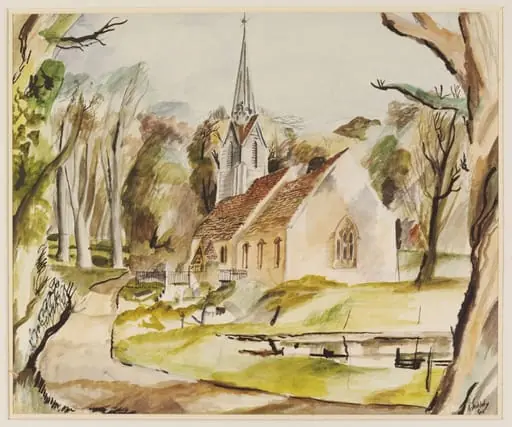
Church, Buckland Hollow
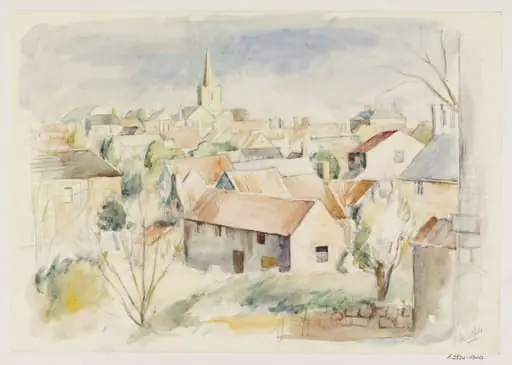
Church, Buckland Hollow is a watercolor work on paper by the Regionalist artist Norman Webster. It dates from 1943 and is held in the collection of the Victoria and Albert Museum.
About this work
Overview
The quiet composition emphasizes stillness and subtlety, reflecting the project’s goal of preserving a sense of place amid national uncertainty.
Painted in 1943 by Norman Webster, this watercolour captures a modest rural church in Buckland Hollow. Executed as part of the Recording Britain project, the work contributes to a broader effort to visually archive landscapes and structures at risk during wartime. The quiet composition emphasizes stillness and subtlety, reflecting the project’s goal of preserving a sense of place amid national uncertainty.
Subject & Meaning
The scene centers on a small, unadorned church with a tall tower and a single yellow door, set beside a quiet road and low stone wall. Bare trees and a dominant evergreen frame the structure, suggesting seasonal transition and endurance. The church, neither grand nor ruined, embodies a quiet continuity, its presence in the landscape symbolizes resilience amid change, a core theme of the Recording Britain initiative.
Technique & Style
Webster employed delicate watercolour washes to convey a muted, atmospheric tone. Soft gradients suggest diffuse daylight, while minimal detail in the architecture and foliage reinforces a sense of calm. The glint of a puddle and the contrast between bare branches and dark evergreen add subtle depth without drama. The style is observational, prioritizing quiet accuracy over expressive flourish.
History & Provenance
Created in 1943 under the Recording Britain scheme, this watercolour was commissioned by Sir Kenneth Clark’s team to document vulnerable rural sites. The project, supported by the Pilgrim Trust, gathered over 1,500 works by artists across Britain. Webster’s piece entered the Victoria and Albert Museum’s collection as part of this archive, where it remains accessible as a historical record of wartime cultural preservation.
Context
During the Second World War, fears of bombing and postwar development prompted efforts to record Britain’s architectural heritage. Churches, cottages, and lanes, symbols of communal memory, were prioritized. Recording Britain positioned art as a form of cultural safeguarding, countering loss not with resistance but with careful documentation, grounding national identity in the everyday landscape.
Legacy
The Recording Britain collection endures as a vital visual archive of mid-20th-century rural Britain. Webster’s watercolour, like others in the series, offers a restrained yet evocative record of places that have since altered or vanished. Its presence in the V&A ensures continued access to a moment when art served as a quiet act of preservation, not spectacle.
Artist & collection
Artist
Norman Webster painted quiet English landscapes, often in watercolour, in the mid-20th century.

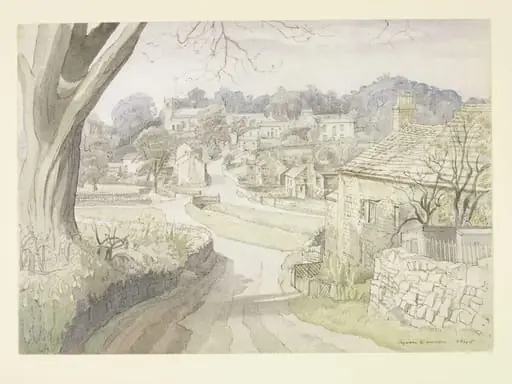 Downham Village, near Clitheroe, Lancashire
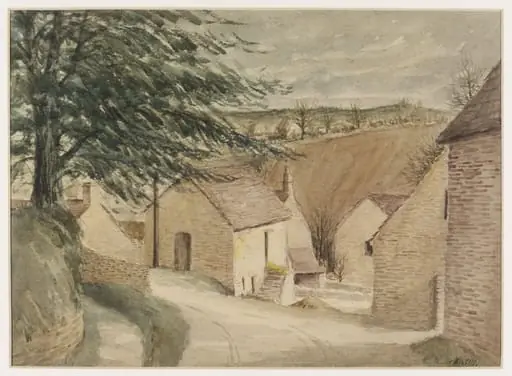 The Village Way, Winson
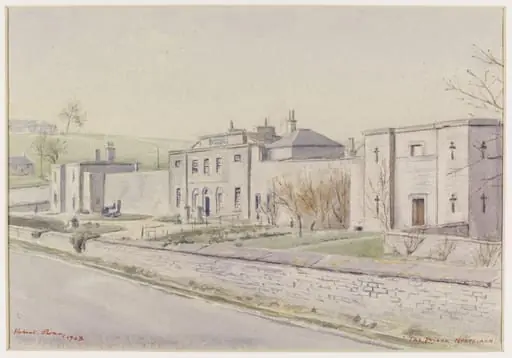 The Old Prison, Northleach
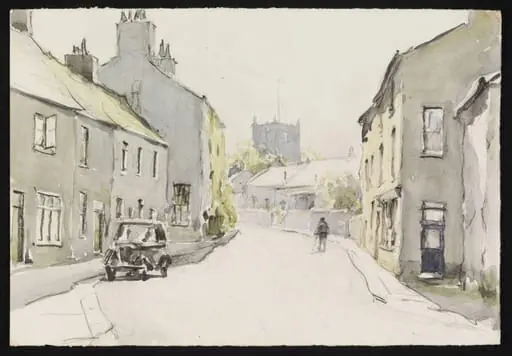 Poulton-le-fylde, near Blackpool
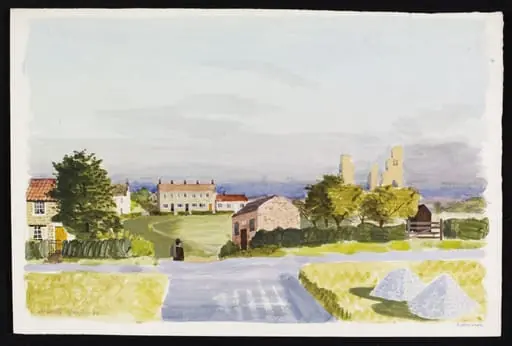 Sheriff Hutton; view over the plain of York, with York Minster in the distance
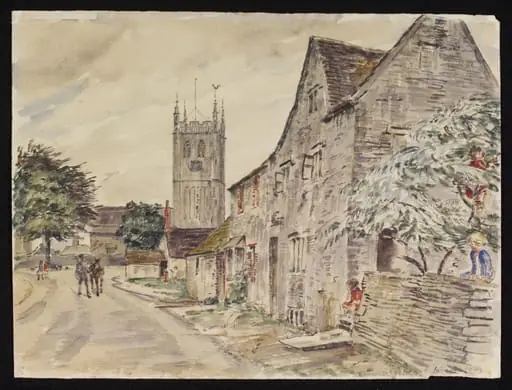 The Church and Noble Street, Sherston
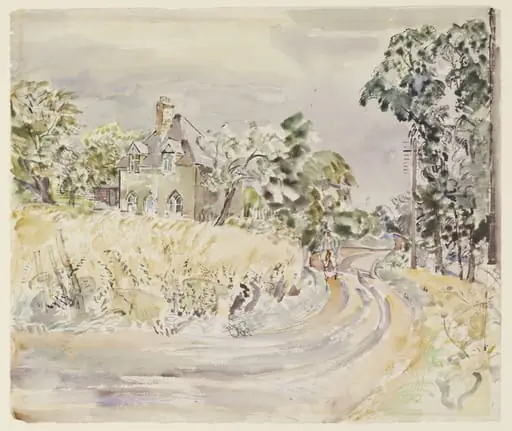 Gamekeepers Cottage (The Warren House), Cuxton Valley
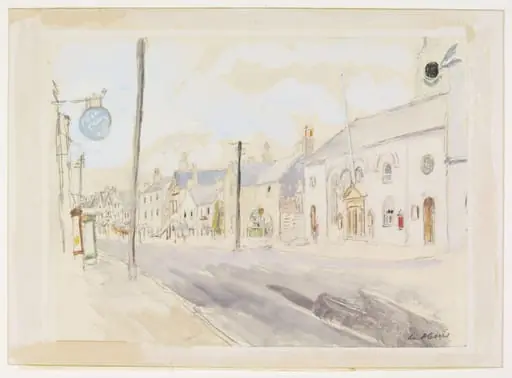 Cowbridge, Glamorganshire
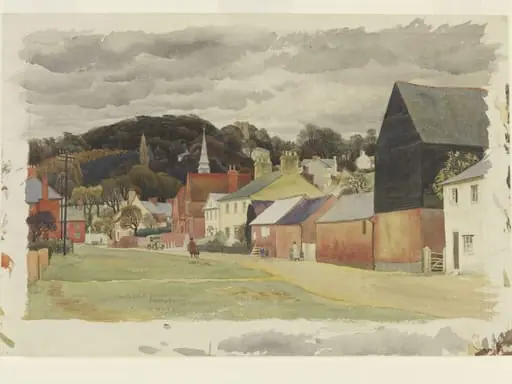 Bow Brickhill, Bletchley, Buckinghamshire
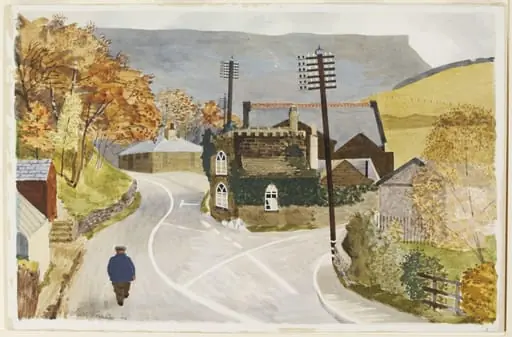 Old Toll Bar House, Ashopton
 View of Pickering
- Middleton Church