Artwork
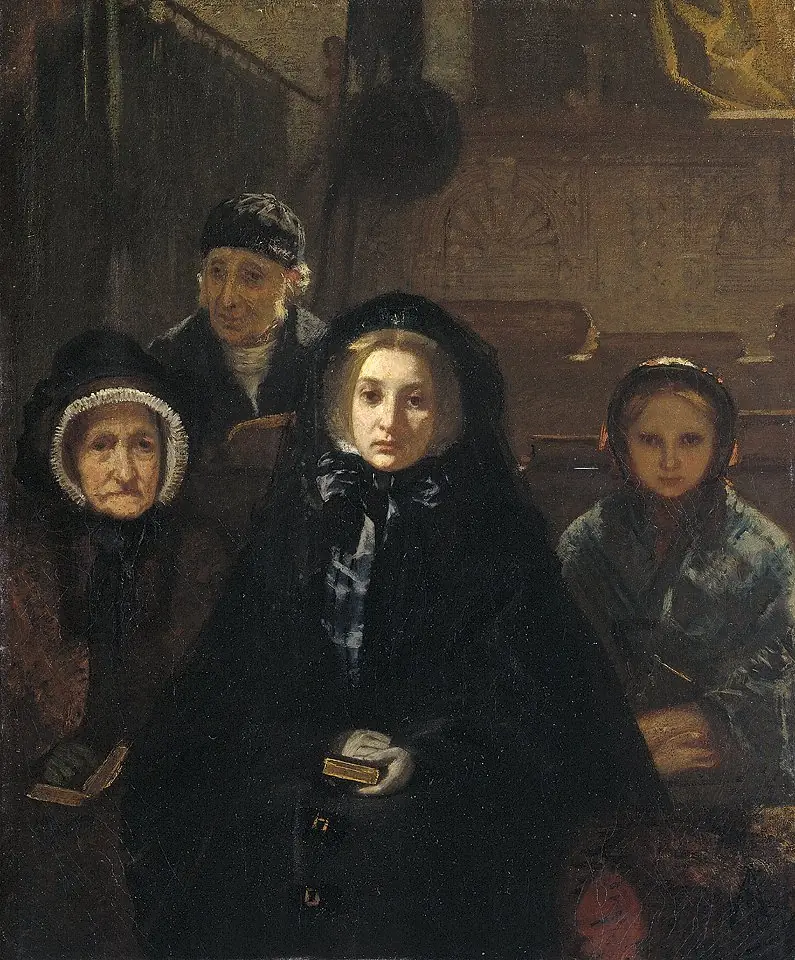
Three Women in Church
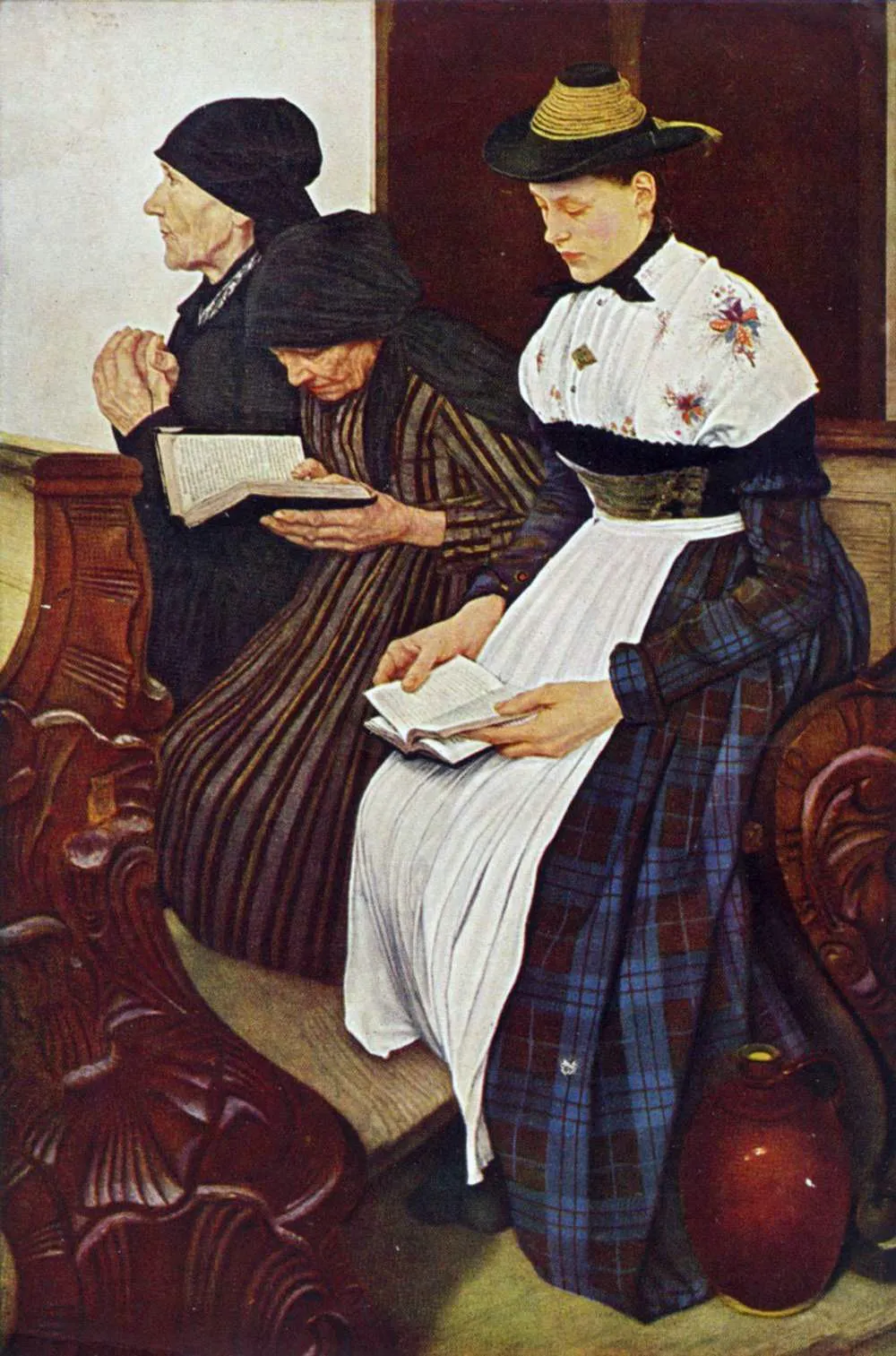
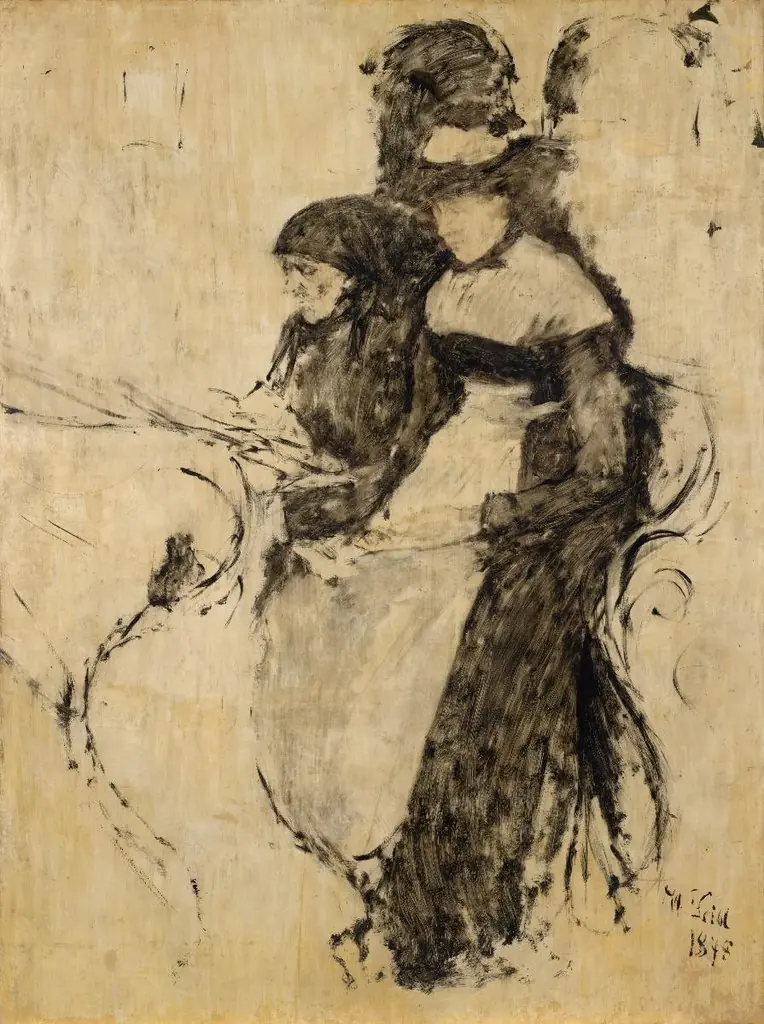
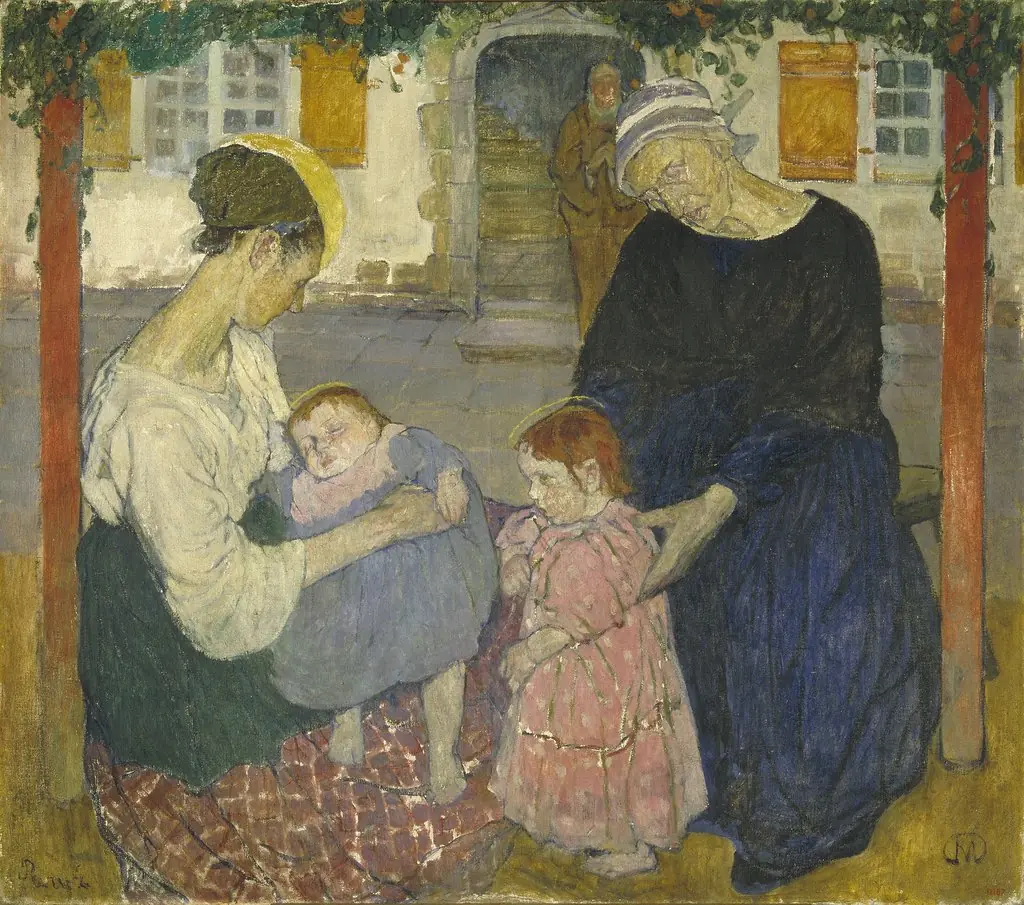
Three Women in Church is an oil painting by the Realist artist Wilhelm Leibl. It dates from 1870 and is held in the collection of the Hamburger Kunsthalle.
About this work
Three Women in Church is a work by German realist Wilhelm Leibl. It was made in 1870 and the surface is mahogany wood.
The painting shows three figures inside a church, a quiet scene typical of Leibl’s realistic style. It now belongs to the collection of the Kunsthalle Hamburg. Leibl painted it in oil, giving it a subtle depth.
You might also explore works at the Hamburger Kunsthalle.
Overview
Executed on a mahogany panel, the painting demonstrates the artist's commitment to direct observation and his rejection of academic idealization.
Three Women in Church, painted by Wilhelm Leibl in 1870, is a definitive example of German Realism. The work depicts three elderly women seated on a wooden pew inside a dimly lit church, absorbed in prayer or contemplation. Leibl renders the figures with meticulous attention to their weathered faces, heavy clothing, and the texture of the surrounding wood, emphasizing the quiet dignity of rural piety.
Executed on a mahogany panel, the painting demonstrates the artist's commitment to direct observation and his rejection of academic idealization. Created during a period when Leibl was refining his technique away from the influence of Gustave Courbet toward a more precise, independent style, the work highlights his interest in the psychological depth of ordinary subjects. The composition is tightly framed, focusing entirely on the women and their immediate environment, eliminating any extraneous narrative elements.
This piece remains a significant contribution to 19th-century genre painting and is held in the collection of the Kunsthalle Hamburg.
Subject & Meaning
The composition presents three women seated within the interior of a church, their quiet presence emphasizing a moment of contemplation. Leibl’s focus on everyday figures in a sacred setting reflects his interest in portraying ordinary life with dignity and restraint.
Technique & Style
Leibl applied oil paint to a smooth mahogany surface, achieving a subtle modeling of forms and a restrained palette characteristic of his realist approach. The careful rendering of light and texture conveys depth without resorting to dramatic effects, aligning the work with the naturalist tendencies of the period.
History & Provenance
Created in 1881, the painting entered the Kunsthalle Hamburg’s collection in the early 20th century, where it has remained. Its acquisition contributed to the museum’s representation of German realism and Leibl’s oeuvre.
Context
Leibl worked during a time when German artists were turning away from academic idealization toward a more direct observation of contemporary life. This painting exemplifies that shift, situating a mundane scene within a traditionally sacred space, thereby blurring the boundaries between the secular and the religious in visual art.
Artist & collection
Artist
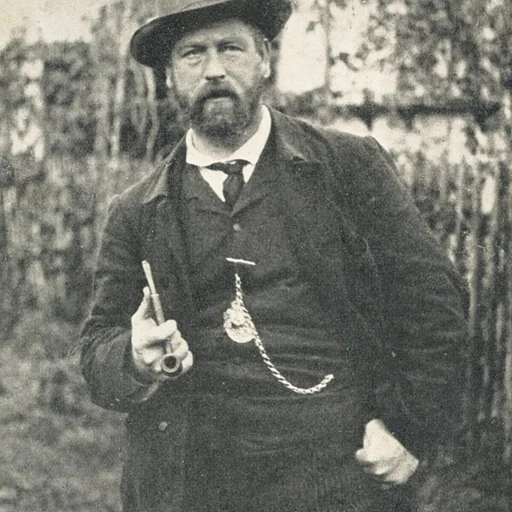
Wilhelm Maria Hubertus Leibl (October 23, 1844 – December 4, 1900) was a German realist painter. He became famous for his portraits and depictions of scenes of peasant life.