Artwork
Still-Life with Glass Goblet and Fruit
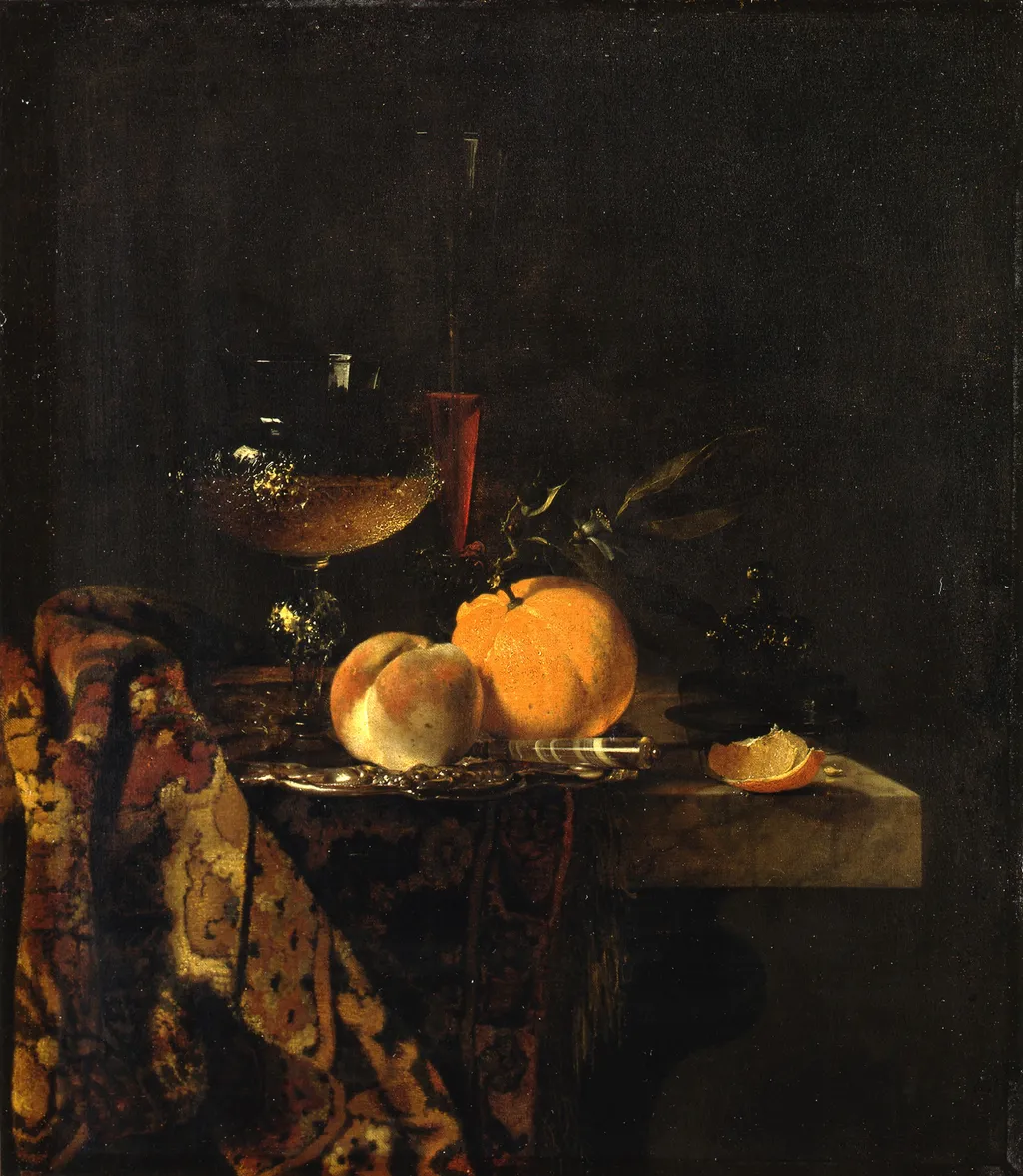
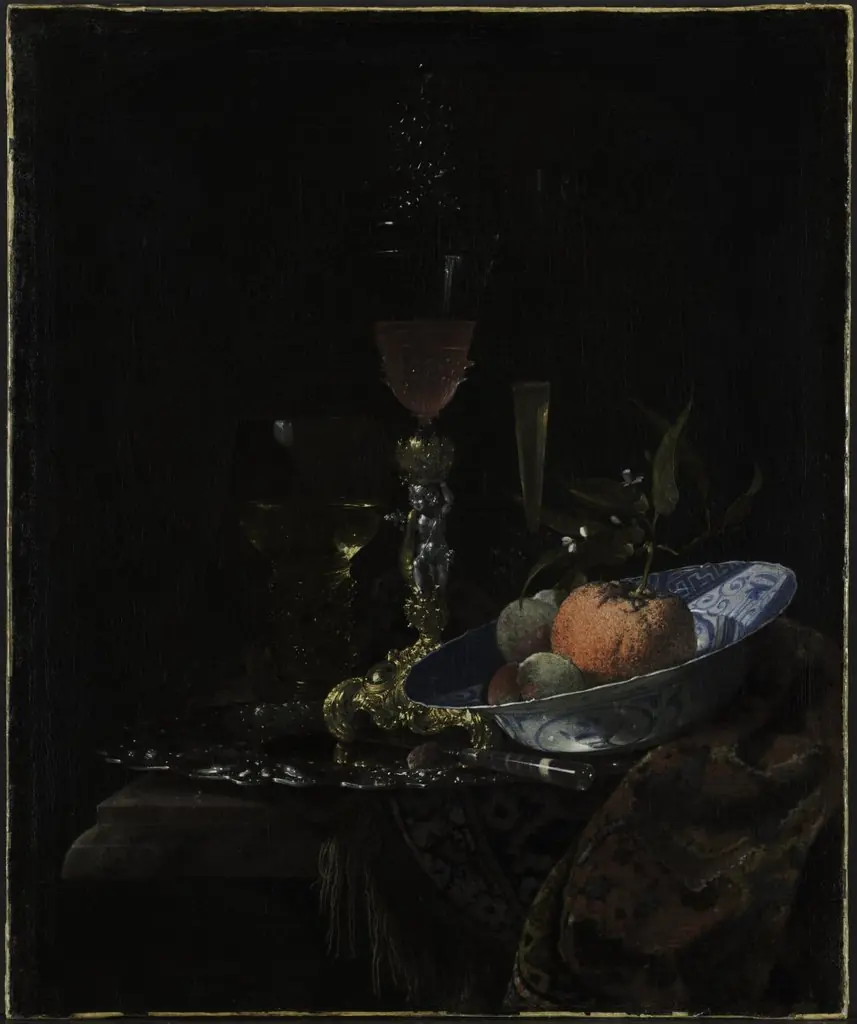
Still-Life with Glass Goblet and Fruit is an oil painting by the Dutch Golden Age artist Willem Kalf. It dates from 1655 and is held in the collection of the Gemäldegalerie Berlin.
About this work
Overview
Still-Life with Glass Goblet and Fruit is an oil painting on canvas by the Dutch Golden Age master Willem Kalf, dated 1655.
Still-Life with Glass Goblet and Fruit is an oil painting on canvas by the Dutch Golden Age master Willem Kalf, dated 1655. Measuring 65 by 56 centimeters, the work exemplifies the pronkstilleven, or "display still life," a genre Kalf helped elevate to unprecedented levels of refinement. The painting is held in the collection of the Gemäldegalerie, Berlin, having entered through the bequest of Julius Wernher. Kalf, born in Rotterdam in 1619 and active until his death in Amsterdam in 1693, is widely regarded as one of the foremost still-life painters of the seventeenth century, and this canvas stands as a characteristic demonstration of his mature style.
Subject & Meaning
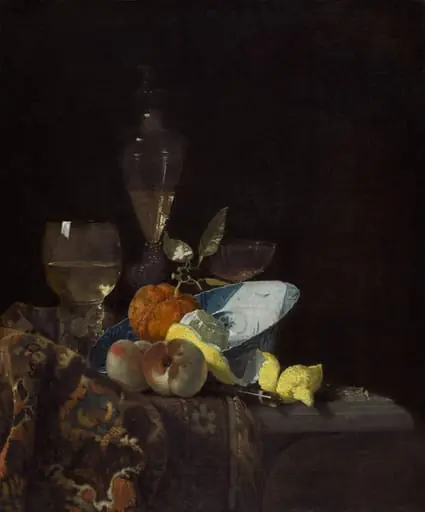
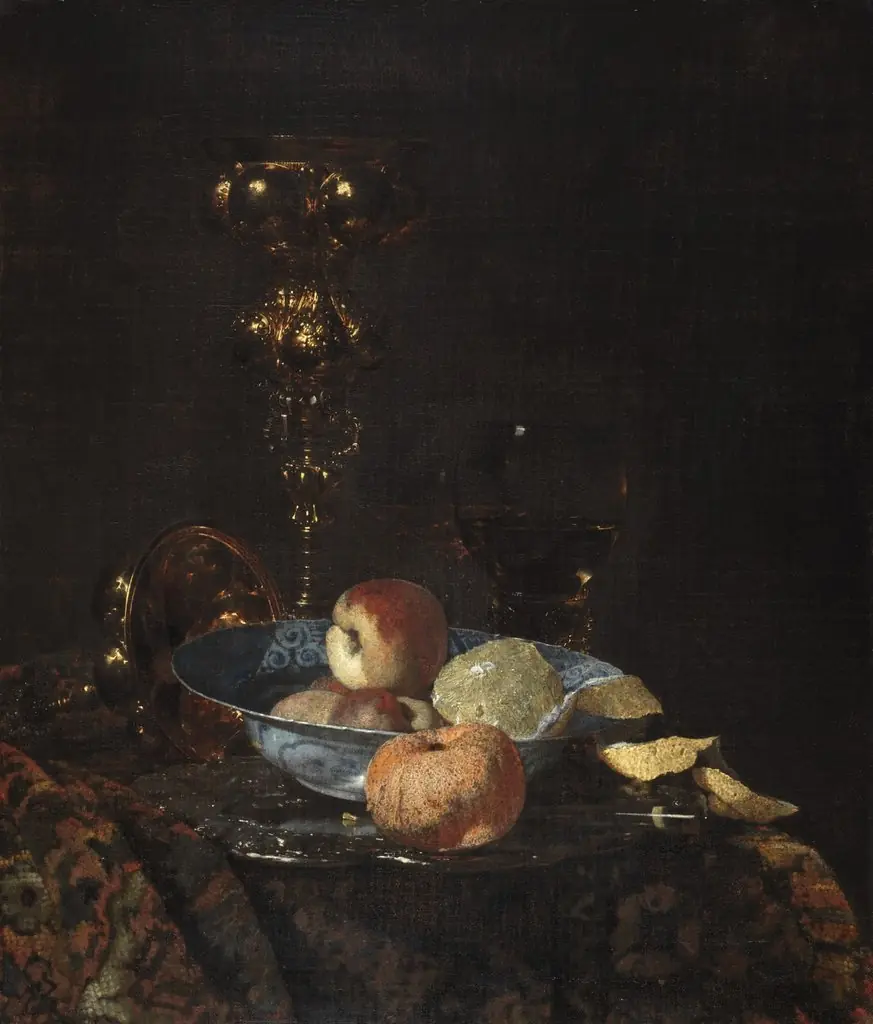
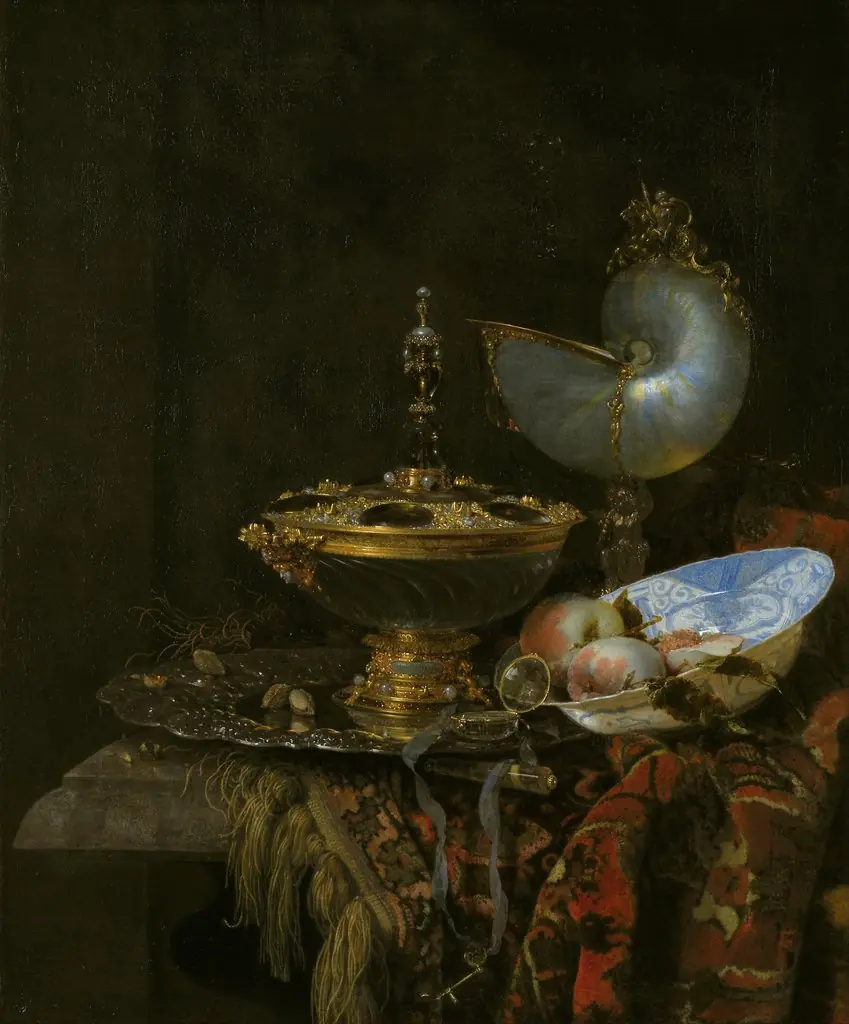
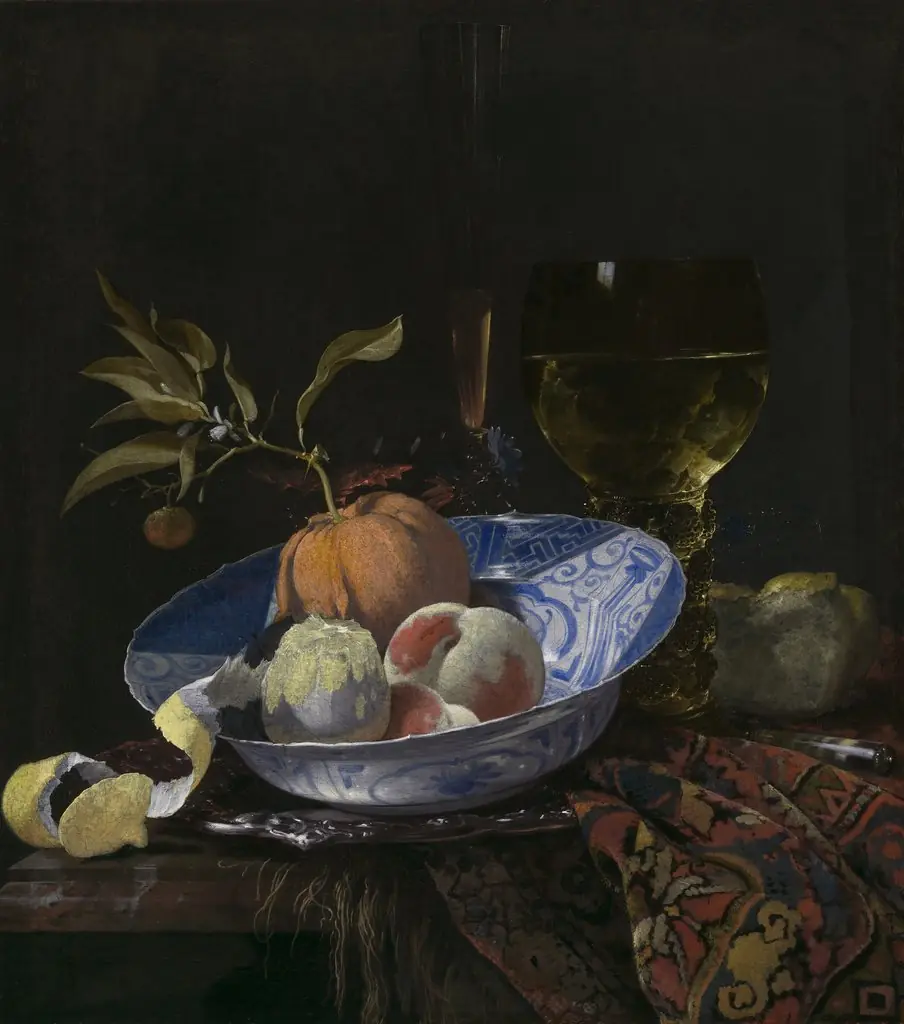
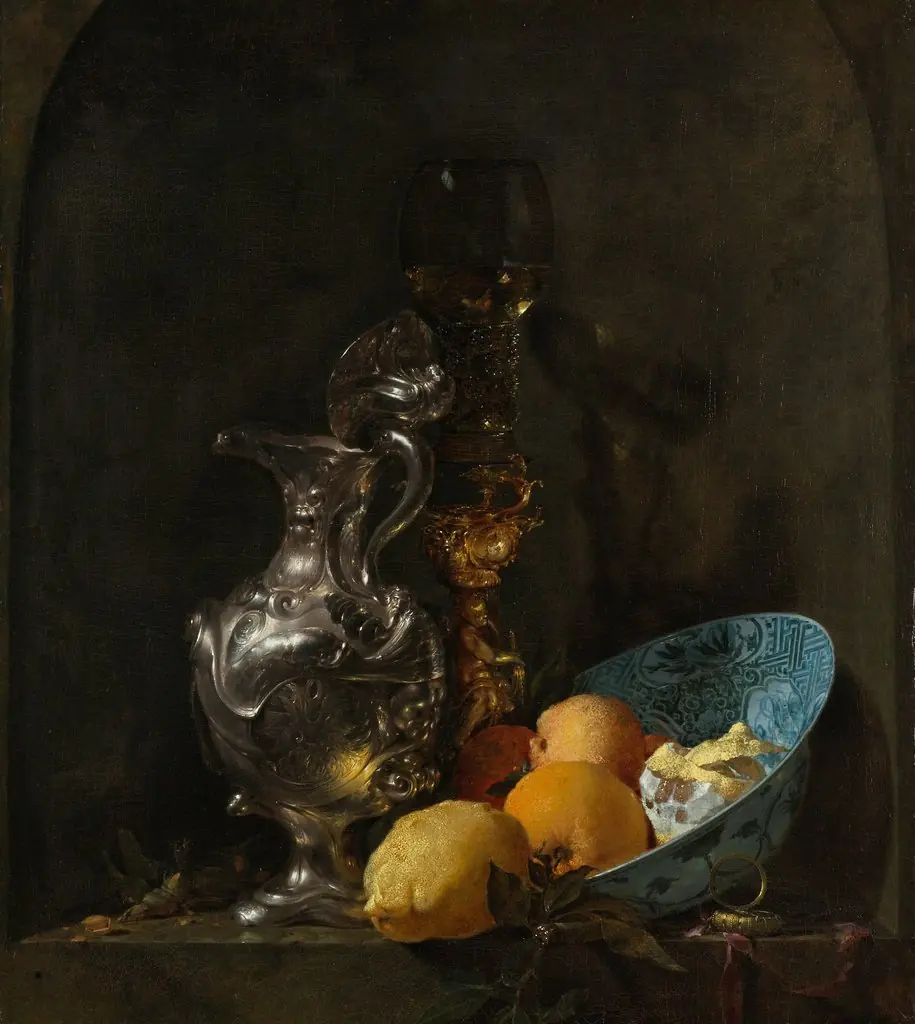
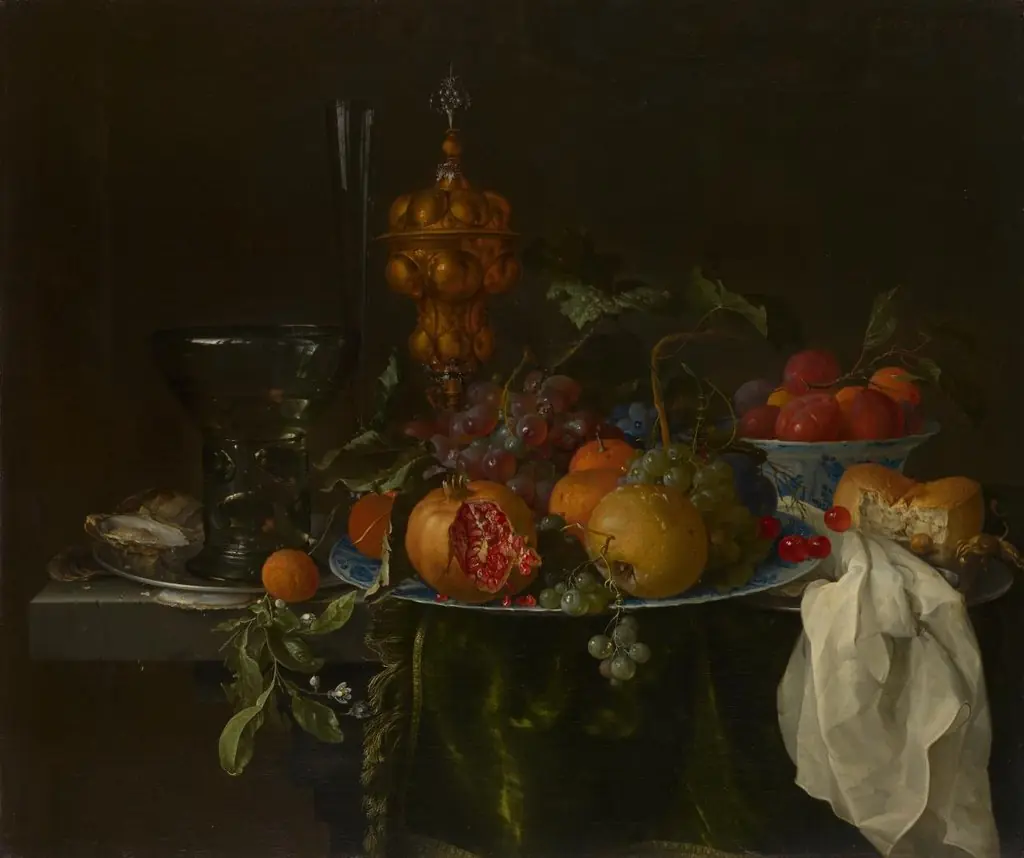
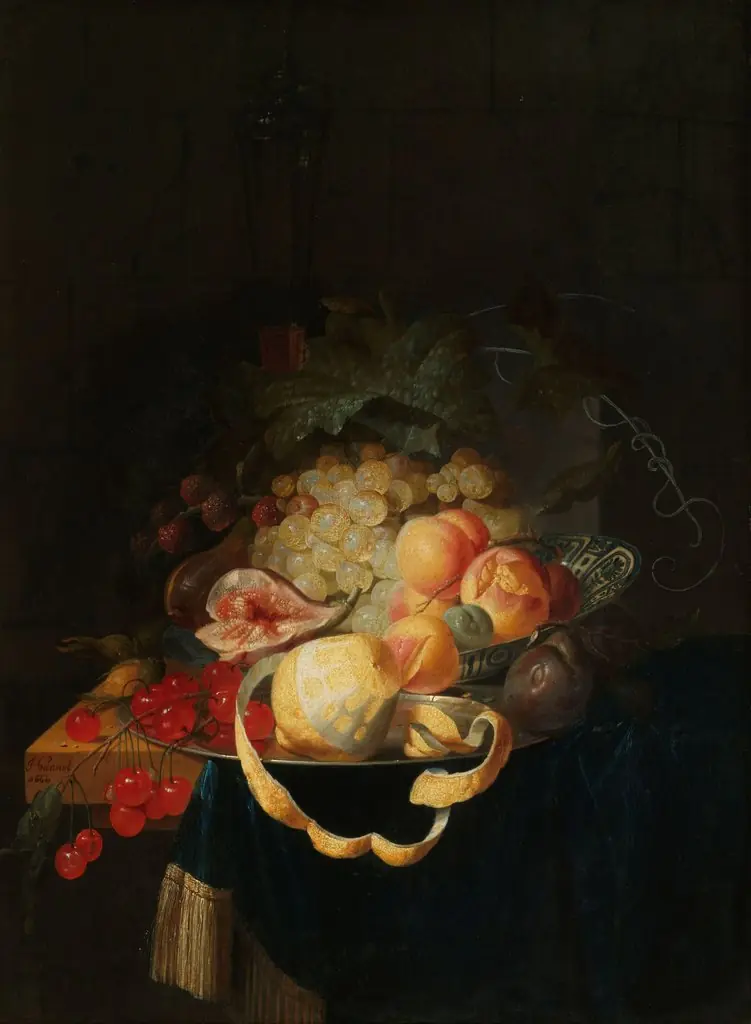
The composition presents a carefully orchestrated arrangement of luxury objects upon a stone ledge set against a near-black background. At left stands a tall, ornate stemmed glass goblet, its curved surface catching light. To its right, a slender red glass rises behind two round peaches with attached leaves, their orange-pink skins softly modeled. A silver dish supports the peaches, while a knife with a patterned handle rests nearby. A peeled orange segment lies close to a small glass container at the right edge of the ledge, and a richly patterned gold and red floral fabric drapes over the left edge. The inclusion of citrus and rare fruit carries multivalent significance in Dutch Baroque painting. Such fruits, often imported and difficult to cultivate in northern climates, signaled wealth and social standing. Oranges in particular could denote political allegiance to the House of Orange-Nassau, a meaning that gained particular resonance in the 1660s when only two of the seven Dutch provinces remained under Orange rule. The peeled orange also invites vanitas readings, suggesting the transience of earthly pleasures and the inevitability of decay beneath the surface of abundance.
Technique & Style
Kalf executed the work in oil on canvas, employing the smooth, controlled brushwork and meticulous attention to surface texture that distinguish his mature period. Light enters from the left, illuminating the fruit and glassware while plunging the background into deep shadow, a dramatic chiaroscuro effect that creates theatrical focus. The artist's handling of reflective surfaces, the soft modeling of peach skin, and the precise rendering of the patterned textile demonstrate his exceptional technical facility. Objects emerge from darkness through carefully placed reflections, particularly on the glass surfaces, a method that produces startling tactile presence. The palette is dominated by warm oranges, golds, and deep browns against the enveloping darkness. The composition juxtaposes sharp angular table edges with the rounded forms of fruit and glass, generating formal tension. This restraint in arrangement, combined with the richness of depicted materials, exemplifies the qualities that contemporaries and later critics found unparalleled in Kalf's work.
History & Provenance
The painting was created in 1655, during the period when Kalf had fully developed the luxurious pronkstilleven formula that would dominate his career. The work entered the collection of the Gemäldegalerie, Berlin, through the ownership of Julius Wernher, though the precise chain of prior ownership remains unspecified in available sources. The Gemäldegalerie accession reflects the international esteem for Kalf's work among major nineteenth- and early twentieth-century collectors. No detailed exhibition history is recorded in the provided sources.
Context
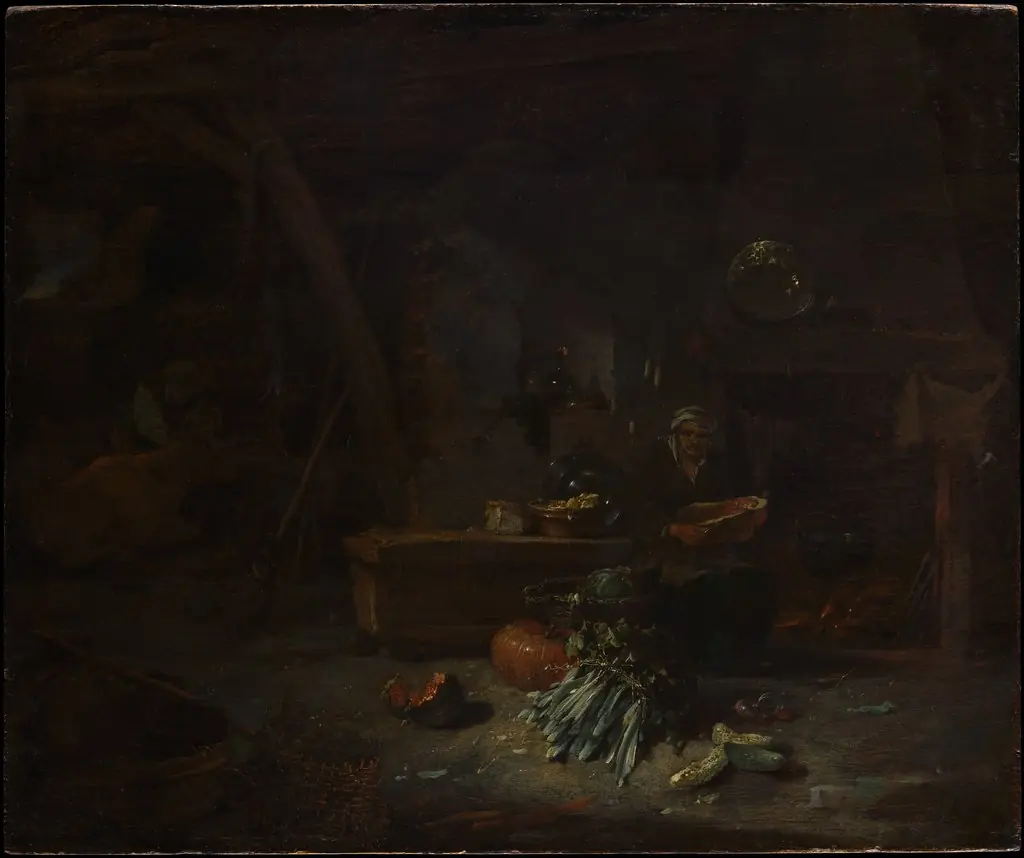
Kalf's formation as a painter began under Hendrik Pot, a history painter, and possibly also under Cornelis Saftleven. His turn to still life crystallized during a prolonged stay in Paris from the late 1630s until 1646. His early kitchen scenes, with their humble gourds and scattered cookware, gave way after his return to the Netherlands to the opulent compositions that secured his reputation among Amsterdam's wealthy elite. The pronkstilleven, to which Still-Life with Glass Goblet and Fruit belongs, catered directly to the tastes of the Dutch merchant class, who desired paintings that mirrored their own collections of exotic and expensive objects. Gerard de Lairesse, a painter and theorist of the following generation, acknowledged that Kalf "surpassed others in still life," even while noting that the artist worked intuitively rather than according to elaborate symbolic programs. Kalf's influence extended to followers such as Juriaen van Streeck, who adopted aspects of his luxurious approach.
Own this work as a print
Artist & collection
Artist
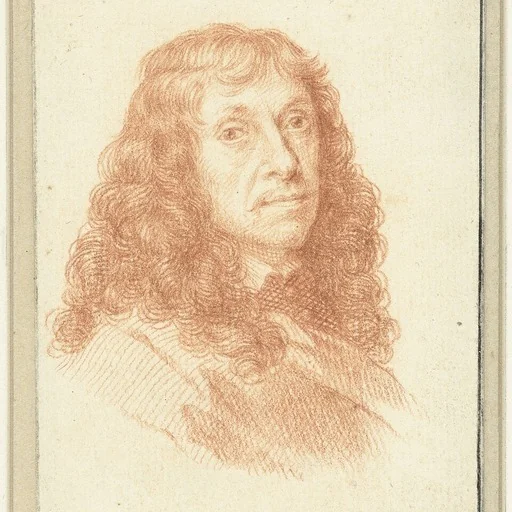
Willem Kalf (1619 – 31 July 1693) was one of the most prominent Dutch still-life painters of the 17th century, the Dutch Golden Age.