Artwork
Still Life
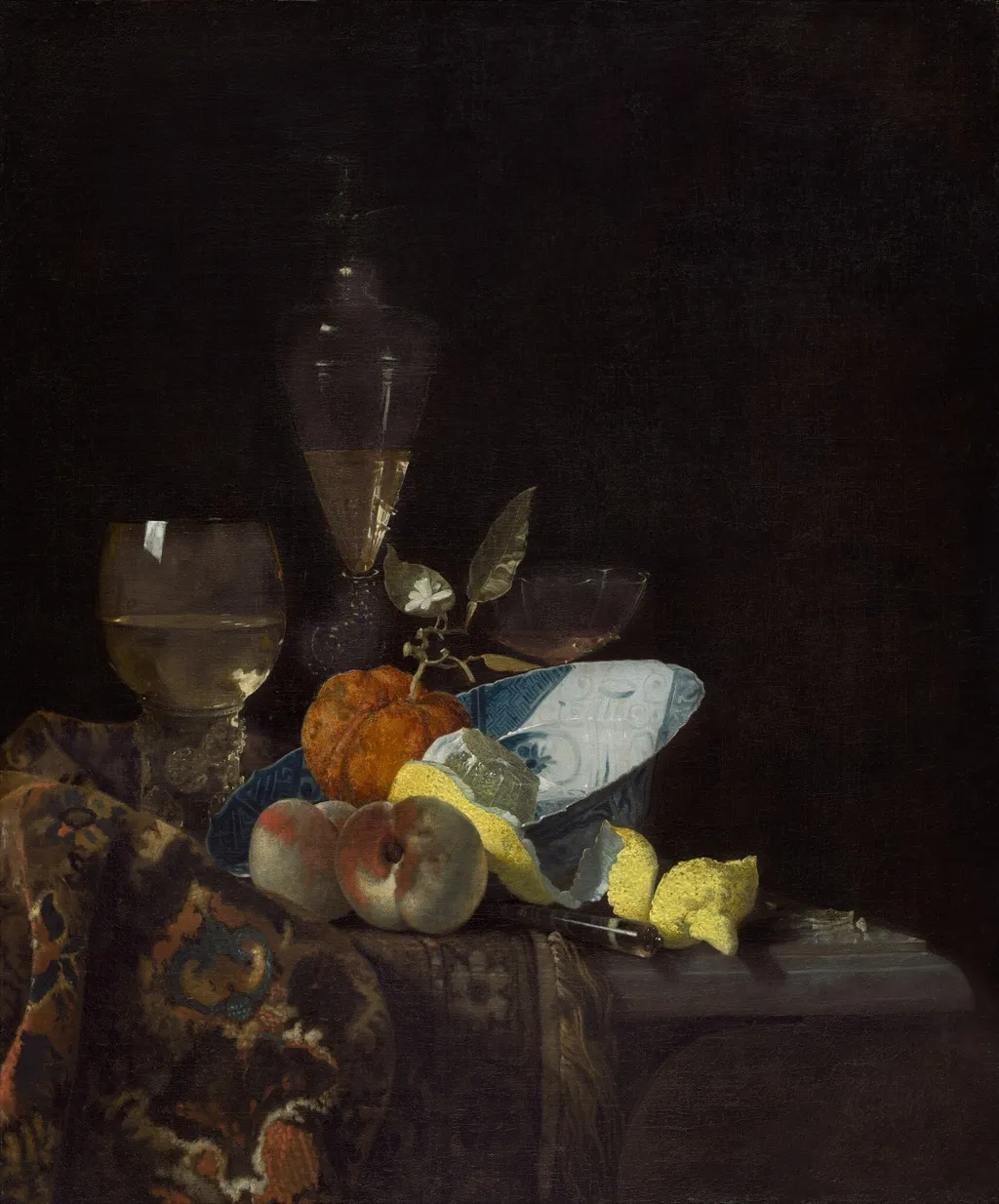
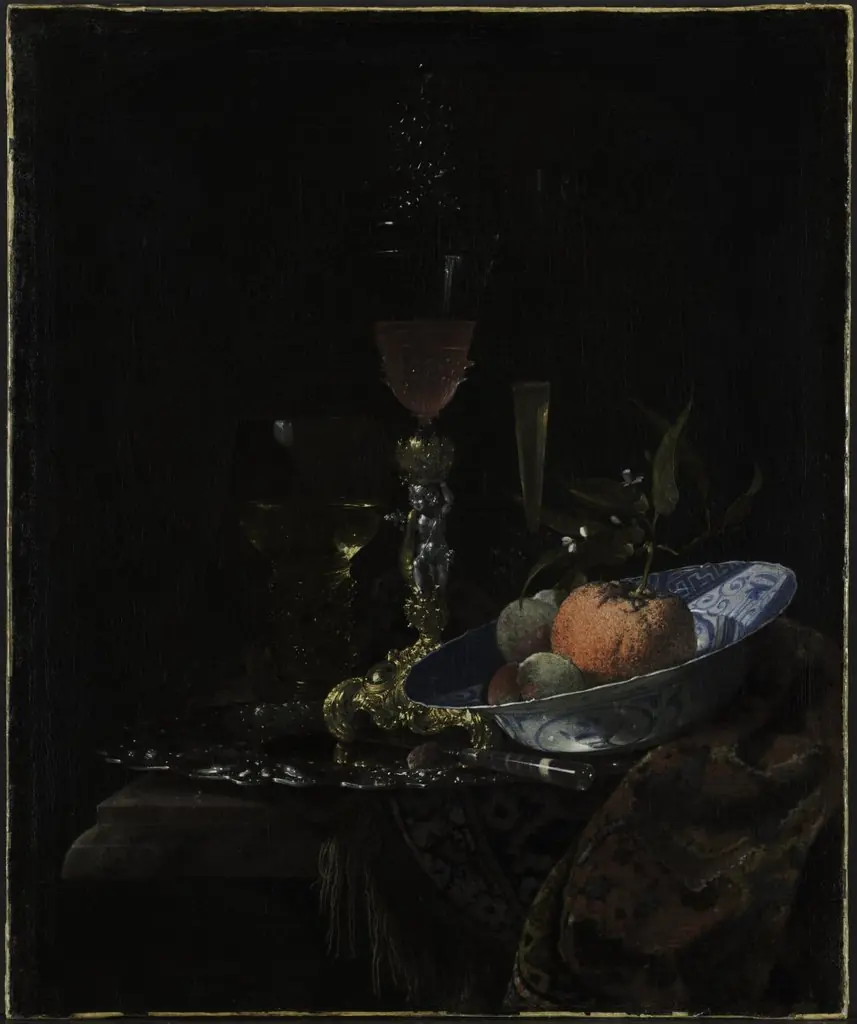
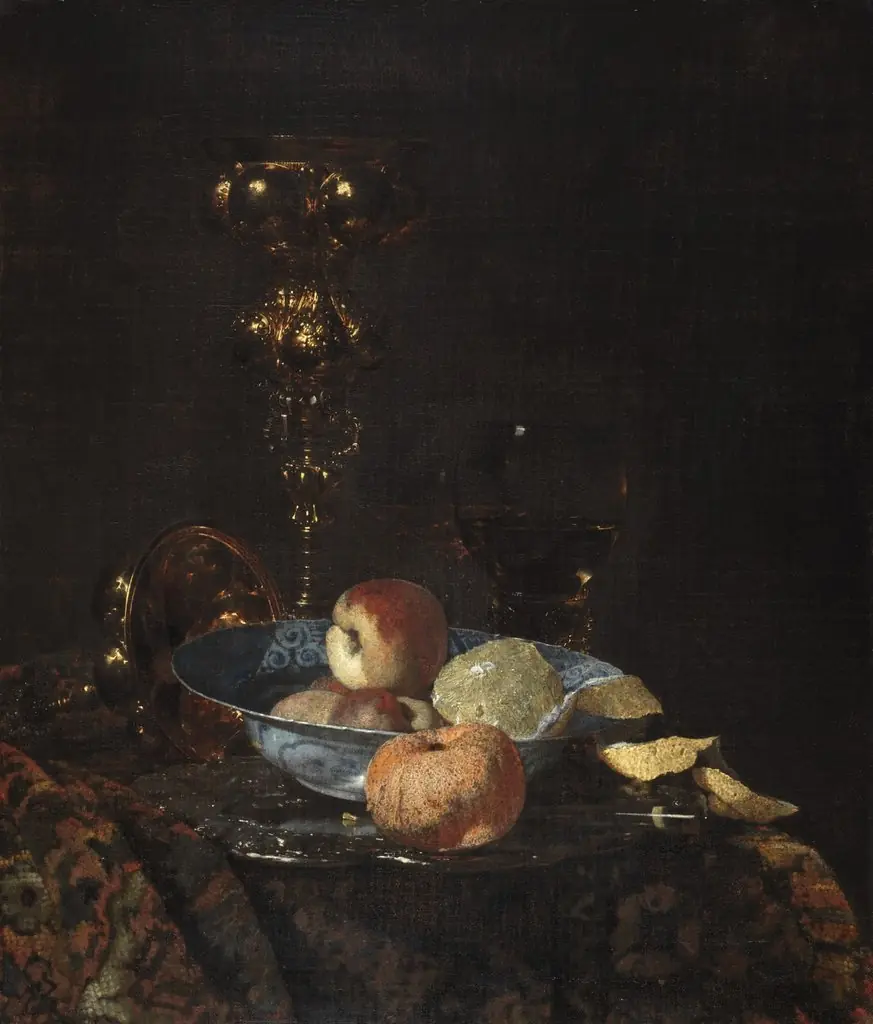
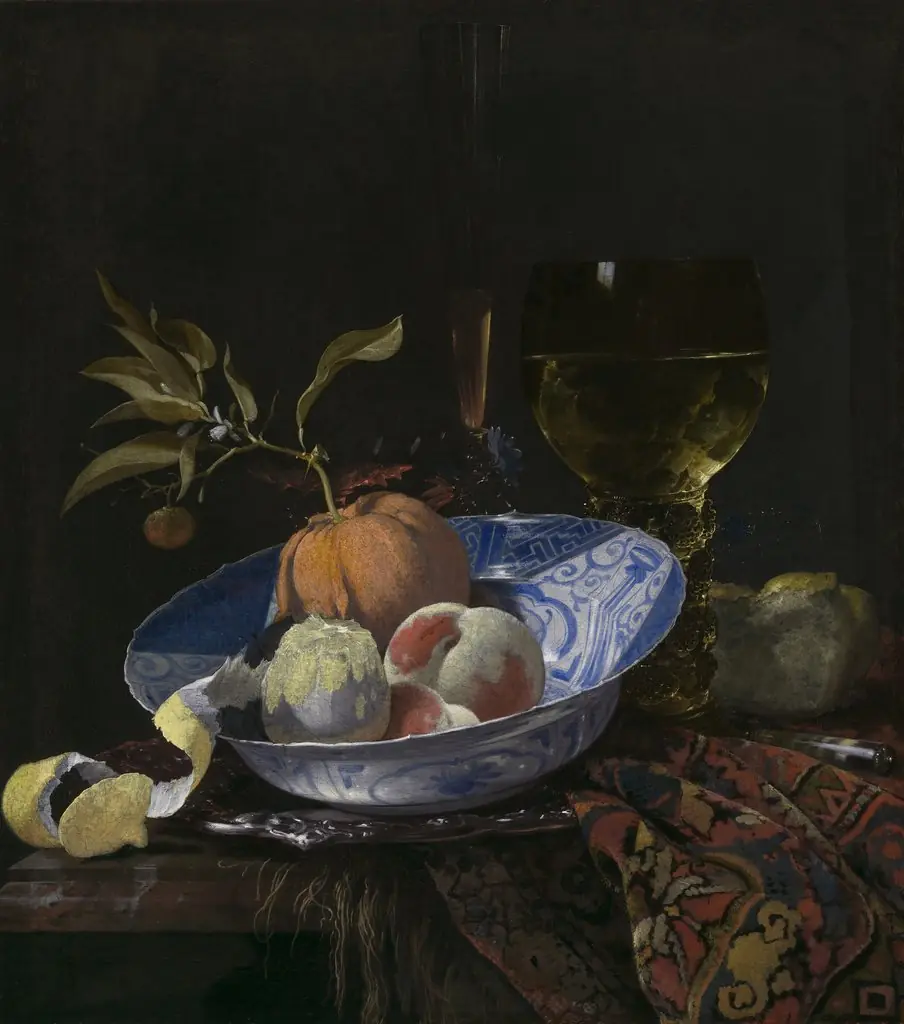
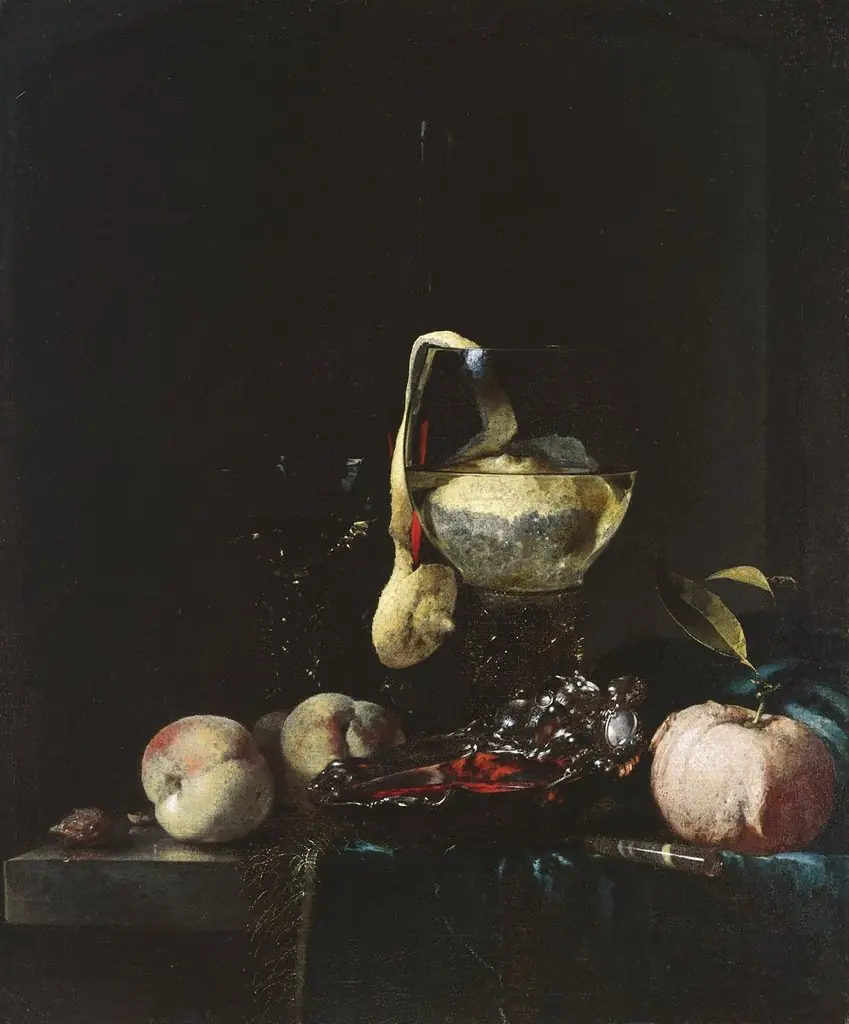
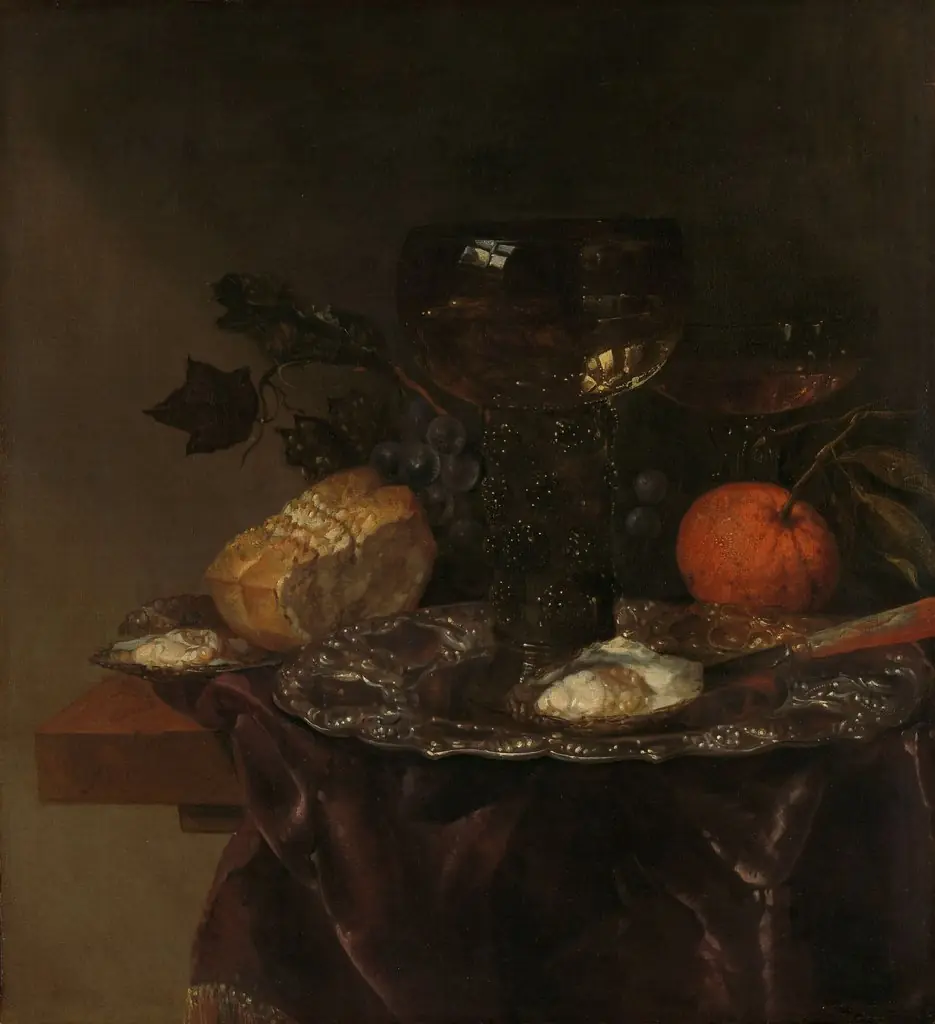
Still Life is an oil painting by the Baroque artist Willem Kalf. It dates from 1660 and is held in the collection of the National Gallery of Art.
About this work
Technique & Style
As a still life, the composition relies on the artist's handling of oil to render textures and light, characteristic of the period's focus on material realism.
Willem Kalf's Still Life, dated 1660, is executed in oil paint on a canvas support. The work measures 64.4 cm in height and 53.8 cm in width, adhering to the conventions of Dutch Golden Age painting. As a still life, the composition relies on the artist's handling of oil to render textures and light, characteristic of the period's focus on material realism.
The painting is part of the National Gallery of Art collection in Washington, D.C., having entered the institution as a gift in 1943.
History & Provenance
Painted in 1660, this oil on canvas by Willem Kalf has a provenance that possibly begins with Joseph Daniel Böhm in Vienna. While scholar Lucius Grisebach suggested the work might be the painting sold from Böhm's estate in 1865, the auction catalogue described a different composition featuring four pomegranates, casting doubt on this identification. The documented ownership chain continues with the New York dealer Cottier & Co., which sold the piece in 1889 to Mrs. Henry Osborne Havemeyer.
Following Havemeyer's death, the painting was auctioned in New York in April 1930 and subsequently acquired by Chester Dale, who gifted it to the National Gallery of Art in Washington, D.C., in 1943.
Overview
Willem Kalf, a significant Dutch painter of the 17th century, created this Still Life around 1660 using oil on canvas. The work presents a meticulously arranged collection of objects, characteristic of the artist's focus on luxurious and detailed compositions. It stands as an example of the rich artistic output during the Dutch Golden Age, a period of considerable cultural and commercial prosperity.
Subject & Meaning
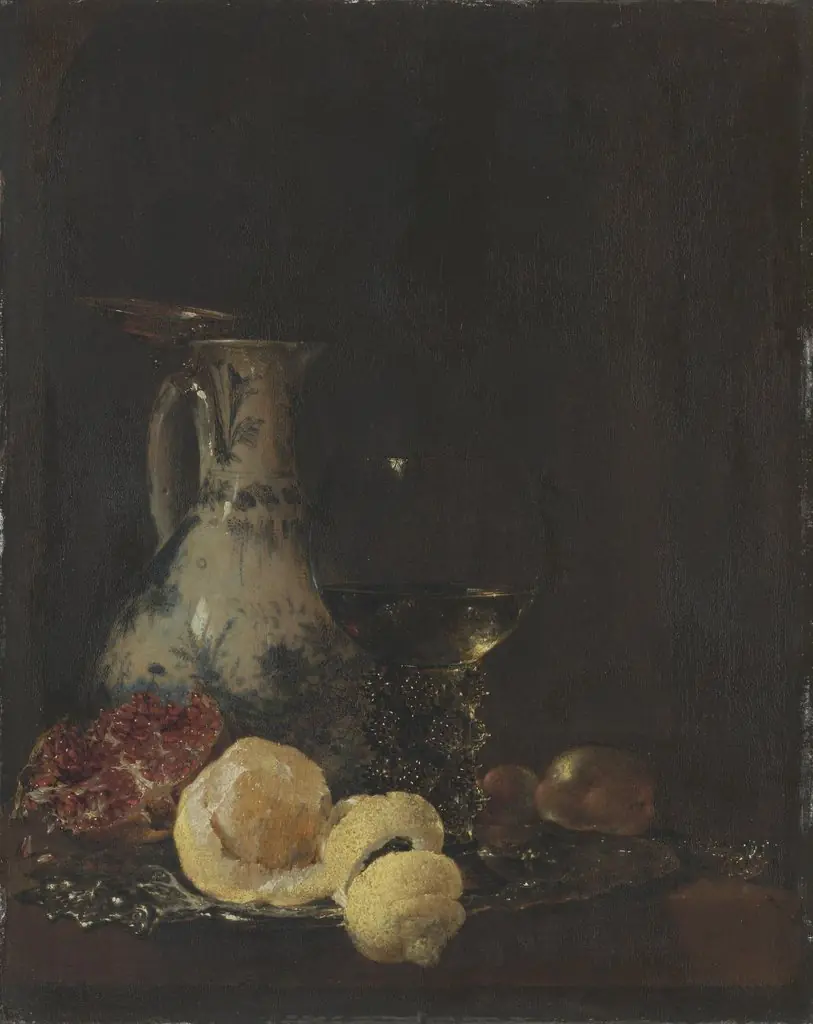
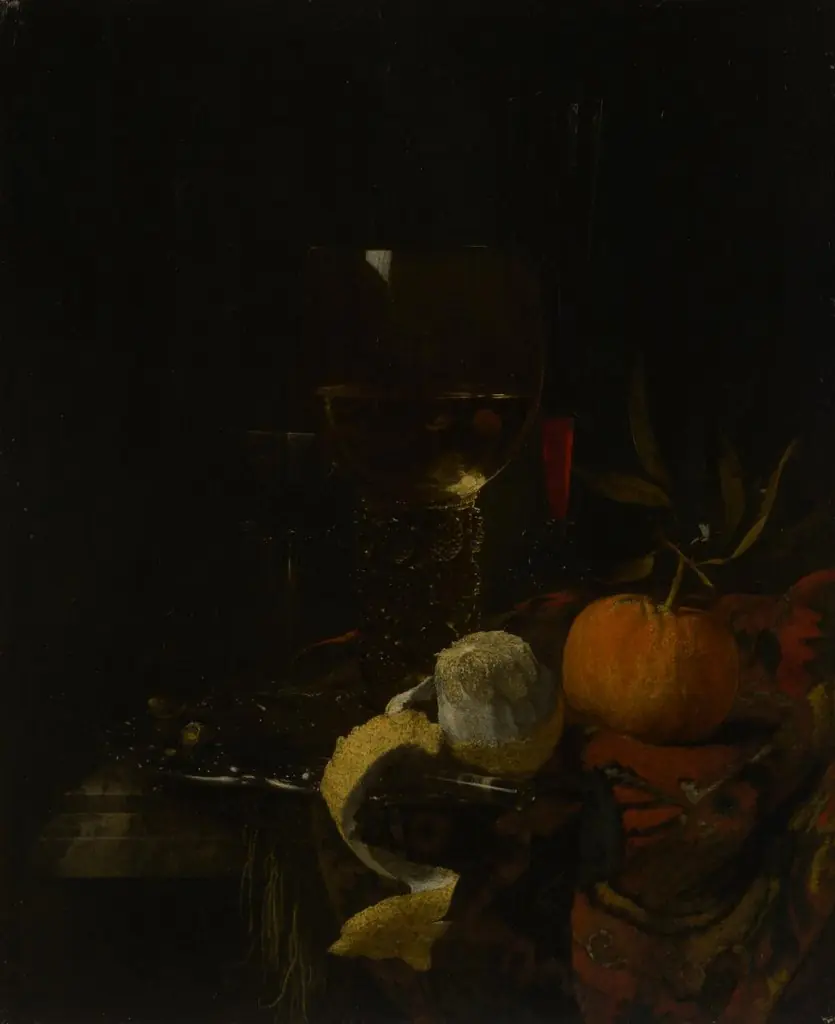
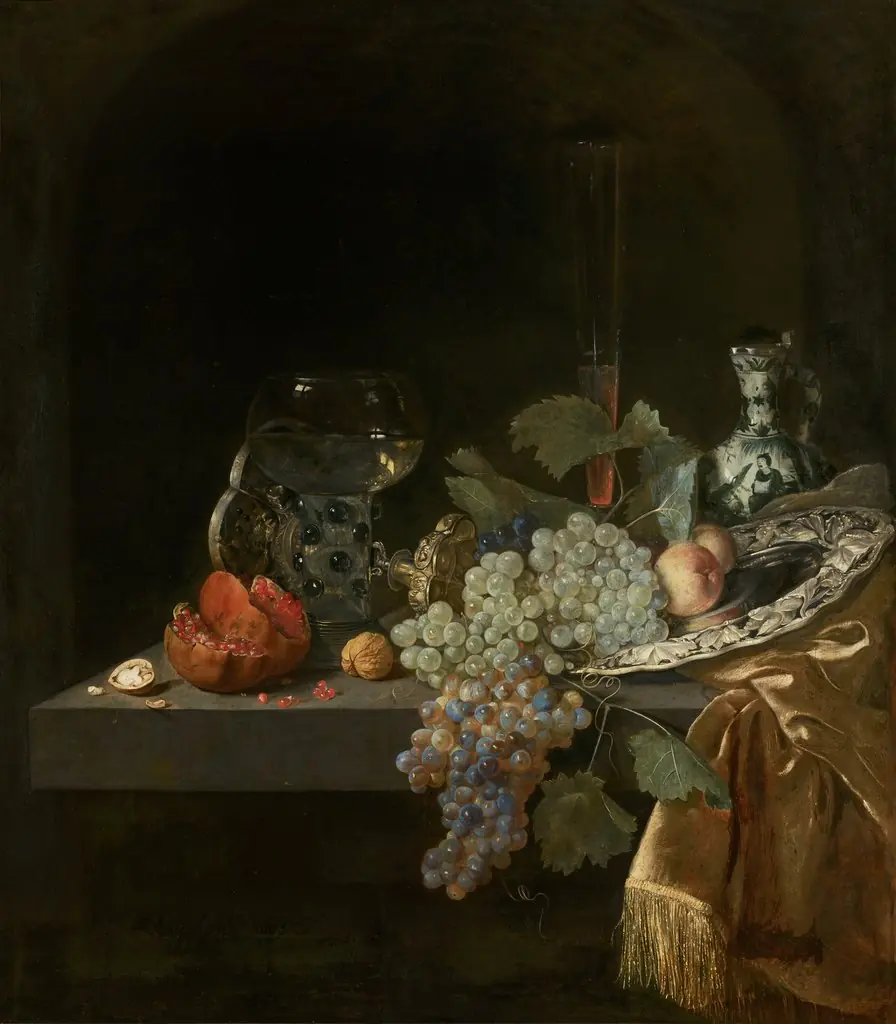
The painting features a table draped with a dark, patterned cloth, upon which a white and blue patterned bowl holds various fruits. Additional fruit, including peaches and lemons, are scattered nearby. A tall, slender glass filled with clear liquid completes the arrangement.
This careful selection and display of opulent items exemplify Kalf's specialization in pronkstilleven, a genre celebrating material wealth and refined taste.
Context
During the Dutch Golden Age, the Netherlands experienced a flourishing of art and commerce, fostering a demand for specialized genres like still life. Willem Kalf was highly esteemed in his time for his skill in depicting elaborate arrangements of valuable and exotic goods. His works, including this Still Life, reflect the era's appreciation for domestic luxury and the meticulous observation of the material world.
Own this work as a print
Artist & collection
Artist
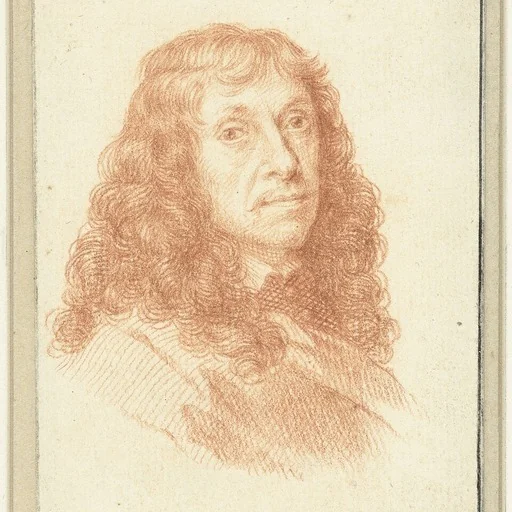
Willem Kalf (1619 – 31 July 1693) was one of the most prominent Dutch still-life painters of the 17th century, the Dutch Golden Age.