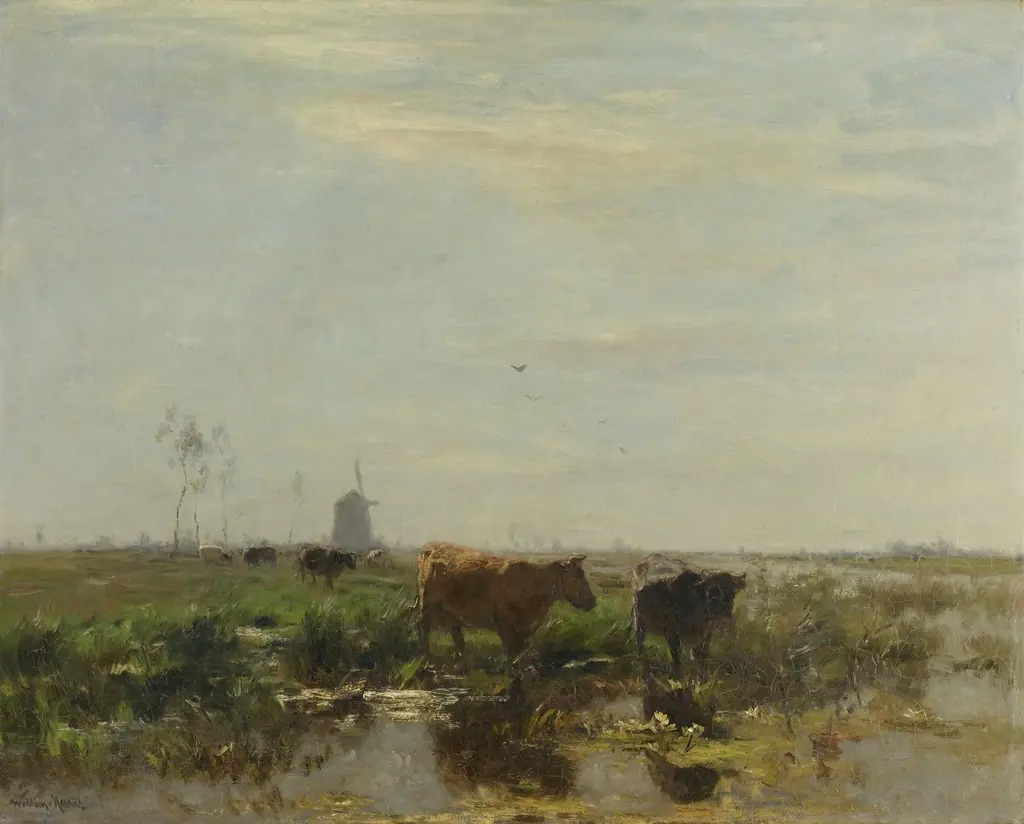
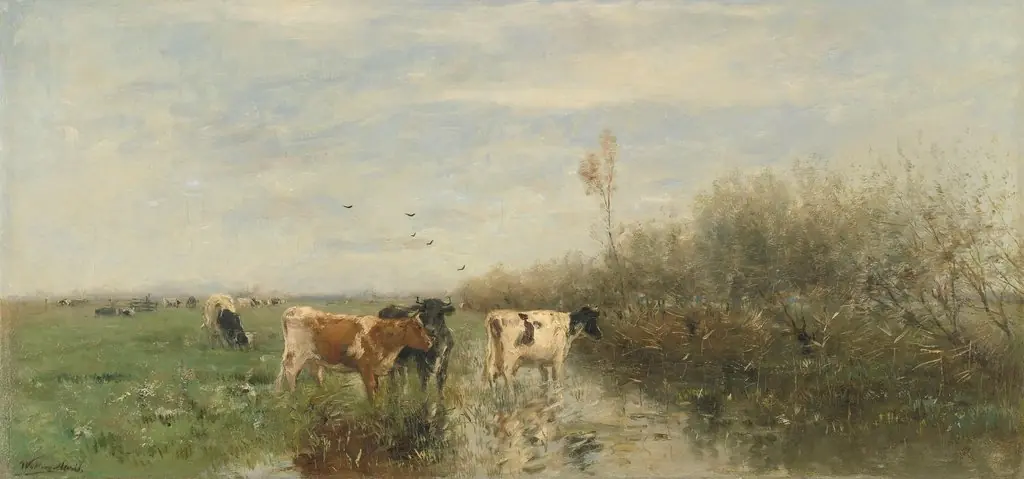
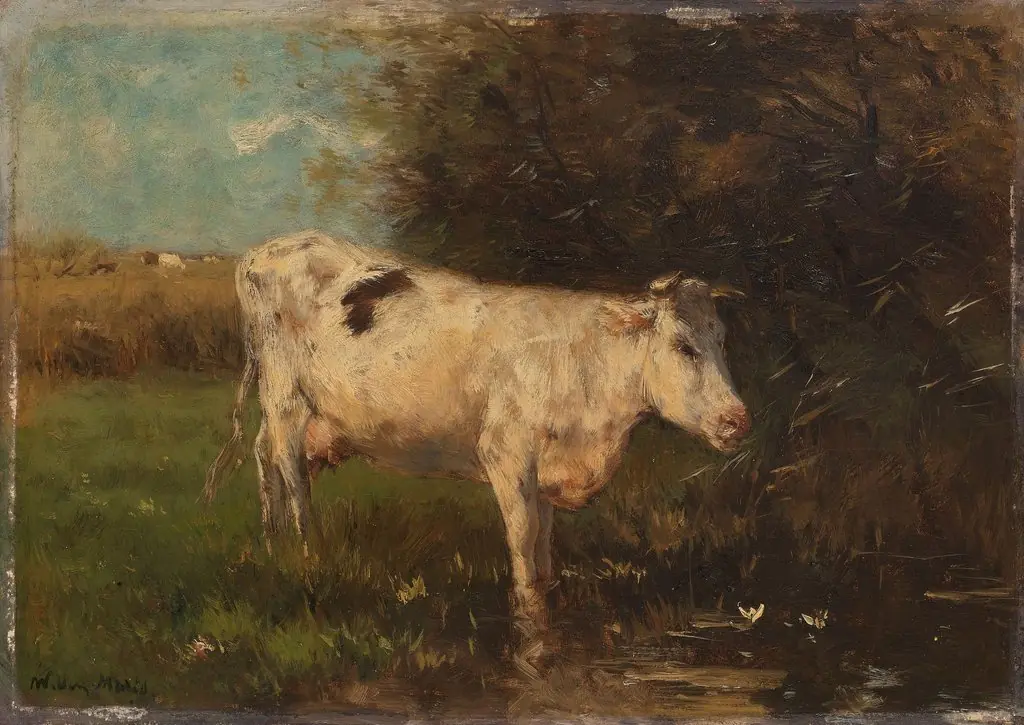
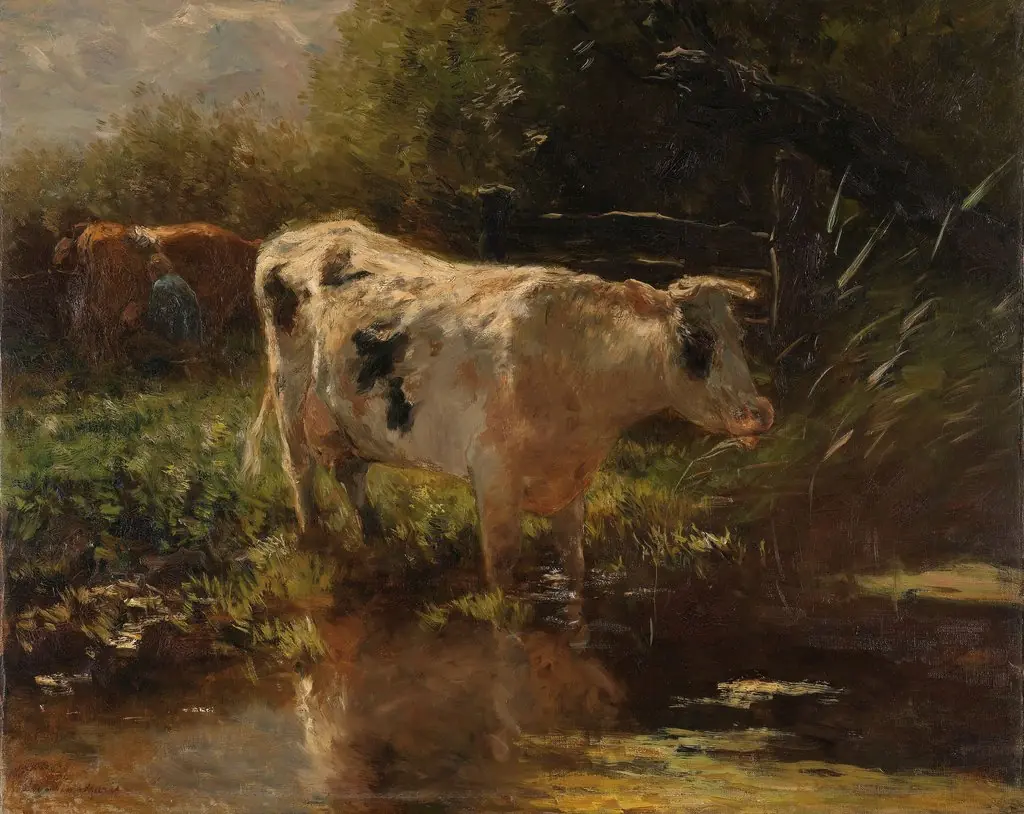
Artwork
Eendjes
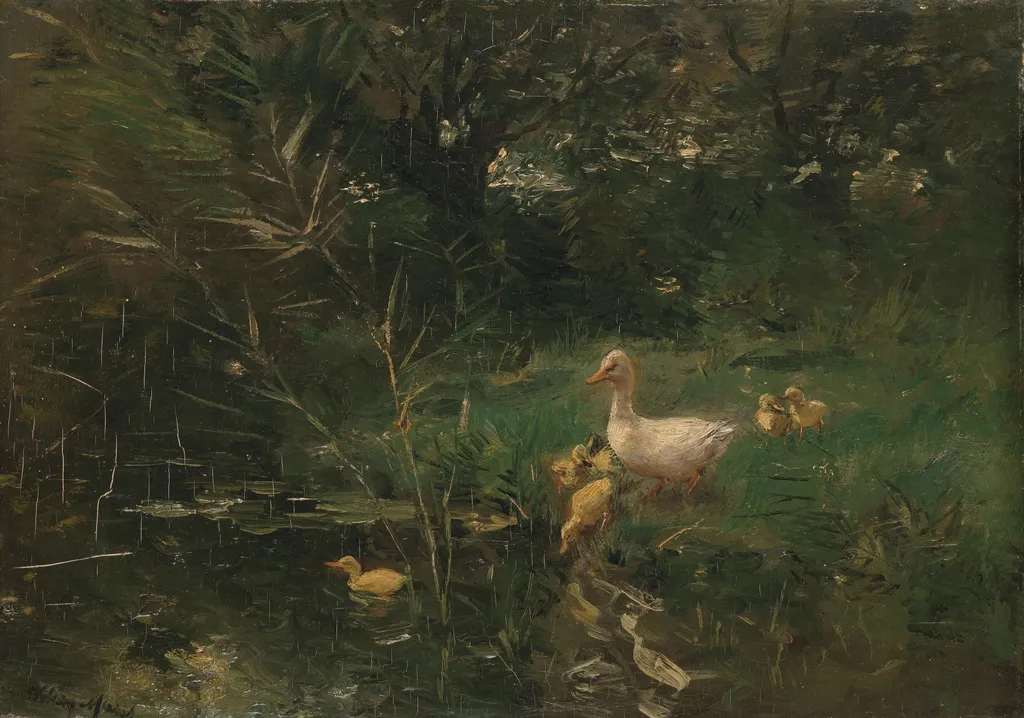
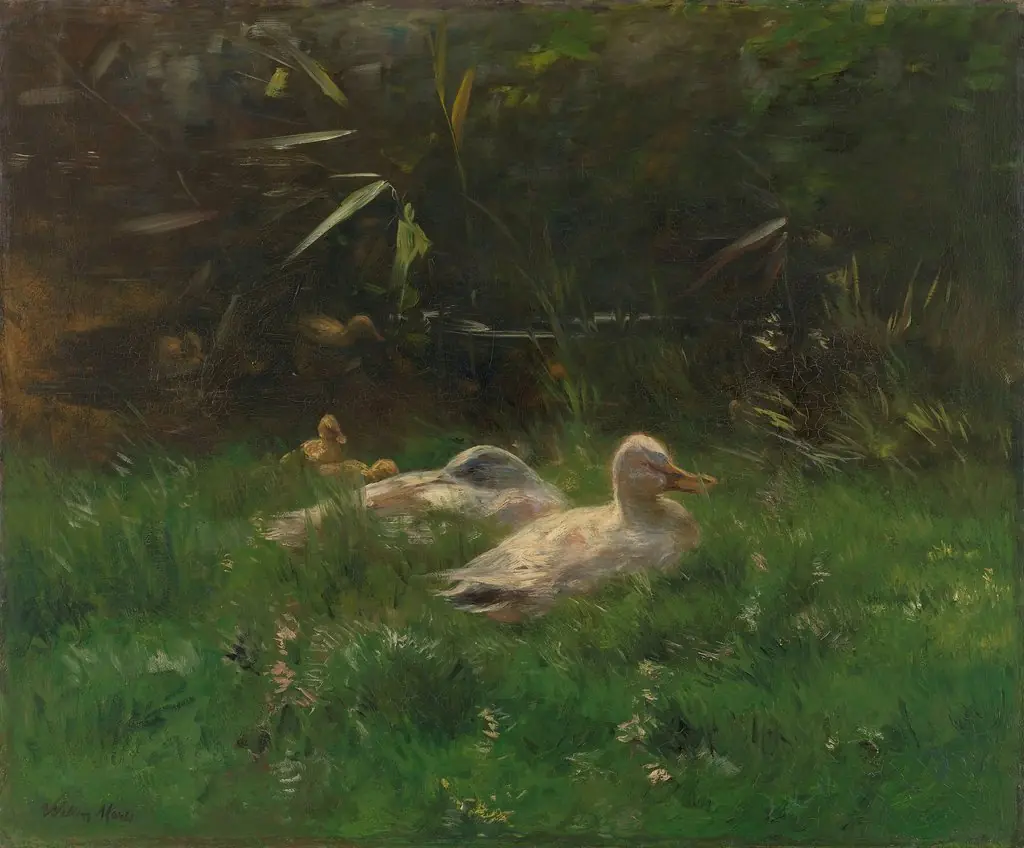
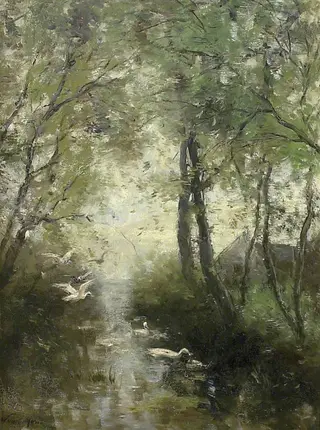
Eendjes is an oil painting by the Impressionist artist Willem Maris. It dates from 1897 and is held in the collection of the Rijksmuseum.
About this work
Subject & Meaning
The depiction of ducks at a water's edge, set within an unspoiled rural landscape, conveys a sense of pastoral harmony and the gentle rhythms of country life.
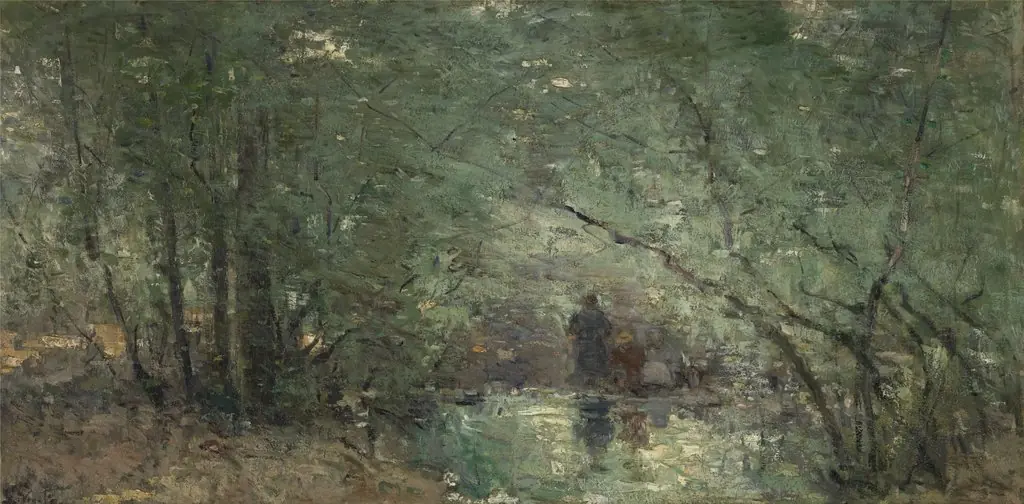
Willem Maris's 1893 oil painting Eendjes depicts a tranquil rural scene populated by ducks gathered at a waterhole along a grassy shore, framed by broad-leaved trees and surrounding plant life. Classified within the genre of animal art, the small panel composition focuses on the quiet observation of waterfowl in their natural habitat, a hallmark subject of the Hague School tradition with which Maris is associated. The depiction of ducks at a water's edge, set within an unspoiled rural landscape, conveys a sense of pastoral harmony and the gentle rhythms of country life.
By centering the modest subject of ducklings amid lush vegetation and reflective water, the work represents the everyday beauty of the Dutch countryside, emphasizing naturalistic observation over narrative drama.
Technique & Style
Eendjes is an oil painting on wooden panel dated 1893, measuring roughly 19 × 27 cm. The work belongs to the animal art genre and depicts a duck beside a waterhole surrounded by grasses, a shore, broad‑leaved trees and other vegetation. Executed in oil paint, the piece exemplifies Willem Maris’s loose brushwork and naturalistic rendering of rural Dutch scenery. The painting is classified simply as a painting and is part of the Rijksmuseum collection. No detailed information on its physical handling or current condition is recorded in the available sources.
History & Provenance
Eendjes was painted by Willem Maris in 1893, executed in oil on panel. The work was owned by Joannes Barnardus Antonius Maria Westerwoudt before entering the collection of the Rijksmuseum in Amsterdam, where it remains. The painting depicts ducks in a rural waterside setting with grass, trees, and vegetation. No commission details or earlier provenance are recorded in the available sources.
Eendjes, an 1893 oil-on-panel painting by Willem Maris, is held in the collection of the Rijksmuseum. The work was formerly owned by Joannes Barnardus Antonius Maria Westerwoudt before entering the museum's holdings. The sources do not provide a specific inventory or accession number for the painting, nor do they document any exhibition history.
Context
The work titled Eendjes, painted by Willem Maris in 1893, exemplifies Dutch 19th‑century animal art and reflects the artist’s focus on rural subjects. Executed in oil on panel, the painting measures 19 × 27 cm and is classified as a rural scene depicting water, grass, and vegetation. It entered the collection of the Rijksmuseum, where it remains part of the institution’s holdings, originally owned by Joannes Barnardus Antonius Maria Westerwoudt.
As a representative example of animal painting within the broader Dutch artistic tradition, Eendjes contributes to scholarship on late‑Hague School subjects and underscores the period’s interest in naturalistic depictions of domestic and pastoral life.
Overview
Willem Maris's oil painting, Eendjes (Ducks), created in 1897, captures a tranquil natural scene. The work features a duck and its offspring situated by a body of water, surrounded by lush vegetation. This piece exemplifies Maris's focus on animal life and landscapes, a common theme in his oeuvre. It is currently part of the collection at the Rijksmuseum.
Own this work as a print
Artist & collection