Artwork
Koeien
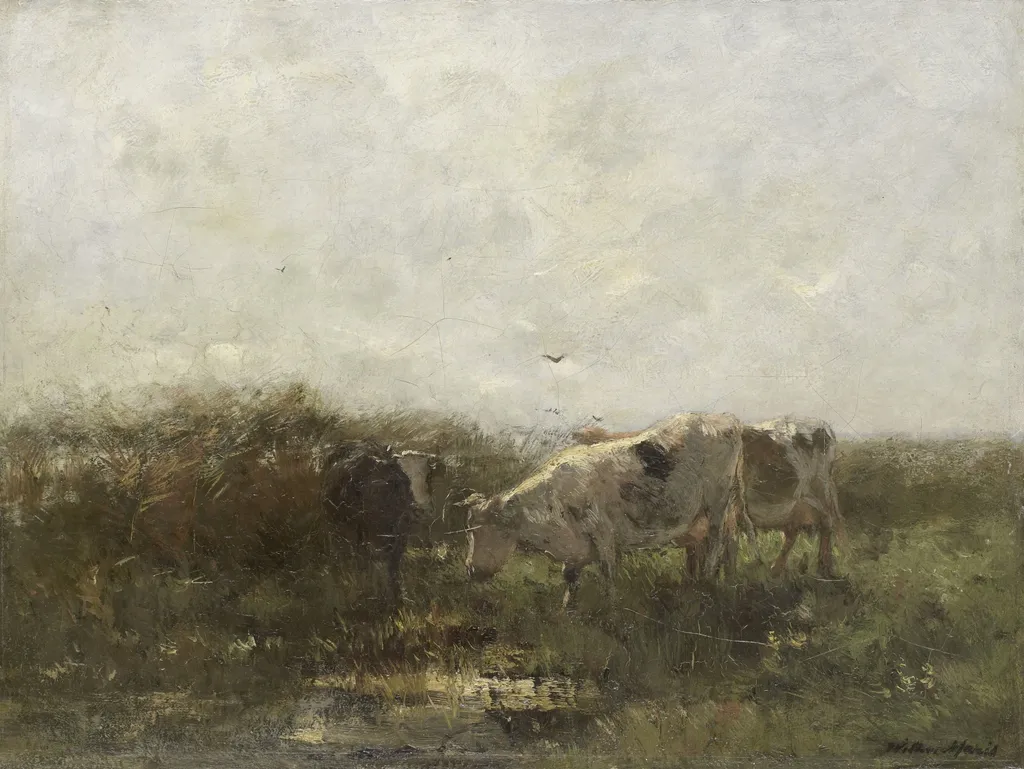
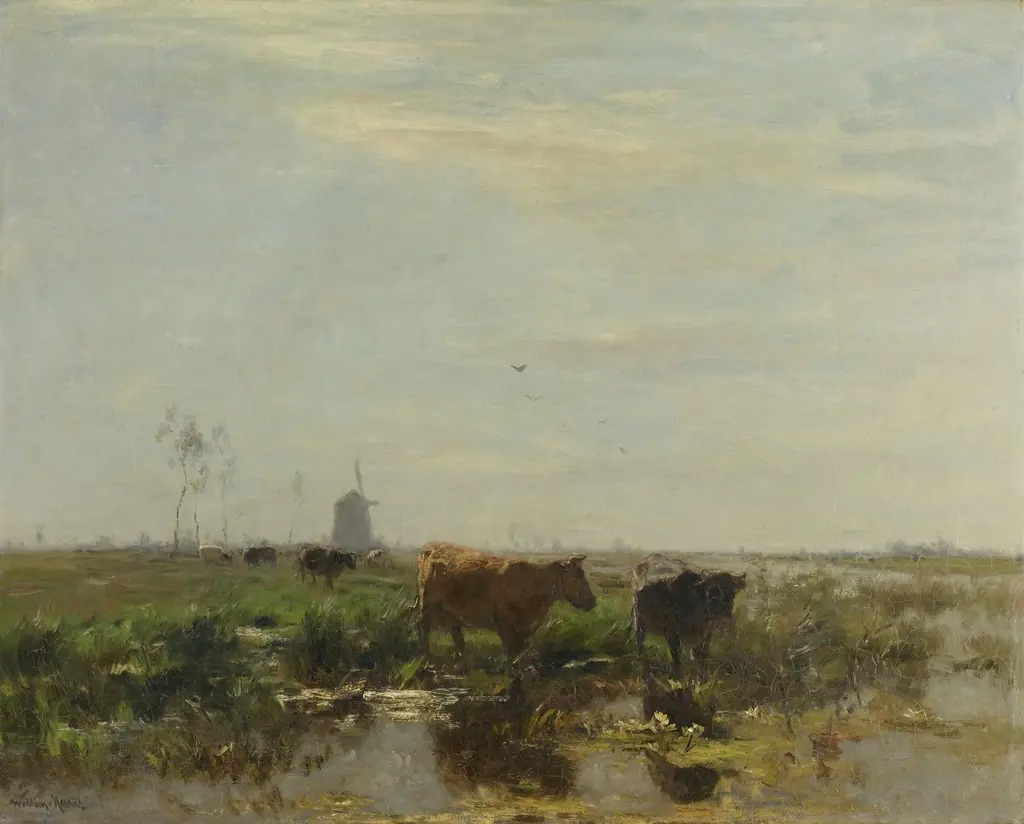
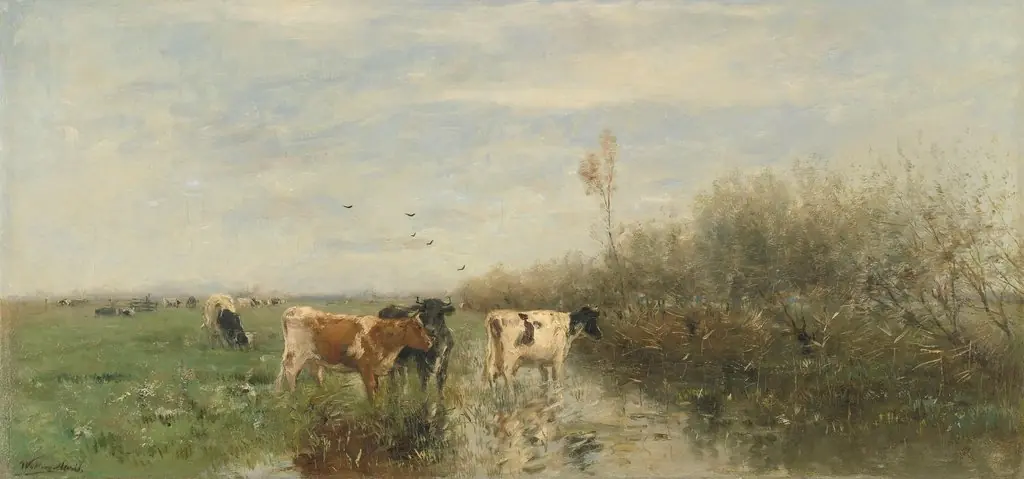
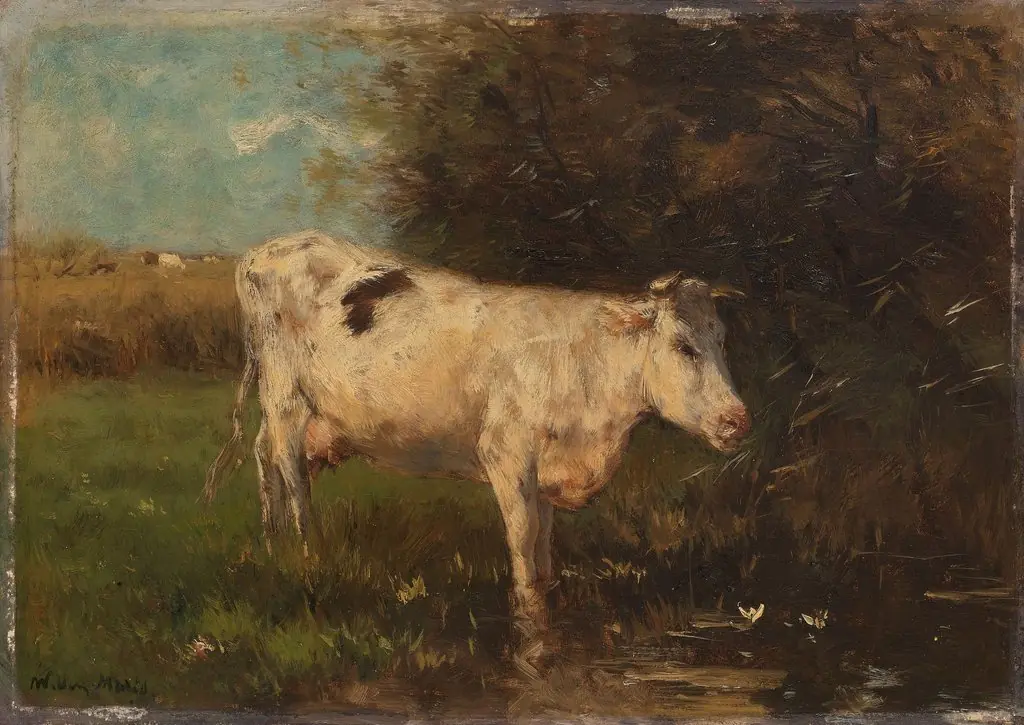
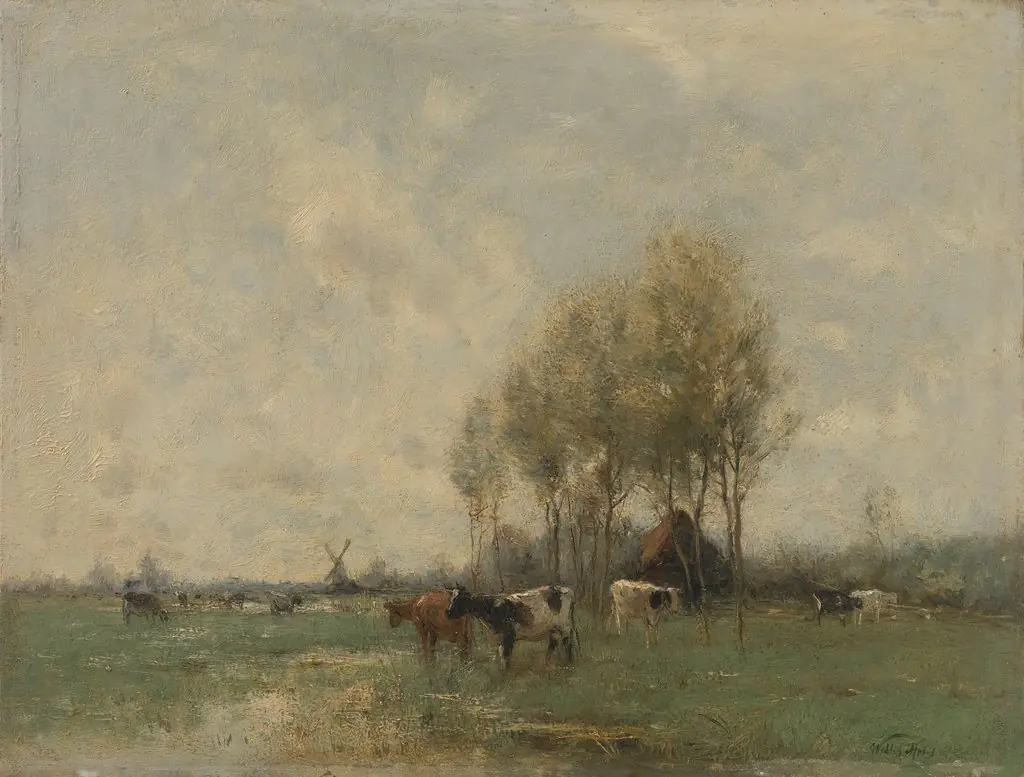
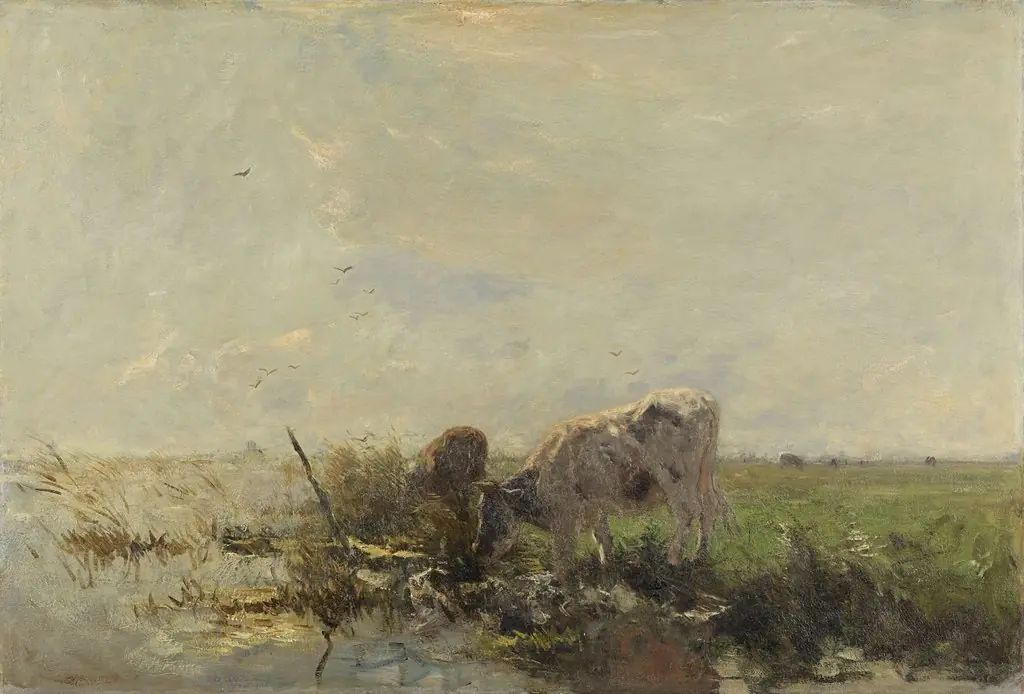
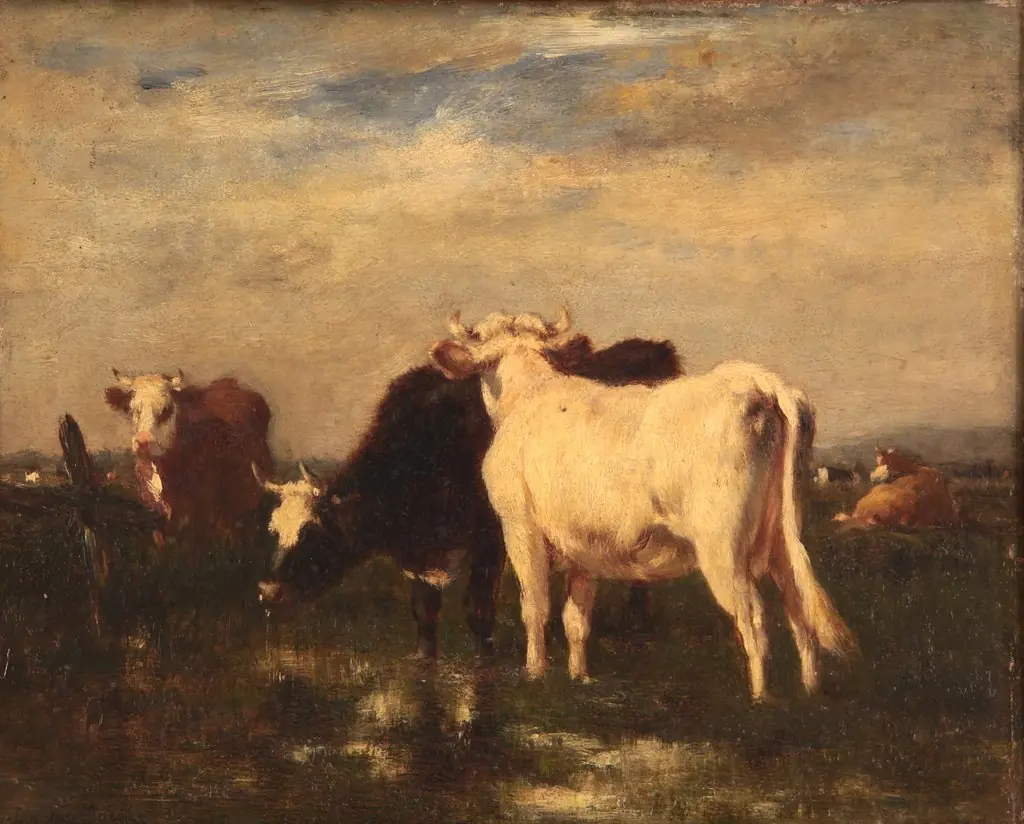
Koeien is an oil painting by the Impressionist artist Willem Maris. It dates from 1896 and is held in the collection of the Rijksmuseum.
About this work
Subject & Meaning
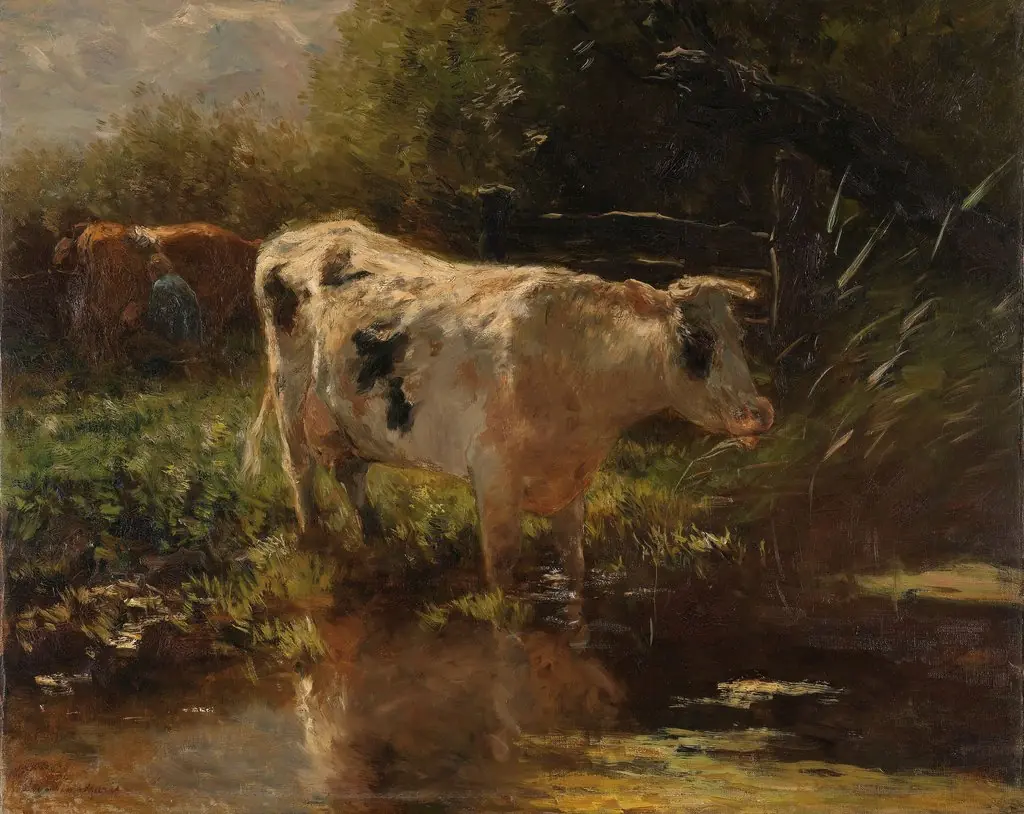
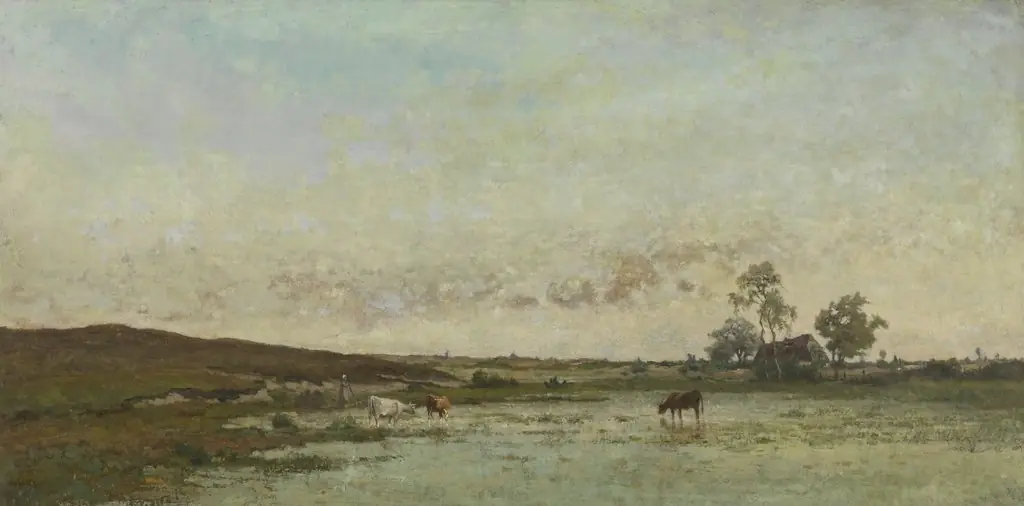
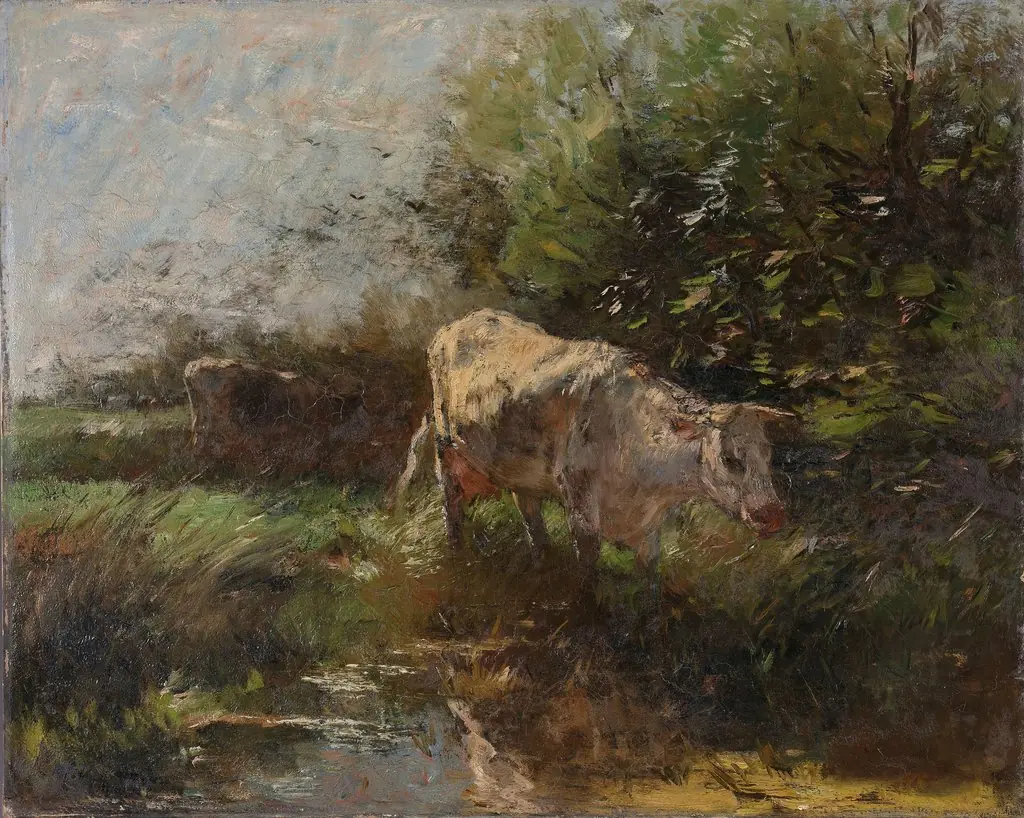
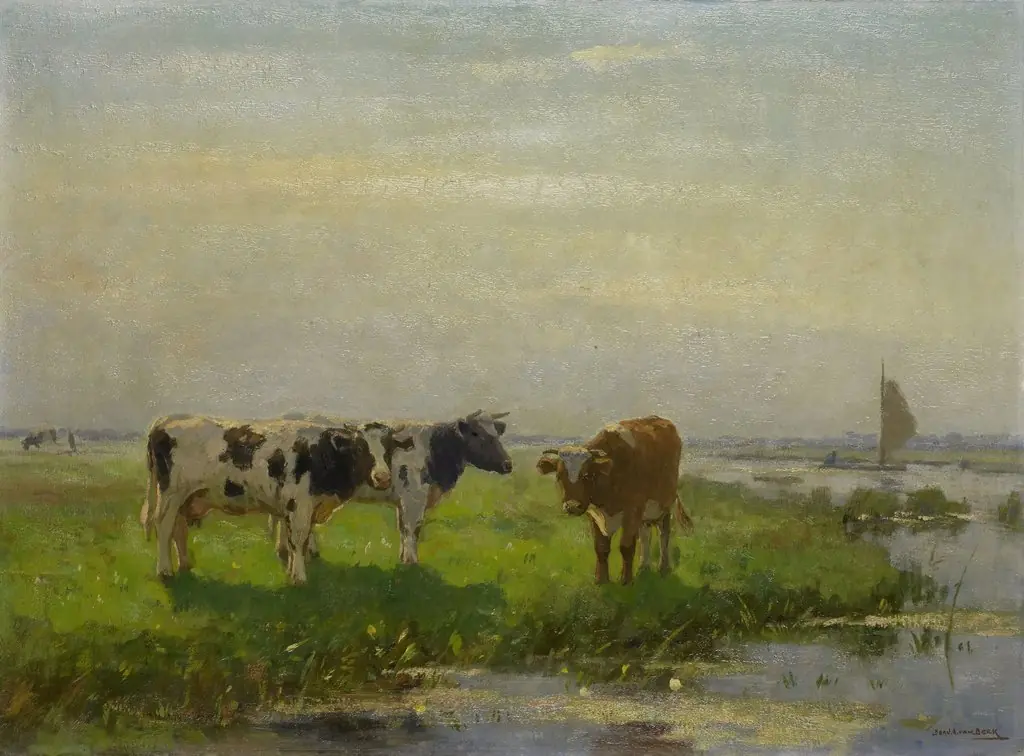
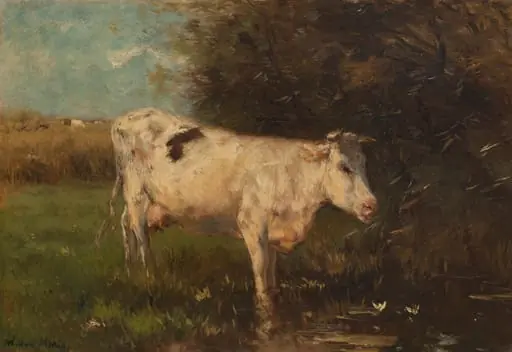
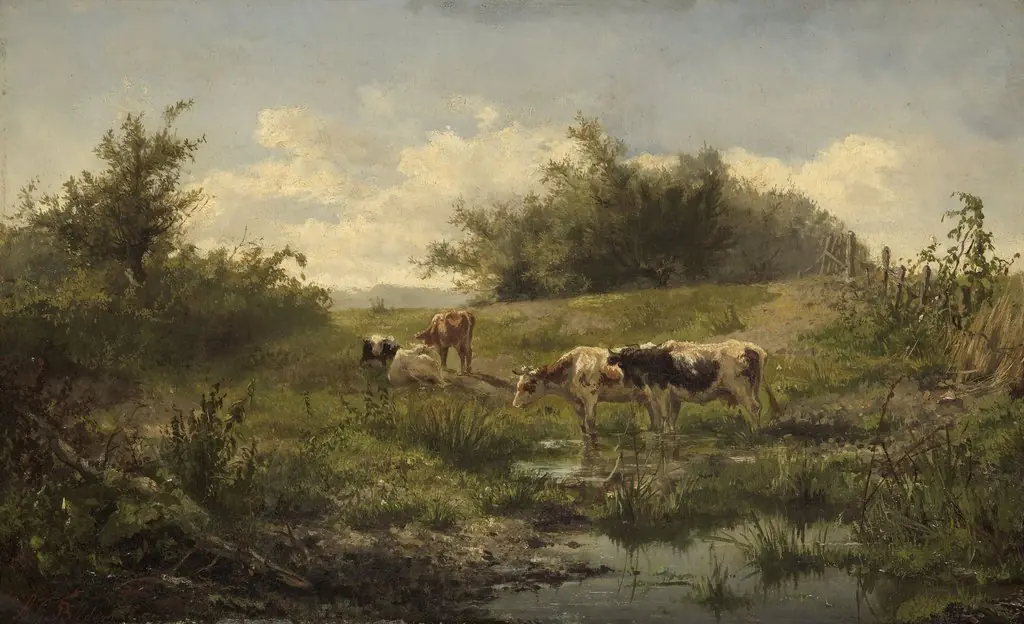
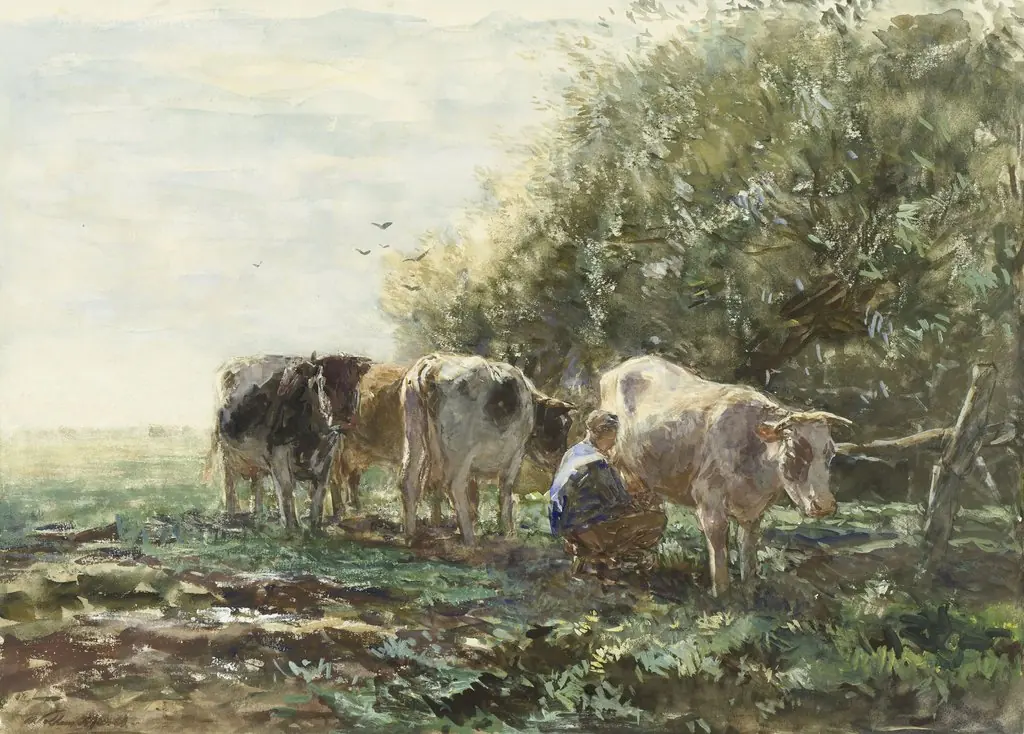
The work depicts cows grazing in a pasture, surrounded by grass and set beneath an open sky, with a herd gathered in the rural environment.
Willem Maris's Koeien is a landscape painting devoted to cattle in a pastoral setting. The work depicts cows grazing in a pasture, surrounded by grass and set beneath an open sky, with a herd gathered in the rural environment. Classified as both a landscape and an example of animal art, the painting draws on the traditional Dutch motif of cattle in the meadow, a subject closely associated with the Hague School, of which Maris was a member.
Rather than presenting the animals as isolated portrait subjects, the composition situates them within their natural agrarian surroundings, emphasizing the harmony between livestock and the cultivated countryside. The small scale of the panel (40 by 53 centimeters) encourages an intimate observation of this everyday rural scene, characteristic of Maris's late nineteenth-century approach to the Dutch pastoral tradition.
Technique & Style
Willem Maris's 1892 work Koeien is executed in oil paint applied to a canvas support. The painting measures 40 centimeters in height and 53 centimeters in width. Stylistically, the piece aligns with the Hague School tradition of landscape and animal art, depicting a herd of cows within a rural pasture setting under an open sky.
The composition focuses on the naturalistic arrangement of the animals and their environment, characteristic of Maris's interest in capturing light and atmosphere in pastoral scenes. The work remains in the collection of the Rijksmuseum, having previously been owned by Jean Charles Joseph Drucker.
History & Provenance
Willem Maris executed the oil painting Koeien in 1892. Created on canvas, the work depicts a herd of cows within a rural pasture setting. Regarding its ownership history, the piece was held in the collection of Jean Charles Joseph Drucker.
The painting subsequently entered the holdings of the Rijksmuseum, where it remains located. No specific details regarding the original commission or the precise circumstances of its creation are provided in the available records, though its inception year is firmly established as 1892.
The painting Koeien, created by Willem Maris in 1892, is held in the collection of the Rijksmuseum. While the work is currently located at this institution, historical records indicate it was previously owned by Jean Charles Joseph Drucker. The provided sources confirm the artwork's presence in the Rijksmuseum but do not list a specific inventory or accession number, nor do they detail any public exhibitions in which the piece has been displayed.
Overview
Willem Maris's painting, Koeien (Cows), created in 1896, is an oil landscape featuring a small herd of cattle. This work exemplifies Maris's characteristic focus on rural subjects, particularly his renowned depictions of farm animals within their natural environment. The piece is part of the collection at the Rijksmuseum, representing a significant example of late 19th-century Dutch landscape painting.
Own this work as a print
Artist & collection